
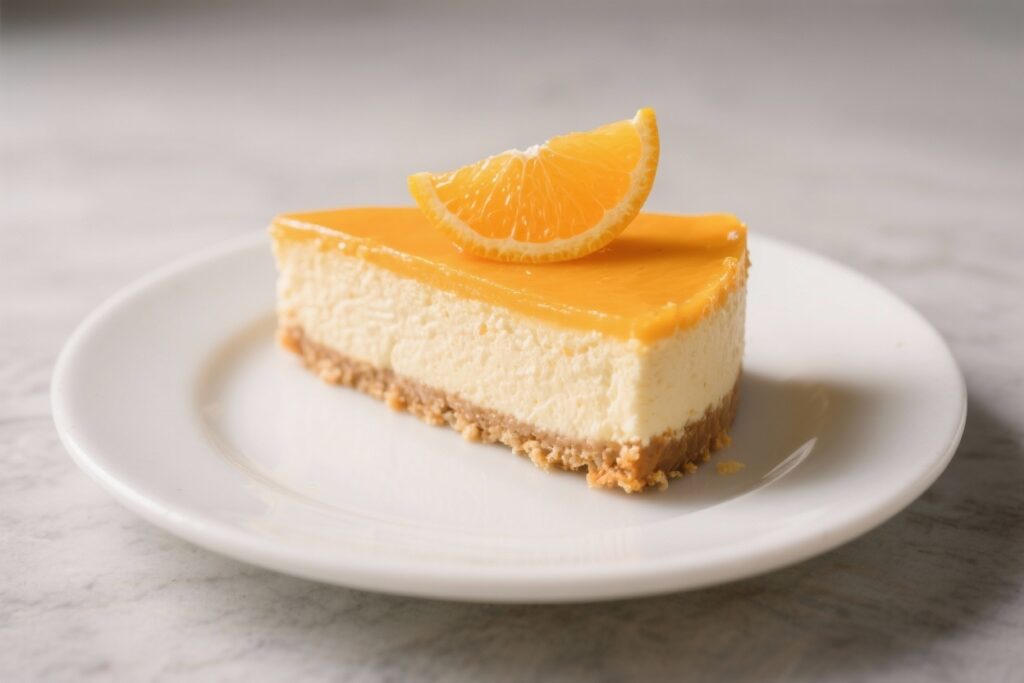
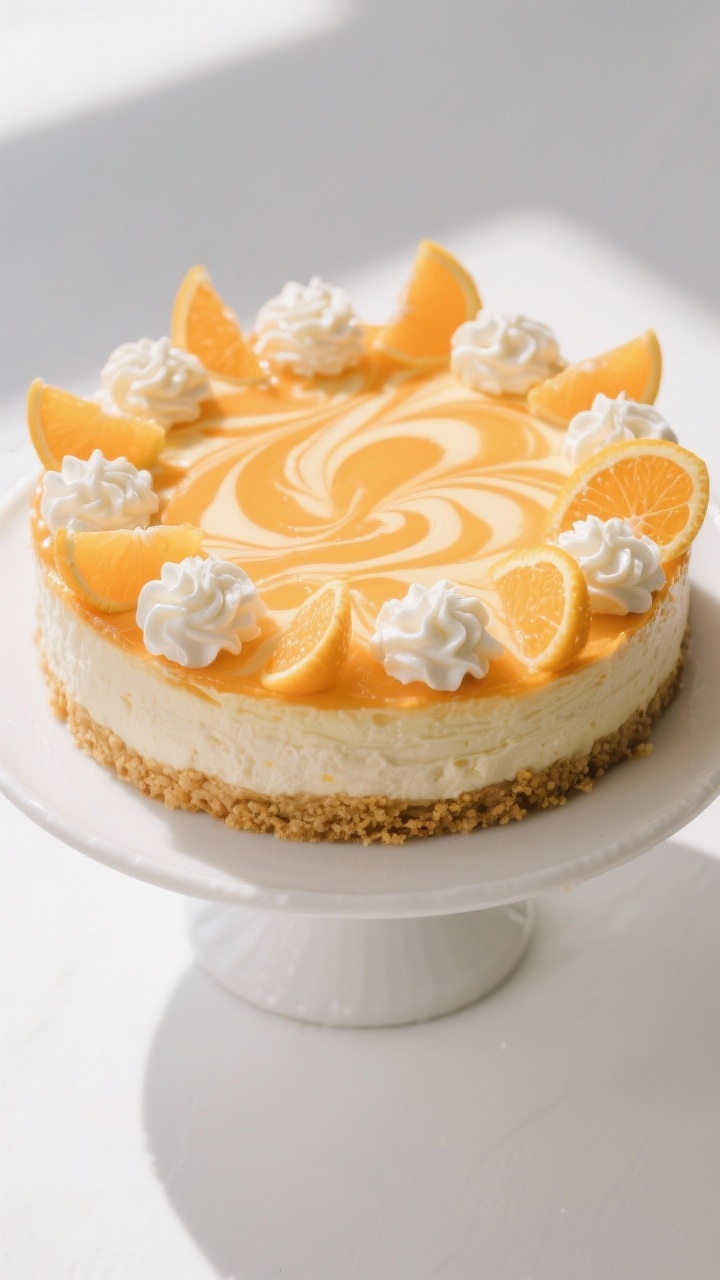
If you grew up loving orange creamsicles, this cheesecake brings that same sunny flavor in a smooth, sliceable form. It’s creamy, citrusy, and just the right amount of sweet. The texture is lush without being heavy, and the orange swirl makes it look like you worked way harder than you did.
Whether it’s for a summer party or a cozy weekend treat, this dessert hits that perfect balance of fun and elegant. One bite and you’ll get why it’s a crowd-pleaser.
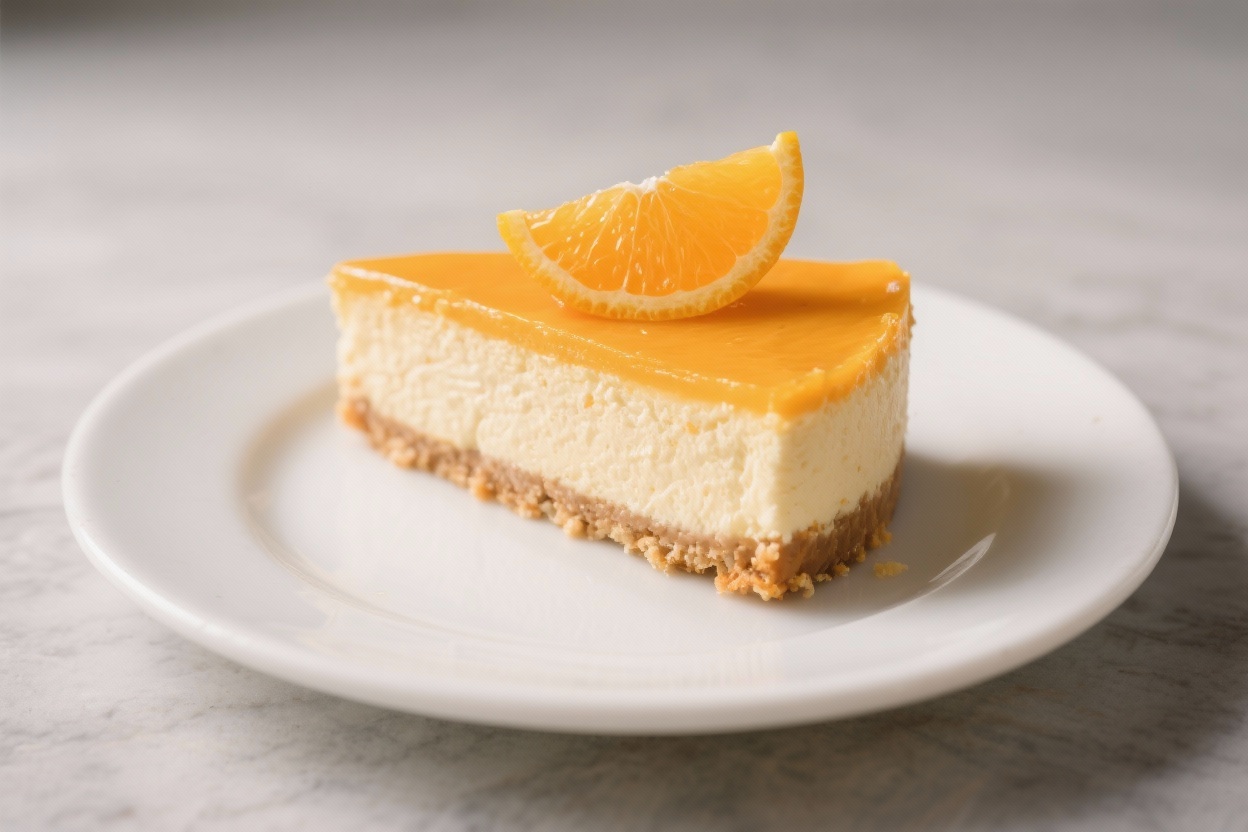
Orange Creamsicle Cheesecake – Bright, Creamy, and Nostalgic
Ingredients
Method
-
Prep the pan. Grease a 9-inch springform pan.
Line the bottom with parchment for easy release. Heat the oven to 325°F (163°C).
-
Make the crust. In a bowl, mix cookie crumbs, sugar, salt, and melted butter until evenly moistened. Press firmly into the bottom and slightly up the sides of the pan.
Bake for 8–10 minutes until fragrant. Cool while you make the filling.
-
Cook the orange swirl. In a small saucepan, whisk orange juice, zest, sugar, and cornstarch until smooth. Cook over medium heat, stirring, until thickened and glossy, 2–3 minutes.
Remove from heat, stir in vanilla and optional food coloring. Cool to room temperature.
-
Beat the cream cheese. In a large bowl, beat cream cheese on medium speed until very smooth, about 2 minutes. Scrape the bowl well.
Add sugar and beat 1–2 minutes more until fluffy.
-
Add dairy and flavor. Mix in sour cream, heavy cream, orange zest, vanilla, and salt until just combined. Keep the speed low to avoid adding too much air.
-
Add eggs. Beat in the eggs one at a time on low speed, mixing just until incorporated. Scrape the bowl and stir by hand to ensure a smooth batter.
-
Assemble. Pour half the batter into the cooled crust.
Spoon half the orange mixture over the surface in dollops. Swirl gently with a knife. Add the remaining cheesecake batter and repeat with the rest of the orange mixture.
Swirl again, taking care not to cut into the crust.
-
Bake. Place the pan on a baking sheet. Bake at 325°F (163°C) for 55–70 minutes, until the edges are set and the center wobbles like Jell-O when you nudge the pan. If the top is browning too fast, tent loosely with foil.
-
Cool gradually. Turn off the oven, crack the door, and let the cheesecake rest inside for 45 minutes.
This slow cool helps prevent cracks.
-
Chill completely. Remove to a rack, run a thin knife around the edge, and cool to room temperature. Cover and refrigerate at least 6 hours, preferably overnight, before unmolding.
-
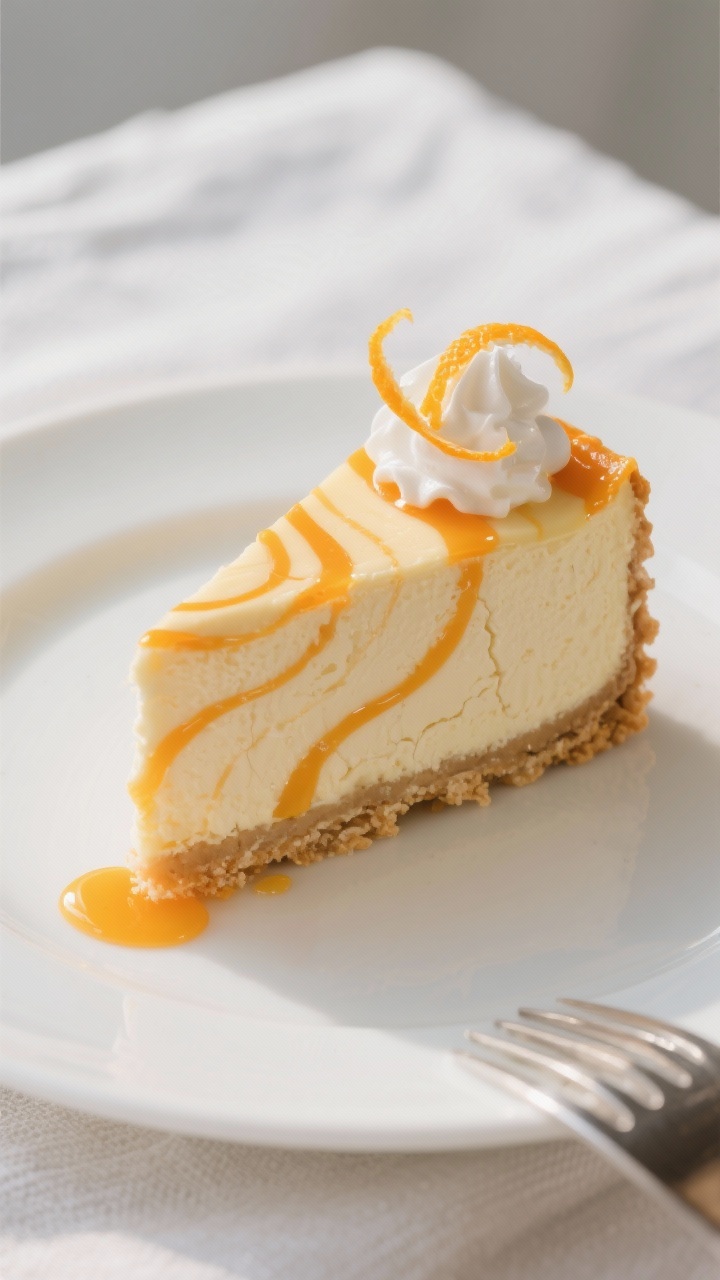
Serve. Release the springform ring, transfer to a serving plate, and garnish with whipped cream and orange slices if desired. Slice with a hot, clean knife for neat pieces.
Why This Recipe Works
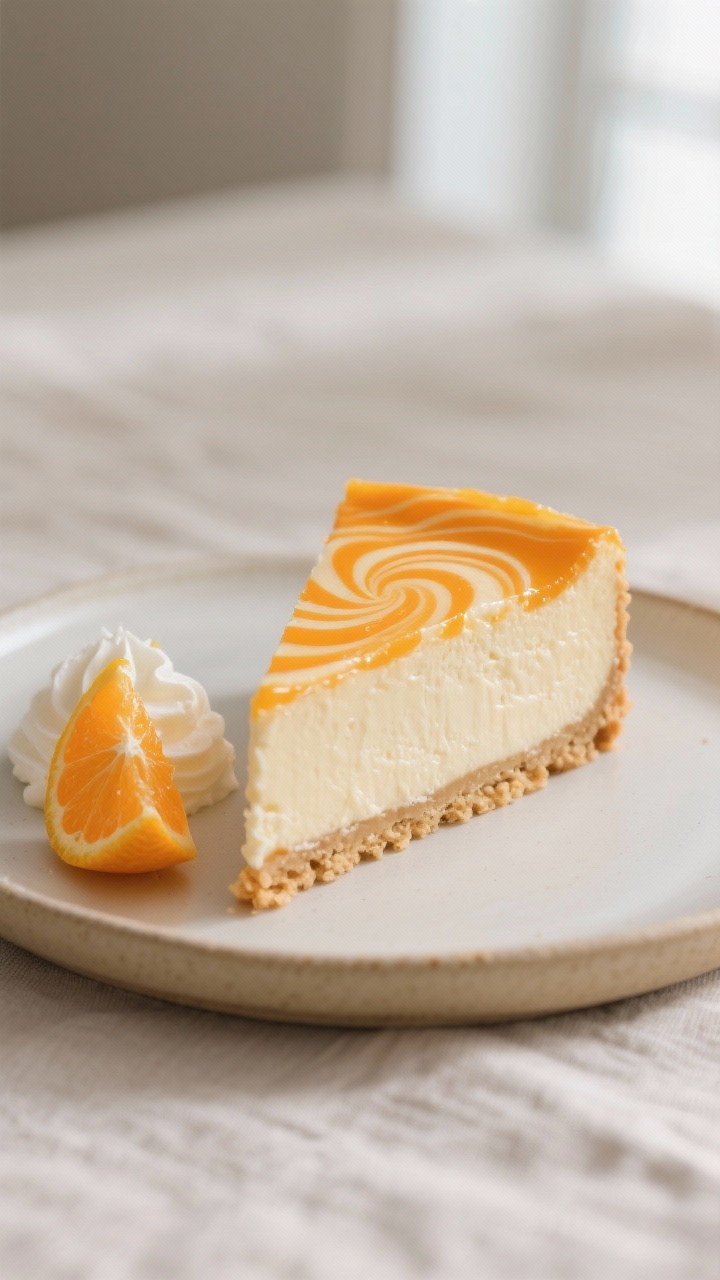
This cheesecake blends fresh orange zest and juice with a touch of vanilla to recreate that classic creamsicle taste. The citrus brightens the rich cream cheese, so the flavor stays light and refreshing.
A cornstarch-thickened orange layer swirls through the batter for a clean orange note and a pretty marbled finish. Baking at a moderate temperature and resting in the oven helps prevent cracks without a fussy water bath. A buttery vanilla wafer crust offers a nostalgic base that complements the orange-vanilla combo.
What You’ll Need
- For the crust:
- 2 cups (about 200 g) vanilla wafer crumbs or graham cracker crumbs
- 2 tablespoons granulated sugar
- 6 tablespoons unsalted butter, melted
- Pinch of salt
- For the orange swirl:
- 1/2 cup fresh orange juice (from 2–3 oranges)
- 2 teaspoons finely grated orange zest
- 2 tablespoons granulated sugar
- 2 teaspoons cornstarch
- 1 teaspoon vanilla extract
- 1–2 drops orange food coloring (optional, for a brighter swirl)
- For the cheesecake filling:
- 24 ounces (680 g) cream cheese, room temperature
- 3/4 cup granulated sugar
- 1/4 cup sour cream, room temperature
- 1/4 cup heavy cream, room temperature
- 1 tablespoon orange zest
- 1 teaspoon vanilla extract
- 3 large eggs, room temperature
- Pinch of salt
- For garnish (optional):
- Lightly sweetened whipped cream
- Thin orange slices or twists of orange peel
- Equipment:
- 9-inch springform pan
- Stand mixer or hand mixer
- Fine grater for zest
- Heavy-duty foil (if using a water bath, optional)
Instructions
- Prep the pan. Grease a 9-inch springform pan.
Line the bottom with parchment for easy release. Heat the oven to 325°F (163°C).
- Make the crust. In a bowl, mix cookie crumbs, sugar, salt, and melted butter until evenly moistened. Press firmly into the bottom and slightly up the sides of the pan.
Bake for 8–10 minutes until fragrant. Cool while you make the filling.
- Cook the orange swirl. In a small saucepan, whisk orange juice, zest, sugar, and cornstarch until smooth. Cook over medium heat, stirring, until thickened and glossy, 2–3 minutes.
Remove from heat, stir in vanilla and optional food coloring. Cool to room temperature.
- Beat the cream cheese. In a large bowl, beat cream cheese on medium speed until very smooth, about 2 minutes. Scrape the bowl well.
Add sugar and beat 1–2 minutes more until fluffy.
- Add dairy and flavor. Mix in sour cream, heavy cream, orange zest, vanilla, and salt until just combined. Keep the speed low to avoid adding too much air.
- Add eggs. Beat in the eggs one at a time on low speed, mixing just until incorporated. Scrape the bowl and stir by hand to ensure a smooth batter.
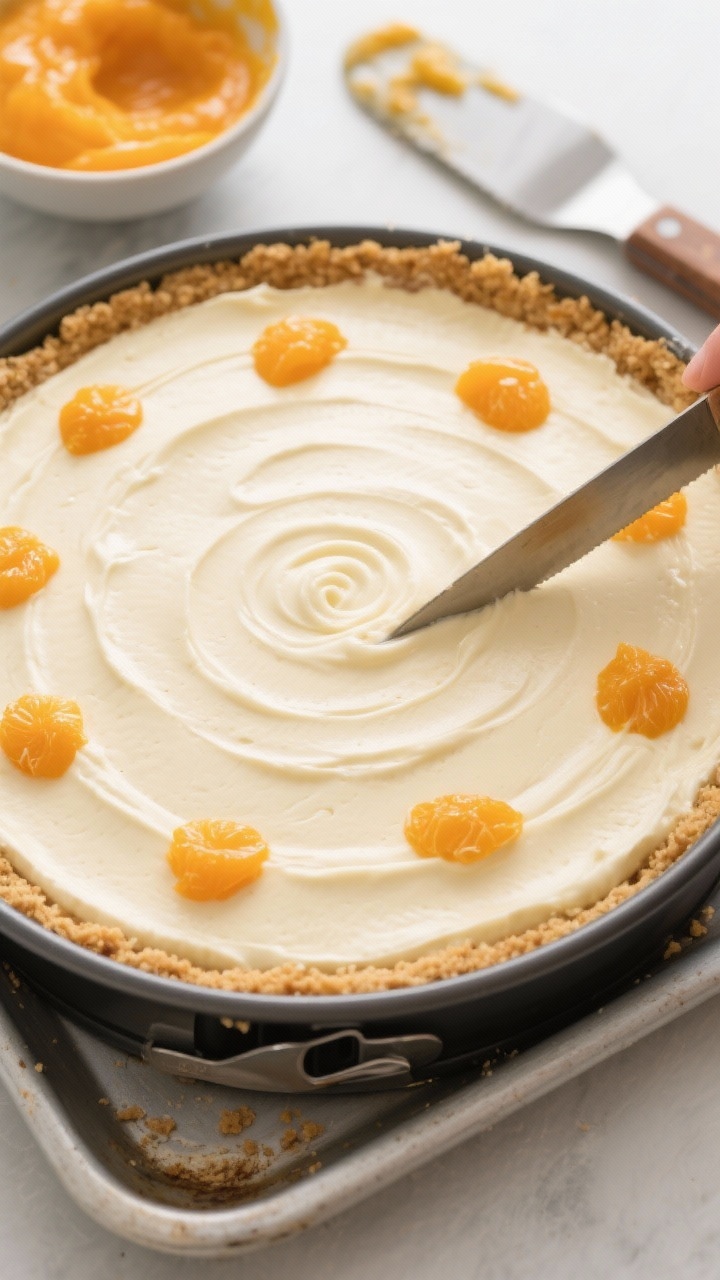
- Assemble. Pour half the batter into the cooled crust.
Spoon half the orange mixture over the surface in dollops. Swirl gently with a knife. Add the remaining cheesecake batter and repeat with the rest of the orange mixture.
Swirl again, taking care not to cut into the crust.
- Bake. Place the pan on a baking sheet. Bake at 325°F (163°C) for 55–70 minutes, until the edges are set and the center wobbles like Jell-O when you nudge the pan. If the top is browning too fast, tent loosely with foil.
- Cool gradually. Turn off the oven, crack the door, and let the cheesecake rest inside for 45 minutes.
This slow cool helps prevent cracks.
- Chill completely. Remove to a rack, run a thin knife around the edge, and cool to room temperature. Cover and refrigerate at least 6 hours, preferably overnight, before unmolding.
- Serve. Release the springform ring, transfer to a serving plate, and garnish with whipped cream and orange slices if desired. Slice with a hot, clean knife for neat pieces.
How to Store
Refrigerate the cheesecake tightly covered for up to 5 days.
Keep it in the springform base or a sealed cake carrier to prevent drying out. For longer storage, freeze slices on a tray until firm, then wrap and store in freezer bags for up to 2 months. Thaw overnight in the fridge, then add fresh garnish before serving.
Benefits of This Recipe
- Make-ahead friendly: Cheesecake tastes best after a long chill, so you can prep a day or two ahead.
- Balanced flavor: Bright citrus cuts through the richness for a refreshing finish.
- Eye-catching swirl: A simple technique creates a bakery-style look.
- Flexible crust: Works with vanilla wafers, grahams, or even golden sandwich cookies.
- No water bath required: Gentle baking and a rest in the oven minimize cracks.
What Not to Do
- Don’t use cold ingredients. Cold cream cheese clumps and traps air, leading to a dense or cracked cake.
- Don’t overmix after adding eggs. Too much air makes the cheesecake puff and fall.
- Don’t skip the cool-down. Rapid temperature changes cause cracks.
- Don’t cut while warm. It needs a full chill to set for clean slices and the best texture.
- Don’t overload the swirl. Too much orange mixture can make the center soggy; stick to the amounts listed.
Recipe Variations
- Dreamsicle Bars: Press the crust into a 9×13-inch pan and bake the filling as bars.
Reduce bake time to 35–45 minutes.
- Shortbread Crust: Swap vanilla wafers for crushed shortbread cookies for richer flavor.
- Extra Citrus: Add 1 tablespoon lemon juice to the swirl for a sharper tang.
- Gluten-Free: Use gluten-free cookie crumbs and confirm cornstarch and extracts are certified GF.
- Lightened Up: Replace half the cream cheese with Neufchâtel and use Greek yogurt instead of sour cream. Texture will be slightly softer.
- No-Bake Option: Use a no-bake cookie crust, then fold orange zest and a little orange gelatin into a whipped cream cheese filling. Chill until firm.
Can I use bottled orange juice?
Fresh orange juice and zest give the best flavor.
Bottled juice can taste flat or bitter after cooking. If you must use it, choose a not-from-concentrate brand and don’t skip the fresh zest.
How do I prevent cracks without a water bath?
Use room temperature ingredients, mix on low once the eggs go in, bake at a steady 325°F, and let the cheesecake rest in the turned-off oven. Run a knife around the edge after baking to release tension as it cools.
Can I make this ahead?
Yes.
Cheesecake is ideal for making 1–2 days in advance. Keep it chilled and garnish just before serving for the freshest look.
What if my cheesecake cracks?
It’s still delicious. Cover minor cracks with whipped cream or citrus slices.
For next time, focus on gentle mixing, gradual cooling, and room temp ingredients.
Can I use a different pan size?
A 10-inch springform will bake a little faster and yield a shorter cheesecake. For an 8-inch, extend the bake slightly. Watch for the classic jiggle rather than relying on time alone.
How do I get clean slices?
Use a sharp knife dipped in hot water and wiped dry between cuts.
A gentle sawing motion keeps the swirl intact and prevents dragging crumbs through the filling.
Final Thoughts
Orange Creamsicle Cheesecake gives you the sunny flavor of a favorite frozen treat in an elegant, creamy dessert. The swirl is simple to make and gorgeous on a plate, and the recipe is forgiving enough for beginners. Make it for birthdays, baby showers, or any day that needs a little brightness.
One smooth, citrusy slice is usually all it takes to win over the table.

Printable Recipe Card
Want just the essential recipe details without scrolling through the article? Get our printable recipe card with just the ingredients and instructions.