
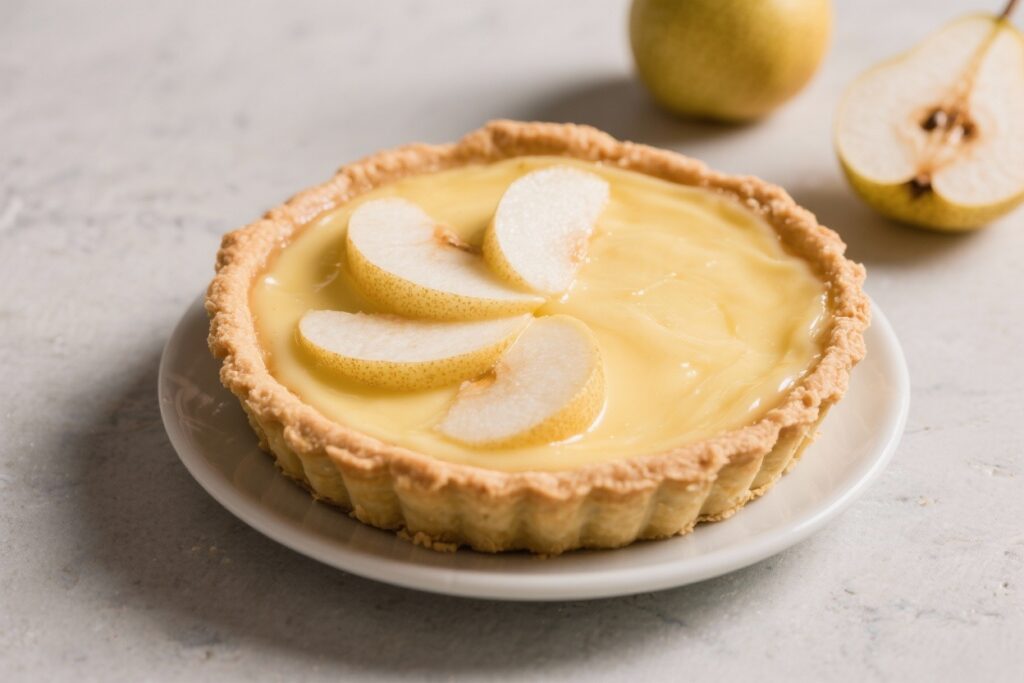
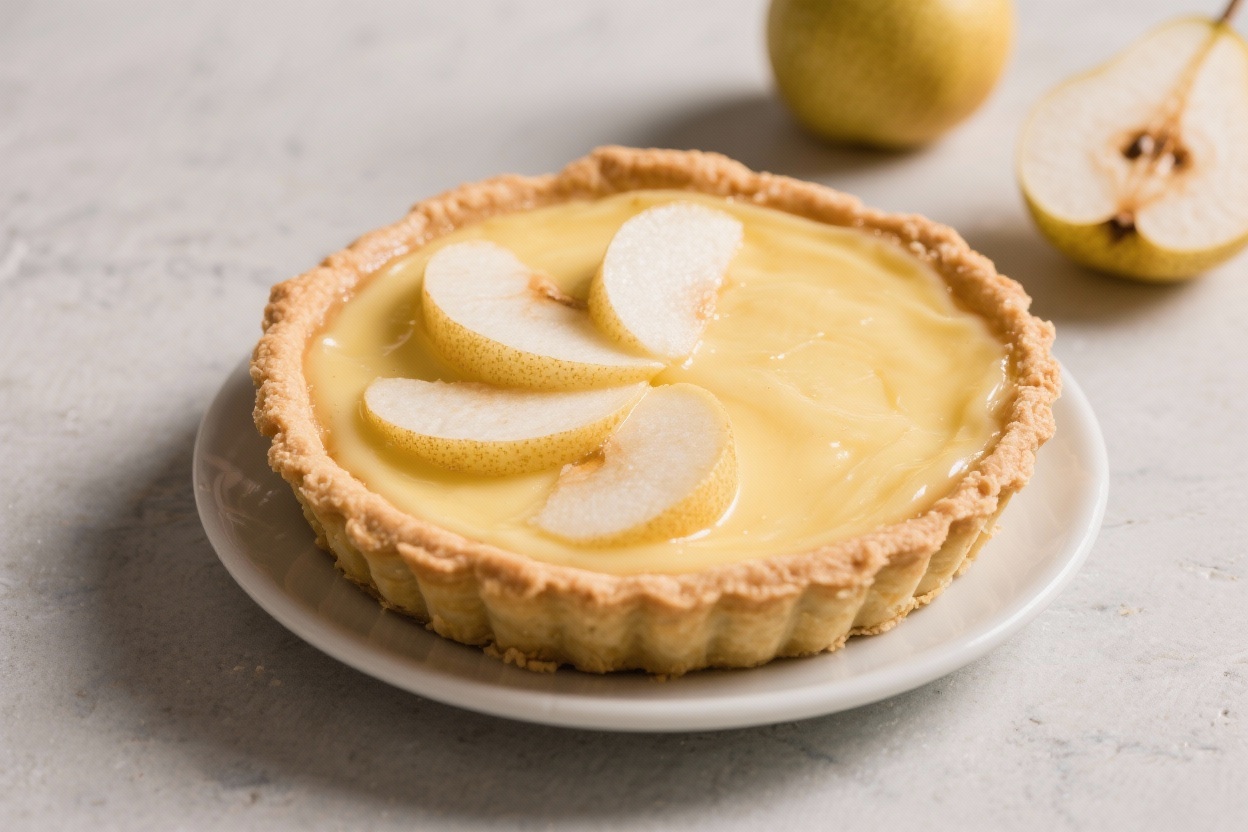
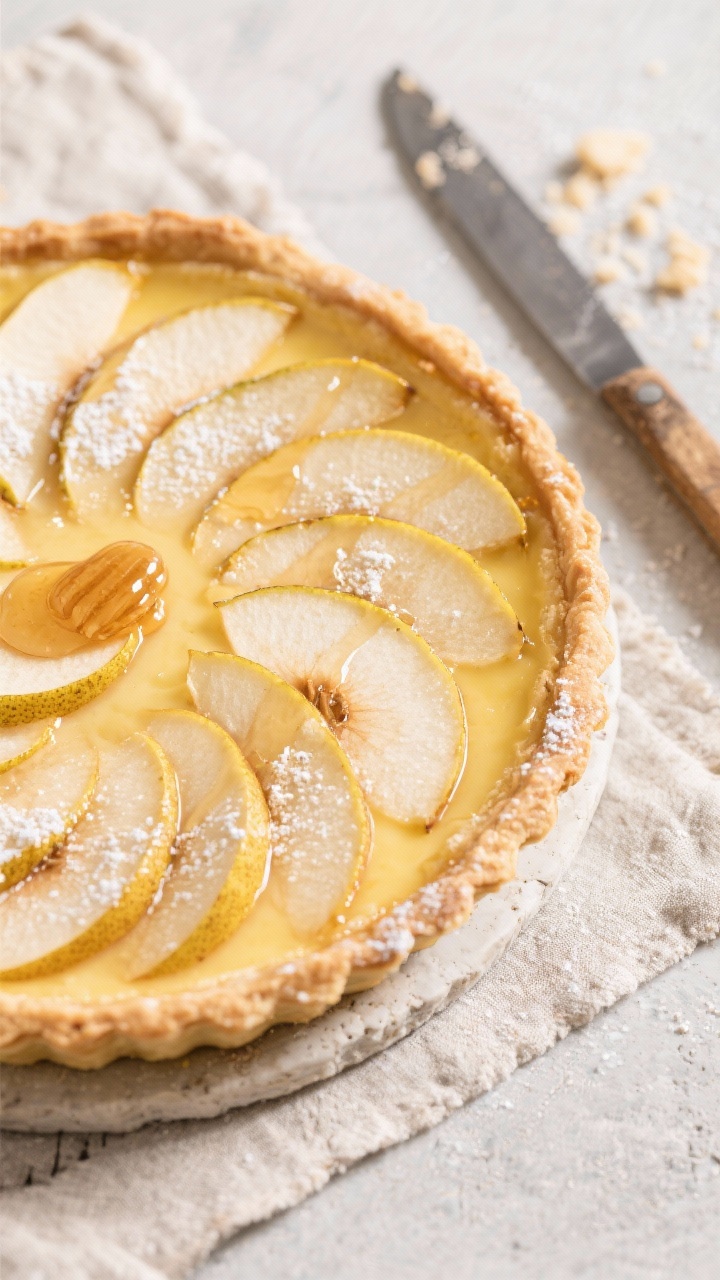
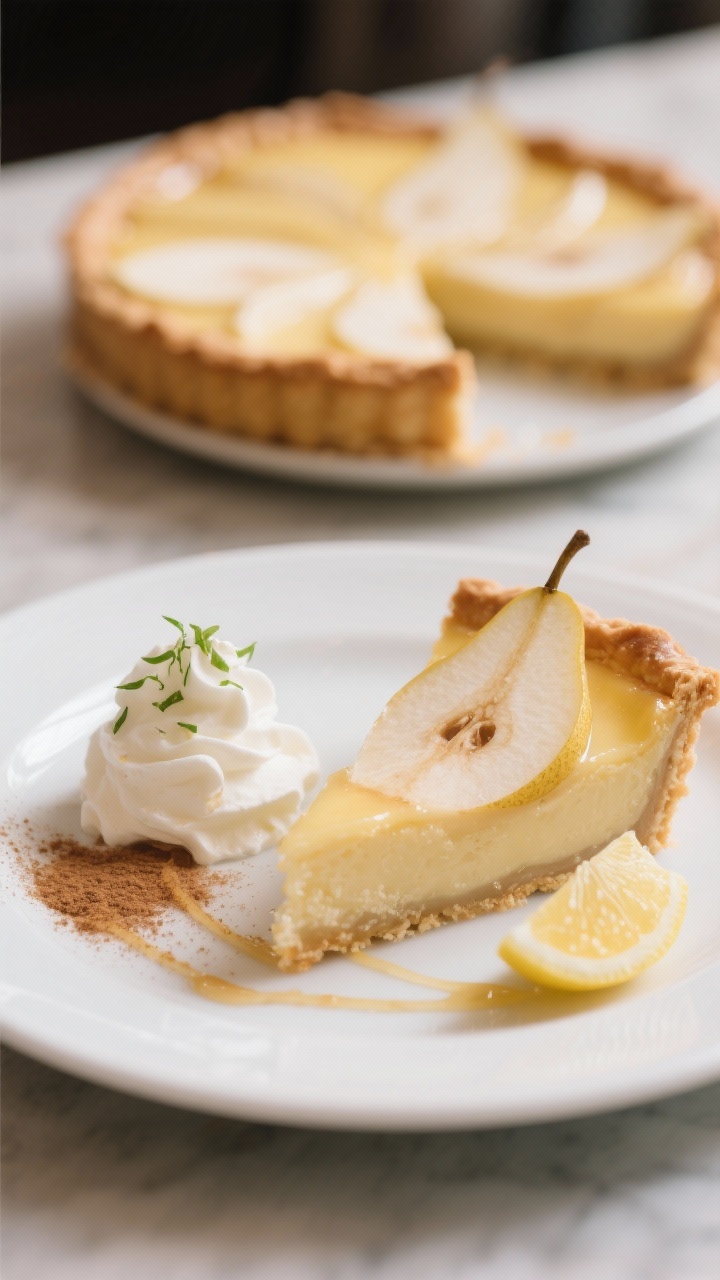
Pear custard pie is the kind of dessert that feels cozy yet elegant. It’s simple to make, but the results taste like something from a charming café. Sweet, ripe pears sit in a creamy vanilla custard, all nestled in a tender, buttery crust.
The flavors are gentle and balanced, and the texture is silky with soft, juicy fruit. If you love fruit-forward desserts that aren’t too heavy, this pie is a winner for any season.
Ingredients
Method
-
Preheat and prep: Heat your oven to 375°F (190°C). Place a baking sheet on the middle rack to preheat; it helps crisp the crust.
-
Prepare the crust: Fit the pie dough into a 9-inch pie dish. Trim and crimp the edges.
Prick the bottom with a fork, then chill for 15 minutes.
-
Blind-bake the crust: Line the crust with parchment and fill with pie weights or dried beans. Bake for 15 minutes. Remove weights and parchment, and bake 5–7 minutes more until lightly golden.
Set aside to cool slightly.
-
Prep the pears: Peel, core, and slice pears about 1/4-inch thick. Toss gently with lemon juice. If using, brush with melted butter for extra richness.
-
Make the custard: In a bowl, whisk eggs and sugar until smooth.
Add cream, flour, vanilla, cinnamon, nutmeg, and salt. Whisk until no lumps remain.
-
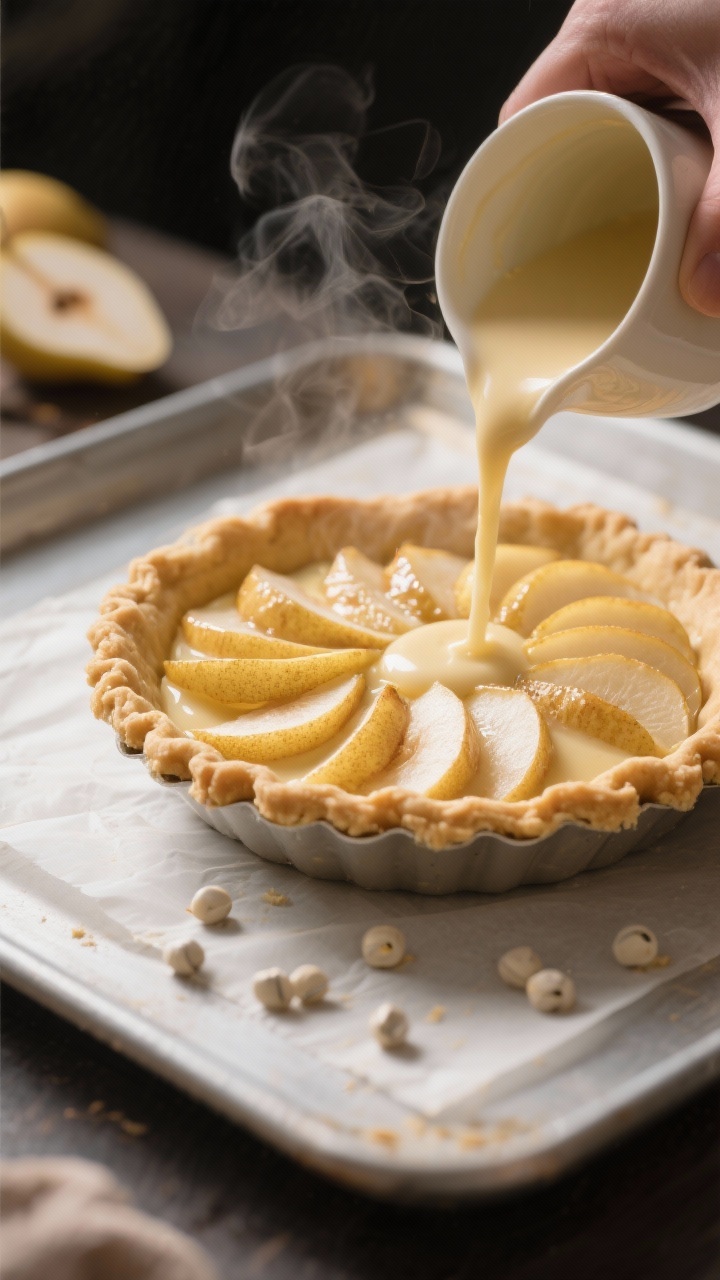
Assemble the pie: Arrange pear slices evenly in the pre-baked crust. Pour the custard over the pears, letting it settle into the gaps.
Don’t overfill; leave a little space at the rim.
-
Bake: Place the pie on the preheated baking sheet. Bake for 35–45 minutes, until the custard is set around the edges and slightly wobbly in the center. If the crust browns too quickly, tent the edges with foil.
-
Cool and set: Let the pie cool on a rack for at least 1 hour.
For the cleanest slices, chill in the fridge for another 2 hours.
-
Serve: Enjoy at room temperature or chilled. Add a dollop of whipped cream or a light drizzle of honey if you like.
Why This Recipe Works
- Pears stay tender without falling apart: Slightly firm, ripe pears soften perfectly as they bake, keeping their shape and sweetness.
- Custard sets smooth and creamy: A mix of eggs, cream, and a touch of flour thickens just enough to hold slices without being dense.
- Balanced sweetness: The pie isn’t overly sugary. It lets the natural flavor of the pears shine.
- Make-ahead friendly: The pie tastes even better after it cools and chills, making it a great option for gatherings.
- Simple technique: No need for complicated steps.
A blind-baked crust and a straightforward custard are all you need.
Ingredients
- 1 9-inch pie crust, homemade or store-bought, chilled
- 3–4 ripe but firm pears (Bartlett, Bosc, or Anjou), peeled, cored, and sliced
- 2 large eggs
- 3/4 cup granulated sugar
- 1 cup heavy cream (or half-and-half for a lighter texture)
- 2 tablespoons all-purpose flour
- 1 teaspoon pure vanilla extract
- 1/4 teaspoon ground cinnamon (optional, but lovely with pears)
- 1/8 teaspoon ground nutmeg (optional)
- Pinch of salt
- 1 tablespoon unsalted butter, melted (optional, for brushing pears)
- 1–2 teaspoons lemon juice (to prevent pears from browning)
Step-by-Step Instructions
- Preheat and prep: Heat your oven to 375°F (190°C). Place a baking sheet on the middle rack to preheat; it helps crisp the crust.
- Prepare the crust: Fit the pie dough into a 9-inch pie dish. Trim and crimp the edges.
Prick the bottom with a fork, then chill for 15 minutes.
- Blind-bake the crust: Line the crust with parchment and fill with pie weights or dried beans. Bake for 15 minutes. Remove weights and parchment, and bake 5–7 minutes more until lightly golden.
Set aside to cool slightly.
- Prep the pears: Peel, core, and slice pears about 1/4-inch thick. Toss gently with lemon juice. If using, brush with melted butter for extra richness.
- Make the custard: In a bowl, whisk eggs and sugar until smooth.
Add cream, flour, vanilla, cinnamon, nutmeg, and salt. Whisk until no lumps remain.
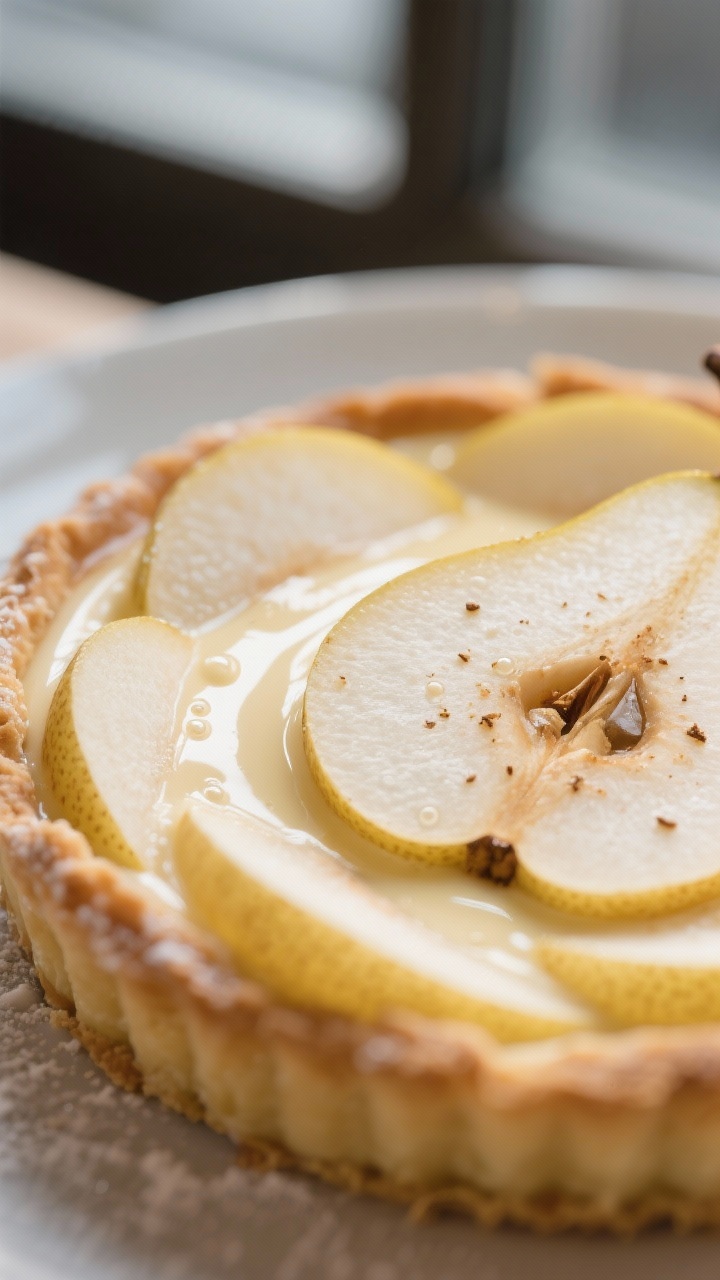
- Assemble the pie: Arrange pear slices evenly in the pre-baked crust. Pour the custard over the pears, letting it settle into the gaps.
Don’t overfill; leave a little space at the rim.
- Bake: Place the pie on the preheated baking sheet. Bake for 35–45 minutes, until the custard is set around the edges and slightly wobbly in the center. If the crust browns too quickly, tent the edges with foil.
- Cool and set: Let the pie cool on a rack for at least 1 hour.
For the cleanest slices, chill in the fridge for another 2 hours.
- Serve: Enjoy at room temperature or chilled. Add a dollop of whipped cream or a light drizzle of honey if you like.
Storage Instructions
- Refrigerate: Cover the cooled pie and store in the fridge for up to 3 days.
- Freeze: Wrap slices tightly in plastic, then foil. Freeze up to 2 months.
Thaw overnight in the fridge.
- Reheat: Warm slices at 300°F (150°C) for 10–12 minutes, or enjoy cold. Avoid microwaving for too long, as it can make the custard watery.
Health Benefits
- Fiber from pears: Pears offer soluble fiber, which supports digestion and helps keep you satisfied.
- Calcium and protein: The dairy in the custard adds calcium and a bit of protein for a more balanced dessert.
- Moderate sugar levels: The recipe keeps sugar reasonable, relying on the fruit’s natural sweetness.
- Customizable richness: Using half-and-half instead of heavy cream lowers saturated fat without sacrificing too much creaminess.
Common Mistakes to Avoid
- Using overripe pears: Very soft pears can turn mushy. Choose pears that give slightly when pressed but still feel firm.
- Skipping the blind bake: If the crust isn’t pre-baked, it can turn soggy under the custard.
- Overfilling the crust: Leave a small margin at the top to prevent spills and uneven baking.
- Overbaking the custard: Bake until the center has a slight jiggle.
Overbaking can cause a rubbery texture and cracks.
- Cutting too soon: Let the pie cool and set. Slicing early will make the custard run.
Variations You Can Try
- Almond twist: Add 1/2 teaspoon almond extract to the custard and sprinkle sliced almonds on top before baking.
- Spiced pear: Swap cinnamon and nutmeg for cardamom and a pinch of ginger for a warm, aromatic flavor.
- Maple custard: Replace 1/4 cup of the sugar with pure maple syrup and reduce the cream by 2 tablespoons.
- Oat crumble top: Mix oats, brown sugar, flour, and butter into a quick crumble. Sprinkle lightly over the pears before pouring the custard.
- Gluten-free: Use a gluten-free crust and swap the flour in the custard for cornstarch (1 tablespoon).
- Dairy-light: Use half-and-half or a barista-style oat creamer.
The texture will be slightly looser but still delicious.
FAQ
What kind of pears are best for this pie?
Bartlett, Bosc, or Anjou pears work well. Choose pears that are ripe but still firm, with a little give at the stem. Overripe pears can turn mushy during baking.
Do I have to peel the pears?
Peeling is recommended for a smooth texture, but you can leave the skins on if you prefer a rustic look and extra fiber.
The skins will soften but remain slightly chewy.
Can I make this pie a day ahead?
Yes. In fact, the flavor improves after chilling. Bake, cool, and refrigerate overnight.
Serve cold or bring to room temperature before slicing.
How do I know when the custard is set?
The edges will look firm, and the middle will have a gentle wobble when you jiggle the pan. It will continue to set as it cools.
Can I use a store-bought crust?
Absolutely. A quality store-bought crust saves time and still delivers great results.
Just be sure to blind-bake it.
What can I use instead of heavy cream?
Half-and-half works well. For a lighter option, try whole milk with 1 additional tablespoon of flour, though the custard will be softer.
Why did my crust get soggy?
Most often, it wasn’t blind-baked long enough, or the custard sat too long in the unbaked shell. Pre-bake until lightly golden and assemble right before baking.
Wrapping Up
Pear custard pie is simple, soothing, and elegant all at once.
With ripe pears, a silky custard, and a crisp crust, it’s a dessert that feels special without a lot of fuss. Keep these tips in mind, choose good fruit, and let the oven do the rest. Serve it after dinner or with afternoon coffee, and watch it disappear slice by slice.

Printable Recipe Card
Want just the essential recipe details without scrolling through the article? Get our printable recipe card with just the ingredients and instructions.