

A good pie crust is the difference between a decent pie and one you can’t stop thinking about. This version is tender, flaky, and dependable, whether you’re filling it with apples, pumpkin, or chicken pot pie. You don’t need special equipment or fancy techniques—just cold ingredients and a light touch.
If pie crust has ever intimidated you, this method will change that. It’s simple, forgiving, and tastes like the real deal.

Pie Crust – A Flaky, Reliable Base for Sweet or Savory Pies
Ingredients
Method
-
Prepare your cold setup. Cut the butter into small cubes and chill it.
Measure the shortening and chill that too. Fill a cup with ice water and let it get very cold.
-
Mix the dry ingredients. In a large bowl, whisk together flour, sugar, and salt. This distributes everything evenly so you don’t get salty pockets.
-
Cut in the fats. Add the cold butter and shortening to the flour.
Using a pastry cutter or your fingertips, work them in until you have a mix of pea-sized pieces and flat flakes. Those visible bits of fat are what create flakiness.
-
Add liquid gradually. Stir the vinegar or lemon juice into the ice water. Sprinkle 6 tablespoons over the flour mixture and toss with a fork.
Add more, a tablespoon at a time, just until the dough holds together when you squeeze it. It should look shaggy, not wet or sticky.
-
Bring it together gently. Turn the mixture onto a counter and press it into a rough mass. Use the “frasage” method: with the heel of your hand, smear portions of dough forward once or twice to blend.
Don’t overwork it.
-
Divide and rest. Split the dough into two discs (for a double crust) or keep as one larger disc for a slab pie. Wrap tightly in plastic. Chill at least 1 hour and up to 2 days.
Resting prevents shrinkage and makes rolling easier.
-
Roll the dough. Lightly flour your surface and rolling pin. Roll from the center out, rotating the dough a quarter turn after every few passes. Keep it even, about 1/8 inch thick.
If it sticks, add a dusting of flour and keep the dough cool.
-
Fit the pan. Gently lift the dough into a 9-inch pie dish. Let it slump into the corners—don’t stretch it. Trim excess, leaving a 1-inch overhang.
Fold under and crimp the edges.
-
Chill again. Pop the lined pie pan into the fridge or freezer for 15–20 minutes. Cold dough holds its shape better in the oven.
-
Blind bake (if needed). For custard or cream pies, line the chilled crust with parchment and fill with pie weights or dried beans. Bake at 400°F (200°C) for 15–20 minutes, remove weights, and bake 8–12 more minutes until lightly golden.
Cool before filling.
-
For a double-crust pie. Add your filling to the chilled bottom crust. Roll the second disc, place on top, trim, and crimp. Cut vents or use a lattice.
Brush with egg wash (1 egg beaten with 1 tablespoon milk) for shine, and sprinkle sugar if making a sweet pie.
-
Bake. Bake according to your pie’s recipe, usually starting at 400–425°F (200–220°C) for the first 20 minutes, then lowering to 350–375°F (175–190°C). Tent edges with foil if they brown too fast.
Why This Recipe Works
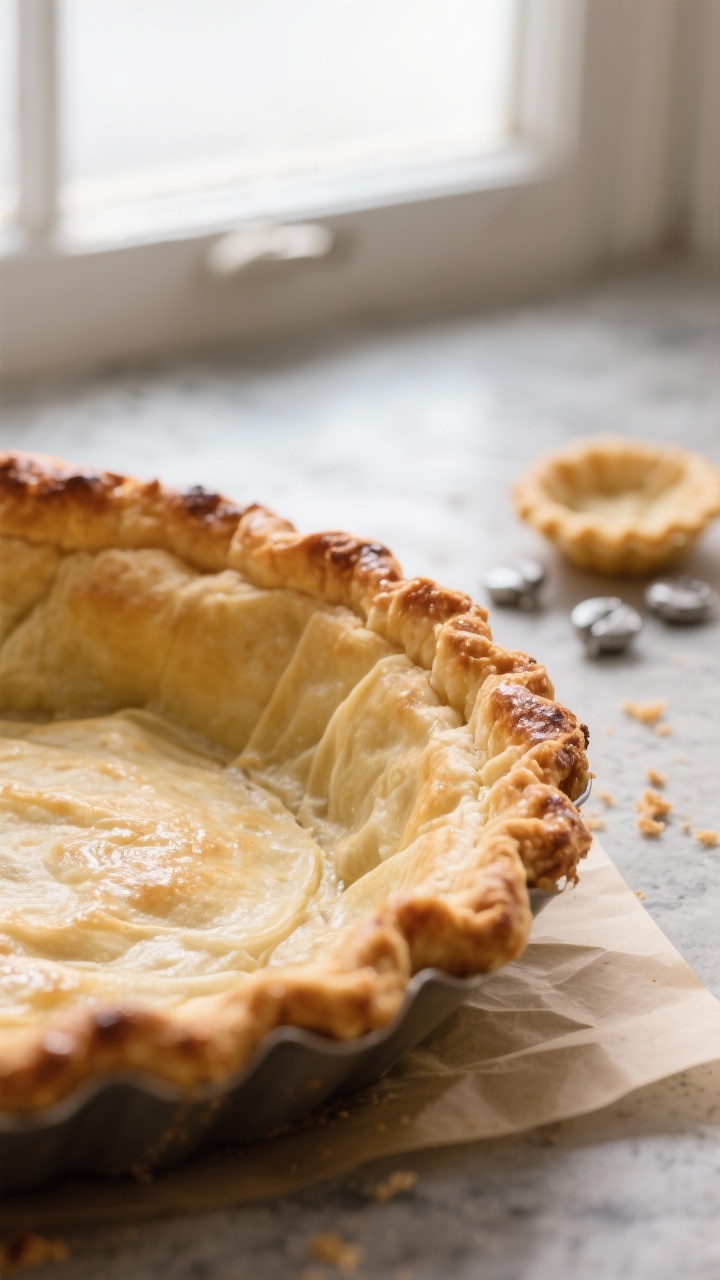
This recipe balances flavor, structure, and flakiness with a few smart choices. A mix of butter and a touch of shortening gives you the best of both worlds: buttery taste and reliable tenderness.
Keeping everything very cold prevents the fat from melting too soon, so it forms flaky layers in the oven. A spoonful of sugar helps with browning and flavor, and a little acid (like vinegar or lemon juice) keeps the dough relaxed and easier to roll. Finally, resting the dough lets the gluten calm down, so the crust doesn’t shrink.
Shopping List
- All-purpose flour (2 1/2 cups)
- Unsalted butter, cold and cubed (1 cup/2 sticks)
- Vegetable shortening, cold (1/4 cup)
- Granulated sugar (1 tablespoon)
- Kosher salt (1 teaspoon)
- Ice water (6–10 tablespoons, as needed)
- Apple cider vinegar or lemon juice (1 teaspoon)
- Egg (optional, for egg wash)
- Milk or cream (optional, for egg wash)
How to Make It

- Prepare your cold setup. Cut the butter into small cubes and chill it.
Measure the shortening and chill that too. Fill a cup with ice water and let it get very cold.
- Mix the dry ingredients. In a large bowl, whisk together flour, sugar, and salt. This distributes everything evenly so you don’t get salty pockets.
- Cut in the fats. Add the cold butter and shortening to the flour.
Using a pastry cutter or your fingertips, work them in until you have a mix of pea-sized pieces and flat flakes. Those visible bits of fat are what create flakiness.
- Add liquid gradually. Stir the vinegar or lemon juice into the ice water. Sprinkle 6 tablespoons over the flour mixture and toss with a fork.
Add more, a tablespoon at a time, just until the dough holds together when you squeeze it. It should look shaggy, not wet or sticky.
- Bring it together gently. Turn the mixture onto a counter and press it into a rough mass. Use the “frasage” method: with the heel of your hand, smear portions of dough forward once or twice to blend.
Don’t overwork it.
- Divide and rest. Split the dough into two discs (for a double crust) or keep as one larger disc for a slab pie. Wrap tightly in plastic. Chill at least 1 hour and up to 2 days.
Resting prevents shrinkage and makes rolling easier.
- Roll the dough. Lightly flour your surface and rolling pin. Roll from the center out, rotating the dough a quarter turn after every few passes. Keep it even, about 1/8 inch thick.
If it sticks, add a dusting of flour and keep the dough cool.
- Fit the pan. Gently lift the dough into a 9-inch pie dish. Let it slump into the corners—don’t stretch it. Trim excess, leaving a 1-inch overhang.
Fold under and crimp the edges.
- Chill again. Pop the lined pie pan into the fridge or freezer for 15–20 minutes. Cold dough holds its shape better in the oven.
- Blind bake (if needed). For custard or cream pies, line the chilled crust with parchment and fill with pie weights or dried beans. Bake at 400°F (200°C) for 15–20 minutes, remove weights, and bake 8–12 more minutes until lightly golden.
Cool before filling.
- For a double-crust pie. Add your filling to the chilled bottom crust. Roll the second disc, place on top, trim, and crimp. Cut vents or use a lattice.
Brush with egg wash (1 egg beaten with 1 tablespoon milk) for shine, and sprinkle sugar if making a sweet pie.
- Bake. Bake according to your pie’s recipe, usually starting at 400–425°F (200–220°C) for the first 20 minutes, then lowering to 350–375°F (175–190°C). Tent edges with foil if they brown too fast.
How to Store
- Unbaked dough: Wrap discs tightly and refrigerate up to 2 days or freeze up to 3 months. Thaw overnight in the fridge.
- Unbaked crust in pan: Freeze on a sheet tray until firm, then wrap well.
Bake from frozen, adding a few extra minutes.
- Blind-baked shell: Once cool, wrap and store at room temperature for 1 day or in the fridge for 3 days. For best crispness, refresh in a 350°F (175°C) oven for 5–8 minutes before filling.
- Leftover baked pie: Cover and refrigerate 3–4 days. Re-crisp slices in a 350°F (175°C) oven for 10 minutes.

Why This is Good for You
No, pie crust isn’t a superfood.
But making it yourself has real benefits. You use simple, recognizable ingredients—no additives or hidden oils. Butter provides rich flavor and satisfaction, which can help you enjoy a smaller portion and feel content.
And cooking skills matter: mastering a basic crust builds confidence and opens the door to homemade meals, not just desserts.
Common Mistakes to Avoid
- Warm ingredients. If the fat softens, you lose flakiness. Keep butter, shortening, and water cold. Chill your bowl if your kitchen is warm.
- Overworking the dough. Too much kneading makes it tough.
Mix just until it holds together.
- Adding too much water. The dough should be slightly dry and shaggy. It will hydrate as it rests.
- Stretching the dough in the pan. Stretching makes it spring back and shrink. Lift and settle it gently.
- Skipping the rest. Resting relaxes gluten and hydrates flour.
It’s key for tenderness and easy rolling.
- Underbaking. Pale crusts are soggy. Bake until the bottom is golden and set, and the edges are fully browned.
Recipe Variations
- All-butter crust: Skip the shortening and use 1 1/4 cups butter. Flavor is top-notch; keep it extra cold to maintain structure.
- Vegan crust: Use all-vegetable shortening or a firm plant butter.
Check salt levels; some vegan butters are salted.
- Whole wheat blend: Swap 1 cup of the flour for white whole wheat. Add 1 extra tablespoon of water if needed.
- Cheddar crust: Add 1 cup finely shredded sharp cheddar to the dry ingredients. Great for apple pie or savory fillings.
- Herb and pepper crust: Mix in 1 teaspoon dried thyme or rosemary and 1/2 teaspoon black pepper for pot pies and quiches.
- Vodka crust: Replace 2–3 tablespoons of water with vodka.
It moistens the dough but evaporates quickly, limiting gluten formation for extra tenderness.
- Gluten-free crust: Use a 1:1 gluten-free flour blend and add 1/2 teaspoon xanthan gum if your blend doesn’t include it. Handle gently and chill well.
FAQ
How do I keep the bottom crust from getting soggy?
Blind bake for custard and cream pies, and brush the warm crust with a thin layer of egg white to create a seal. For fruit pies, sprinkle a little flour, cornstarch, or finely ground nuts over the bottom before filling.
Baking on a preheated sheet pan also helps set the bottom quickly.
Can I make pie crust in a food processor?
Yes. Pulse the dry ingredients, add cold fats, and pulse until pea-sized. Drizzle in cold water just until it clumps when pressed.
Stop before it forms a ball in the machine. Turn it out and bring it together by hand.
What if my dough cracks when I roll it?
That usually means it’s too cold or slightly dry. Let it sit at room temperature for 5 minutes and try again.
Patch cracks with a bit of extra dough and press gently to seal.
How thick should I roll the crust?
Aim for about 1/8 inch. Too thin and it tears; too thick and it can taste heavy. Consistent thickness ensures even baking.
Do I need pie weights?
They help keep the crust flat during blind baking.
If you don’t have weights, use dried beans, rice, or sugar. Line with parchment first so nothing sticks.
Why add vinegar or lemon juice?
A small amount of acid weakens gluten development, making the dough more tender and easier to roll. You won’t taste it in the final crust.
Can I freeze a fully assembled fruit pie?
Yes.
Assemble the pie in a metal pan, freeze until solid, wrap well, and bake from frozen. Add 15–25 minutes to the baking time and shield the edges as needed.
Final Thoughts
A great pie crust isn’t about perfection—it’s about cold ingredients, light handling, and a little patience. With this method, you’ll get a crust that’s flaky, flavorful, and sturdy enough to hold any filling.
Keep a few discs in the freezer, and pie night becomes easy. Once you master the basics, you can riff with herbs, cheese, or whole grains and make it your own.


Printable Recipe Card
Want just the essential recipe details without scrolling through the article? Get our printable recipe card with just the ingredients and instructions.