
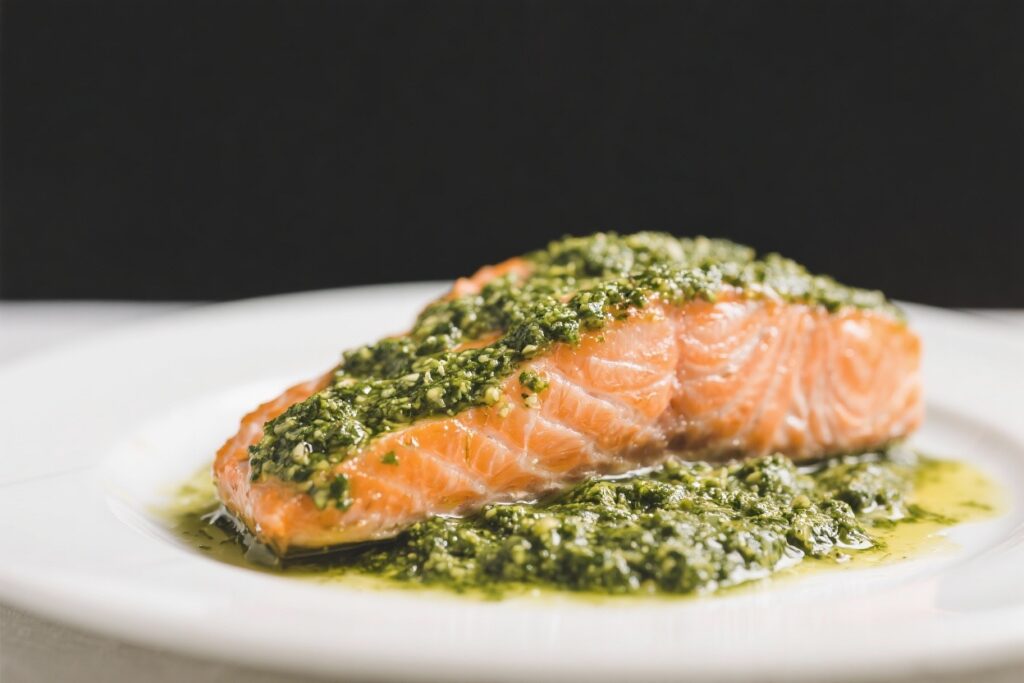
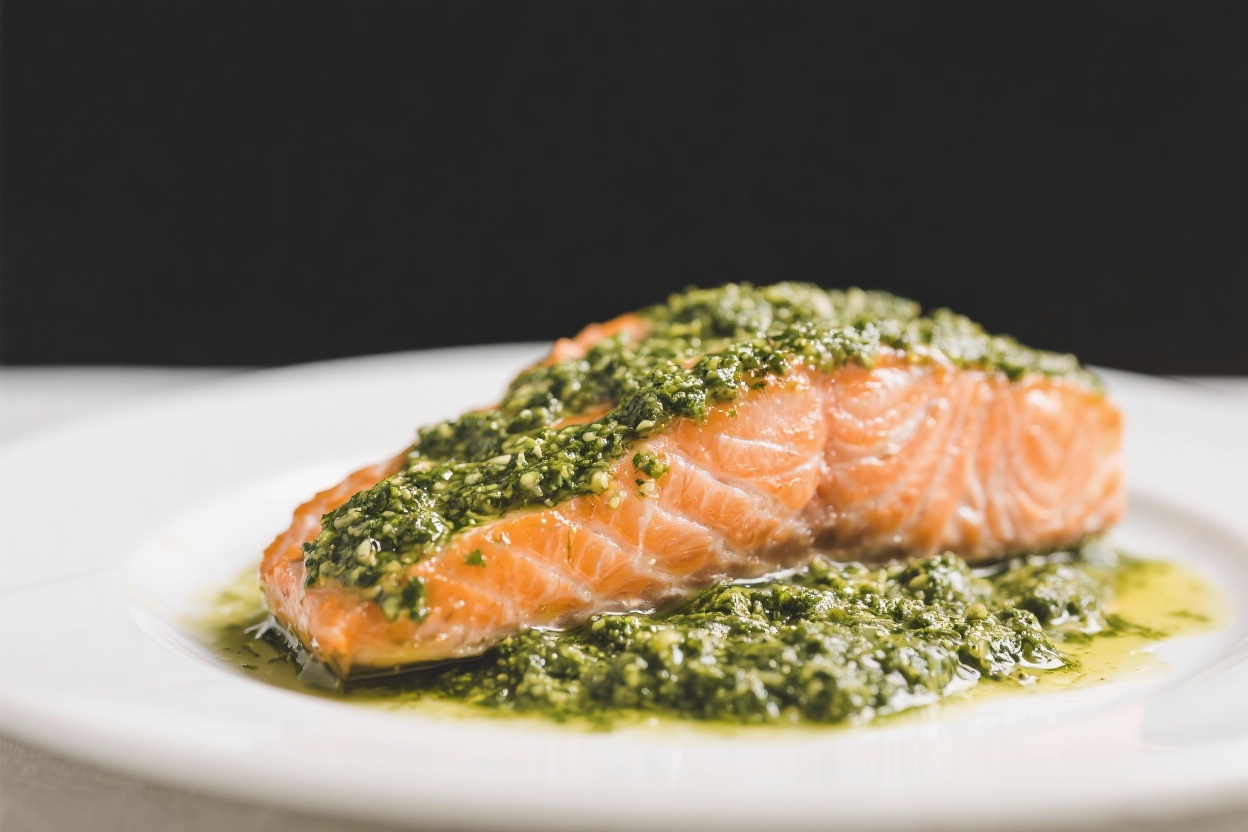
Salmon and pesto are a natural pairing: rich, buttery fish meets a bright, garlicky herb sauce. This dish looks impressive, tastes restaurant-level, and still comes together fast. You can bake it, pan-sear it, or air-fry it, and it works with fresh or store-bought pesto.
Whether you’re cooking for one or feeding a family, this is the kind of recipe that makes dinner feel easy and satisfying.
Ingredients
Method
-
Preheat the oven: Set the oven to 400°F (200°C). Line a sheet pan with parchment for easy cleanup.
-
Prep the salmon: Pat the fillets dry with paper towels. Dry fish sears and roasts better.
Season both sides with salt and pepper.
-
Add pesto: Spread 2 to 3 teaspoons of pesto over the top of each fillet. Don’t bury the fish—just a thin, even layer to coat.
-
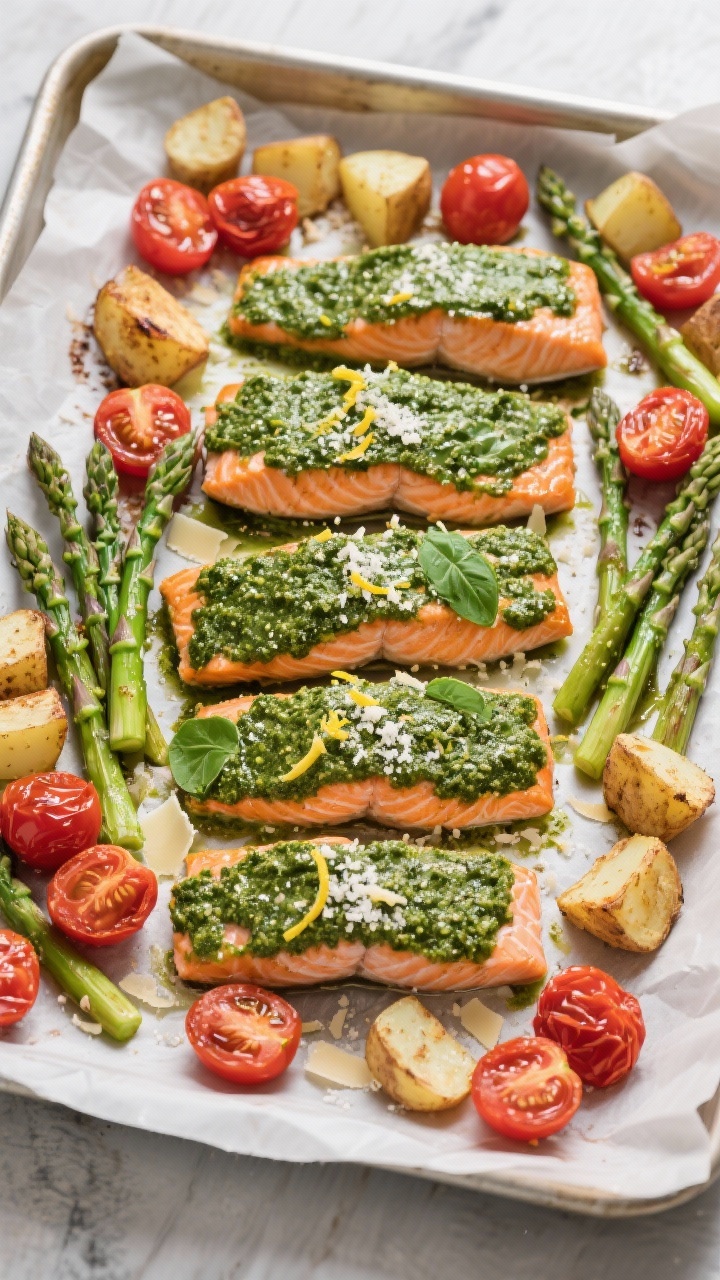
Optional veggies: If using cherry tomatoes or asparagus, toss them with a drizzle of olive oil, salt, and pepper. Scatter them around the salmon on the pan.
-
Roast: Bake for 9–12 minutes, depending on thickness.
Salmon is done when it flakes easily and reaches an internal temperature of about 125–130°F for medium.
-
Finish: Zest the lemon over the hot salmon. Add a squeeze of lemon juice and a light sprinkle of Parmesan, if you like.
-
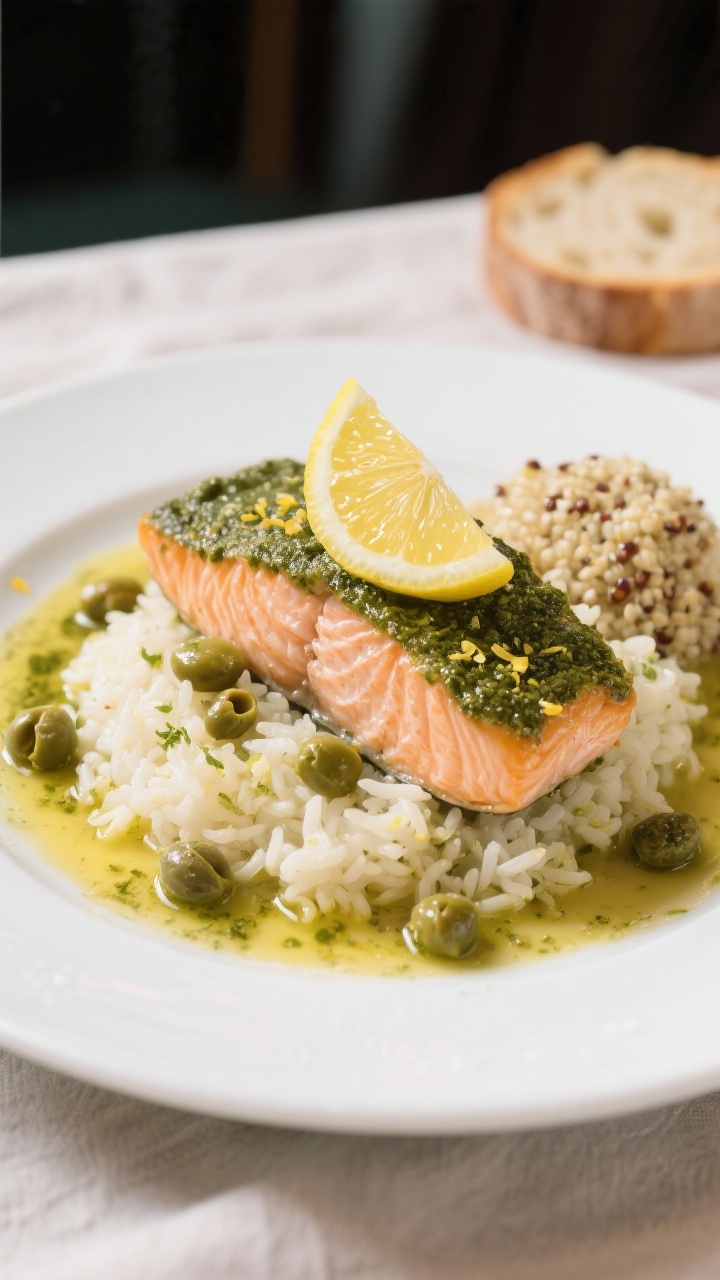
Serve: Plate with rice, quinoa, or bread to soak up the juices. Spoon any pan juices over the top for extra flavor.
What Makes This Special
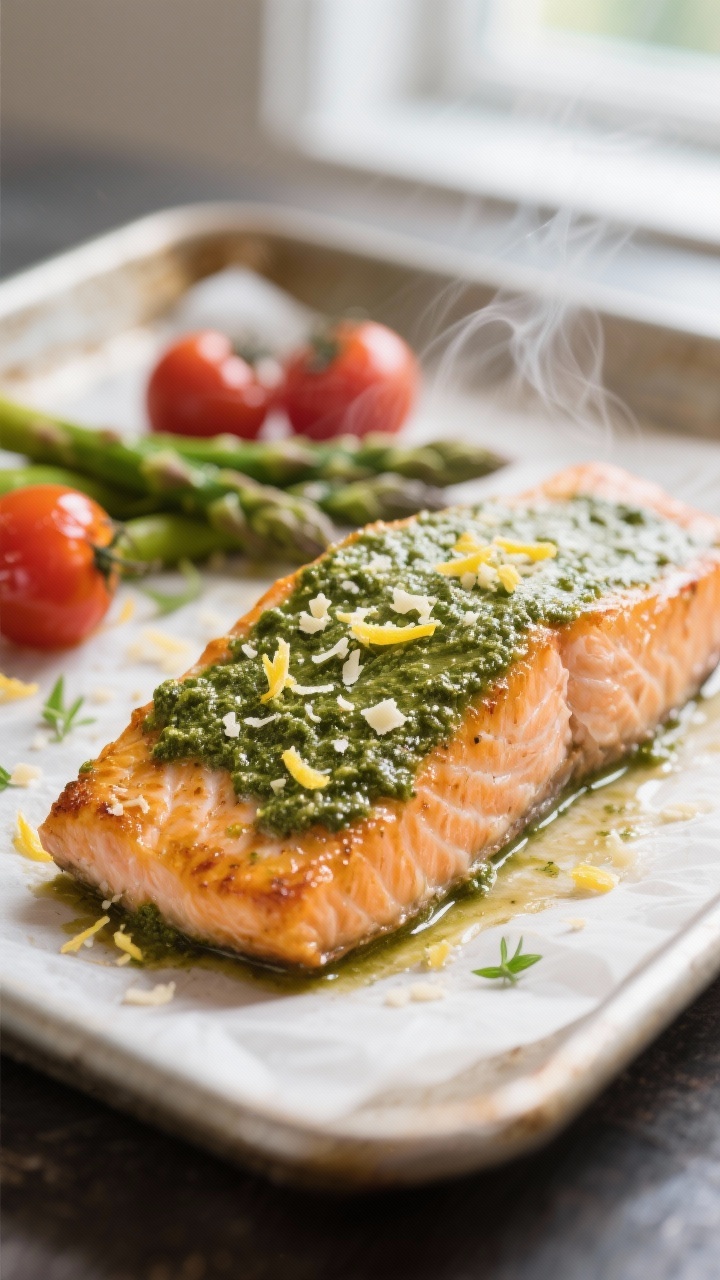
Pesto salmon is all about balance: the fat in salmon carries the fresh flavors of basil, garlic, and lemon, while a quick roast keeps the fish tender and moist. It’s flexible, too—use homemade pesto if you want, or grab a good jar from the store. You can keep it simple with just salmon and pesto, or add tomatoes, asparagus, or potatoes to the pan for a full meal.
Best of all, it’s ready in under 25 minutes with minimal cleanup.
Ingredients
- 4 salmon fillets (about 6 ounces each), skin-on or skinless
- 1/2 to 3/4 cup pesto (homemade or store-bought)
- 1 tablespoon olive oil (optional, for searing or roasting)
- 1 lemon, zested and cut into wedges
- Salt and black pepper, to taste
- 2 tablespoons grated Parmesan (optional, for finishing)
- Cherry tomatoes or asparagus (optional, for roasting on the side)
- Cooked rice, quinoa, or crusty bread (optional, for serving)
How to Make It
- Preheat the oven: Set the oven to 400°F (200°C). Line a sheet pan with parchment for easy cleanup.
- Prep the salmon: Pat the fillets dry with paper towels. Dry fish sears and roasts better.
Season both sides with salt and pepper.
- Add pesto: Spread 2 to 3 teaspoons of pesto over the top of each fillet. Don’t bury the fish—just a thin, even layer to coat.
- Optional veggies: If using cherry tomatoes or asparagus, toss them with a drizzle of olive oil, salt, and pepper. Scatter them around the salmon on the pan.
- Roast: Bake for 9–12 minutes, depending on thickness.
Salmon is done when it flakes easily and reaches an internal temperature of about 125–130°F for medium.
- Finish: Zest the lemon over the hot salmon. Add a squeeze of lemon juice and a light sprinkle of Parmesan, if you like.
- Serve: Plate with rice, quinoa, or bread to soak up the juices. Spoon any pan juices over the top for extra flavor.
Storage Instructions
- Refrigerate: Store leftovers in an airtight container for up to 3 days.
- Reheat gently: Warm in a 275°F (135°C) oven for 8–10 minutes, or in a skillet over low heat with a splash of water.
Avoid microwaving on high, which can dry the fish.
- Meal prep: Flake leftover salmon over salads, pasta, or grain bowls. Add a spoon of fresh pesto when serving to revive flavor.
- Freezing: Cooked salmon can be frozen for up to 2 months. Thaw in the fridge overnight and reheat gently.
Health Benefits
- Rich in omega-3s: Salmon provides heart-healthy fats that support brain and cardiovascular health.
- High-quality protein: Each fillet delivers a satisfying dose of protein to keep you full and energized.
- Herb-powered pesto: Basil offers antioxidants, while garlic may support immune and heart health.
- Customizable nutrition: Add veggies like tomatoes, asparagus, or zucchini for fiber and vitamins without extra effort.
Common Mistakes to Avoid
- Using too much pesto: A thick layer can burn or make the fish greasy.
Thin, even coverage is best.
- Skipping the pat-dry step: Moisture on the surface prevents good browning and can steam the fish.
- Overcooking: Salmon goes from tender to dry quickly. Check early at the 9-minute mark.
- Not seasoning the fish: Pesto is flavorful, but a little salt and pepper on the salmon makes a big difference.
- Cold salmon in a hot oven: If the fillets are very cold, cook time can be uneven. Let them sit at room temp for 10–15 minutes before cooking.
Variations You Can Try
- Air-fryer pesto salmon: Cook at 390°F (200°C) for 7–10 minutes.
Great for 1–2 fillets.
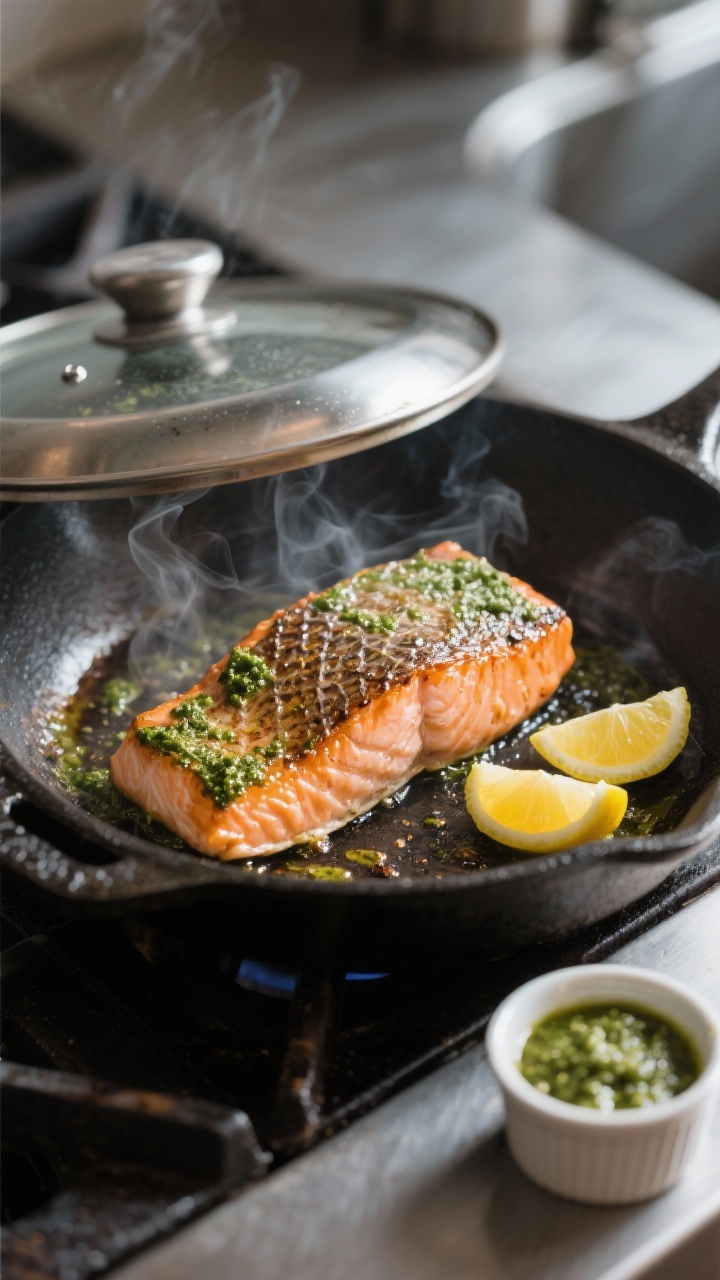
- Skillet-seared: Sear skin-side down in a hot, lightly oiled pan for 4–5 minutes. Flip, spread pesto, and cook 2–3 minutes more off heat under a lid.
- Panko-parmesan crust: Mix 1/3 cup panko with 2 tablespoons Parmesan and 1 tablespoon olive oil. Sprinkle over the pesto before baking for a crispy top.
- Sun-dried tomato pesto: Swap basil pesto for sun-dried tomato pesto for a deeper, slightly sweet flavor.
- Pesto cream sauce: Stir 2 tablespoons pesto into 1/2 cup warm cream or half-and-half.
Drizzle over cooked salmon.
- Sheet-pan dinner: Add cubed potatoes (pre-roasted 10 minutes), asparagus, and tomatoes for a one-pan meal.
- Lemon-caper finish: Scatter chopped capers and extra lemon zest over the fish for a briny pop.
FAQ
Can I use frozen salmon?
Yes. Thaw it in the refrigerator overnight, then pat it very dry before seasoning. Frozen salmon often holds extra moisture, so drying helps it roast well.
What kind of pesto works best?
Classic basil pesto is perfect.
Look for one with olive oil, Parmesan, pine nuts or walnuts, and real basil. Homemade is great, but a good jarred pesto saves time and still tastes excellent.
Do I need to remove the skin?
No. Skin-on fillets stay juicier and are easier to handle.
After cooking, the skin will separate easily if you prefer not to eat it.
How do I know when the salmon is done?
It should flake easily with a fork and look just opaque in the center. A thermometer should read about 125–130°F for medium. If you like it more done, go to 135°F, but avoid going much higher.
Can I make this dairy-free?
Yes.
Use a dairy-free pesto and skip the Parmesan. The dish still tastes bright and satisfying.
What should I serve with pesto salmon?
It pairs well with lemony rice, roasted potatoes, couscous, or a simple green salad. Grilled asparagus or sautéed zucchini also work nicely.
How much pesto should I use per fillet?
About 2 to 3 teaspoons per 6-ounce fillet.
You want a thin, even coat that won’t overwhelm the fish.
Can I grill pesto salmon?
Yes. Oil the grates well and grill skin-side down over medium heat for 6–8 minutes, spread pesto on top, then finish with the lid closed for 2–3 minutes. Avoid flipping if the fish sticks.
Is this recipe kid-friendly?
Usually, yes.
If your pesto is garlicky or peppery, use a lighter amount or mix with a bit of olive oil to mellow the flavor.
Can I make it ahead?
You can season the fish and keep it refrigerated for up to 12 hours. Add the pesto just before cooking to keep the herbs fresh and vibrant.
In Conclusion
Pesto salmon is a fast, flavorful way to upgrade dinner without extra work. With a few pantry staples and a good piece of fish, you’ll have a meal that tastes bright, fresh, and satisfying.
Keep the technique simple, avoid overcooking, and finish with lemon. It’s an easy recipe you’ll come back to again and again.

Printable Recipe Card
Want just the essential recipe details without scrolling through the article? Get our printable recipe card with just the ingredients and instructions.