

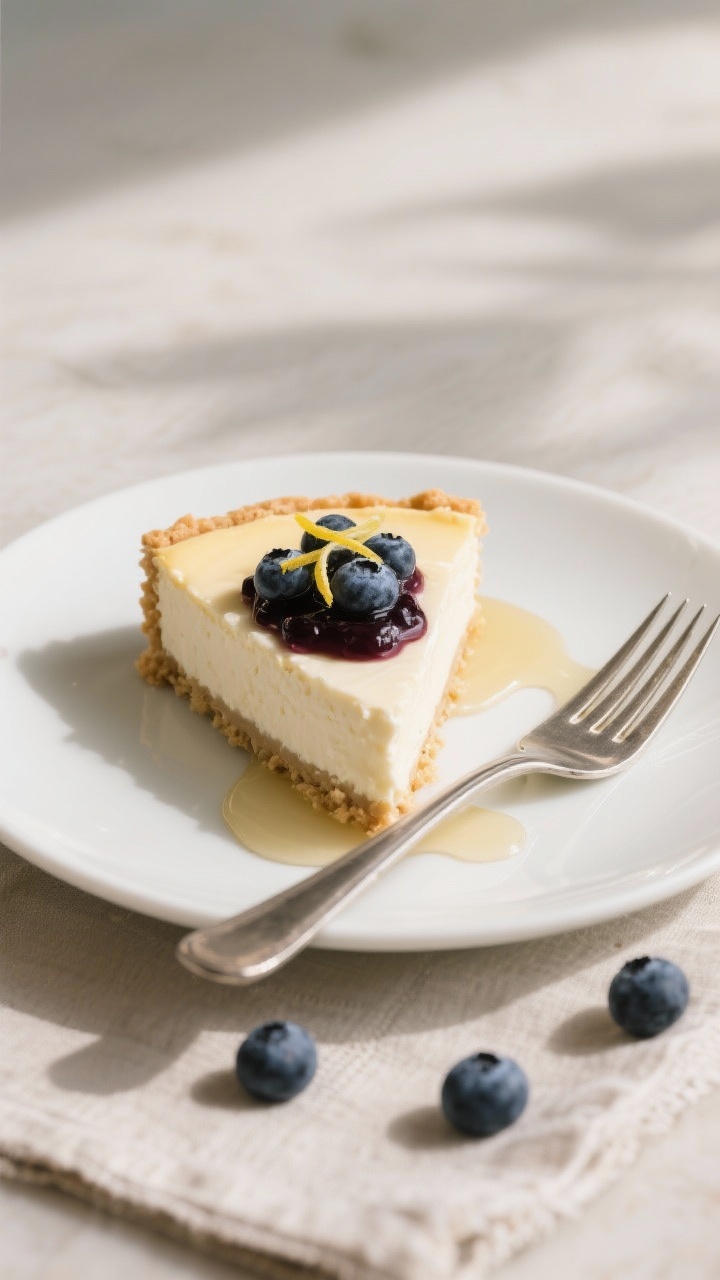
Vanilla ricotta cheesecake is smooth, gently sweet, and wonderfully light. It skips the heaviness of traditional cream cheese cakes and leans into the delicate flavor of vanilla. The texture is creamy with a slight custard-like wobble, and it slices beautifully.
It’s the kind of dessert that feels special but doesn’t ask for complicated steps. If you’re looking for a cheesecake that’s elegant, balanced, and not overly rich, this one fits the bill.

Vanilla Ricotta Cheesecake – Light, Creamy, and Comforting
Ingredients
Method
-
Prep the pan. Line the bottom of a 9-inch springform pan with parchment.
Lightly butter the sides. Wrap the outside with a double layer of foil if using a water bath.
-
Heat the oven. Preheat to 325°F (160°C). Position a rack in the lower-middle of the oven.
-
Make the crust. In a bowl, mix graham cracker crumbs, brown sugar, and melted butter until it feels like damp sand.
Press firmly into the bottom of the pan. Use a flat-bottomed glass to compact. Bake for 8 minutes, then cool while you make the filling.
-
Drain the ricotta. If your ricotta looks wet, place it in a fine-mesh sieve or cheesecloth over a bowl for 15–30 minutes.
This step helps prevent a watery batter.
-
Blend the cheeses. In a large bowl, beat the ricotta until smooth, about 1 minute. Add cream cheese and beat until fully combined and creamy, 1–2 minutes. Scrape the bowl well.
-
Add sugar and flavor. Beat in granulated sugar, vanilla, lemon zest, and salt until silky.
Mix in sour cream and heavy cream (if using).
-
Stabilize the batter. Sprinkle in flour (or cornstarch) and mix just to combine. This helps set the cheesecake without making it dense.
-
Add eggs gently. Beat in the eggs one at a time on low speed. Mix only until each egg disappears.
Overbeating adds air and can cause cracks.
-
Assemble the pan. Pour the filling over the cooled crust. Tap the pan on the counter a few times to release bubbles. Smooth the top with a spatula.
-
Choose your bake method. For the smoothest texture, place the pan in a larger roasting pan.
Pour hot water around it to reach halfway up the sides (water bath). If skipping the bath, place a pan of hot water on a lower rack to add moisture.
-
Bake. Bake at 325°F (160°C) for 55–70 minutes. The edges should be set, and the center should jiggle like Jell-O, not ripple like liquid.
-
Cool slowly. Turn off the oven, crack the door, and let the cheesecake rest inside for 45–60 minutes.
Then move it to a rack. Run a thin knife around the edge to prevent sticking.
-
Chill to set. Cool to room temperature, then cover and chill at least 6 hours, preferably overnight. This step sets the texture and deepens the flavor.
-
Serve. Release the springform ring.
Slice with a warm, thin knife, wiping between cuts. Serve plain or with fresh berries, a simple berry compote, or a drizzle of honey.
What Makes This Special

This cheesecake uses ricotta as the star, which brings a lighter body and a clean, milky flavor. It’s not overly sweet, so the vanilla really shines.
The crust is crisp and buttery, giving you that satisfying contrast with every bite. The batter is simple to prepare and more forgiving than classic cheesecake. With a gentle bake and a slow cool, you get a smooth, crack-free finish without fuss.
Shopping List
- Ricotta cheese (whole milk, well-drained) – 24 oz (680 g)
- Cream cheese (softened) – 8 oz (225 g)
- Granulated sugar – 3/4 cup (150 g)
- Eggs – 4 large
- Sour cream – 1/2 cup (120 g)
- Vanilla extract – 2 to 3 teaspoons
- Lemon zest – from 1 small lemon (optional but brightens flavor)
- All-purpose flour – 2 tablespoons (or cornstarch)
- Salt – a pinch
- Unsalted butter (melted) – 5 tablespoons (70 g)
- Graham cracker crumbs – 1 1/2 cups (150 g)
- Brown sugar – 2 tablespoons
- Heavy cream – 2 tablespoons (optional, for extra silkiness)
- Fresh berries or fruit sauce (optional, for serving)
Step-by-Step Instructions

- Prep the pan. Line the bottom of a 9-inch springform pan with parchment.
Lightly butter the sides. Wrap the outside with a double layer of foil if using a water bath.
- Heat the oven. Preheat to 325°F (160°C). Position a rack in the lower-middle of the oven.
- Make the crust. In a bowl, mix graham cracker crumbs, brown sugar, and melted butter until it feels like damp sand.
Press firmly into the bottom of the pan. Use a flat-bottomed glass to compact. Bake for 8 minutes, then cool while you make the filling.
- Drain the ricotta. If your ricotta looks wet, place it in a fine-mesh sieve or cheesecloth over a bowl for 15–30 minutes.
This step helps prevent a watery batter.
- Blend the cheeses. In a large bowl, beat the ricotta until smooth, about 1 minute. Add cream cheese and beat until fully combined and creamy, 1–2 minutes. Scrape the bowl well.
- Add sugar and flavor. Beat in granulated sugar, vanilla, lemon zest, and salt until silky.
Mix in sour cream and heavy cream (if using).
- Stabilize the batter. Sprinkle in flour (or cornstarch) and mix just to combine. This helps set the cheesecake without making it dense.
- Add eggs gently. Beat in the eggs one at a time on low speed. Mix only until each egg disappears.
Overbeating adds air and can cause cracks.
- Assemble the pan. Pour the filling over the cooled crust. Tap the pan on the counter a few times to release bubbles. Smooth the top with a spatula.
- Choose your bake method. For the smoothest texture, place the pan in a larger roasting pan.
Pour hot water around it to reach halfway up the sides (water bath). If skipping the bath, place a pan of hot water on a lower rack to add moisture.
- Bake. Bake at 325°F (160°C) for 55–70 minutes. The edges should be set, and the center should jiggle like Jell-O, not ripple like liquid.
- Cool slowly. Turn off the oven, crack the door, and let the cheesecake rest inside for 45–60 minutes.
Then move it to a rack. Run a thin knife around the edge to prevent sticking.
- Chill to set. Cool to room temperature, then cover and chill at least 6 hours, preferably overnight. This step sets the texture and deepens the flavor.
- Serve. Release the springform ring.
Slice with a warm, thin knife, wiping between cuts. Serve plain or with fresh berries, a simple berry compote, or a drizzle of honey.
How to Store
Keep the cheesecake covered in the fridge for up to 5 days. For clean edges, chill thoroughly before slicing.
To freeze, wrap slices tightly in plastic, then foil, and freeze for up to 2 months. Thaw overnight in the fridge or at room temperature for 30–45 minutes. Avoid microwaving, which can turn the texture grainy.
Why This is Good for You
- Protein-rich: Ricotta packs protein, which helps with satiety and makes a small slice satisfying.
- Calcium and B vitamins: Dairy contributes calcium for bones and B12 for energy metabolism.
- Less heavy than classic cheesecake: Ricotta lightens the texture and cuts some of the richness, making it easier to enjoy without feeling weighed down.
- Portion-friendly: Because the flavor is balanced, a modest slice feels complete.
Pair it with fruit for added fiber and freshness.
Pitfalls to Watch Out For
- Skipping the ricotta drain: Excess moisture can lead to a watery, curdled texture.
- Overmixing the eggs: Too much air expands in the oven and collapses as it cools, causing cracks.
- Overbaking: If the center is fully set in the oven, it will be dry once chilled. Pull it when the middle still jiggles.
- Rapid cooling: Sudden temperature changes encourage cracks. Slow the cool-down in the oven, then on the counter.
- Not greasing or releasing the sides: Sticking can cause tearing and cracks as it contracts.
Recipe Variations
- Lemon Ricotta Cheesecake: Add 2 teaspoons lemon zest and 2 tablespoons lemon juice.
Top with lemon curd.
- Vanilla Bean: Swap the extract for 1 vanilla bean, seeds scraped. The specks look gorgeous.
- Almond Twist: Add 1/2 teaspoon almond extract and top with toasted sliced almonds and honey.
- Chocolate Swirl: Melt 3 oz dark chocolate and swirl into the batter before baking.
- Gluten-Free Crust: Use gluten-free graham crackers or a nut crust made from ground almonds and a touch of sugar and butter.
- No-Crust Option: Skip the crust and butter the pan well. Bake the custard-like filling on its own for an ultra-light dessert.
FAQ
Can I use part-skim ricotta?
Yes, but the cheesecake will be slightly less creamy.
Whole milk ricotta gives the best texture. If using part-skim, drain it very well and consider keeping the heavy cream in the batter for richness.
Do I have to use a water bath?
No, but it helps with a silky texture and fewer cracks. If you skip it, place a pan of hot water on a lower rack and don’t overbake.
Cooling slowly is even more important without a bath.
What if I don’t have cream cheese?
You can make it with all ricotta, but blend the ricotta very smooth and add 1 extra tablespoon of flour to help it set. The texture will be lighter and a bit more custard-like, which many people love.
How do I prevent a grainy texture?
Drain the ricotta, beat it smooth before adding other ingredients, and avoid high-speed mixing after adding eggs. Bake low and slow, then chill fully before slicing.
Can I sweeten with honey or maple syrup?
Yes.
Replace sugar with 1/2 cup honey or 2/3 cup maple syrup and increase flour by 1 tablespoon to balance the extra moisture. Expect a slightly softer set and a gentle caramel flavor.
What toppings go well with vanilla ricotta cheesecake?
Fresh berries, macerated strawberries, a quick blueberry compote, lemon curd, or a thin drizzle of salted caramel are all great. Keep it simple so the vanilla and ricotta can shine.
Final Thoughts
This vanilla ricotta cheesecake is the kind of dessert that feels both classic and fresh.
It’s simple to make, easy to slice, and not overly rich, which makes it a crowd-pleaser. Take your time with the slow bake and cool, and you’ll be rewarded with a smooth, elegant cake. Serve it plain or with fruit, and enjoy the subtle, comforting flavor of real vanilla in every bite.


Printable Recipe Card
Want just the essential recipe details without scrolling through the article? Get our printable recipe card with just the ingredients and instructions.