
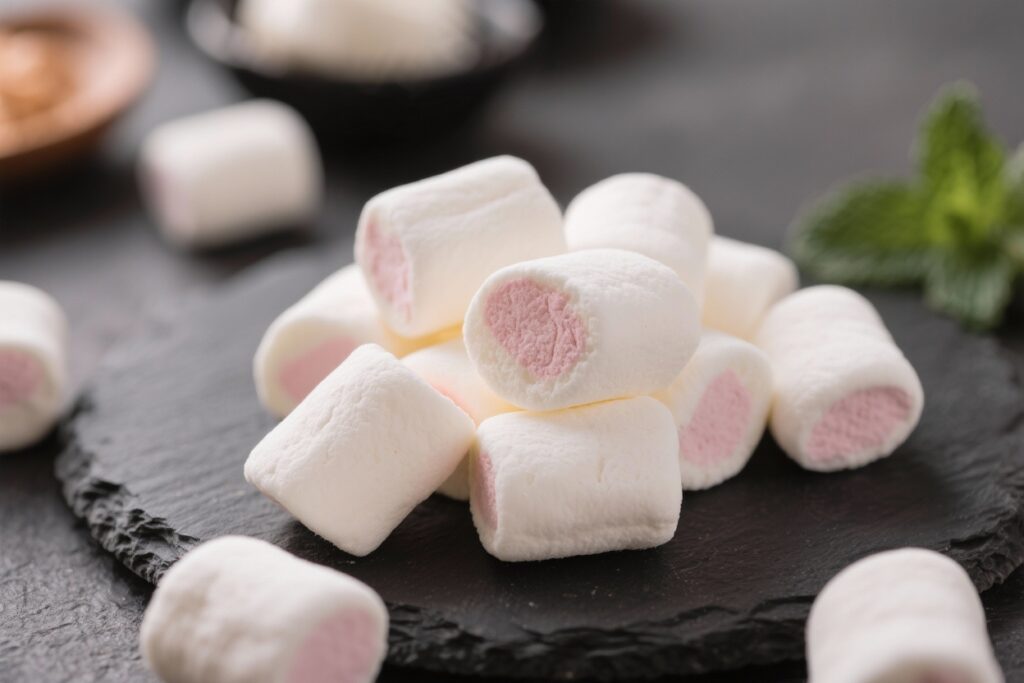
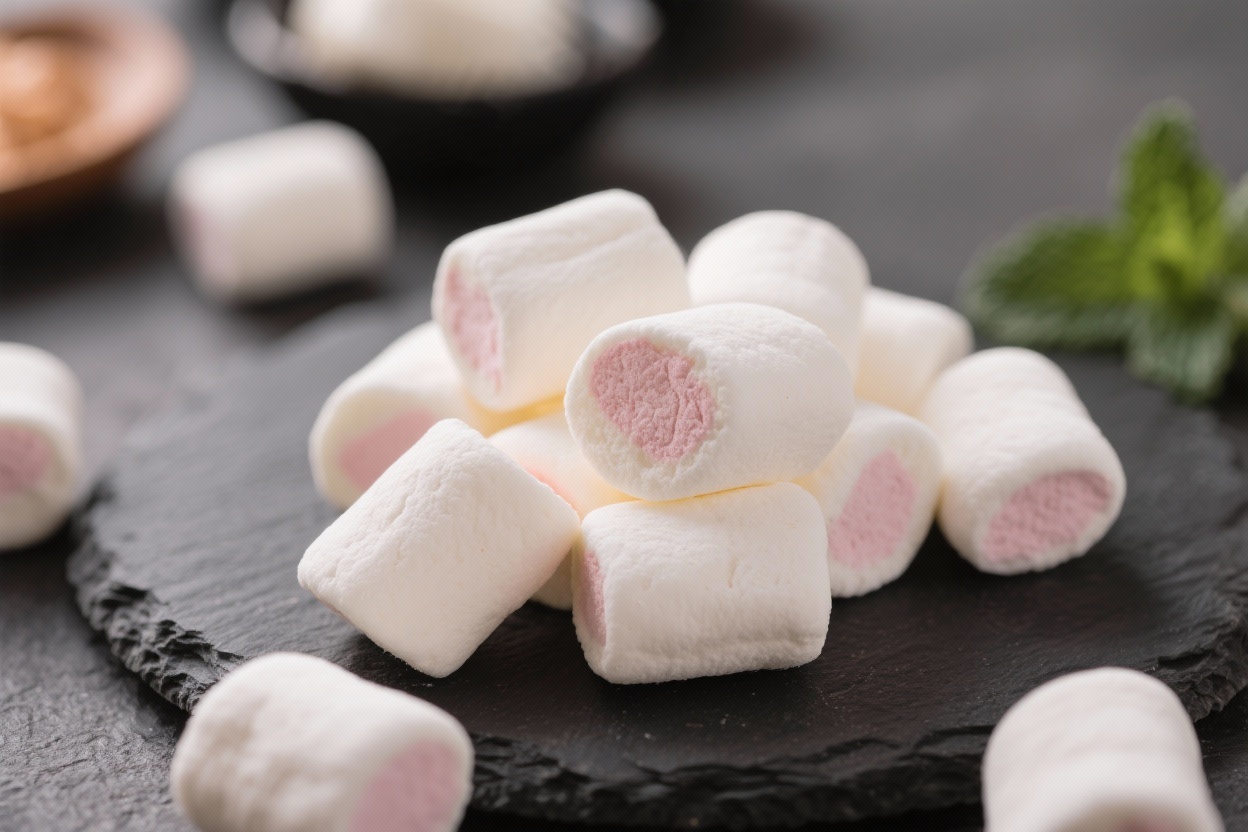
Sugar free marshmallows are the kind of treat that makes cutting back on sugar feel effortless. They’re pillowy, light, and melt-in-your-mouth just like the classic version. You can toast them, swirl them into hot chocolate, or use them in homemade crispy treats.
Best of all, they’re surprisingly simple to make at home with a few pantry ingredients. If you’ve missed marshmallows on a low-sugar or low-carb plan, this recipe brings them back—without the crash.
Ingredients
Method
-
Prep the pan. Line an 8×8-inch pan with parchment, leaving overhang for easy lifting.
Lightly mist with oil and wipe away excess, or dust with a little of the coating mix.
-
Bloom the gelatin. Add 1/2 cup cold water to the bowl of a stand mixer. Sprinkle gelatin over the water and let it sit for 5–10 minutes to soften.
-
Make the syrup. In a small saucepan, combine 1/2 cup water, powdered allulose, and salt. Heat over medium, stirring until dissolved.
Bring to a steady simmer and cook for 3–4 minutes, just until slightly thickened and clear. You don’t need a high temperature with allulose.
-
Start the mixer. With the mixer on low (whisk attachment), carefully pour the hot syrup into the bloomed gelatin in a thin stream.
-
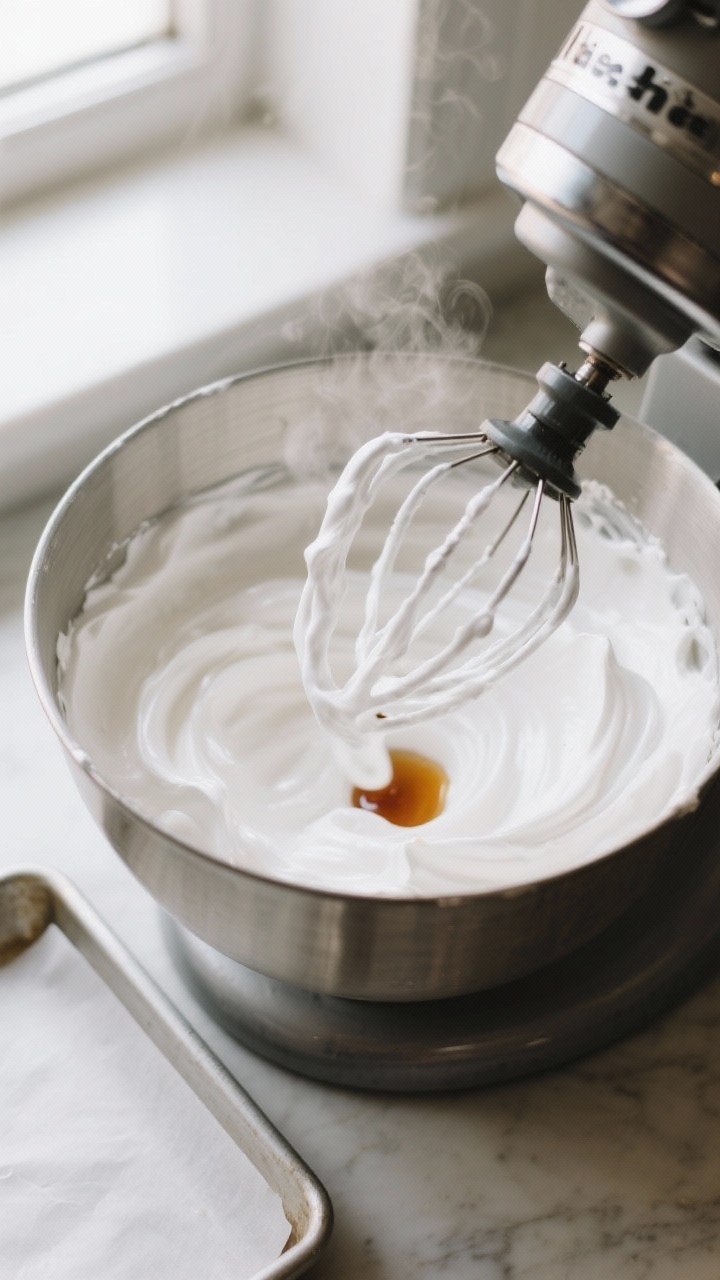
Whip until fluffy. Increase speed to high and whip for 8–12 minutes, until the mixture triples in volume, turns glossy, and forms soft, billowy peaks. Beat in vanilla during the last minute.
-
Spread and set. Quickly scrape the mixture into the prepared pan and smooth the top with a lightly oiled spatula.
Let it set at room temperature for 4–6 hours, or overnight, until bouncy.
-
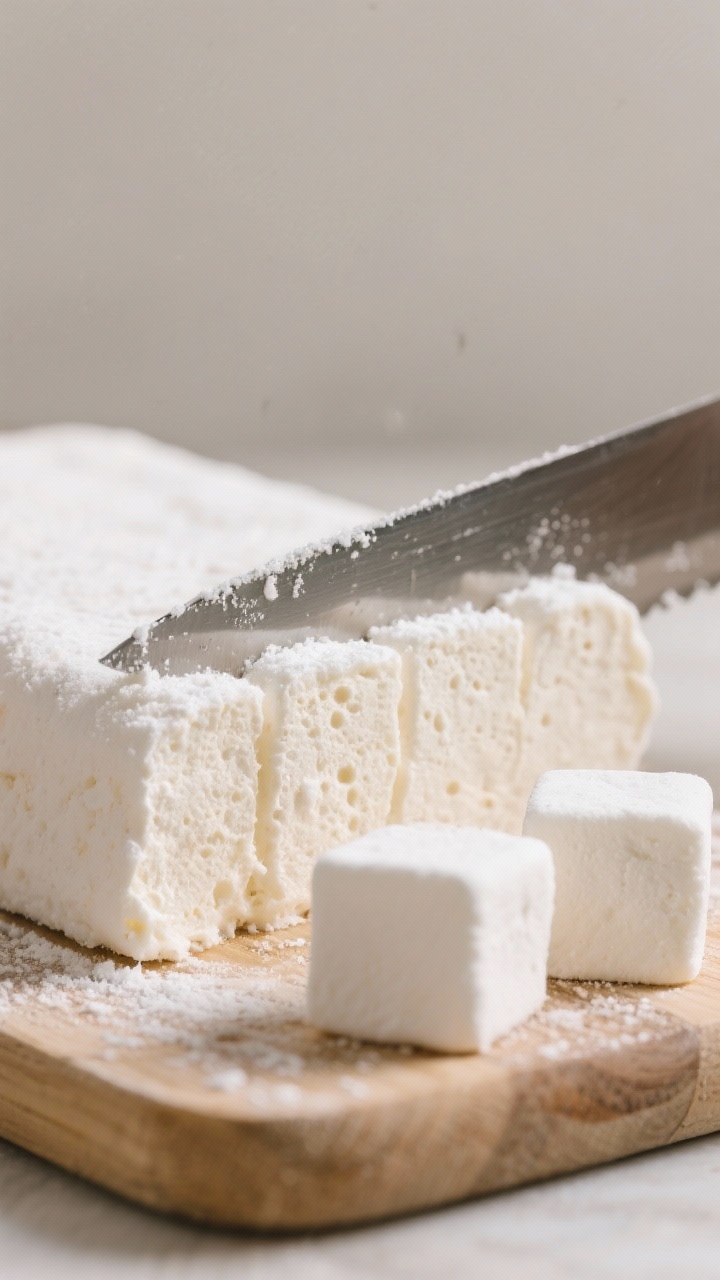
Cut and coat. Lift the slab out by the parchment. Dust a cutting board with the coating mixture, flip the slab onto it, and peel off the parchment. Lightly oil a sharp knife or pizza cutter and slice into squares.
Toss pieces in the coating to prevent sticking.
-
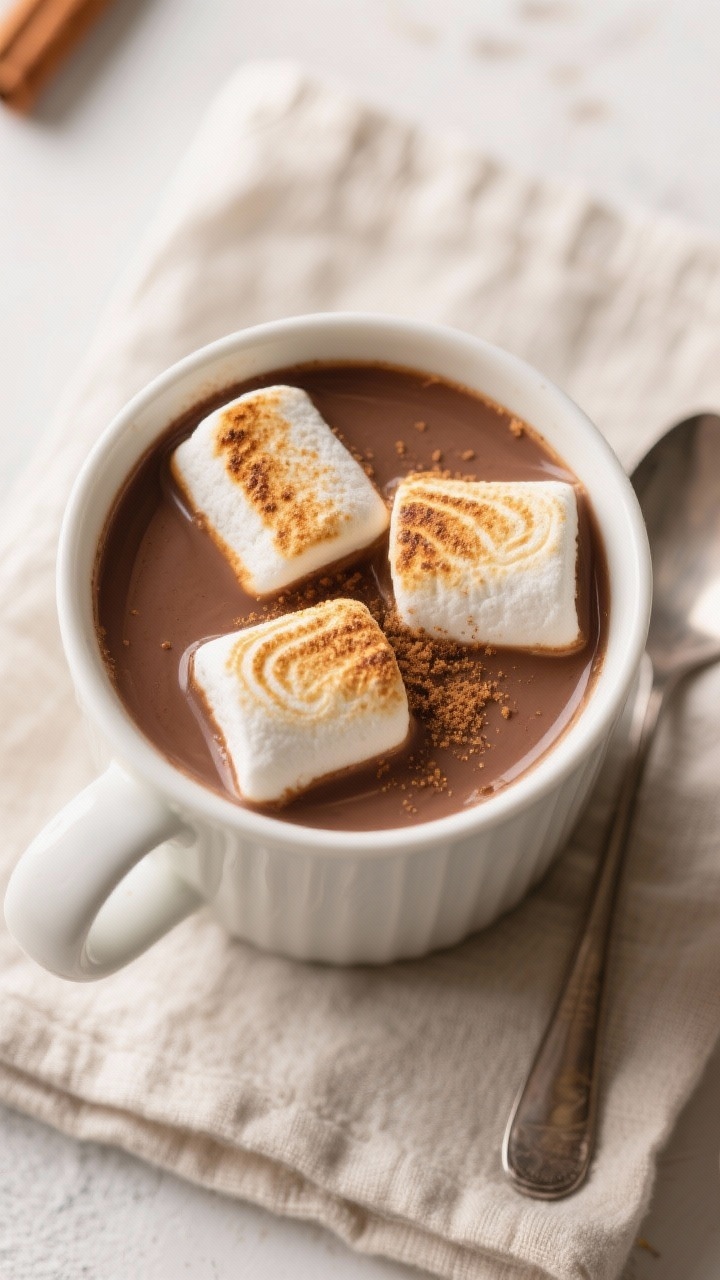
Enjoy. Serve as is, toast gently, or add to hot drinks. Store as directed below.
Why This Recipe Works
This recipe uses powdered allulose for sweetness, which tastes clean and doesn’t crystallize like some sugar substitutes. That means you get a soft, bouncy texture instead of a gritty one.
Unflavored gelatin gives the marshmallows their signature structure, and a touch of vanilla rounds out the classic flavor. The method is straightforward: bloom gelatin, heat a simple syrup, then whip until fluffy. The result is reliable, light, and wonderfully stretchy.
Ingredients
- 3 tablespoons (about 30 g) unflavored gelatin
- 1 cup cold water, divided
- 1 1/4 cups powdered allulose (or grind granulated allulose until powdery)
- 1/8 teaspoon sea salt
- 2 teaspoons pure vanilla extract
- Optional coating: 1/4 cup powdered allulose mixed with 1 tablespoon arrowroot or cornstarch for dusting
How to Make It
- Prep the pan. Line an 8×8-inch pan with parchment, leaving overhang for easy lifting.
Lightly mist with oil and wipe away excess, or dust with a little of the coating mix.
- Bloom the gelatin. Add 1/2 cup cold water to the bowl of a stand mixer. Sprinkle gelatin over the water and let it sit for 5–10 minutes to soften.
- Make the syrup. In a small saucepan, combine 1/2 cup water, powdered allulose, and salt. Heat over medium, stirring until dissolved.
Bring to a steady simmer and cook for 3–4 minutes, just until slightly thickened and clear. You don’t need a high temperature with allulose.
- Start the mixer. With the mixer on low (whisk attachment), carefully pour the hot syrup into the bloomed gelatin in a thin stream.
- Whip until fluffy. Increase speed to high and whip for 8–12 minutes, until the mixture triples in volume, turns glossy, and forms soft, billowy peaks. Beat in vanilla during the last minute.
- Spread and set. Quickly scrape the mixture into the prepared pan and smooth the top with a lightly oiled spatula.
Let it set at room temperature for 4–6 hours, or overnight, until bouncy.
- Cut and coat. Lift the slab out by the parchment. Dust a cutting board with the coating mixture, flip the slab onto it, and peel off the parchment. Lightly oil a sharp knife or pizza cutter and slice into squares.
Toss pieces in the coating to prevent sticking.
- Enjoy. Serve as is, toast gently, or add to hot drinks. Store as directed below.
Storage Instructions
- Room temperature: Keep in an airtight container for 5–7 days. Add a tablespoon of coating mixture to the container to reduce sticking.
- Refrigerator: Not recommended; moisture can make them weep and turn sticky.
- Freezer: Freeze in a single layer, then transfer to a bag.
Best within 1–2 months. Thaw at room temperature in the closed bag to avoid condensation.
Health Benefits
- Reduced sugar load: Using allulose keeps the sweetness without the spike in blood sugar typical of regular marshmallows.
- Lower calorie option: Allulose has fewer calories per gram than sugar, helping cut overall calories.
- Gelatin support: Gelatin contains amino acids like glycine and proline, which may support joint and skin health.
- No artificial aftertaste: Allulose has a clean flavor, so you can avoid the bitterness some sweeteners bring.
What Not to Do
- Don’t use erythritol as the main sweetener. It tends to crystallize and make the marshmallows gritty and hard.
- Don’t skip blooming the gelatin. If it doesn’t hydrate properly, the marshmallows won’t set.
- Don’t overheat the syrup. With allulose, high temperatures can cause browning and off flavors. A brief simmer is enough.
- Don’t cut before they’re set. Give them several hours; rushing leads to sticky, saggy pieces.
- Don’t store them uncovered. Exposure to air makes them dry on the outside and sticky inside.
Alternatives
- Sweetener swaps: A blend of allulose and monk fruit extract works well.
Avoid straight erythritol. If using a liquid allulose syrup, reduce the water slightly to keep the texture firm.
- Flavor twists: Add almond extract, peppermint, or lemon zest. Swirl in sugar-free cocoa powder or crushed freeze-dried berries for color and flavor.
- Gelatin-free option: Use agar-agar for a vegetarian version.
Note: it sets firmer and less bouncy. Use 2–2.5 teaspoons agar powder bloomed in water, bring to a brief boil, then whip as directed.
- Coloring: A drop or two of gel food coloring mixes in nicely during the last minute of whipping.
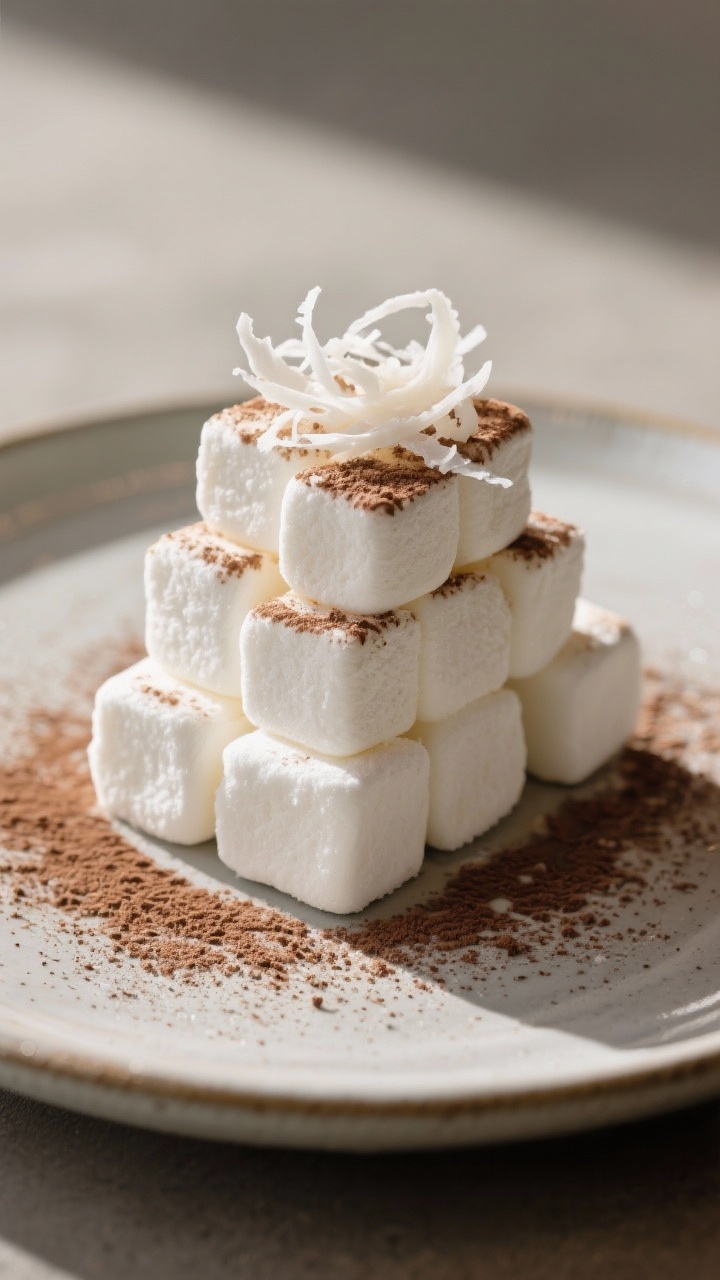
- Coatings: Roll in unsweetened shredded coconut, cocoa powder, or a cinnamon-allulose mix.
FAQ
Can I toast sugar free marshmallows?
Yes, but go low and slow. Allulose browns faster than sugar, so hold them a little farther from the flame and rotate often to prevent scorching.
Why are my marshmallows sticky?
They may need more time to set, or the room was very humid.
Toss them in the coating mixture and keep them in an airtight container. A little stickiness is normal with allulose-based marshmallows.
Can I make them without a stand mixer?
A hand mixer works, but it will take longer and your arm will get a workout. Use a deep bowl to avoid splatter and whip until the mixture is very thick and cool to the touch.
What if I only have granulated allulose?
Blend it in a high-speed blender until powdery.
Powdered sweetener dissolves better and gives a smoother texture.
How do I make them extra fluffy?
Whip a minute or two longer and ensure the syrup stream is added slowly. Also, check that your gelatin fully bloomed and your whisk and bowl are clean and dry.
Can I use stevia?
Not by itself. Stevia lacks bulk and won’t create the right texture.
If desired, pair a tiny amount of stevia with allulose for a sweeter taste without changing structure.
Do these work in crispy rice treats?
Yes. Melt them gently over low heat with a tablespoon of butter, then stir in your cereal. They set a bit softer than sugar-based versions, which many people prefer.
In Conclusion
These sugar free marshmallows are soft, fluffy, and every bit as satisfying as the originals.
With allulose and gelatin, you get a clean flavor and that classic bounce—no gritty texture, no odd aftertaste. Keep a batch on hand for snacking, s’mores, or cozy mugs of hot chocolate. They’re simple, reliable, and a feel-good treat you’ll want to make again and again.
Printable Recipe Card
Want just the essential recipe details without scrolling through the article? Get our printable recipe card with just the ingredients and instructions.