
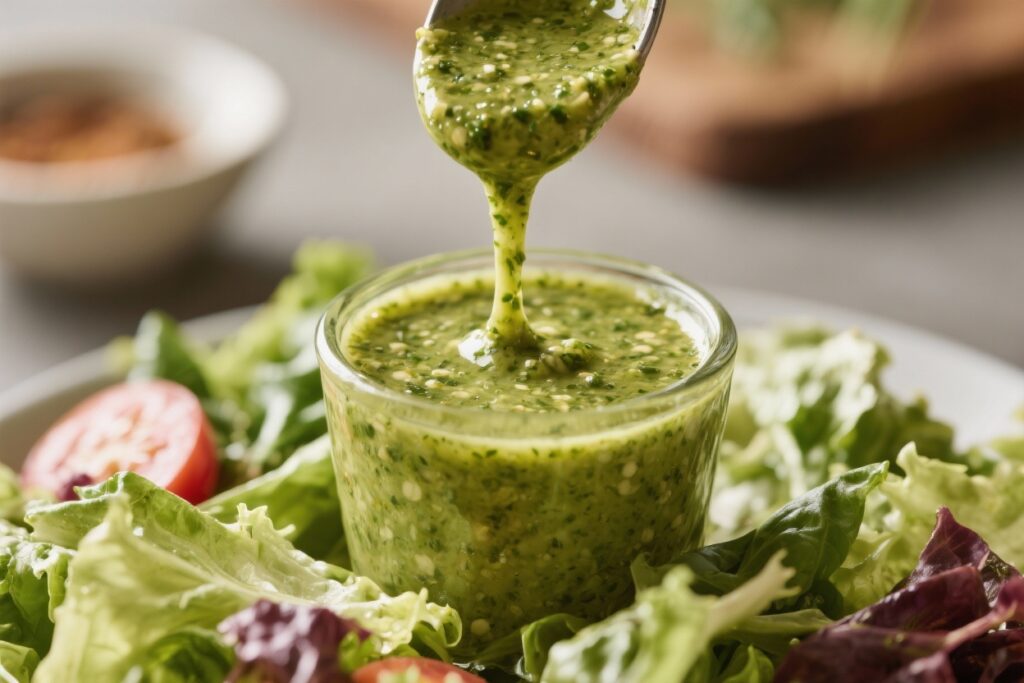
Pesto salad dressing is one of those small kitchen wins that makes everything taste better. It’s fresh, garlicky, and full of basil, and it turns simple greens into something you actually look forward to eating. You can whisk it up in minutes, and it works on more than just salad—think grain bowls, roasted vegetables, and sandwiches.
If you love pesto on pasta, this dressing brings that same flavor with a lighter, zippier feel. It’s the kind of recipe you’ll keep coming back to.
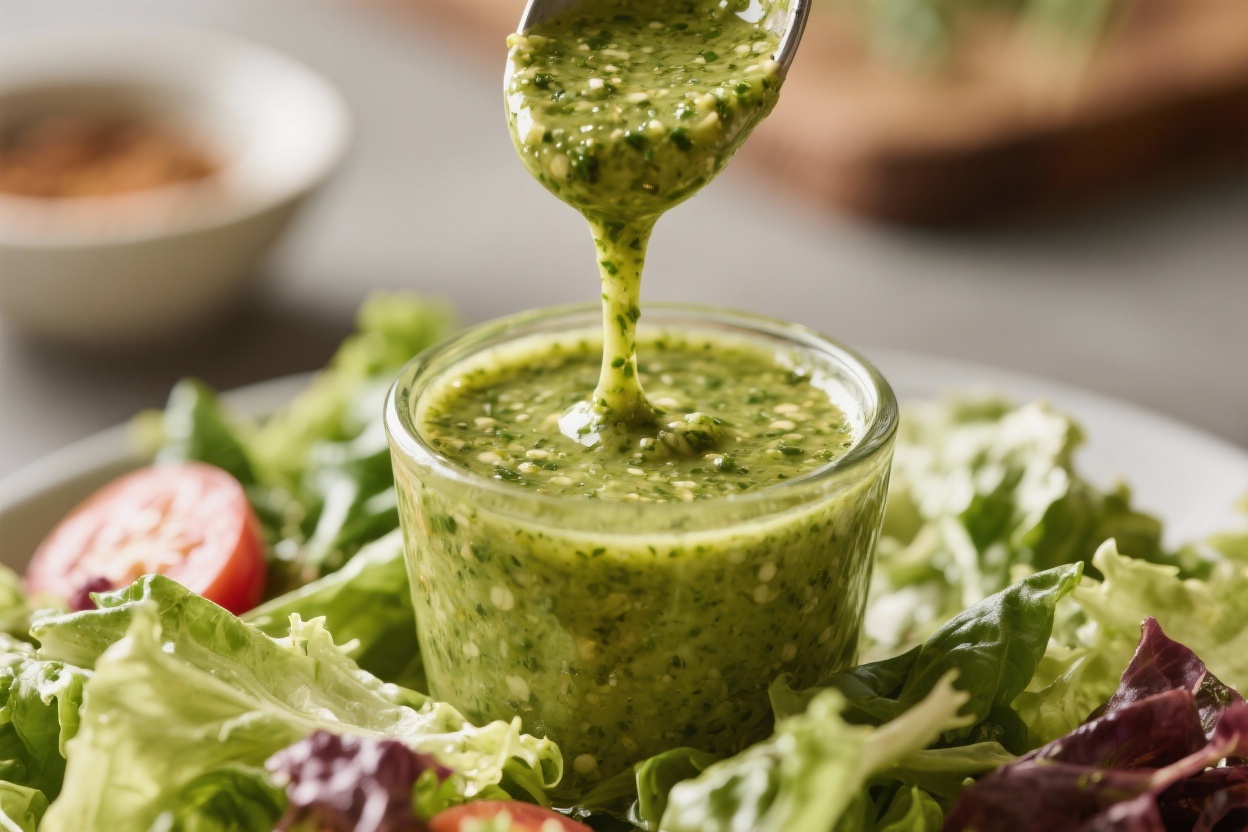
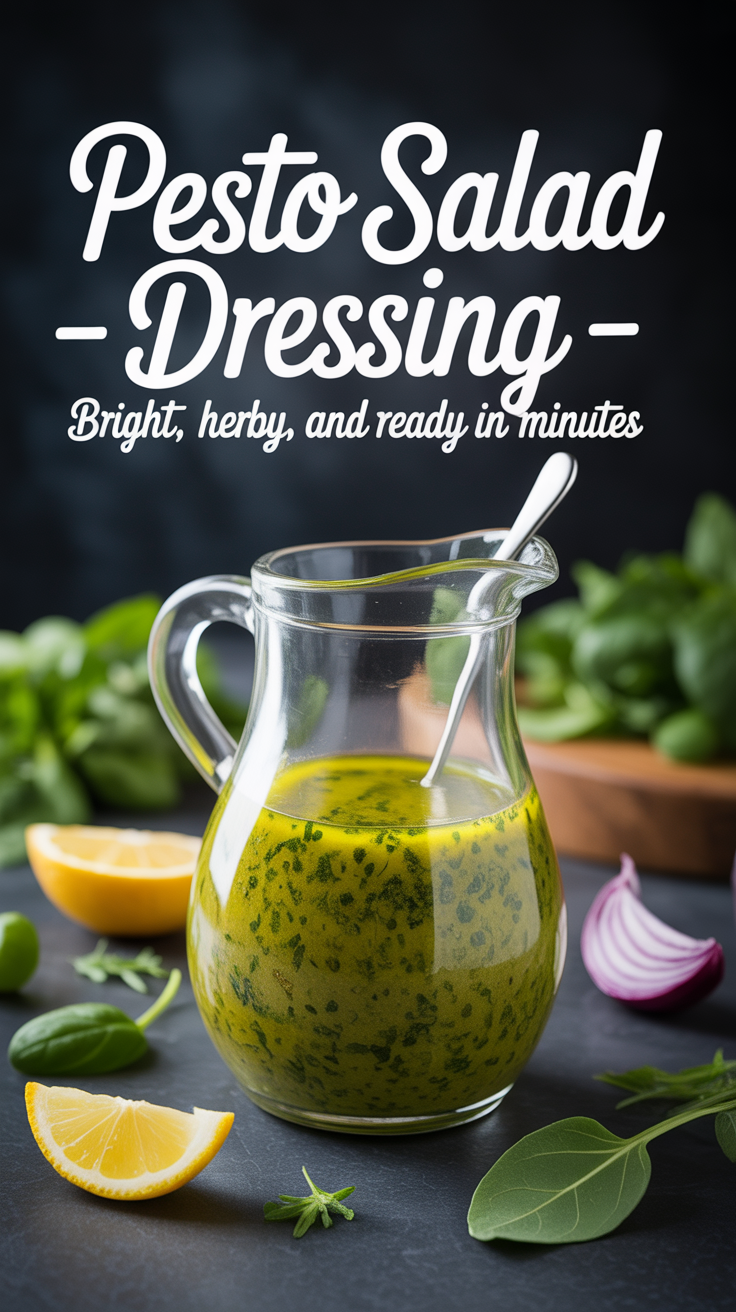
Pesto Salad Dressing – Bright, Herby, and Ready in Minutes
Ingredients
Method
-
Prep the basil: Rinse and pat dry the basil leaves. Excess water can dull the flavor and break the emulsion.
-
Blend the base: In a blender or food processor, add basil, garlic, Parmesan, pine nuts, Dijon, lemon juice, honey, salt, and pepper.
Pulse until finely chopped.
-
Stream in the oil: With the motor running, slowly pour in the olive oil. Blend until smooth and creamy. If you prefer a looser dressing, add water a tablespoon at a time.
-
Taste and adjust: Add more lemon for brightness, salt for pop, and a pinch more honey if it tastes too sharp.
The flavors should feel round and lively.
-
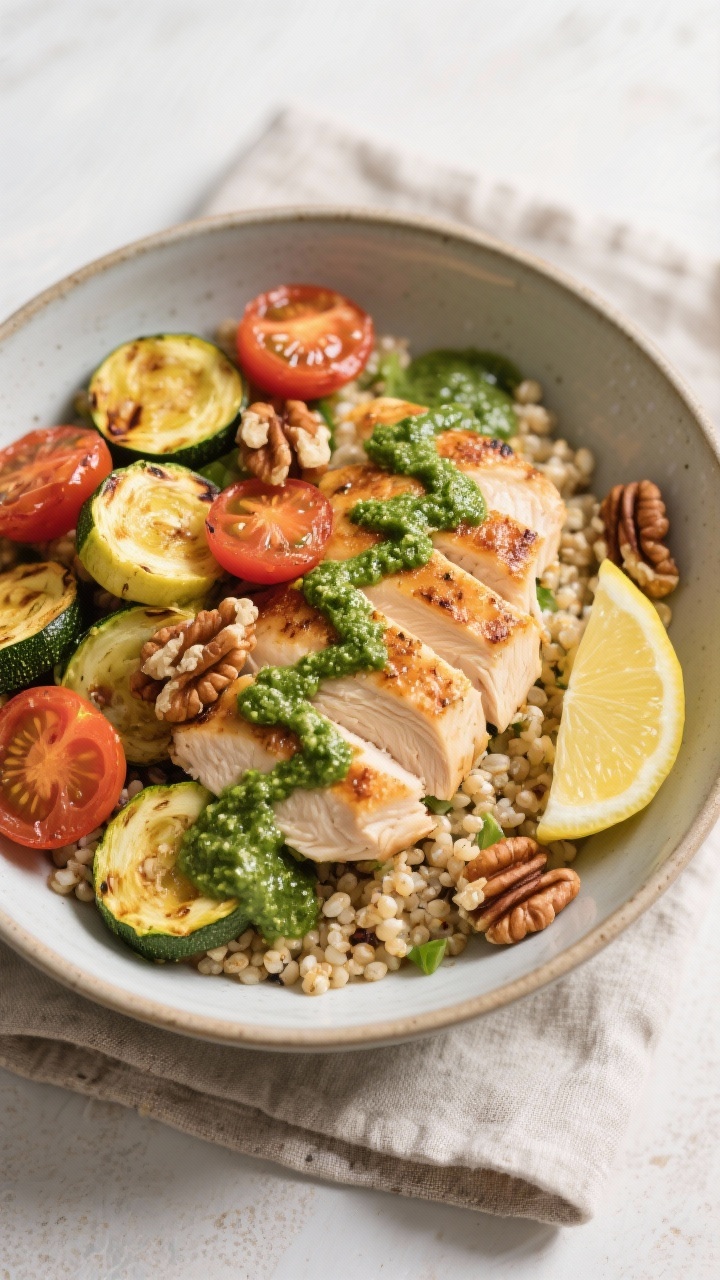
Serve: Toss with crisp greens, spoon over roasted vegetables, or drizzle on grain bowls. It clings well to tender leaves and hearty textures alike.
What Makes This Special
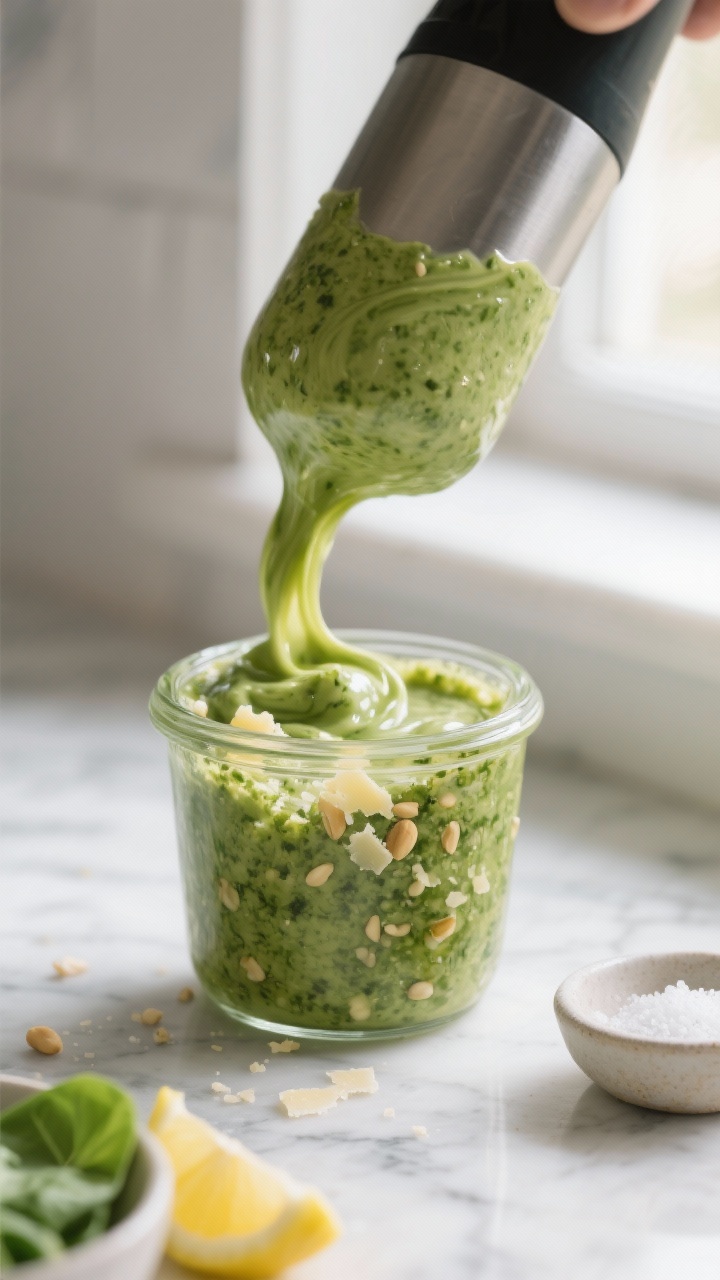
This dressing blends the richness of classic pesto with the brightness of a vinaigrette. You still get basil, garlic, and Parmesan, but the olive oil and lemon juice balance it with acidity and a silky texture.
It’s flexible, forgiving, and easy to adjust to your taste. Plus, it’s a smart way to use up extra basil or that half-jar of pesto in your fridge.
- Big flavor, little effort: Comes together in 5 minutes with a blender or whisk.
- Versatile: Works as a salad dressing, marinade, or drizzle for grilled meats and veggies.
- Customizable: Swap nuts, tweak acidity, or make it dairy-free without losing flavor.
- Meal-prep friendly: Keeps well in the fridge and doesn’t separate as quickly as some vinaigrettes.
Ingredients
- 2 packed cups fresh basil leaves (tender stems okay)
- 1 small garlic clove (or 2 if you like it punchy)
- 1/4 cup grated Parmesan or Pecorino Romano
- 2 tablespoons pine nuts (or walnuts/almonds)
- 1 tablespoon Dijon mustard
- 3 tablespoons fresh lemon juice (plus more to taste)
- 1 teaspoon honey or maple syrup (optional, for balance)
- 1/2 teaspoon kosher salt, more to taste
- 1/4 teaspoon freshly ground black pepper
- 1/2 cup extra-virgin olive oil
- 2–4 tablespoons water to thin, as needed
Instructions
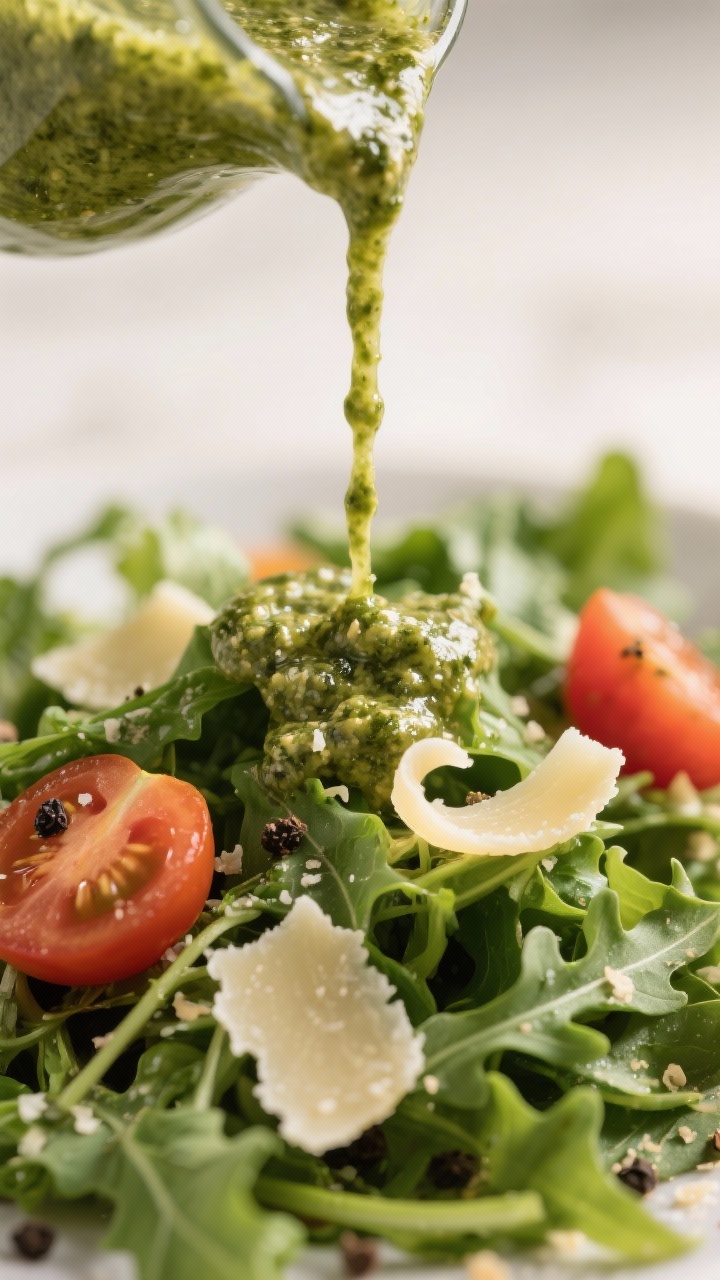
- Prep the basil: Rinse and pat dry the basil leaves. Excess water can dull the flavor and break the emulsion.
- Blend the base: In a blender or food processor, add basil, garlic, Parmesan, pine nuts, Dijon, lemon juice, honey, salt, and pepper.
Pulse until finely chopped.
- Stream in the oil: With the motor running, slowly pour in the olive oil. Blend until smooth and creamy. If you prefer a looser dressing, add water a tablespoon at a time.
- Taste and adjust: Add more lemon for brightness, salt for pop, and a pinch more honey if it tastes too sharp.
The flavors should feel round and lively.
- Serve: Toss with crisp greens, spoon over roasted vegetables, or drizzle on grain bowls. It clings well to tender leaves and hearty textures alike.
How to Store
- Refrigerator: Store in a sealed jar for up to 5 days. Press a small piece of plastic wrap directly onto the surface or top with a thin layer of olive oil to minimize browning.
- Freezer: Freeze in ice cube trays, then transfer cubes to a freezer bag.
Thaw in the fridge and whisk to refresh. Best used within 2 months.
- Refresh before serving: Shake or whisk to re-emulsify. Add a splash of water or lemon juice if it thickens in the fridge.
Why This is Good for You
This dressing gives you a solid dose of healthy fats from olive oil, which help your body absorb fat-soluble vitamins from greens.
Basil brings antioxidants and a fresh, herbal lift without heavy calories. Lemon juice adds vitamin C and brightens the overall flavor. With real ingredients and no fillers, you know exactly what you’re putting on your salad.
- Olive oil: Heart-friendly monounsaturated fats.
- Basil: Antioxidants and natural compounds with anti-inflammatory properties.
- Nuts: Extra healthy fats and a bit of protein.
- Cheese: Flavorful, so a small amount goes a long way.
Pitfalls to Watch Out For
- Over-blending with extra-virgin olive oil: Prolonged blending can make the oil taste bitter.
Blend just until smooth.
- Too thick: Pesto can seize up into a paste. Thin with water or more lemon juice a little at a time.
- Harsh garlic: Raw garlic can overpower. Use a small clove or quickly blanch the clove in hot water to mellow it.
- Under-seasoning: Salt wakes up the basil and lemon.
Taste after chilling and adjust as needed.
- Browning: Air exposure darkens basil. Store airtight and cover the surface.
Recipe Variations
- Dairy-free: Skip the cheese and add 1–2 tablespoons nutritional yeast for a savory note.
- No-nut: Leave out the nuts or use toasted sunflower seeds or pumpkin seeds.
- Greek yogurt pesto dressing: Blend in 1/4 cup plain Greek yogurt for a creamy, tangy twist. Thin with water as needed.
- Spinach-basil blend: Swap half the basil for baby spinach to stretch your herbs and keep the color bright.
- Lime and cilantro riff: Use cilantro for the basil and lime for the lemon for a punchy, taco-salad-friendly version.
- Roasted garlic: Replace raw garlic with 1–2 cloves roasted garlic for a sweet, mellow flavor.
- Miso umami boost: Whisk in 1 teaspoon white miso instead of extra salt for depth without more cheese.
FAQ
Can I use store-bought pesto to make this?
Yes.
Whisk 1/3 cup store-bought pesto with 2–3 tablespoons lemon juice, 1 teaspoon Dijon, and 1/4 cup olive oil. Thin with water and adjust salt and acidity to taste.
What kind of olive oil should I use?
Use a good-tasting extra-virgin olive oil you enjoy on salads. If your oil is very peppery or bitter, blend lightly or cut it with a neutral oil to soften the finish.
How do I keep the dressing green?
Dry your basil well, add a squeeze of lemon, and store it with minimal air exposure.
A thin layer of olive oil on top or pressing plastic wrap directly on the surface helps prevent browning.
Is this gluten-free?
Yes, all the ingredients listed are naturally gluten-free. As always, check labels on Dijon and Parmesan to be sure.
What salads does this pair with?
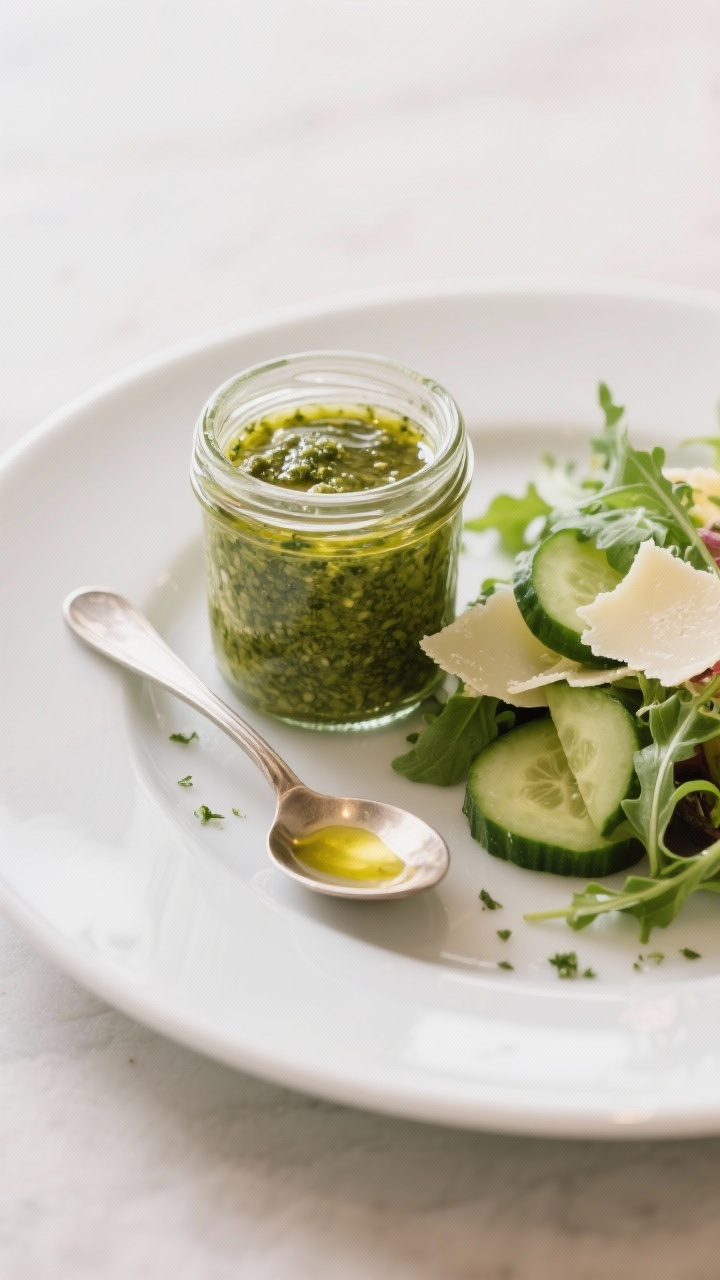
It’s great with mixed greens, arugula, cherry tomatoes, cucumbers, and shaved Parmesan. It also shines on pasta salad, quinoa bowls, grilled chicken salads, and roasted vegetables.
Can I make it without a blender?
Yes.
Finely mince the basil and garlic, then whisk everything in a bowl while slowly adding the oil. The texture will be more rustic but still delicious.
How do I fix a dressing that’s too sharp or too flat?
If it’s too sharp, add a bit more olive oil or a small splash of water and a pinch of honey. If it tastes flat, add a pinch of salt or a squeeze more lemon to brighten it up.
How much dressing should I use per salad?
Start with about 2 tablespoons per serving of greens and adjust to taste.
This dressing is flavorful, so a little goes a long way.
Final Thoughts
Pesto salad dressing is a simple upgrade that makes everyday meals taste special. It’s fast, flexible, and loaded with fresh, herby flavor. Keep a jar in your fridge and you’ll always have a way to wake up salads, bowls, and roasted veggies.
Once you try it, you may never go back to plain vinaigrette.
Printable Recipe Card
Want just the essential recipe details without scrolling through the article? Get our printable recipe card with just the ingredients and instructions.