
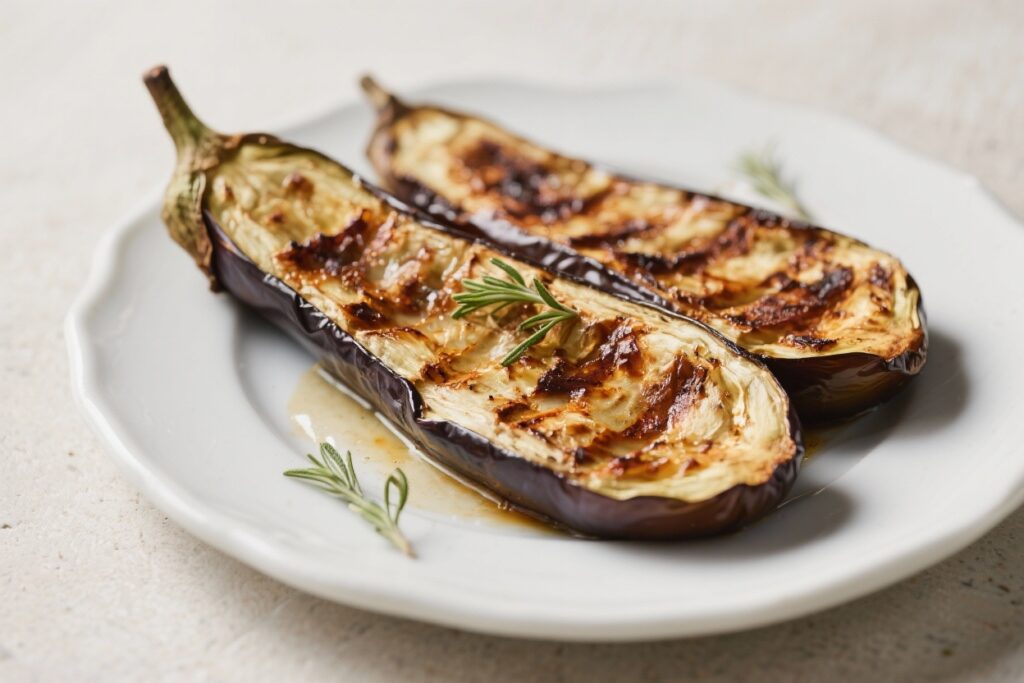
Roasted eggplant is one of those dishes that feels a little fancy but is actually easy to pull off. It turns silky and caramelized in the oven, with crisp edges and a mellow, savory flavor. You can serve it as a side, layer it into bowls, or toss it with pasta.
It also pairs beautifully with sauces like tahini, pesto, or a simple squeeze of lemon. If you’ve only had eggplant that’s soggy or bitter, this method will change your mind.

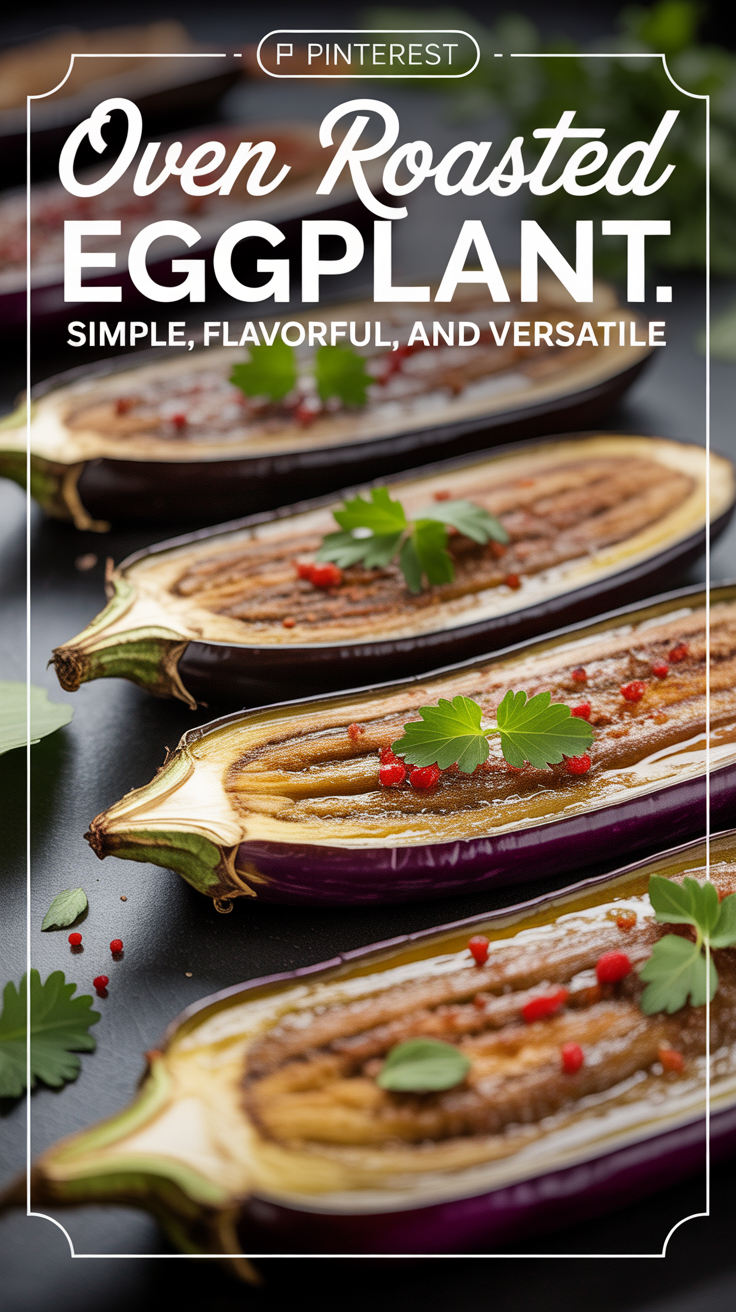
Oven Roasted Eggplant – Simple, Flavorful, and Versatile
Ingredients
Method
-
Preheat the oven: Set to 425°F (220°C).
A hot oven is key for caramelization and avoiding sogginess.
-
Prep the eggplant: Wash and dry. Trim the stem ends. Cut into 1-inch cubes or 1/2-inch thick rounds.
Keep the pieces uniform so they cook evenly.
-
Optional salting step: If your eggplants are large or older, sprinkle the cut pieces with salt and let them sit in a colander for 20–30 minutes. This draws out moisture and potential bitterness. Rinse and pat very dry.
If your eggplant is small and fresh, you can skip this.
-
Season: On a large baking sheet, toss eggplant with olive oil, salt, pepper, garlic powder, oregano, and red pepper flakes. Use your hands to coat evenly. The eggplant should be lightly glistening—add a bit more oil if it looks dry.
-
Spread it out: Arrange in a single layer with space between pieces. Overcrowding causes steaming, which prevents browning.
-
Roast: Bake for 15 minutes, then flip or stir.
Return to the oven for another 10–15 minutes, until the eggplant is deep golden with crisp edges and tender inside. Total time is usually 25–30 minutes.
-
Finish: Grate lemon zest over the hot eggplant and toss with chopped fresh herbs. Taste and adjust salt and pepper.
Add a squeeze of lemon if you like brightness.
-
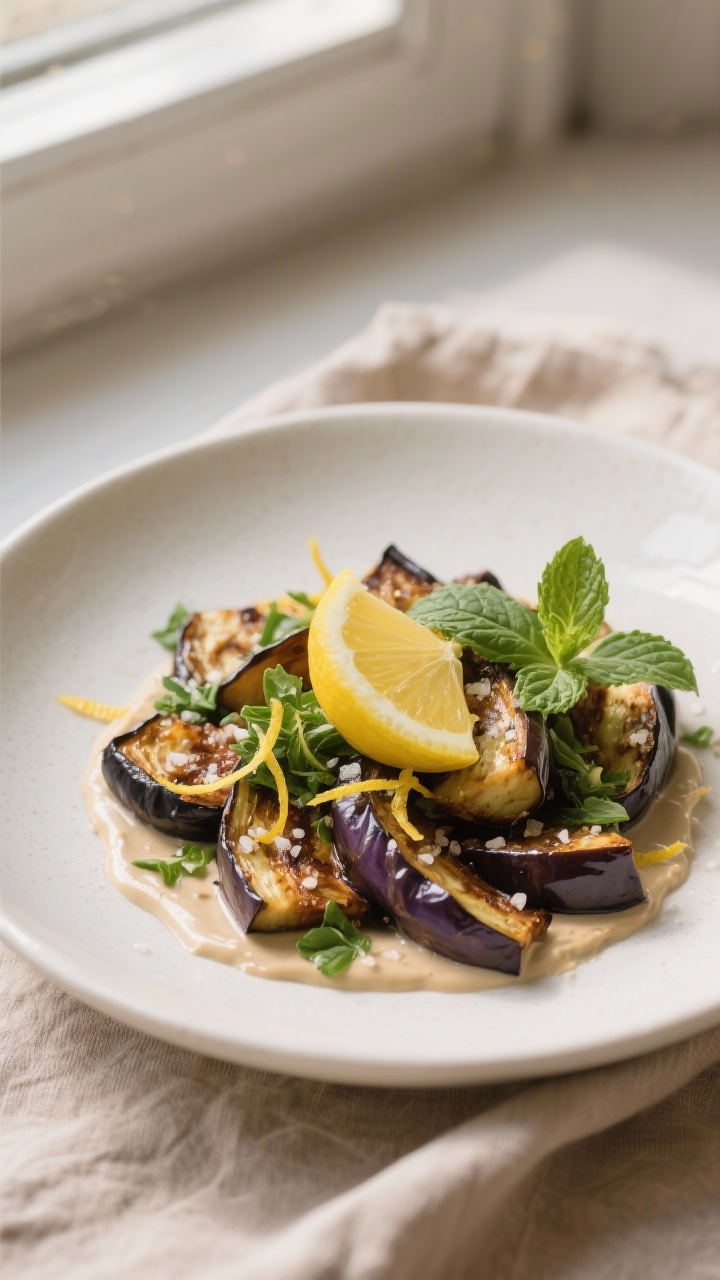
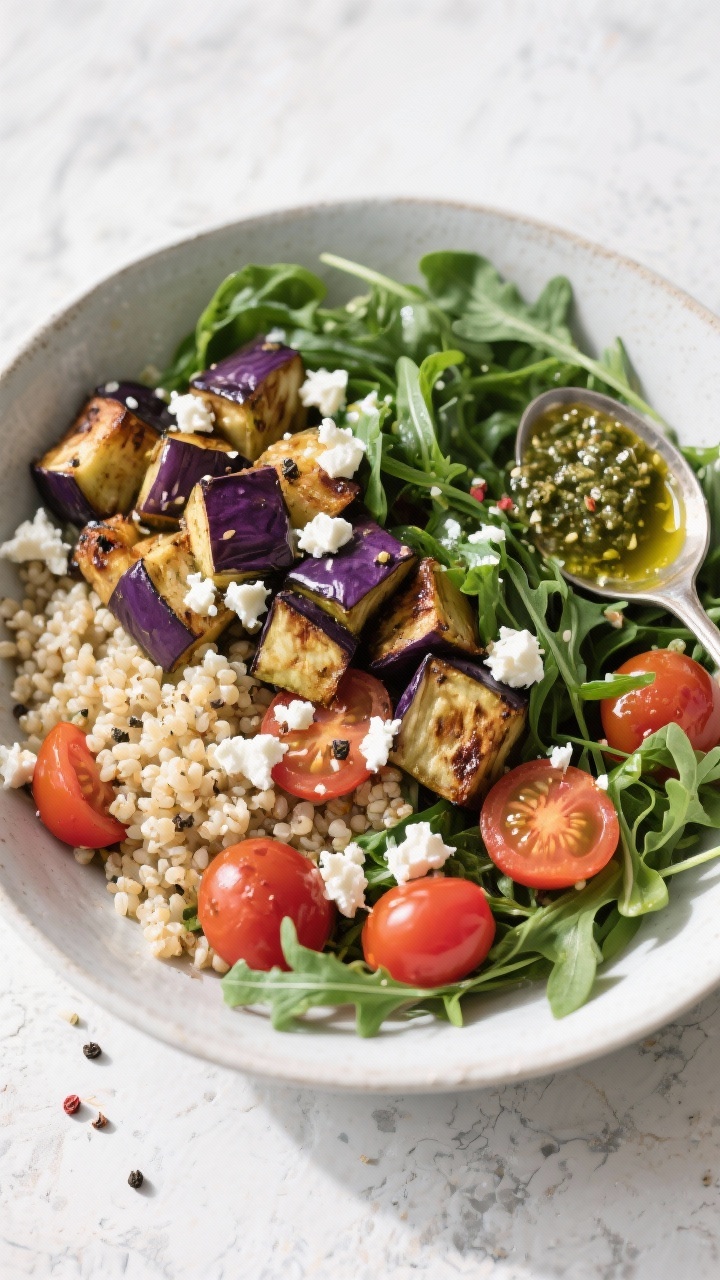
Serve: Enjoy hot as a side, or fold into grain bowls, pasta, salads, or wraps. A drizzle of tahini or a spoon of yogurt makes it extra special.
What Makes This Special
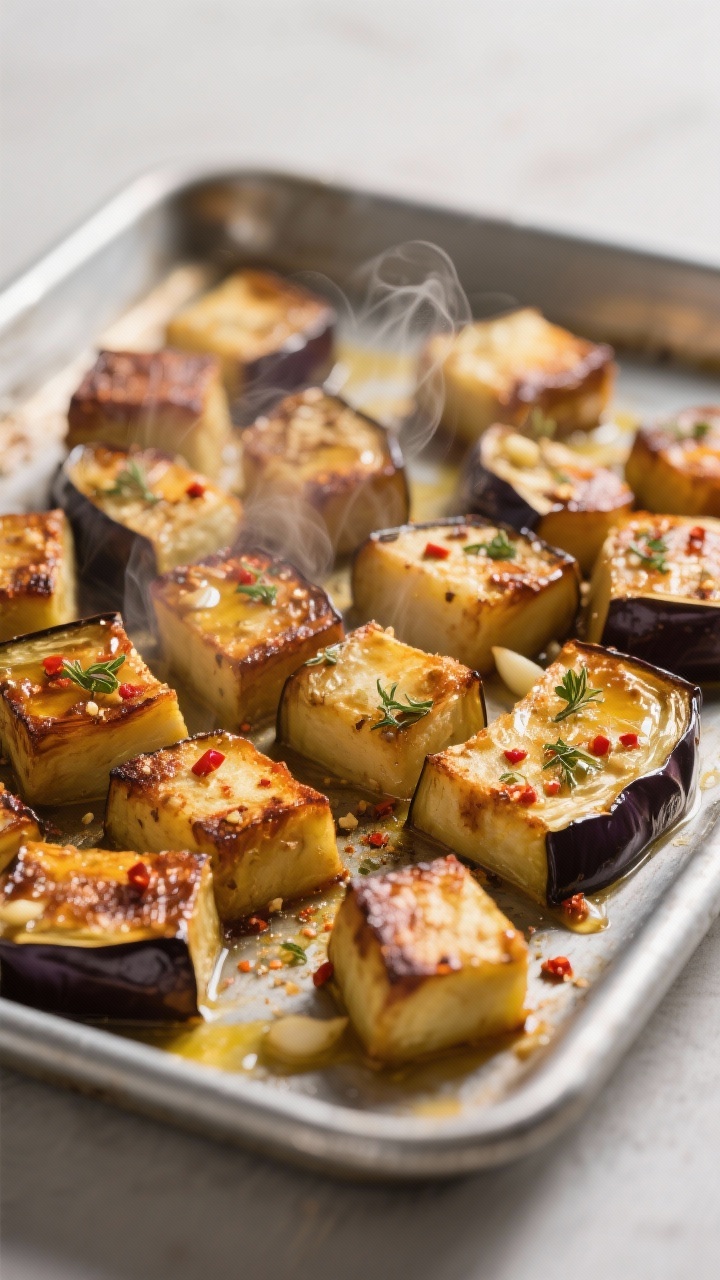
- Perfect texture: Soft inside, lightly crisp outside. The high heat works its magic.
- Balanced flavor: A simple mix of olive oil, garlic, and herbs lets the eggplant shine.
- No complicated steps: No breading, no frying—just chop, season, and roast.
- Flexible: Works with globe eggplants, Japanese eggplants, or fairy tale varieties.
- Meal-prep friendly: Keeps well and reheats nicely, so you can build meals all week.
Ingredients
- 2 large eggplants (or 4–5 small Japanese eggplants)
- 3 tablespoons extra-virgin olive oil
- 1 teaspoon kosher salt, plus more to taste
- 1/2 teaspoon freshly ground black pepper
- 1 teaspoon garlic powder (or 2 cloves fresh garlic, minced)
- 1 teaspoon dried oregano or Italian seasoning
- 1/4 teaspoon red pepper flakes (optional, for heat)
- Zest of 1 lemon (optional), plus lemon wedges for serving
- Fresh herbs for finishing: parsley, basil, or mint
Step-by-Step Instructions
- Preheat the oven: Set to 425°F (220°C).
A hot oven is key for caramelization and avoiding sogginess.
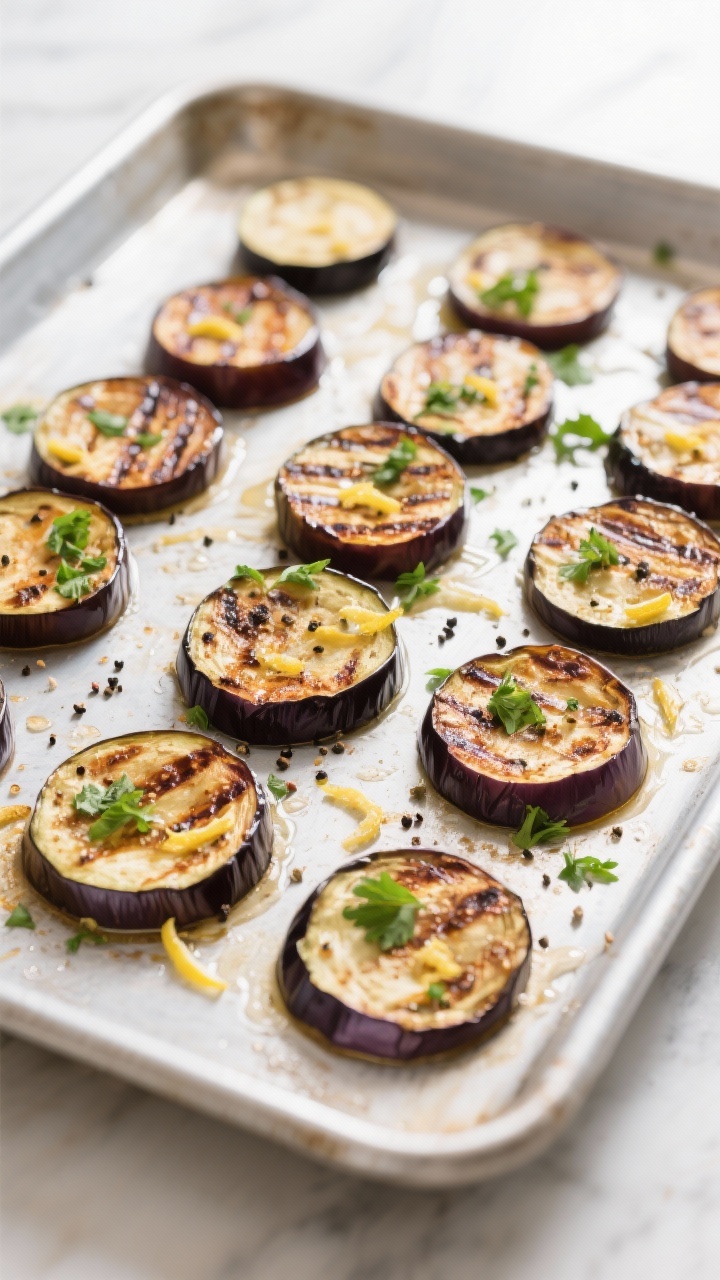
- Prep the eggplant: Wash and dry. Trim the stem ends. Cut into 1-inch cubes or 1/2-inch thick rounds.
Keep the pieces uniform so they cook evenly.
- Optional salting step: If your eggplants are large or older, sprinkle the cut pieces with salt and let them sit in a colander for 20–30 minutes. This draws out moisture and potential bitterness. Rinse and pat very dry.
If your eggplant is small and fresh, you can skip this.
- Season: On a large baking sheet, toss eggplant with olive oil, salt, pepper, garlic powder, oregano, and red pepper flakes. Use your hands to coat evenly. The eggplant should be lightly glistening—add a bit more oil if it looks dry.
- Spread it out: Arrange in a single layer with space between pieces. Overcrowding causes steaming, which prevents browning.
- Roast: Bake for 15 minutes, then flip or stir.
Return to the oven for another 10–15 minutes, until the eggplant is deep golden with crisp edges and tender inside. Total time is usually 25–30 minutes.
- Finish: Grate lemon zest over the hot eggplant and toss with chopped fresh herbs. Taste and adjust salt and pepper.
Add a squeeze of lemon if you like brightness.
- Serve: Enjoy hot as a side, or fold into grain bowls, pasta, salads, or wraps. A drizzle of tahini or a spoon of yogurt makes it extra special.
How to Store
- Fridge: Store cooled roasted eggplant in an airtight container for up to 4 days.
- Freezer: Not ideal for texture, but you can freeze it for up to 2 months. Thaw in the fridge and reheat in a hot skillet or oven.
- Reheat: Use a 400°F (205°C) oven for 8–10 minutes or a skillet over medium heat with a splash of oil.
Avoid the microwave if you want to keep the edges crisp.
Why This is Good for You
- Fiber-rich: Eggplant provides dietary fiber that supports digestion and helps you feel full.
- Low in calories: A great way to build volume on your plate without heavy calories.
- Antioxidants: The deep purple skin contains nasunin and other antioxidants that support cellular health.
- Heart-friendly fats: Olive oil adds healthy monounsaturated fats that help with nutrient absorption.
- Herbs and spices: Garlic, oregano, and lemon add flavor without extra salt or sugar.
What Not to Do
- Don’t overcrowd the pan: If the pieces touch, they steam and turn mushy. Use two pans if needed.
- Don’t skip drying: If you salt and rinse the eggplant, dry it thoroughly. Excess water causes sogginess.
- Don’t under-season: Eggplant is like a sponge.
It needs enough salt and oil for flavor and proper browning.
- Don’t roast at low heat: Temperatures below 400°F (205°C) rarely yield caramelized edges.
- Don’t cut pieces too small: Tiny cubes can dry out. Aim for about 1-inch chunks or 1/2-inch slices.
Variations You Can Try
- Parmesan and herb: In the last 5 minutes, sprinkle grated Parmesan and chopped parsley over the eggplant.
- Middle Eastern style: Toss with ground cumin and coriander before roasting. Finish with tahini, lemon, and fresh mint.
- Spicy miso glaze: Whisk 1 tablespoon white miso, 1 teaspoon soy sauce, 1 teaspoon rice vinegar, and 1 teaspoon chili paste with a bit of water.
Brush on during the last 10 minutes.
- Pesto toss: After roasting, toss hot eggplant with a spoonful of pesto and a squeeze of lemon.
- Tomato and feta: Serve roasted eggplant with cherry tomatoes, crumbled feta, and a drizzle of olive oil.
- Smoky paprika: Add 1/2 teaspoon smoked paprika to the seasoning for a barbecue-like depth.
FAQ
Do I need to peel the eggplant?
No. The skin softens as it roasts and adds flavor, color, and nutrients. If your eggplant is very large with tough skin, you can peel alternating strips for a nice texture balance.
How do I avoid bitterness?
Fresh, small-to-medium eggplants are naturally less bitter.
Salting and draining helps if your eggplant is older. Roasting at high heat also mellows any sharp flavors.
Can I use less oil?
Yes, but use at least enough to lightly coat the pieces so they don’t dry out. If you cut back on oil, watch closely and don’t overcook.
A spray of oil can help distribute it evenly.
What’s the best cut: cubes or rounds?
Both work. Cubes are great for bowls and pasta. Rounds are perfect for layering on sandwiches or topping with sauce and cheese.
Keep the size consistent for even cooking.
Can I add other vegetables to the pan?
Yes. Bell peppers, red onion, or zucchini roast well alongside eggplant. Cut them to similar sizes and avoid overcrowding.
You may need two pans.
Is this recipe vegan and gluten-free?
Yes, as written it’s both. If you add toppings like Parmesan or pesto, check labels or choose dairy-free versions.
What sauces go well with roasted eggplant?
Tahini sauce, garlicky yogurt, chimichurri, pesto, romesco, or a simple mix of olive oil and lemon all complement it. Even a spoon of marinara works nicely.
How do I make it crispier?
Use a metal sheet pan, give the pieces space, and don’t flip too early.
You can also preheat the pan in the oven, then add the seasoned eggplant to the hot surface.
Wrapping Up
Oven roasted eggplant is simple, satisfying, and endlessly adaptable. With a hot oven, enough seasoning, and a little space on the pan, you’ll get tender centers and caramelized edges every time. Keep a batch in the fridge for quick meals and dress it up with herbs or sauce whenever you like.
It’s a straightforward recipe that delivers big flavor with minimal effort.
Printable Recipe Card
Want just the essential recipe details without scrolling through the article? Get our printable recipe card with just the ingredients and instructions.