
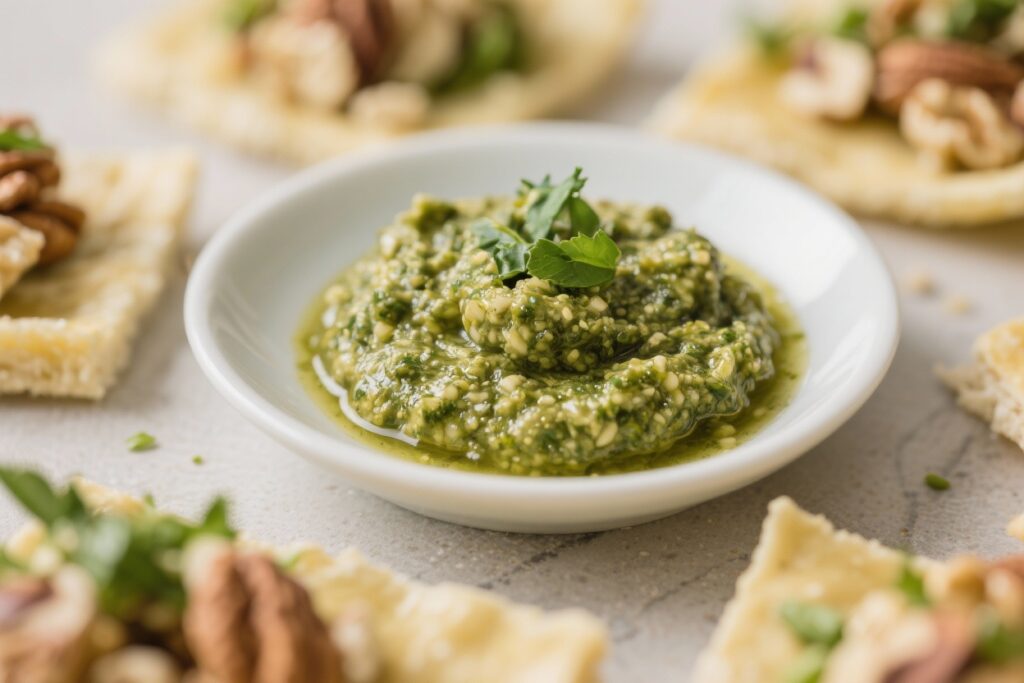
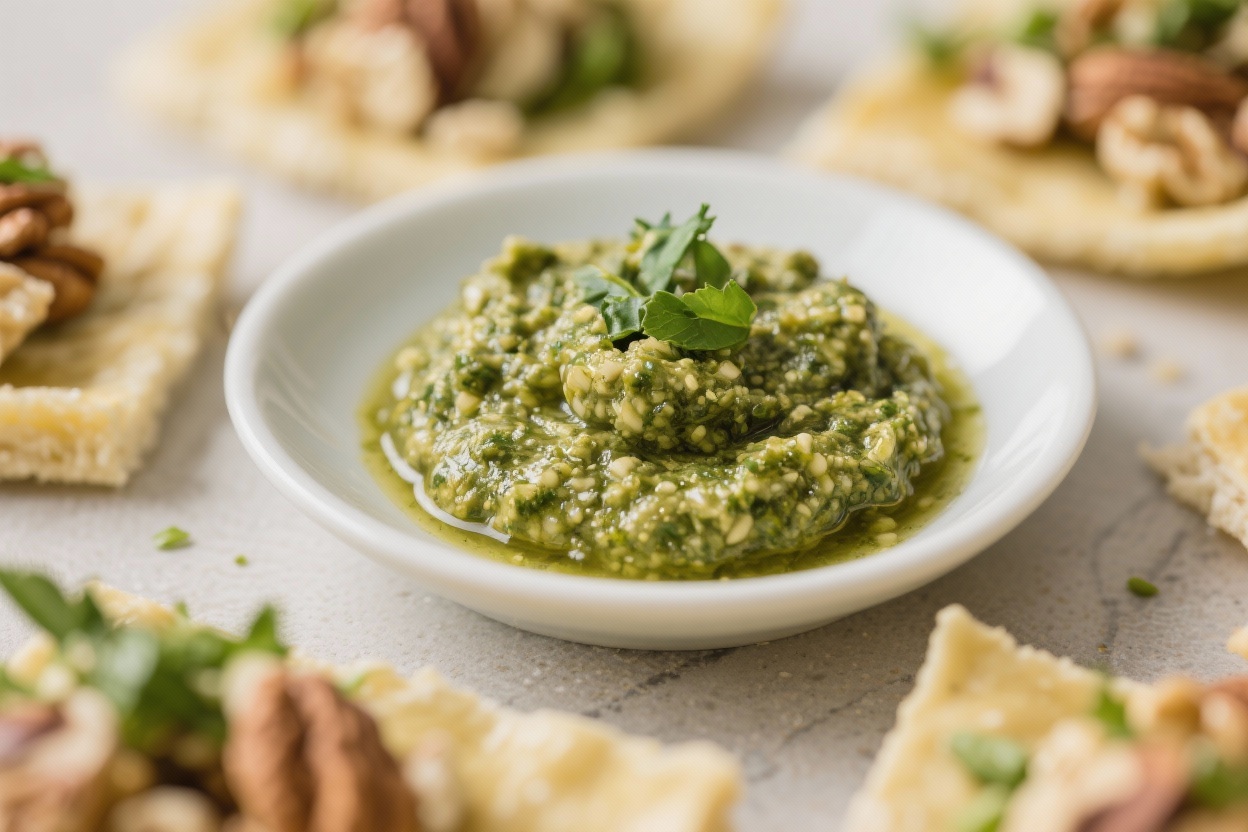
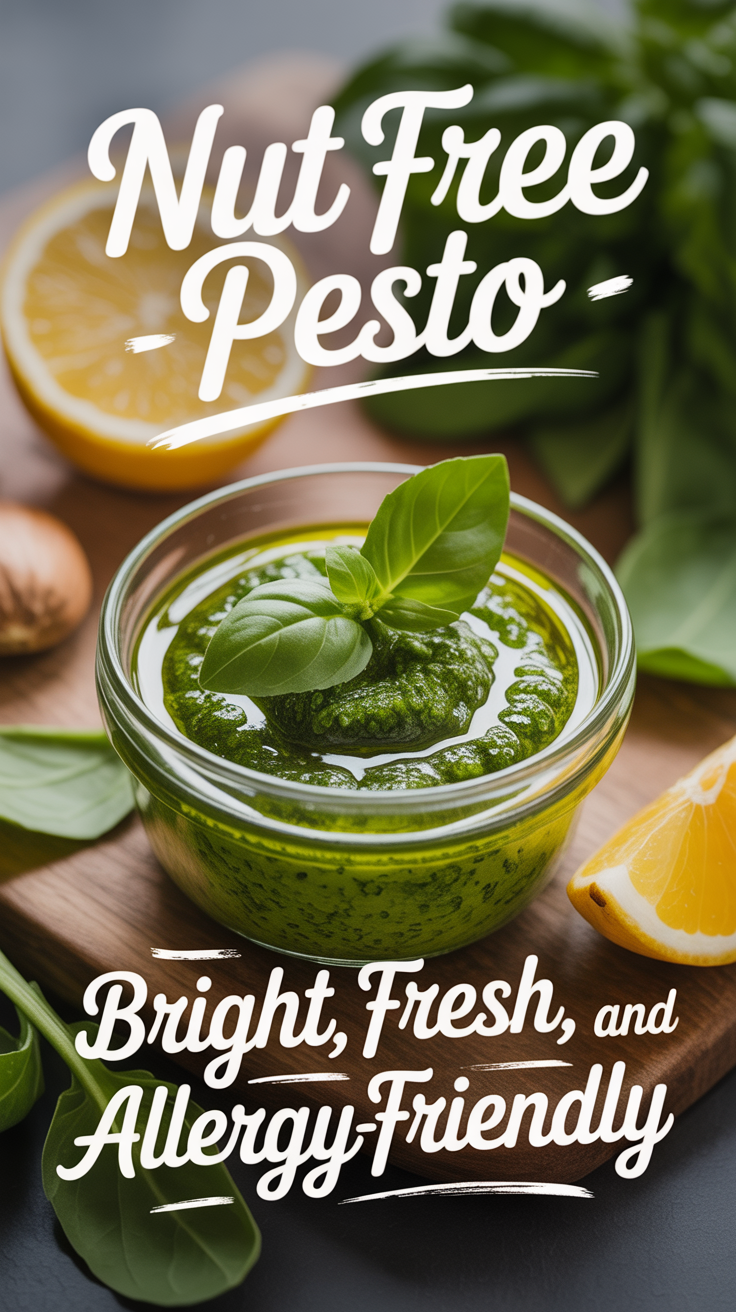
If you love the vibrant flavor of pesto but need to avoid nuts, this recipe has your back. It’s bright, herby, and silky, with all the punch you expect from classic pesto—just without the pine nuts. You’ll get a balanced blend of basil, garlic, lemon, and olive oil, grounded by a smart, nut-free swap that still gives you body and depth.
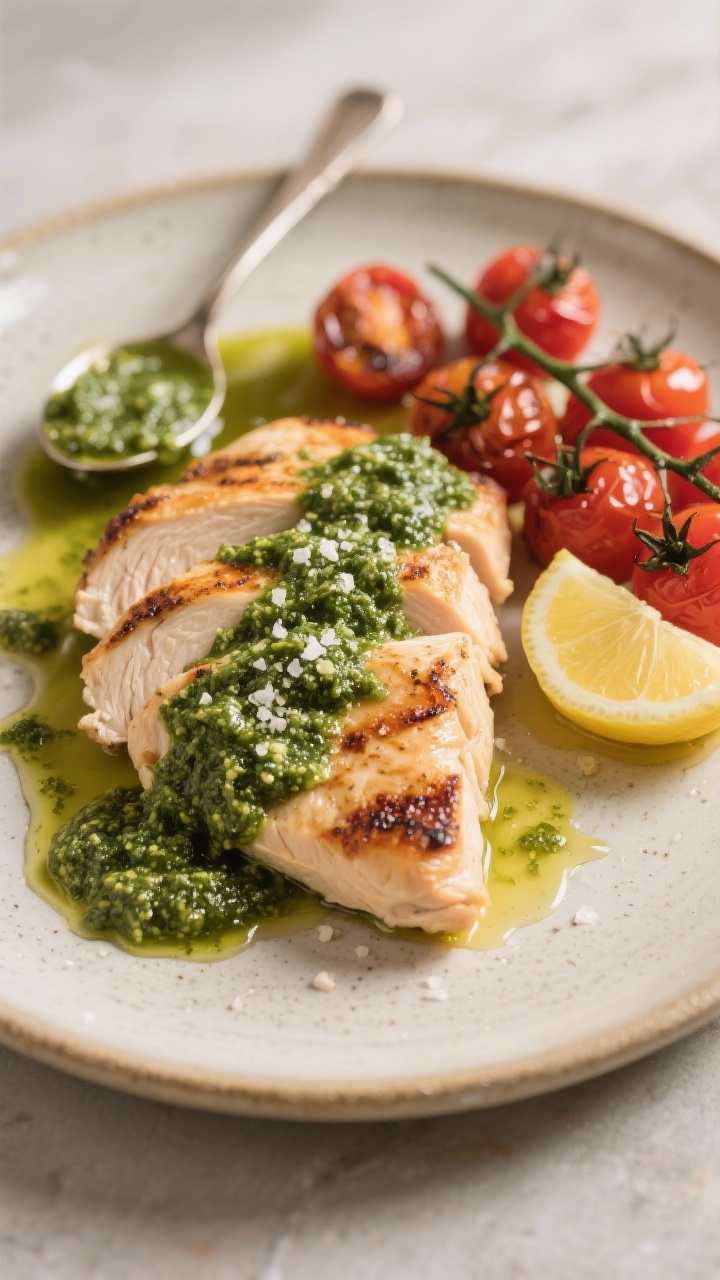
It comes together fast in a blender or food processor and keeps well for easy meals all week. Toss it with pasta, spread it on sandwiches, or spoon it over grilled chicken or veggies.
Ingredients
Method
-
Prep your greens: Rinse and thoroughly dry the basil and parsley.
Excess water can thin the pesto and dull the flavor.
-
Toast the seeds (if not already toasted): Warm a dry skillet over medium heat. Add sunflower seeds and stir until fragrant and lightly golden, 3–4 minutes. Let cool.
-
Load the processor: In a food processor, add basil, parsley, cooled seeds, Parmesan, garlic, lemon zest, lemon juice, salt, and pepper.
-
Pulse to chop: Pulse 8–10 times until everything is finely chopped but not paste-like.
Scrape down the sides as needed.
-
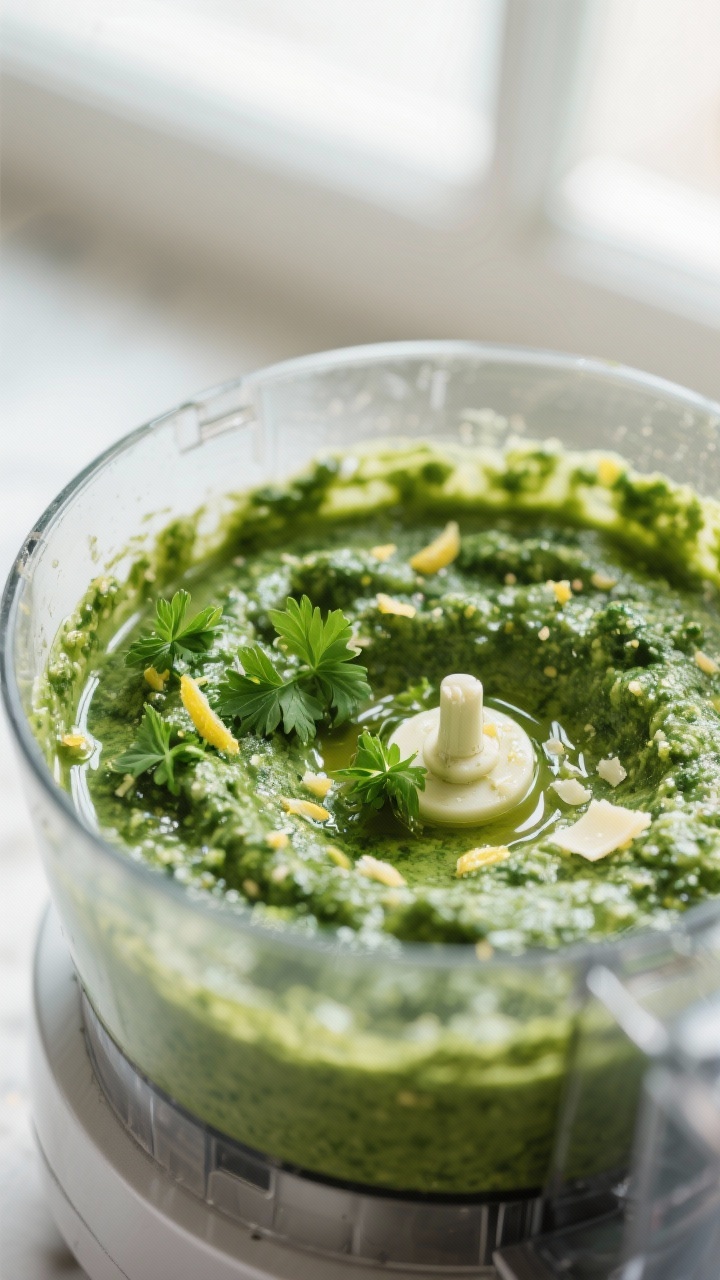
Stream in oil: With the machine running, slowly pour in the olive oil. Blend just until the mixture looks creamy and cohesive. Avoid over-blending to keep it bright green.
-
Adjust consistency: If it’s thicker than you’d like, pulse in 1–2 tablespoons of cold water.
Repeat until it reaches your preferred texture.
-
Taste and tweak: Add more salt, lemon, or pepper as needed. If it tastes flat, a pinch more salt or a splash of lemon usually fixes it.
-
Serve or store: Use right away with hot pasta, spread on toast, or spoon over proteins and vegetables.
Why This Recipe Works
- Toasted sunflower seeds for body: They provide a toasty, savory base that mimics the richness of nuts without the allergens.
- Fresh basil and parsley for balance: Basil brings sweetness; parsley adds a clean, slightly bitter note that keeps the sauce from tasting flat.
- Lemon for brightness: A touch of lemon juice and zest lifts the flavors and helps preserve that vibrant green color.
- Parmesan for umami: Grated Parmesan adds depth and a salty kick. You can easily swap it for a dairy-free option if needed.
- Controlled texture: Starting with a small amount of oil and adding more slowly helps you dial in a silky, clingy sauce.
Ingredients
- 2 packed cups fresh basil leaves (tender stems okay)
- 1/2 cup flat-leaf parsley leaves
- 1/3 cup toasted unsalted sunflower seeds (or pumpkin seeds)
- 1/2 cup freshly grated Parmesan cheese (or dairy-free Parmesan)
- 2–3 garlic cloves, roughly chopped
- 1 teaspoon lemon zest
- 2 tablespoons fresh lemon juice
- 1/2 teaspoon kosher salt, plus more to taste
- 1/4 teaspoon freshly ground black pepper
- 1/2 cup extra-virgin olive oil, plus more as needed
- 2–3 tablespoons cold water (optional, to loosen)
Instructions

- Prep your greens: Rinse and thoroughly dry the basil and parsley.
Excess water can thin the pesto and dull the flavor.
- Toast the seeds (if not already toasted): Warm a dry skillet over medium heat. Add sunflower seeds and stir until fragrant and lightly golden, 3–4 minutes. Let cool.
- Load the processor: In a food processor, add basil, parsley, cooled seeds, Parmesan, garlic, lemon zest, lemon juice, salt, and pepper.
- Pulse to chop: Pulse 8–10 times until everything is finely chopped but not paste-like.
Scrape down the sides as needed.
- Stream in oil: With the machine running, slowly pour in the olive oil. Blend just until the mixture looks creamy and cohesive. Avoid over-blending to keep it bright green.
- Adjust consistency: If it’s thicker than you’d like, pulse in 1–2 tablespoons of cold water.
Repeat until it reaches your preferred texture.
- Taste and tweak: Add more salt, lemon, or pepper as needed. If it tastes flat, a pinch more salt or a splash of lemon usually fixes it.
- Serve or store: Use right away with hot pasta, spread on toast, or spoon over proteins and vegetables.
How to Store
- Short term: Transfer pesto to a small jar. Smooth the top and cover with a thin layer of olive oil to prevent browning.
Refrigerate for up to 5 days.
- Freeze it: Spoon into ice cube trays, freeze, then pop into a freezer-safe bag. Keeps well for 2–3 months. Thaw in the fridge or stir a cube into hot pasta water to loosen.
- Prevent oxidation: Press a piece of parchment or plastic wrap directly on the surface if not using oil on top.
Why This is Good for You
- Healthy fats: Olive oil and sunflower seeds supply heart-friendly monounsaturated and polyunsaturated fats.
- Antioxidants: Basil and parsley bring vitamin K, vitamin A, and plant compounds that support overall wellness.
- Protein and minerals: Seeds add a bit of protein, plus magnesium and vitamin E.
- Lower sodium control: You decide the salt and cheese levels, making it easy to tailor to your needs.
Pitfalls to Watch Out For
- Over-blending: Running the processor too long can heat the sauce and turn the basil dark.
Blend just until smooth.
- Watery greens: Not drying herbs fully leads to a thin, washed-out pesto. Spin or pat them dry.
- Flat flavor: If it tastes dull, it likely needs more salt or lemon. Always taste and adjust at the end.
- Using bitter oil: If your olive oil is very peppery, the pesto can skew harsh.
Blend with a milder oil or add a bit more Parmesan to round it out.
- Allergen confusion: While nut-free, seeds can still be an issue for some. Check with guests if you’re serving a crowd with allergies.
Alternatives
- Seed swaps: Pumpkin seeds (pepitas) or hemp hearts work well. Hemp gives a creamy texture without toasting.
- Herb variations: Swap half the basil for spinach, arugula, or kale for a milder or peppery twist.
Cilantro with lime makes a bright, taco-friendly version.
- Dairy-free: Use dairy-free Parmesan or 2 tablespoons nutritional yeast for a savory, cheesy vibe.
- Garlic options: Prefer it mild? Use 1 clove or briefly blanch the garlic to soften its bite.
- Citrus change-up: Try a splash of white wine vinegar instead of lemon for a different kind of brightness.
- Oil choices: Blend half olive oil with avocado oil for a softer flavor profile.
FAQ
Can I make this without a food processor?
You can use a blender, though you may need to stop often to scrape the sides and add a touch more oil or water. For a rustic texture, chop everything very finely by hand and stir in the oil at the end.
Is this safe for people with nut allergies?
This recipe uses seeds instead of nuts, which many people with nut allergies tolerate.
However, always confirm individual allergies, and buy seeds labeled from nut-free facilities to avoid cross-contact.
What pasta shape works best with pesto?
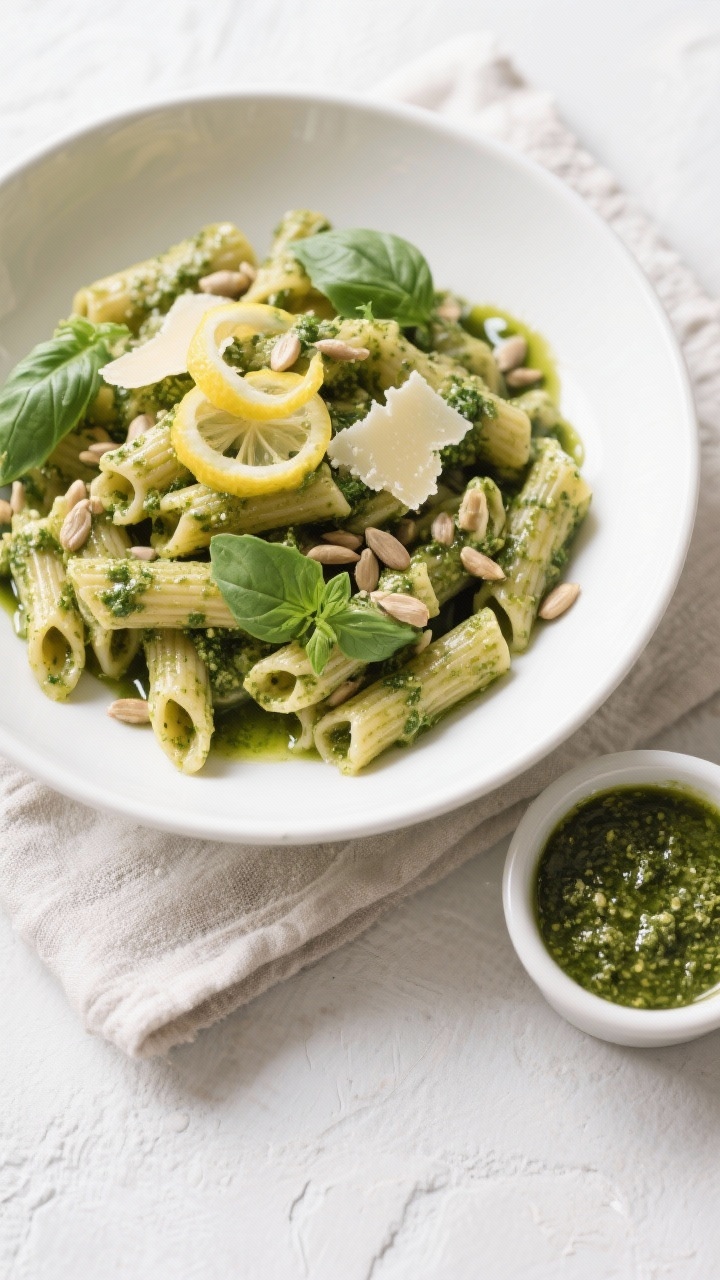
Short, ridged shapes like fusilli or casarecce hold pesto well. Long strands like spaghetti also work—reserve a little pasta water to help the sauce cling.
How do I keep the pesto bright green?
Use fresh herbs, avoid over-blending, and finish with a thin layer of oil on top when storing. A touch of lemon juice also helps slow oxidation.
Can I make it vegan?
Yes.
Replace Parmesan with a dairy-free Parmesan or nutritional yeast. Taste and adjust salt because Parmesan contributes both salt and umami.
What if I don’t have sunflower seeds?
Pumpkin seeds, hemp hearts, or even roasted chickpeas can substitute. Each will change the flavor slightly, but all provide body and richness.
How much pesto do I need for pasta?
Plan on about 1/4 cup of pesto per serving of cooked pasta.
Loosen with a splash of hot pasta water for a glossy, even coating.
Can I use dried basil?
Fresh basil is essential for classic pesto flavor and texture. Dried basil won’t deliver the same aroma or color. If you’re short on basil, bulk it up with spinach or parsley.
Is it okay to warm pesto?
Avoid simmering.
Heat can dull the color and flavor. Toss pesto with hot pasta off the heat or warm it gently with a splash of pasta water.
How can I reduce the garlic bite?
Use fewer cloves, remove the germ in the center, or briefly blanch the garlic. You can also let the finished pesto rest 10–15 minutes; the flavors mellow as they sit.
Final Thoughts
Nut Free Pesto is proof that you don’t need pine nuts to get that classic, fresh, full-flavored sauce.
With a few smart swaps, you’ll have a versatile condiment that brightens everything from pasta to roasted vegetables. Keep a jar in the fridge, freeze a batch for busy nights, and tweak the herbs and seeds to match your taste. Simple, flexible, and weeknight-ready—this is a staple worth making again and again.
Printable Recipe Card
Want just the essential recipe details without scrolling through the article? Get our printable recipe card with just the ingredients and instructions.