
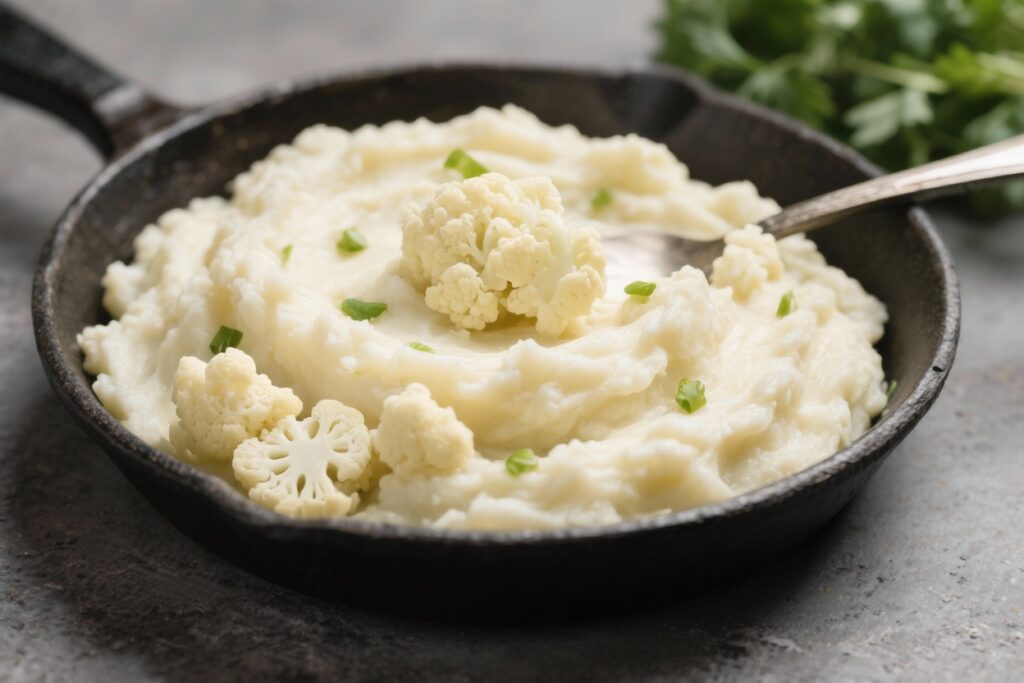
Mashed cauliflower is the kind of side dish that wins over skeptics with one spoonful. It’s creamy, fluffy, and full of flavor, yet lighter than traditional mashed potatoes. Whether you’re cutting carbs, adding more veggies, or just trying something new, this mash delivers comfort without the heaviness.
It pairs well with everything from roast chicken to grilled salmon, and it’s easy to customize. Best of all, it comes together fast, with simple ingredients you probably already have.
Ingredients
Method
-
Prep the cauliflower: Remove the leaves and core. Cut the head into medium florets. Rinse and drain well.
-
Cook the cauliflower: Steam or boil until fork-tender, about 8–10 minutes.
It should be very soft but not falling apart.
-
Drain thoroughly: If boiled, drain in a colander. Let it sit for 2–3 minutes to release steam. For extra dryness, pat gently with a clean towel or return to the hot pot over low heat for 1 minute, stirring to evaporate moisture.
-
Sauté the garlic: In a small pan, melt the butter over medium-low heat.
Add garlic and cook 30–60 seconds until fragrant but not browned.
-
Blend or mash: Transfer cauliflower to a food processor, blender, or back to the pot. Add the garlic butter, sour cream or yogurt, and half the milk/cream. Process or mash until smooth and creamy.
Add more milk as needed to reach your desired consistency.
-
Season and enrich: Mix in Parmesan (if using), salt, pepper, and a pinch of nutmeg. Taste and adjust seasoning.
-
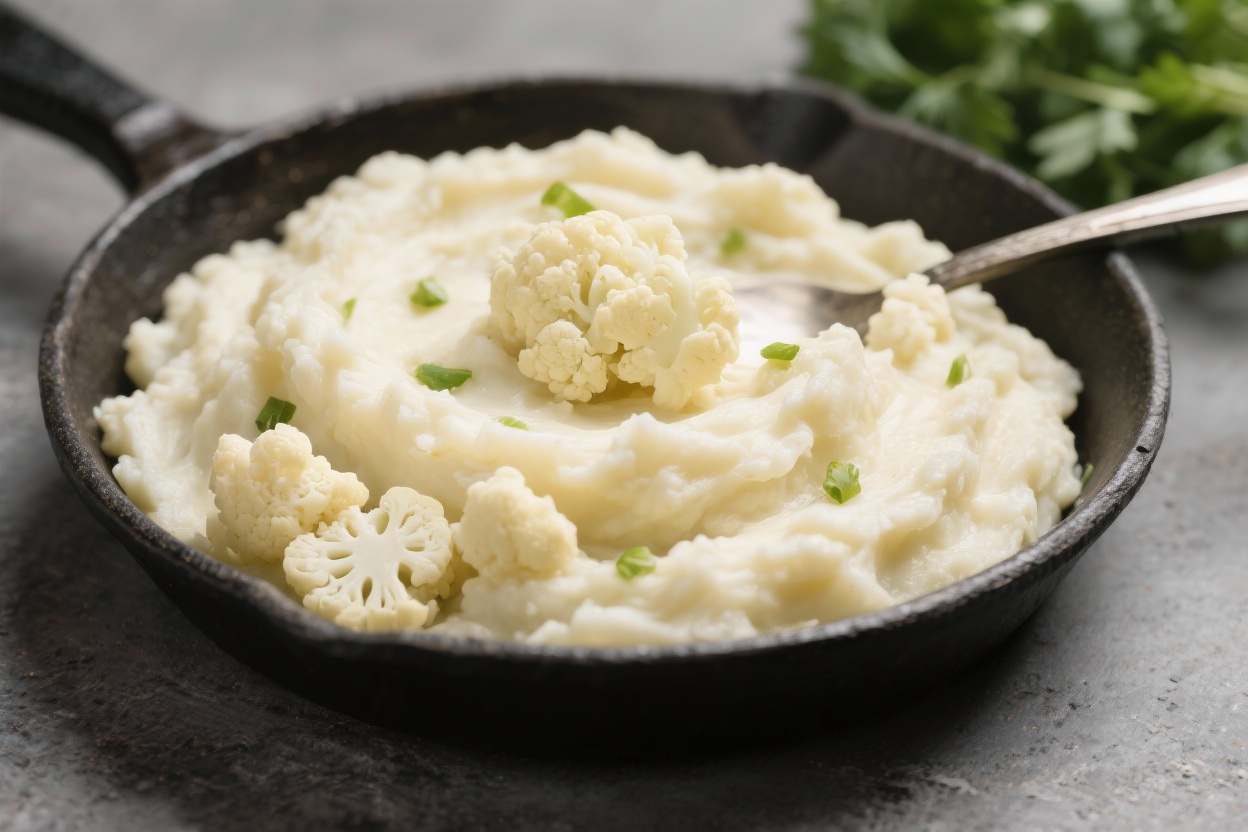
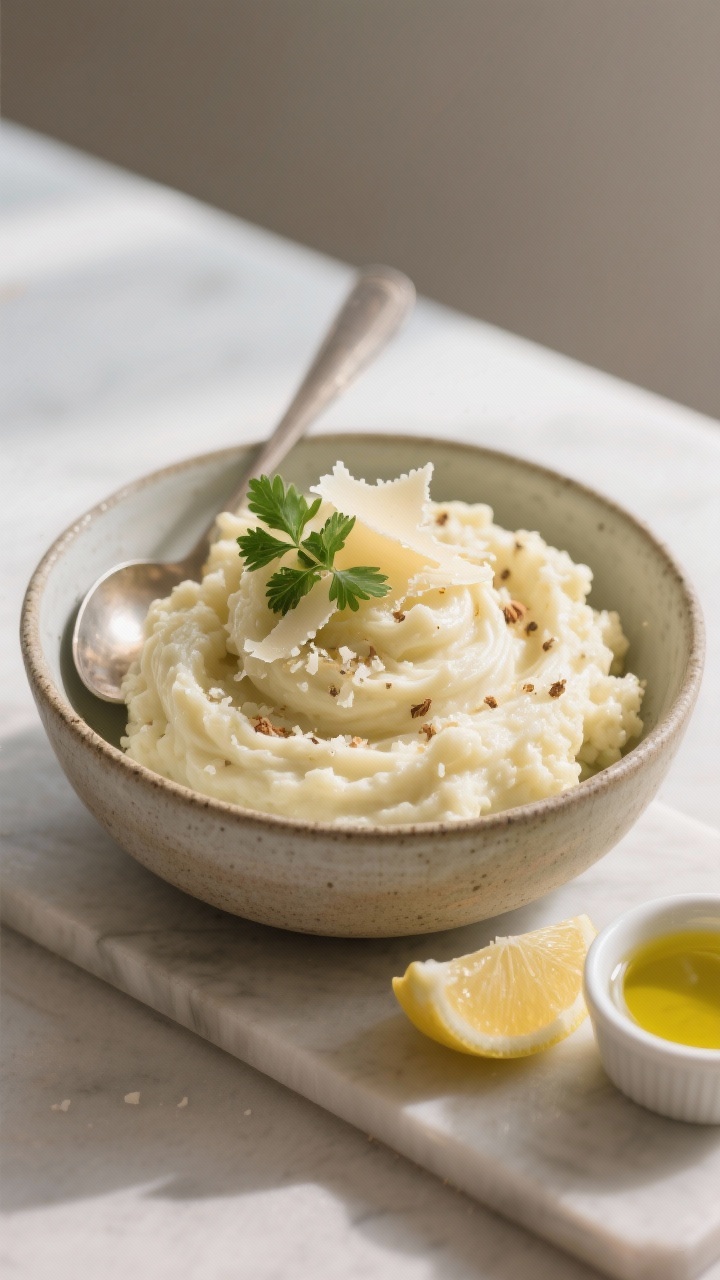
Serve: Spoon into a warm bowl. Top with chopped chives or parsley, a drizzle of olive oil or a small pat of butter, and extra pepper.
What Makes This Special

This mashed cauliflower is more than a swap—it’s a delicious dish in its own right. The key is cooking the cauliflower until tender, then removing excess moisture so you get a silky, not watery, texture.
A little dairy, fat, and seasoning make it taste rich and satisfying.
- Light but satisfying: Creamy texture without the heaviness of potatoes.
- Quick to make: Ready in about 20–25 minutes.
- Flexible: Easy to make dairy-free, vegan, or extra indulgent.
- Flavor-forward: Garlic, butter, and a touch of cheese add depth.
Ingredients
- 1 large head of cauliflower (about 2 to 2.5 pounds), cut into florets
- 2 tablespoons unsalted butter (or olive oil for dairy-free)
- 2–3 cloves garlic, smashed or minced
- 1/4 cup sour cream or Greek yogurt (optional for extra creaminess)
- 2–4 tablespoons milk or cream (dairy or unsweetened plant milk), as needed
- 1/4 cup grated Parmesan (optional but recommended)
- Salt and freshly ground black pepper, to taste
- 1–2 tablespoons fresh chives or parsley, chopped (optional garnish)
- Pinch of nutmeg (optional, adds warmth)
Step-by-Step Instructions

- Prep the cauliflower: Remove the leaves and core. Cut the head into medium florets. Rinse and drain well.
- Cook the cauliflower: Steam or boil until fork-tender, about 8–10 minutes.
It should be very soft but not falling apart.
- Drain thoroughly: If boiled, drain in a colander. Let it sit for 2–3 minutes to release steam. For extra dryness, pat gently with a clean towel or return to the hot pot over low heat for 1 minute, stirring to evaporate moisture.
- Sauté the garlic: In a small pan, melt the butter over medium-low heat.
Add garlic and cook 30–60 seconds until fragrant but not browned.
- Blend or mash: Transfer cauliflower to a food processor, blender, or back to the pot. Add the garlic butter, sour cream or yogurt, and half the milk/cream. Process or mash until smooth and creamy.
Add more milk as needed to reach your desired consistency.
- Season and enrich: Mix in Parmesan (if using), salt, pepper, and a pinch of nutmeg. Taste and adjust seasoning.
- Serve: Spoon into a warm bowl. Top with chopped chives or parsley, a drizzle of olive oil or a small pat of butter, and extra pepper.
How to Store
- Refrigerator: Store in an airtight container for up to 3–4 days.
- Freezer: Freeze in a freezer-safe container for up to 2 months.
Thaw overnight in the fridge.
- Reheat: Warm gently on the stovetop over low heat or in the microwave, stirring occasionally. Add a splash of milk or broth to loosen if needed.
- Make-ahead tip: You can cook and drain the cauliflower a day ahead. Reheat and mash with the other ingredients just before serving.

Health Benefits
Cauliflower is naturally low in carbs and calories, making this mash a lighter option that still feels comforting.
It’s also rich in vitamin C and a good source of fiber, which supports digestion and helps you feel satisfied. If you use olive oil and Greek yogurt, you get a nice balance of healthy fats and protein without heavy cream. The garlic adds antioxidants and a savory punch.
Compared to traditional mashed potatoes, this version is easier on your blood sugar and can fit into many eating styles.
Common Mistakes to Avoid
- Not draining enough: Excess water leads to a runny mash. Let the florets steam-dry and cook off moisture in the warm pot if needed.
- Under-seasoning: Cauliflower is mild. Be generous with salt and pepper, and don’t skip aromatics like garlic or Parmesan.
- Over-blending: A food processor is great, but process just until smooth.
Overdoing it can make the texture pasty.
- Adding too much liquid: Start with less milk and add slowly. It’s easier to loosen than to thicken.
- Skipping fat altogether: A little butter, oil, or dairy makes a big difference in mouthfeel and flavor.
Alternatives
- Dairy-free/vegan: Use olive oil or dairy-free butter. Swap Greek yogurt for a spoonful of unsweetened coconut yogurt or cashew cream.
Skip Parmesan or use nutritional yeast for a cheesy note.
- Roasted cauliflower mash: Roast florets at 425°F (220°C) with a little oil and salt until browned, then mash. This adds deeper flavor and reduces moisture.
- Cauliflower-potato blend: For a more traditional taste, mix equal parts cauliflower and Yukon Gold potatoes. You’ll get extra creaminess with fewer carbs than all-potato mash.
- Herb and spice twists: Try roasted garlic, smoked paprika, fresh thyme, or a squeeze of lemon for brightness.
A pinch of white pepper adds subtle heat.
- Cheesy upgrade: Stir in shredded cheddar, Gruyère, or goat cheese for a richer, more indulgent side.
- Extra protein: Add a dollop of cottage cheese before blending for creaminess and protein without heavy cream.
FAQ
Can I make mashed cauliflower without a food processor?
Yes. A potato masher or immersion blender works well. Just cook the cauliflower until very tender, then mash thoroughly.
An immersion blender gives a smoother finish than a hand masher.
How do I keep it from being watery?
Drain well and let the cauliflower sit to steam off excess moisture. Return it to the hot pot for a minute, stirring, to cook off water. Add liquids gradually and avoid over-blending.
What’s the best way to add more flavor?
Use sautéed garlic or roasted garlic, butter or olive oil, and a salty cheese like Parmesan.
Fresh herbs, black pepper, and a tiny pinch of nutmeg boost depth. A splash of lemon juice can brighten the flavors.
Is mashed cauliflower keto-friendly?
Yes. Cauliflower is low in net carbs, and if you use butter, cream, or olive oil, it fits well within a keto approach.
Just avoid starchy add-ins like potatoes or thickeners.
Can I make it ahead for a dinner party?
Absolutely. Make it up to a day in advance, then reheat gently on the stovetop with a splash of milk or broth. Finish with fresh herbs and a drizzle of olive oil right before serving.
What if I don’t like the taste of cauliflower?
Roasting the florets first gives a sweeter, nuttier flavor.
Adding Parmesan, roasted garlic, or a bit of cream cheese helps mask the stronger notes while keeping the texture silky.
How much salt should I use?
Start with 1/2 teaspoon of kosher salt for a large head of cauliflower, then taste and adjust. Cauliflower needs more seasoning than you might expect, especially if you’re skipping cheese.
In Conclusion
Mashed cauliflower is simple, flavorful, and endlessly adaptable. With the right technique—thorough draining, balanced seasoning, and a touch of richness—you’ll get a smooth, satisfying side that suits weeknights and special dinners alike.
Keep it classic with butter and Parmesan, or go dairy-free with olive oil and herbs. Either way, it’s a smart, tasty upgrade to your side-dish lineup.

Printable Recipe Card
Want just the essential recipe details without scrolling through the article? Get our printable recipe card with just the ingredients and instructions.