
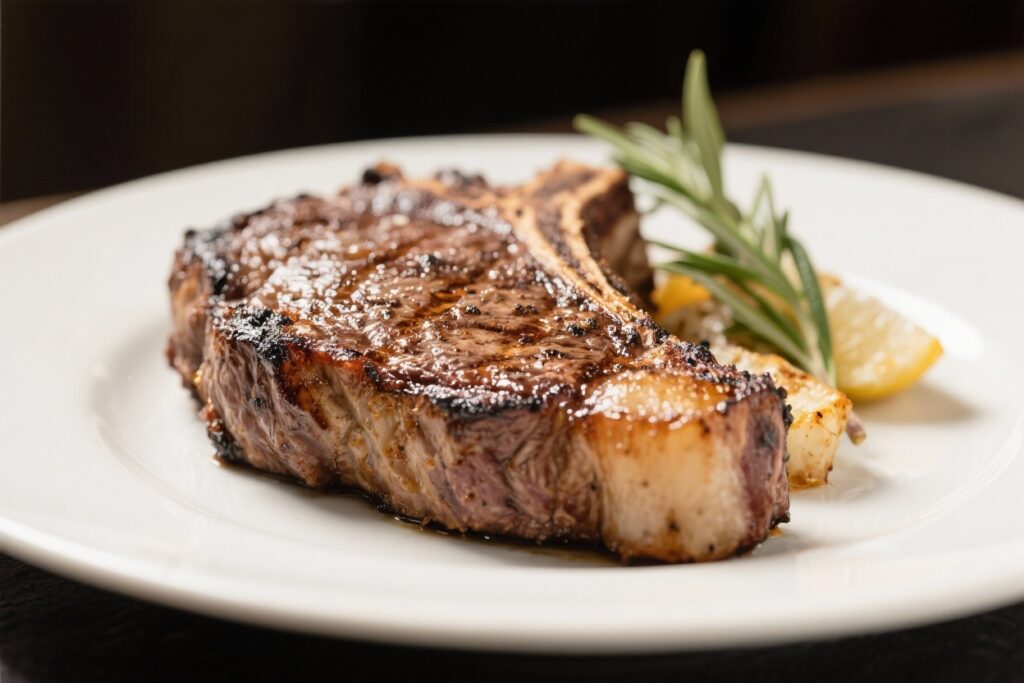
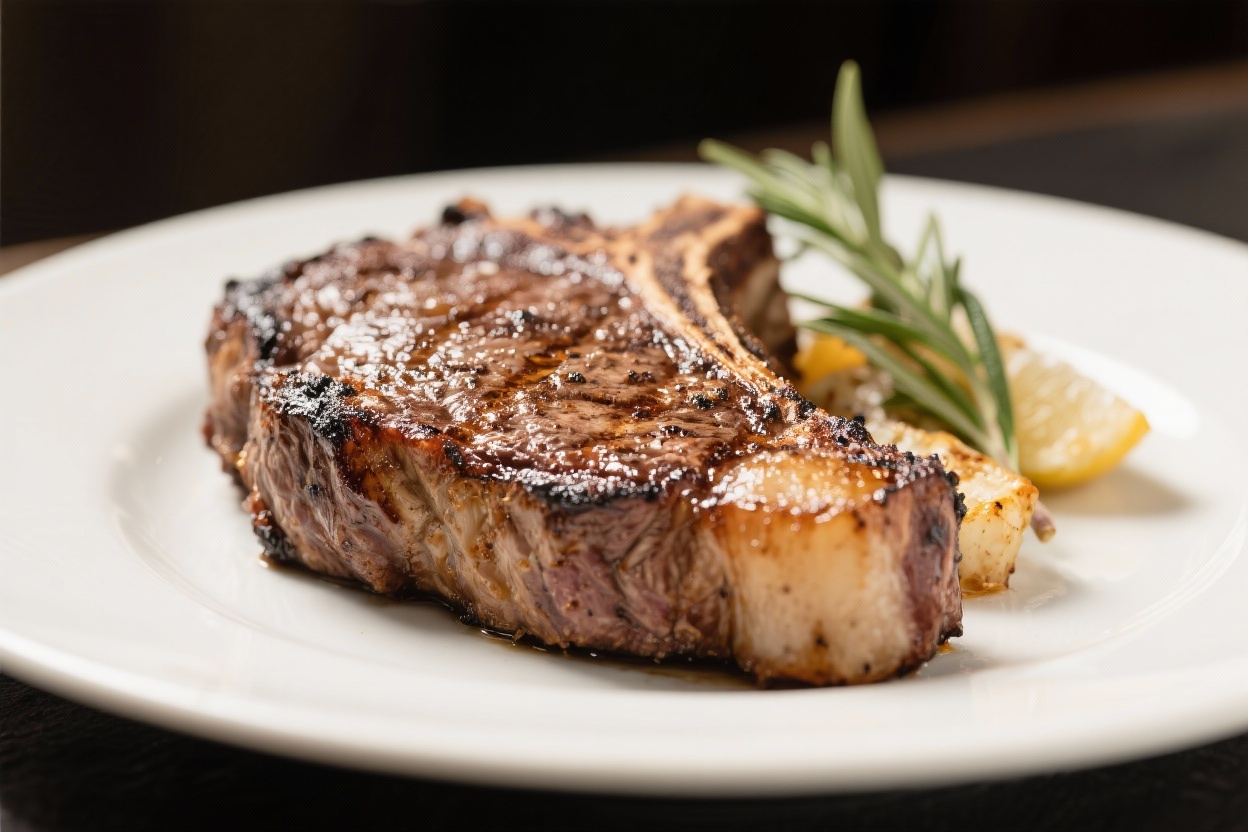
Broiled ribeye is the kind of steak that feels like a special occasion, even on a weeknight. It’s quick, bold, and deeply satisfying—no grill required. The broiler gives you that gorgeous crust, the center stays juicy, and dinner hits the table fast.
If you’re craving steakhouse results without stepping outside, this is your move. Grab a thick-cut ribeye, a hot pan, and a few basic seasonings, and you’re set.
Ingredients
Method
-
Bring the steak to room temp: Pat the ribeye dry and let it sit out for 30–45 minutes. This helps it cook more evenly and develop a better crust.
-
Preheat the broiler and pan: Set your oven rack 6 inches from the broiler element.
Place a cast-iron skillet or broiler pan under the broiler for 10 minutes until very hot.
-
Season generously: Coat the steak lightly with oil. Season both sides with kosher salt and lots of black pepper. Don’t be shy—ribeye can handle it.
-
Sear under the broiler: Carefully slide the hot pan out, add a thin film of oil if needed, and place the steak in the pan.
Return to the oven directly under the broiler.
-
Broil the first side: Cook 4–5 minutes, until the top is well browned and the edges begin to char slightly.
-
Flip and add flavor: Flip the steak. Dot with butter and add smashed garlic and herbs to the pan. Tilt the pan slightly and spoon the melted butter over the steak once or twice.
-
Finish to temperature: Broil another 3–5 minutes, depending on thickness.
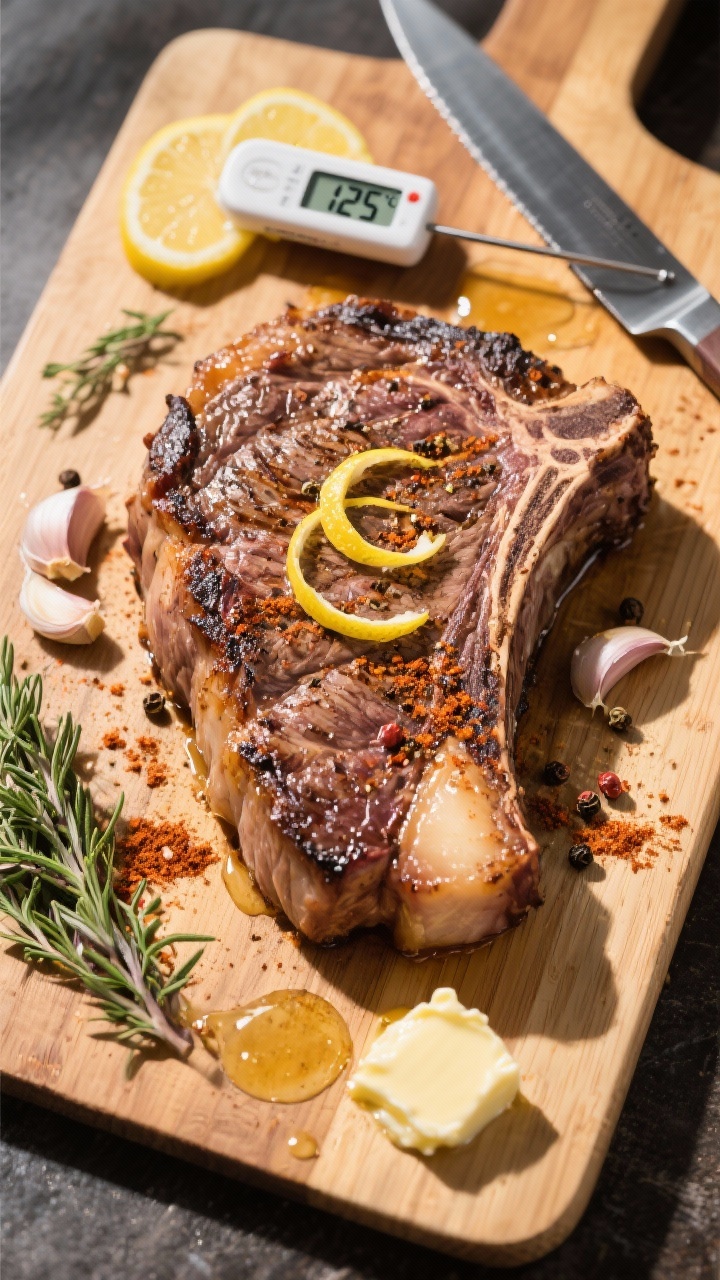
Aim for 120–125°F for rare, 130–135°F for medium-rare, 140–145°F for medium. Use an instant-read thermometer for accuracy.
-
Rest the steak: Transfer to a cutting board and rest 7–10 minutes. The juices will redistribute, keeping the steak tender.
-
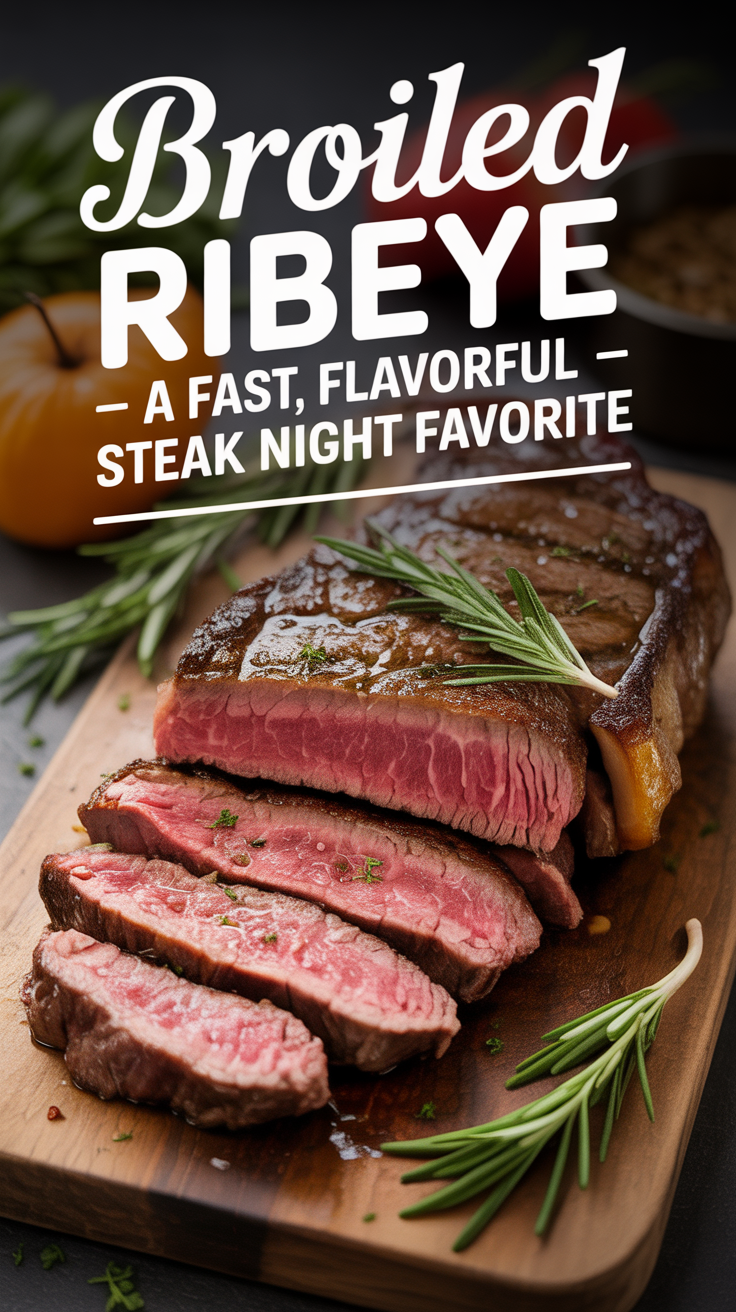
Slice and serve: Slice against the grain if serving sliced.
Spoon any pan juices over the top and finish with a squeeze of lemon if you like.
What Makes This Recipe So Good
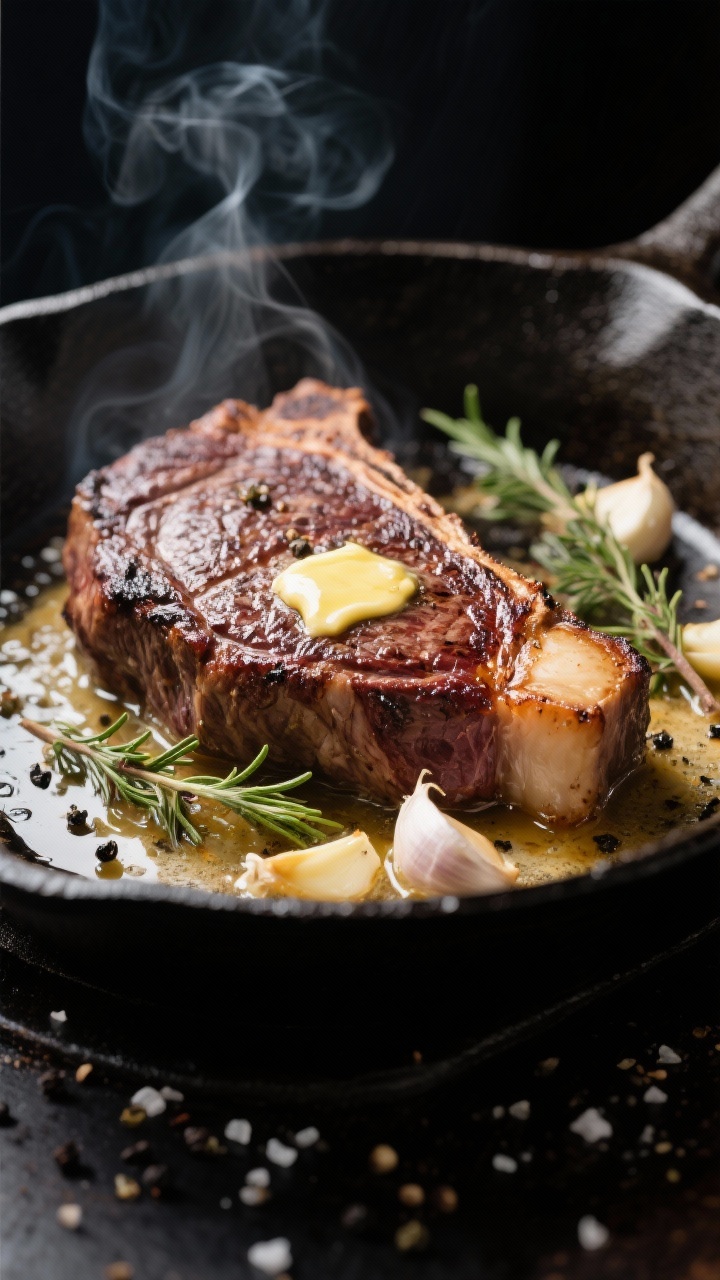
- Big flavor, minimal effort: Ribeye is naturally rich and well-marbled, so it shines with just salt, pepper, and heat.
- Great crust from the broiler: High, direct heat creates a beautiful char without overcooking the center.
- Perfect for thick steaks: A 1 to 1½-inch ribeye broils quickly yet stays tender and juicy inside.
- No special gear needed: A sturdy, oven-safe skillet or a broiler pan is all you need.
- Customizable: Finish with butter, herbs, or a squeeze of lemon for your ideal flavor.
What You’ll Need
- 1 ribeye steak (1 to 1½ inches thick, about 12–16 ounces)
- Kosher salt and freshly ground black pepper
- High-heat oil (avocado, canola, or grapeseed)
- 2 tablespoons unsalted butter
- 2–3 garlic cloves, lightly smashed
- Fresh herbs (thyme or rosemary), optional
- Lemon wedge, optional for serving
How to Make It
- Bring the steak to room temp: Pat the ribeye dry and let it sit out for 30–45 minutes. This helps it cook more evenly and develop a better crust.
- Preheat the broiler and pan: Set your oven rack 6 inches from the broiler element.
Place a cast-iron skillet or broiler pan under the broiler for 10 minutes until very hot.
- Season generously: Coat the steak lightly with oil. Season both sides with kosher salt and lots of black pepper. Don’t be shy—ribeye can handle it.
- Sear under the broiler: Carefully slide the hot pan out, add a thin film of oil if needed, and place the steak in the pan.
Return to the oven directly under the broiler.
- Broil the first side: Cook 4–5 minutes, until the top is well browned and the edges begin to char slightly.
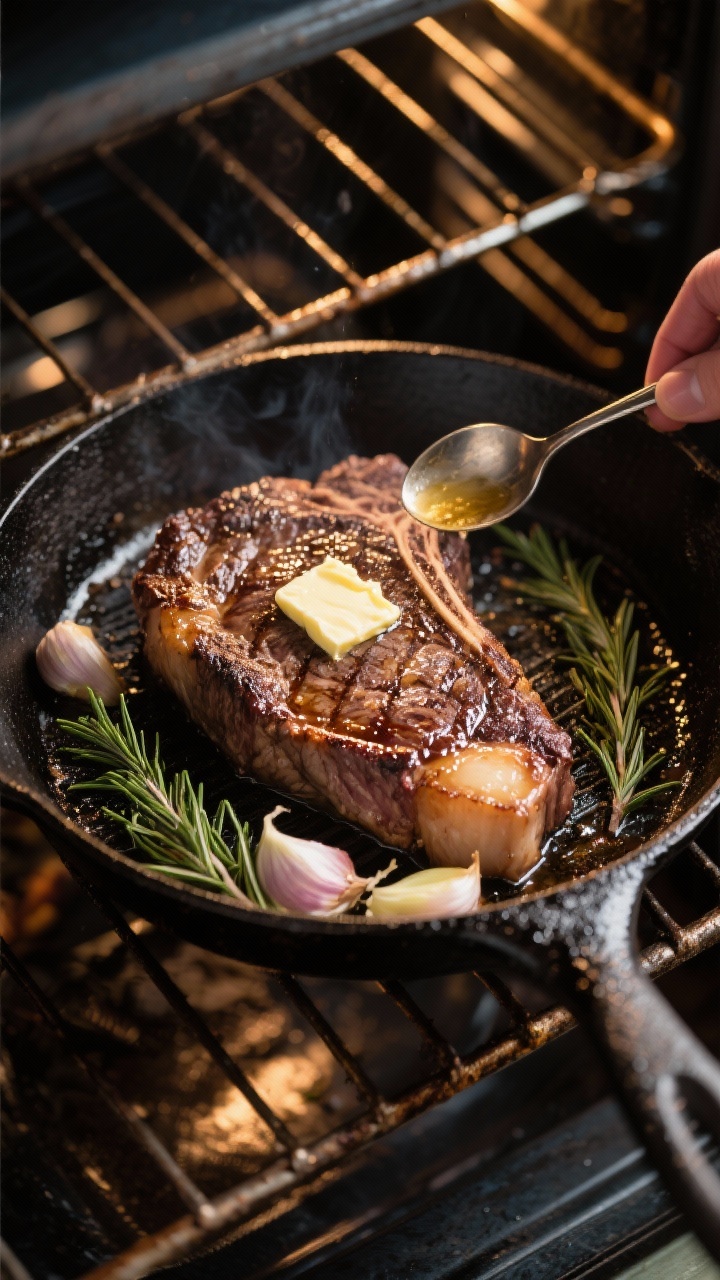
- Flip and add flavor: Flip the steak. Dot with butter and add smashed garlic and herbs to the pan. Tilt the pan slightly and spoon the melted butter over the steak once or twice.
- Finish to temperature: Broil another 3–5 minutes, depending on thickness.
Aim for 120–125°F for rare, 130–135°F for medium-rare, 140–145°F for medium. Use an instant-read thermometer for accuracy.
- Rest the steak: Transfer to a cutting board and rest 7–10 minutes. The juices will redistribute, keeping the steak tender.
- Slice and serve: Slice against the grain if serving sliced.
Spoon any pan juices over the top and finish with a squeeze of lemon if you like.
Storage Instructions
- Refrigerate: Cool completely, then store in an airtight container for up to 3 days.
- Reheat gently: Warm in a low oven (250°F) until just heated through, or slice and reheat briefly in a skillet with a bit of butter. Avoid microwaving on high—it toughens the meat.
- Repurpose: Thinly slice and use in steak salads, tacos, or sandwiches. It’s great cold over greens with a vinaigrette.
- Freezing: Not ideal for cooked steak texture, but possible.
Wrap tightly and freeze up to 2 months. Thaw in the fridge before reheating gently.

Health Benefits
- High-quality protein: Ribeye delivers complete protein, which supports muscle repair and keeps you full longer.
- Iron and B vitamins: Steak is rich in heme iron, B12, and niacin—nutrients that support energy, cognition, and red blood cell production.
- Healthy fats in moderation: Ribeye is marbled, which makes it tender and flavorful. Enjoy it as part of a balanced diet with veggies and whole grains.
- Customizable sodium and fat: You control the salt, and a small amount of butter goes a long way when broiling.
What Not to Do
- Don’t broil a cold steak: Going straight from the fridge to high heat leads to uneven cooking and a gray band around the center.
- Don’t skip drying the surface: Moisture prevents browning.
Pat the steak dry before seasoning.
- Don’t crowd the pan: If you’re cooking multiple steaks, give them space so they sear instead of steam.
- Don’t rely on time alone: Thickness varies. Use an instant-read thermometer for the best results.
- Don’t cut into it right away: Resting is non-negotiable if you want juicy steak.
Variations You Can Try
- Garlic-herb crust: Mix softened butter with minced garlic, chopped parsley, and thyme. Spread a thin layer on the steak after cooking and let it melt as it rests.
- Peppercorn rub: Coarsely crush black peppercorns with a bit of kosher salt and press onto the steak before broiling for a steak au poivre vibe.
- Smoky spice blend: Combine smoked paprika, garlic powder, onion powder, and a pinch of cayenne.
Sprinkle lightly before broiling.
- Citrus finish: Brighten the richness with lemon zest and a squeeze of lemon just before serving.
- Blue cheese butter: Mash blue cheese with butter and chives. Add a small dollop to the hot steak to melt.
- Balsamic glaze: Drizzle a little balsamic reduction over sliced steak for a sweet-savory contrast.
FAQ
Do I need a cast-iron skillet?
A heavy, oven-safe skillet like cast iron gives the best crust and retains heat well. If you don’t have one, use a broiler pan or a sturdy sheet pan with a wire rack to allow airflow and prevent steaming.
How thick should the ribeye be?
Aim for 1 to 1½ inches thick.
Thinner steaks cook too fast under the broiler and can overcook before they develop a nice crust.
What if I don’t have an instant-read thermometer?
You can use the touch test: rare feels soft and squishy, medium-rare has slight spring, and medium feels firmer. Still, a thermometer is the most reliable way to hit your target doneness.
Should I marinate ribeye?
It’s not necessary. Ribeye is already flavorful due to the marbling.
A simple salt-and-pepper seasoning does the job, with butter and herbs added for richness.
Can I broil from a lower oven rack?
You can, but you’ll get less browning and slower cooking. Keep the steak around 6 inches from the broiler for that steakhouse-style crust.
How do I prevent smoke?
Use a clean, dry pan, choose a high-heat oil, and make sure your steak is well dried. Turn on your vent or open a window.
A little smoke is normal with high heat.
Is resting really necessary?
Yes. Resting 7–10 minutes allows juices to redistribute so the steak stays moist when you slice it. Skipping this step can lead to a drier result.
What sides go well with broiled ribeye?
Try roasted potatoes, sautéed mushrooms, creamed spinach, or a crisp salad.
A simple pan sauce from the drippings and a splash of stock is a nice touch too.
Can I cook two steaks at once?
Yes, if your pan and broiler have the space. Leave room between the steaks and rotate the pan halfway through if your broiler heats unevenly.
How do I make it dairy-free?
Skip the butter and baste with oil. You can still add flavor with garlic, herbs, and a squeeze of lemon at the end.
Wrapping Up
Broiled ribeye is simple, fast, and incredibly satisfying.
With a hot pan, generous seasoning, and a brief rest, you’ll get a steak that rivals your favorite steakhouse. Keep the technique straightforward, finish with a little butter or bright citrus, and enjoy a reliable, crowd-pleasing dinner any night of the week.
Printable Recipe Card
Want just the essential recipe details without scrolling through the article? Get our printable recipe card with just the ingredients and instructions.