
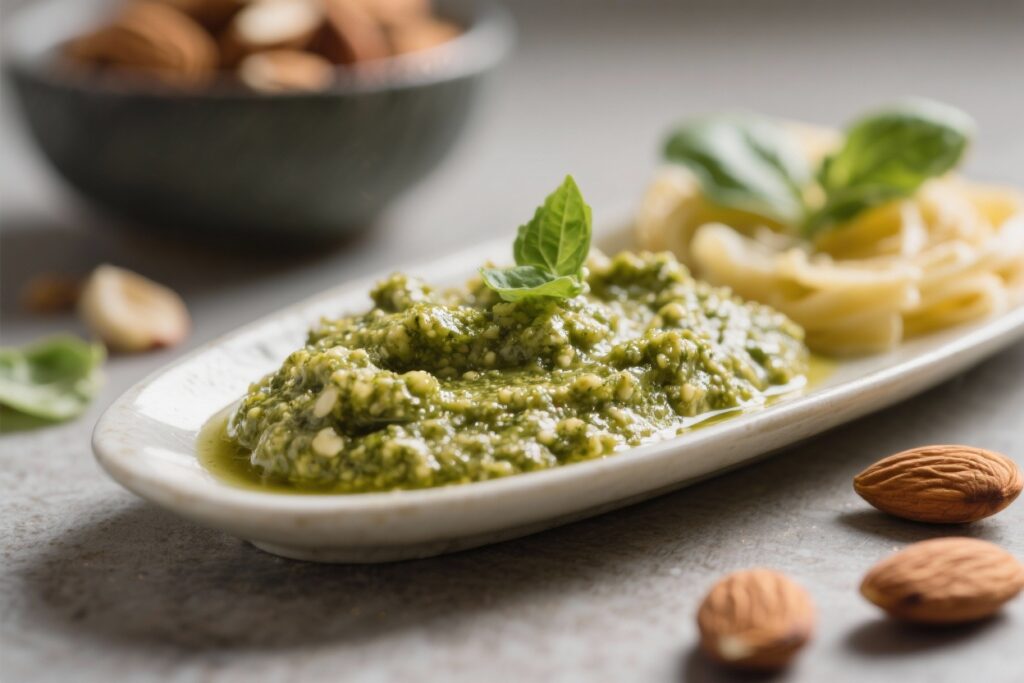
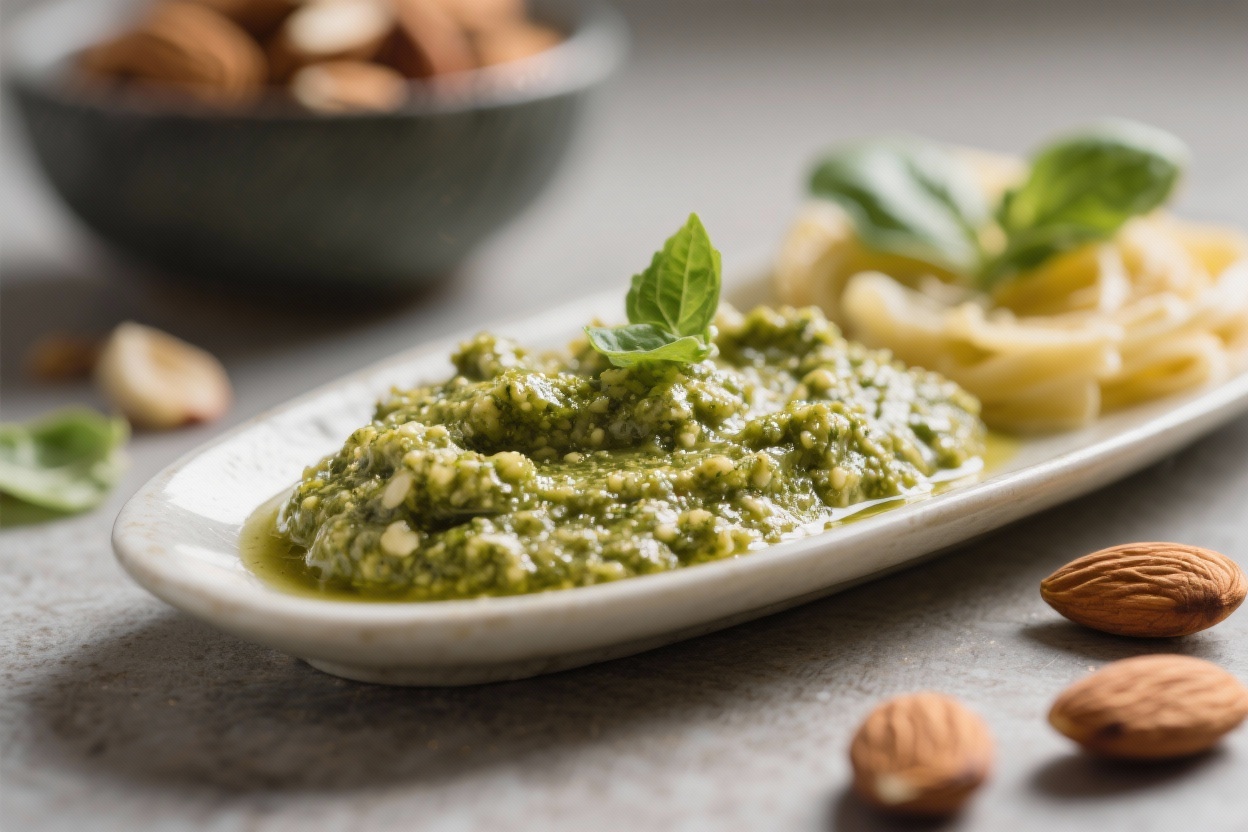
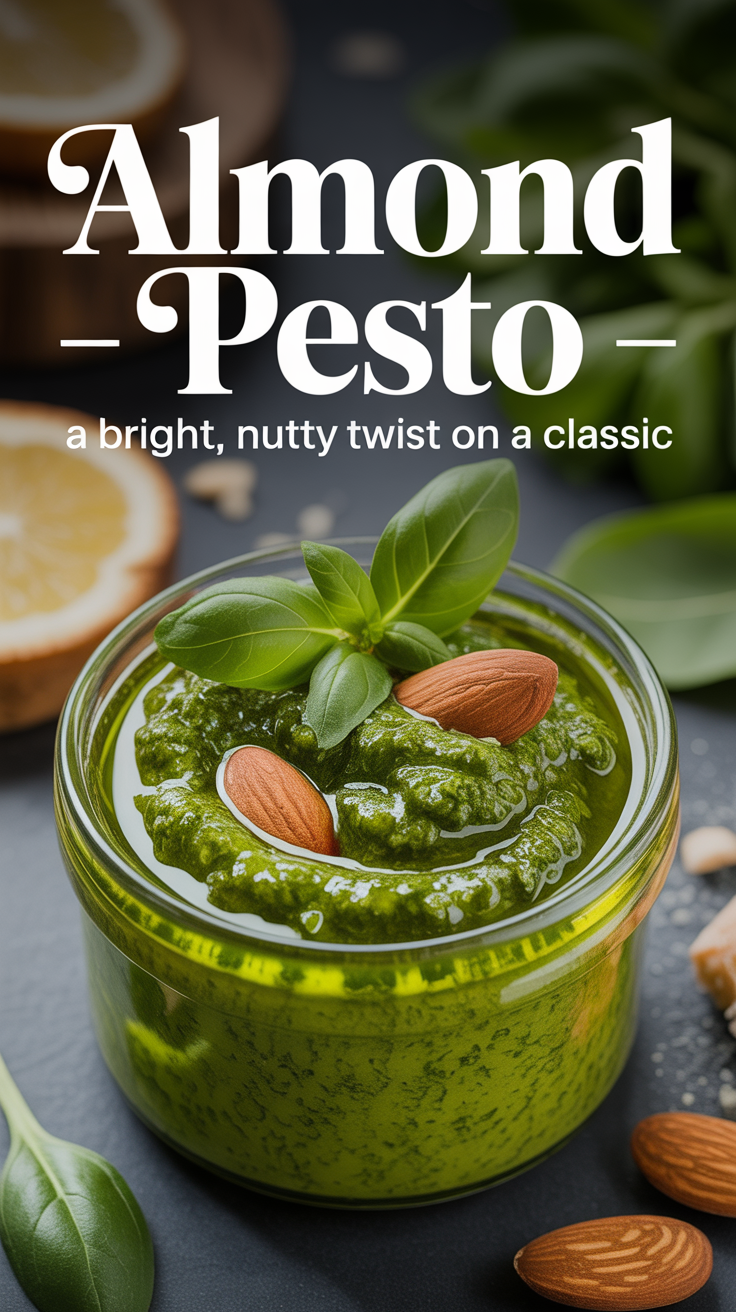
Almond pesto is a fresh, flavorful spread that adds instant charm to pasta, sandwiches, and roasted veggies. It’s a simple blend of herbs, nuts, oil, and cheese, but the almonds give it a gentle sweetness and a round, toasty flavor. You don’t need special equipment or fancy ingredients—just a food processor and a handful of pantry staples.
It’s easy to make, easy to freeze, and endlessly versatile. If you love basil pesto but want something a little different, this version is a great addition to your kitchen routine.
Ingredients
Method
-
Toast the almonds. Warm a dry skillet over medium heat. Add the almonds and toast for 3–5 minutes, stirring often, until fragrant and lightly golden.
Let them cool for a few minutes so they don’t wilt the basil.
-
Prepare your basil. Rinse the leaves and pat them completely dry. Excess water can thin the pesto and mute the flavor.
-
Pulse the almonds and garlic. In a food processor, add the cooled almonds and 1 clove of garlic. Pulse until finely chopped.
This step builds a consistent base.
-
Add basil and cheese. Add the basil leaves and grated parmesan. Pulse several times until everything is finely chopped and combined.
-
Stream in the olive oil. With the machine running, slowly drizzle in 1/2 cup olive oil. Stop and scrape the bowl.
If you want a looser pesto, add up to 1/4 cup more oil or a splash of water.
-
Season and brighten. Add 1–2 teaspoons of lemon juice, a pinch of salt, and a few grinds of pepper. Pulse to combine, then taste. Adjust salt, lemon, and garlic to your liking.
-
Finish and use. If you plan to toss the pesto with hot pasta, reserve a little pasta water.
Add a spoonful to the pesto when mixing to help it cling and turn glossy.
Why This Recipe Works
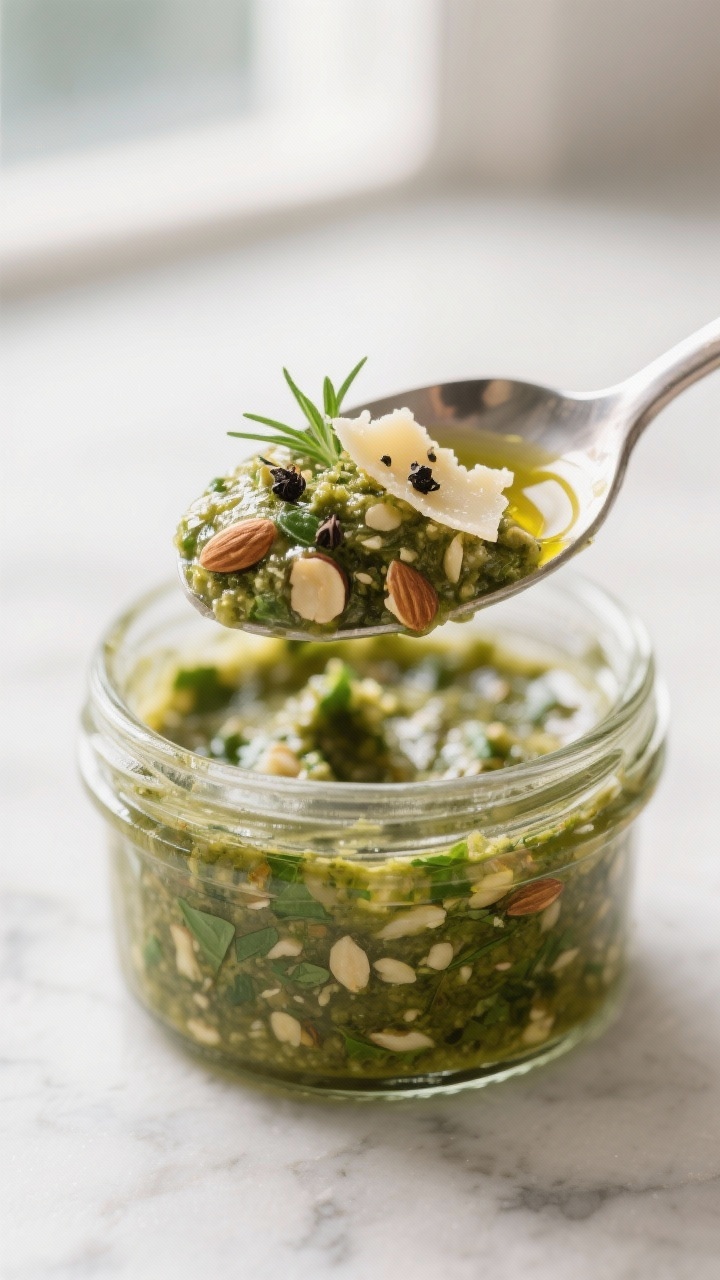
This almond pesto swaps pine nuts for almonds, which are more affordable and widely available. Almonds also add a creamy body and a subtle sweetness that pairs beautifully with basil and parmesan.
Toasting the almonds brings out a deeper, nuttier flavor that makes the pesto taste richer.
A splash of lemon juice brightens everything and helps balance the olive oil and cheese.
The process is quick and forgiving. You can adjust texture and seasoning as you go, and the ingredients are flexible—perfect for weeknights or meal prep.
Shopping List
- Fresh basil (about 2 packed cups)
- Raw almonds (whole or slivered; 1/2 cup)
- Extra-virgin olive oil (1/2 to 3/4 cup)
- Parmesan cheese, finely grated (1/2 cup)
- Garlic (1–2 cloves, to taste)
- Lemon (1, for juice and optional zest)
- Salt (kosher or sea salt)
- Black pepper (freshly ground)
- Optional add-ins: fresh parsley, red pepper flakes, or a spoonful of water for lighter texture
Step-by-Step Instructions
- Toast the almonds. Warm a dry skillet over medium heat. Add the almonds and toast for 3–5 minutes, stirring often, until fragrant and lightly golden.
Let them cool for a few minutes so they don’t wilt the basil.
- Prepare your basil. Rinse the leaves and pat them completely dry. Excess water can thin the pesto and mute the flavor.
- Pulse the almonds and garlic. In a food processor, add the cooled almonds and 1 clove of garlic. Pulse until finely chopped.
This step builds a consistent base.
- Add basil and cheese. Add the basil leaves and grated parmesan. Pulse several times until everything is finely chopped and combined.
- Stream in the olive oil. With the machine running, slowly drizzle in 1/2 cup olive oil. Stop and scrape the bowl.
If you want a looser pesto, add up to 1/4 cup more oil or a splash of water.
- Season and brighten. Add 1–2 teaspoons of lemon juice, a pinch of salt, and a few grinds of pepper. Pulse to combine, then taste. Adjust salt, lemon, and garlic to your liking.
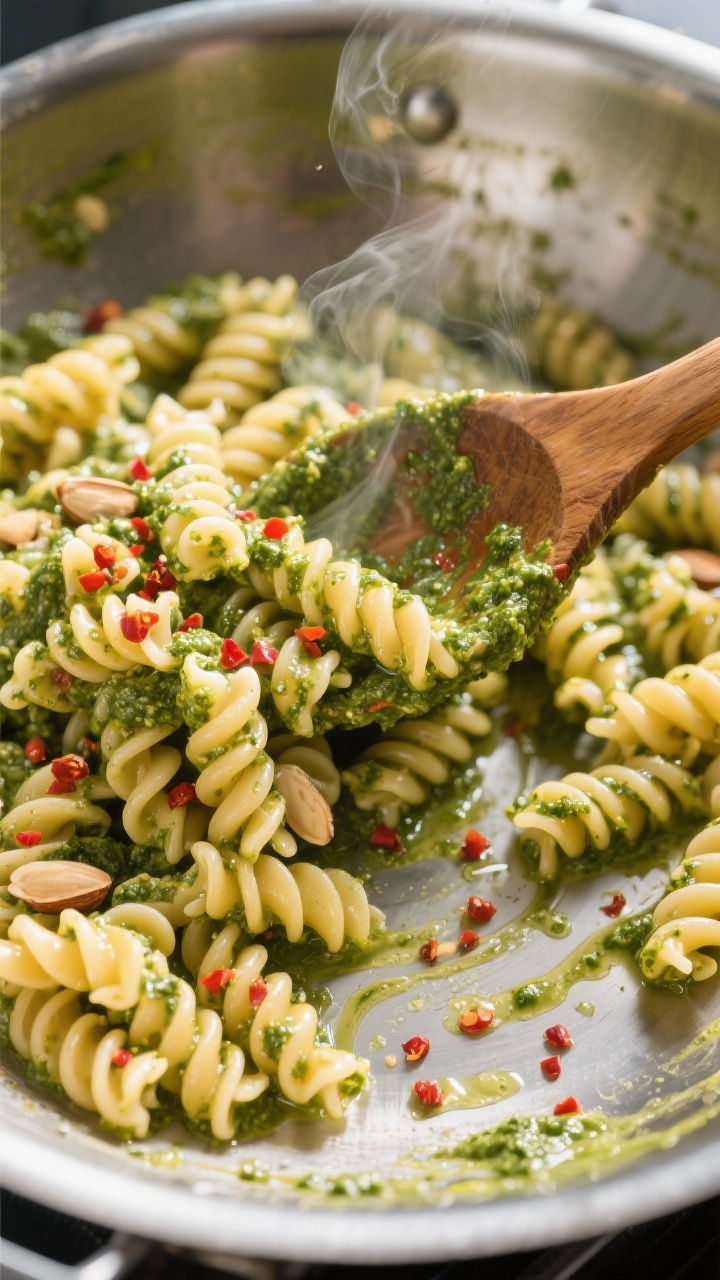
- Finish and use. If you plan to toss the pesto with hot pasta, reserve a little pasta water.
Add a spoonful to the pesto when mixing to help it cling and turn glossy.
How to Store
Short-term: Transfer pesto to a small jar, press plastic wrap directly onto the surface, and seal with a lid. Store in the refrigerator for up to 5 days.
To prevent browning: Smooth the surface and pour a thin layer of olive oil on top. This keeps air out and preserves color and flavor.
Freezing: Freeze in small containers or ice cube trays for up to 3 months.
Thaw in the fridge or at room temperature. Stir and add a splash of oil to refresh.
Health Benefits
Heart-healthy fats: Almonds and olive oil provide monounsaturated fats, which support heart health and help you feel satisfied.
Nutrient-dense: Basil offers antioxidants and vitamin K. Almonds add vitamin E, magnesium, and plant-based protein.
Lower sodium control: Homemade pesto lets you manage salt levels.
You can also choose a lower-sodium cheese or use less parmesan if needed.
Naturally gluten-free: Pesto itself has no gluten, so it’s an easy way to add flavor to gluten-free meals like roasted vegetables, grilled chicken, or gluten-free pasta.
Common Mistakes to Avoid
- Skipping the almond toast. Raw almonds are fine, but toasting adds a deeper flavor that makes the pesto taste restaurant-worthy.
- Overprocessing. If you run the processor too long, you’ll get a paste that’s heavy and oily. Pulse in short bursts to keep a fresh, slightly textured sauce.
- Using wet basil. Water thins the pesto and dulls the flavor. Dry the basil well for a bright, concentrated taste.
- Adding all the oil at once. Drizzle slowly so the sauce emulsifies.
This creates a silky, cohesive pesto instead of a separated one.
- Under-seasoning. Pesto needs enough salt and acid to pop. Taste and adjust with salt and lemon at the end.
- Overheating. Don’t cook pesto. Stir it into warm food off the heat to preserve color and freshness.
Alternatives
- Nut swaps: Use walnuts, cashews, pistachios, or hazelnuts.
Each brings a slightly different flavor and texture.
- Dairy-free version: Replace parmesan with nutritional yeast (start with 2–3 tablespoons) and add extra salt and lemon to balance.
- Herb variations: Mix in parsley, arugula, spinach, or cilantro. If using peppery greens like arugula, add an extra splash of lemon.
- Garlic level: For a milder pesto, use half a clove or roast the garlic first. For a bolder kick, use two cloves.
- Citrus twist: Add 1/2 teaspoon lemon zest for a brighter, more aromatic finish.
- Spice it up: A pinch of red pepper flakes adds gentle heat without overpowering the basil.
FAQ
Can I make almond pesto without a food processor?
Yes.
Use a mortar and pestle for a rustic texture, or chop everything very finely with a sharp knife, then stir in the oil. It takes more time, but the flavor is excellent.
Do I need to peel the almonds?
No. Skins add flavor and color.
If you prefer a smoother, paler pesto, use blanched almonds or rub toasted almonds in a towel to remove some skins.
What’s the best pasta shape for pesto?
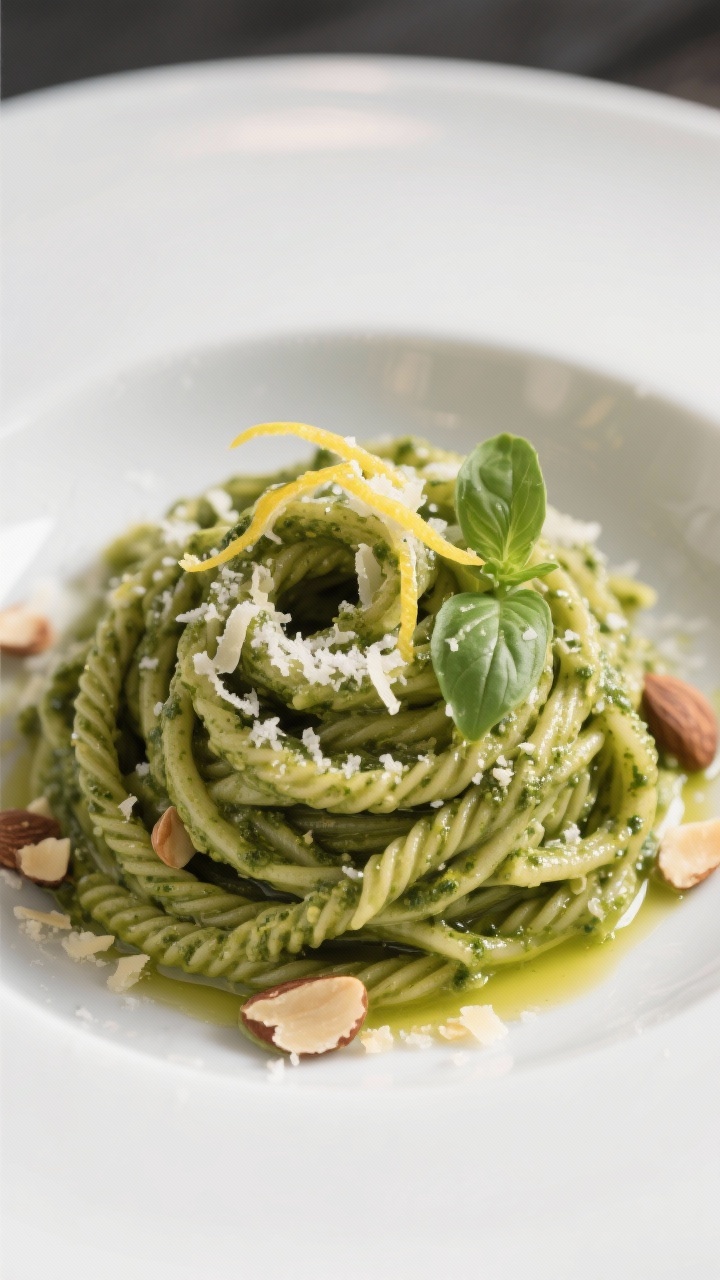
Short, ridged shapes like fusilli or trofie hold pesto well, but spaghetti and linguine work too. Reserve a bit of pasta water to help the sauce cling.
Can I use pre-grated parmesan?
You can, but freshly grated cheese melts and blends better. If using pre-grated, choose a good-quality brand and adjust salt carefully.
Why did my pesto turn brown?
Oxidation.
Exposure to air darkens basil. Press plastic wrap directly on the surface, cover with a thin oil layer, and refrigerate promptly to keep it green.
Is almond pesto safe to freeze with cheese in it?
Yes. The texture may thicken slightly after thawing, but a small splash of olive oil or warm water brings it back to silky.
How much pesto should I use for pasta?
Plan on 1/4 to 1/3 cup per serving of cooked pasta, depending on how saucy you like it.
Loosen with pasta water as needed.
Can I reduce the oil?
Yes. Replace a few tablespoons of oil with cold water for a lighter texture. Adjust salt and lemon to keep the flavor balanced.
In Conclusion
Almond pesto is a fresh, reliable sauce that turns simple ingredients into something special.
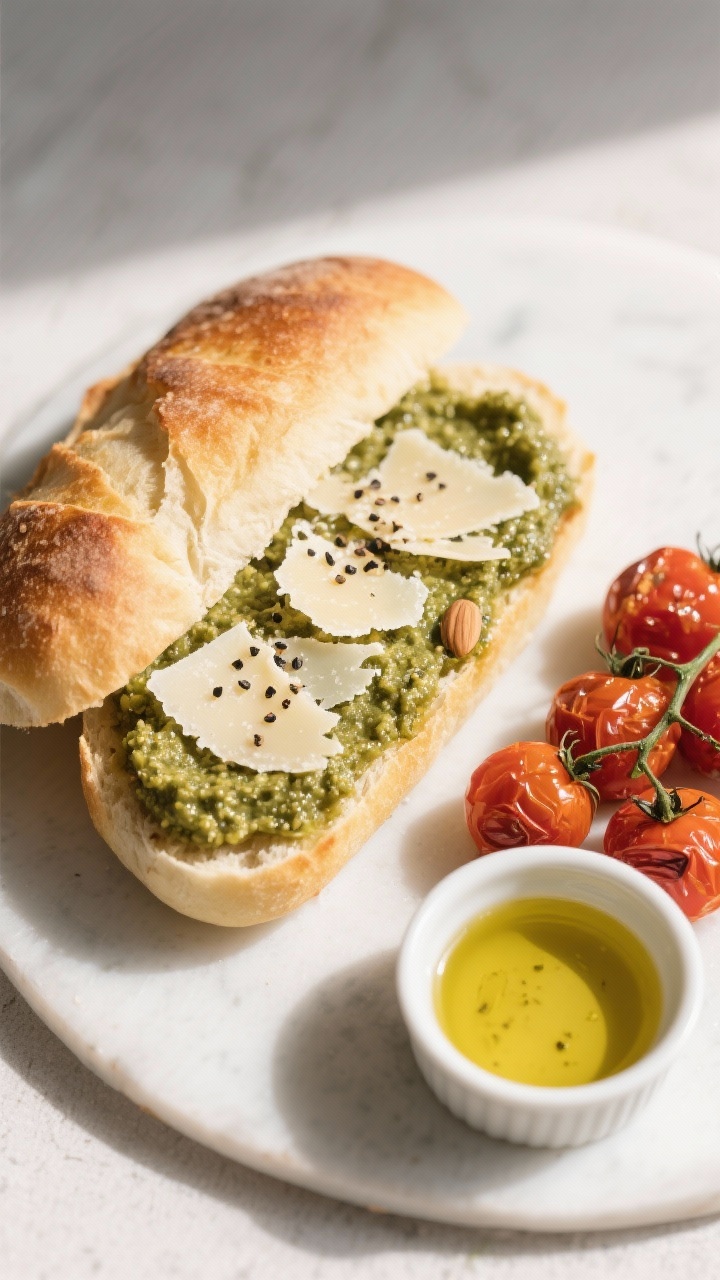
It’s quick to make, easy to customize, and works with everything from pasta to grilled fish. Keep a jar in the fridge, stash some in the freezer, and you’ll always have a bright, nutty boost on hand. Once you make it, you’ll find a dozen ways to use it all week long.
Printable Recipe Card
Want just the essential recipe details without scrolling through the article? Get our printable recipe card with just the ingredients and instructions.