
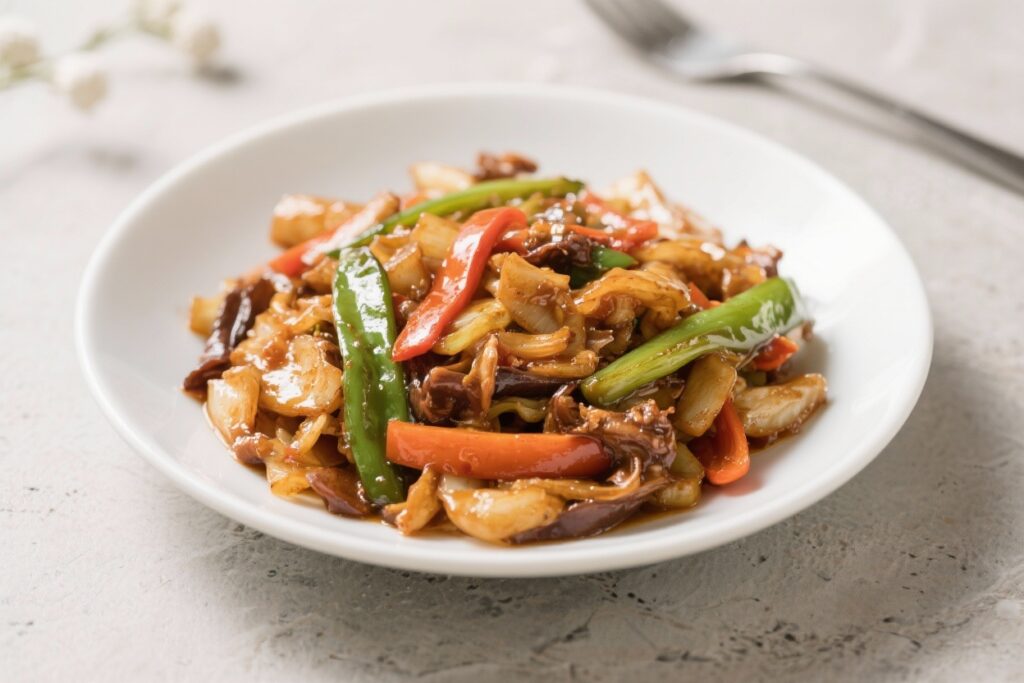
A good stir fry is weeknight magic: fast, satisfying, and full of flavor. This keto version brings all the color and crunch without the sugar or heavy carbs you’d find in takeout sauces. You’ll get tender protein, crisp veggies, and a glossy, savory sauce that clings just right.
It cooks in minutes and tastes like the best kind of shortcut. If you want a go-to low-carb meal that doesn’t feel like a compromise, this is it.
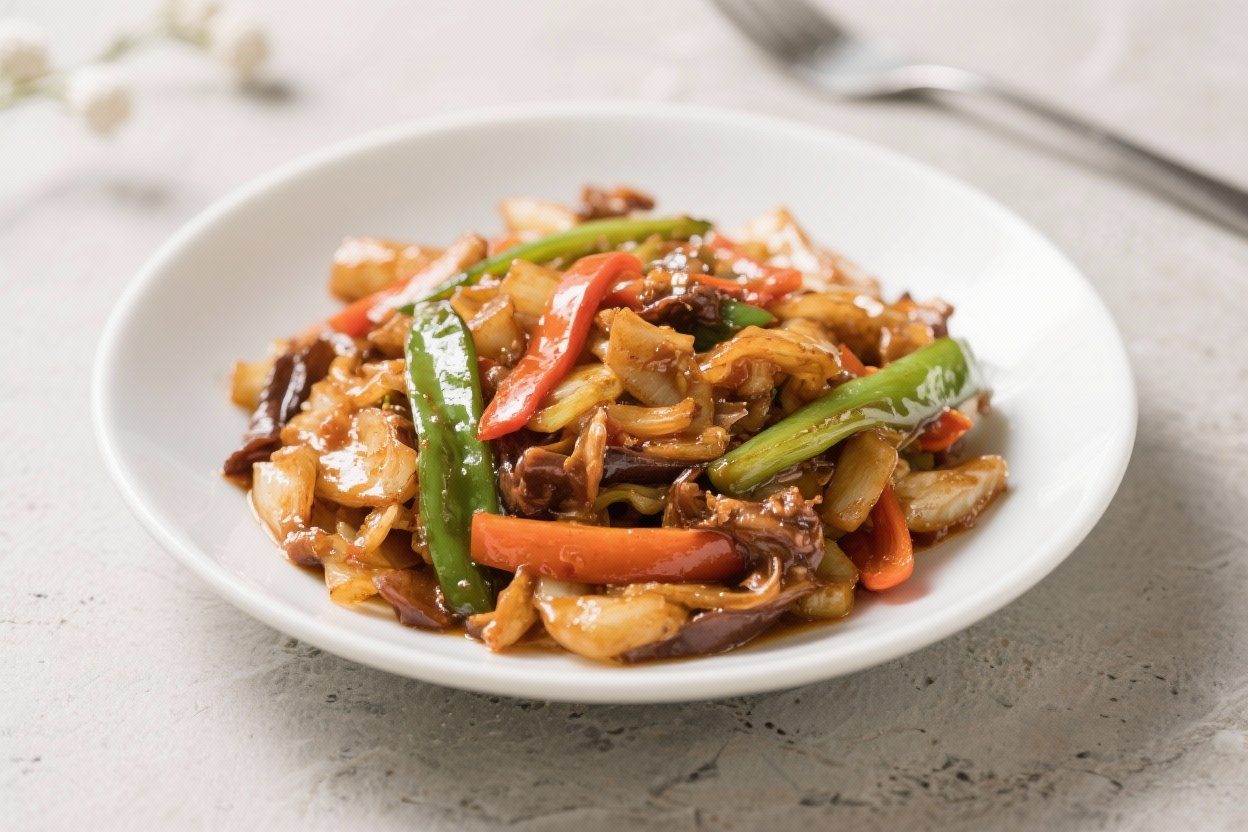
Ingredients
Method
- Prep the sauce. In a small bowl, whisk tamari or coconut aminos, vinegar, sesame oil, broth, chili garlic sauce (if using), pepper, and sweetener. If you want a thick sauce, sprinkle in xanthan gum or glucomannan while whisking until just combined. Set aside.
- Slice everything thin. Cut protein into bite-size pieces. Slice veggies into similar sizes so they cook quickly and evenly. Pat protein dry with paper towels to help it sear.
- Heat the pan properly. Set a large skillet or wok over medium-high heat. Add 1 tablespoon oil and swirl until shimmering.
- Sear the protein. Add the protein in a single layer. Cook without moving for 1–2 minutes to get color, then stir-fry until just cooked through, 2–4 minutes more. Transfer to a plate.
- Stir-fry the veggies. Add remaining oil. Toss in broccoli, peppers, mushrooms, or the firmest veggies first. Stir-fry 2 minutes, then add quicker-cooking veggies like zucchini, cabbage, snow peas, and bok choy. Cook until crisp-tender, about 3–5 minutes total.
- Add aromatics. Push veggies to the sides, add garlic and ginger to the center, and cook 30 seconds until fragrant.
- Combine and sauce. Return the protein and any juices to the pan. Pour in the sauce and toss to coat. Cook 1–2 minutes until glossy and slightly thickened.
- Taste and finish. Adjust salt, pepper, heat, or sweetness. Sprinkle sesame seeds and scallions. Serve immediately over cauliflower rice or on its own.
What Makes This Special

This keto stir fry balances bold flavors with smart, low-carb choices. Instead of sugary sauces, it uses tamari or coconut aminos with ginger, garlic, and a hint of sesame for depth.
You still get the satisfying stir fry texture—seared edges, bright veggies, and a silky finish—without relying on cornstarch or rice. It’s also incredibly flexible. You can swap in chicken, beef, shrimp, or tofu, and adjust the veggies based on what you have.
The sauce keeps things consistent, and everything comes together in one pan in under 20 minutes.
Ingredients
- Protein (choose one, about 1 pound/450 g): thinly sliced chicken thigh or breast, flank steak, peeled shrimp, or extra-firm tofu (pressed and cubed)
- Low-carb veggies (about 4 cups total): broccoli florets, sliced bell peppers, zucchini, mushrooms, snow peas, cabbage, or bok choy
- 2 tablespoons avocado oil or light olive oil, divided
- 2 cloves garlic, minced
- 1 tablespoon fresh ginger, minced or grated
- 3 tablespoons tamari (gluten-free soy sauce) or coconut aminos
- 1 tablespoon rice vinegar or apple cider vinegar
- 1–2 teaspoons toasted sesame oil
- 1 teaspoon chili garlic sauce or a pinch of red pepper flakes (optional)
- 1/2 teaspoon ground white or black pepper
- 1/2–1 teaspoon granulated erythritol or allulose (optional, to balance saltiness)
- Thickener (optional): 1/2 teaspoon xanthan gum or 1 teaspoon glucomannan (konjac powder)
- 1/4 cup chicken or vegetable broth
- Sesame seeds and chopped scallions for garnish
- Cauliflower rice, shirataki rice, or shredded cabbage for serving (optional)
Instructions

- Prep the sauce. In a small bowl, whisk tamari or coconut aminos, vinegar, sesame oil, broth, chili garlic sauce (if using), pepper, and sweetener. If you want a thick sauce, sprinkle in xanthan gum or glucomannan while whisking until just combined. Set aside.
- Slice everything thin. Cut protein into bite-size pieces.
Slice veggies into similar sizes so they cook quickly and evenly. Pat protein dry with paper towels to help it sear.
- Heat the pan properly. Set a large skillet or wok over medium-high heat. Add 1 tablespoon oil and swirl until shimmering.
- Sear the protein. Add the protein in a single layer.
Cook without moving for 1–2 minutes to get color, then stir-fry until just cooked through, 2–4 minutes more. Transfer to a plate.
- Stir-fry the veggies. Add remaining oil. Toss in broccoli, peppers, mushrooms, or the firmest veggies first.
Stir-fry 2 minutes, then add quicker-cooking veggies like zucchini, cabbage, snow peas, and bok choy. Cook until crisp-tender, about 3–5 minutes total.
- Add aromatics. Push veggies to the sides, add garlic and ginger to the center, and cook 30 seconds until fragrant.
- Combine and sauce. Return the protein and any juices to the pan. Pour in the sauce and toss to coat.
Cook 1–2 minutes until glossy and slightly thickened.
- Taste and finish. Adjust salt, pepper, heat, or sweetness. Sprinkle sesame seeds and scallions. Serve immediately over cauliflower rice or on its own.
Keeping It Fresh
Leftovers reheat well if you don’t overcook the veggies on day one.
Store in an airtight container for up to 3 days. Reheat in a skillet over medium heat with a splash of broth to revive the sauce and keep the veg from turning soggy. If you’re meal-prepping, keep the sauce in a separate jar and add it when reheating.
This prevents the veggies from absorbing too much liquid. For the freshest texture, prep and chop everything ahead, then cook right before eating.

Why This is Good for You
A keto stir fry gives you a strong macro profile: high protein, healthy fats, and very low net carbs. That combo supports steady energy and satiety without post-meal sluggishness.
The veggies bring fiber, potassium, and antioxidants, while the protein helps maintain lean muscle. Using avocado oil and sesame oil adds monounsaturated fats and flavor. Skipping sugar and cornstarch keeps insulin spikes in check, making this a solid option if you’re watching carbs or just want a cleaner, lighter dinner.
Common Mistakes to Avoid
- Overcrowding the pan: Too many ingredients at once steam instead of sear.
Cook in batches if needed.
- Skipping the dry pat: Wet protein won’t brown well. Pat it dry for better texture.
- Overcooking vegetables: Aim for crisp-tender. Soft veggies lose their crunch and look dull.
- Dumping in thickener too fast: Sprinkle xanthan gum lightly while whisking to avoid clumps.
You can also skip it for a lighter sauce.
- Using sugary sauces: Many bottled stir fry sauces are loaded with sugar. Stick to tamari, coconut aminos, and your own seasoning.
Alternatives
- Protein swaps: Try pork tenderloin, ground turkey, or salmon bites. For tofu, press it well and pan-fry until golden before adding sauce.
- Veggie mix: Use what’s in season.
Great options include asparagus, green beans, napa cabbage, and baby corn (in modest amounts if strict keto).
- Sauce twist: Add a teaspoon of fish sauce for umami, or a spoon of sugar-free peanut butter and a splash of lime for a Thai-style vibe.
- Heat level: Swap chili flakes for sliced fresh chiles or a dash of sriracha (look for no-sugar versions).
- Serving ideas: Serve over cauliflower rice, shirataki rice, zoodles, or shredded cabbage sautéed with garlic.
FAQ
Is stir fry keto-friendly?
Yes, as long as you keep the sauce low in sugar and use low-carb veggies. Avoid sweet bottled sauces and starchy thickeners.
Can I thicken the sauce without cornstarch?
Use a small amount of xanthan gum or glucomannan. Sprinkle it in while whisking, and let it simmer for a minute to activate.
What are the best low-carb vegetables for stir fry?
Broccoli, bell peppers, mushrooms, zucchini, bok choy, cabbage, and snow peas are all good picks.
Keep starchy veggies like carrots or corn minimal if you’re strict keto.
How do I keep the beef or chicken tender?
Slice against the grain, keep the pieces thin, and don’t overcook. A quick sear on high heat is key.
Can I make this without soy?
Yes. Use coconut aminos instead of tamari and add a pinch of salt to taste, since coconut aminos are sweeter and less salty.
What’s a good oil for high heat?
Avocado oil is ideal.
It has a high smoke point and a neutral flavor. Light olive oil also works; save extra virgin for finishing.
How do I meal prep this?
Portion the cooked protein and veggies into containers, keep the sauce on the side, and add it when reheating. This keeps everything crisp and fresh.
How many carbs are in a serving?
It varies with your veggies and sauce amounts, but a typical serving lands around 6–10 net carbs without a side.
Using cauliflower rice adds about 2–3 more net carbs per cup.
In Conclusion
Keto Stir Fry is a fast, flexible, and satisfying way to keep dinner low-carb without losing flavor. You get seared protein, bright veggies, and a clean, savory sauce that checks all the boxes. Keep a few staples on hand—tamari, ginger, garlic, and a good oil—and you can whip this up any night of the week.
It’s the kind of recipe you’ll use again and again, with endless variations that always taste fresh and bold.


Printable Recipe Card
Want just the essential recipe details without scrolling through the article? Get our printable recipe card with just the ingredients and instructions.