
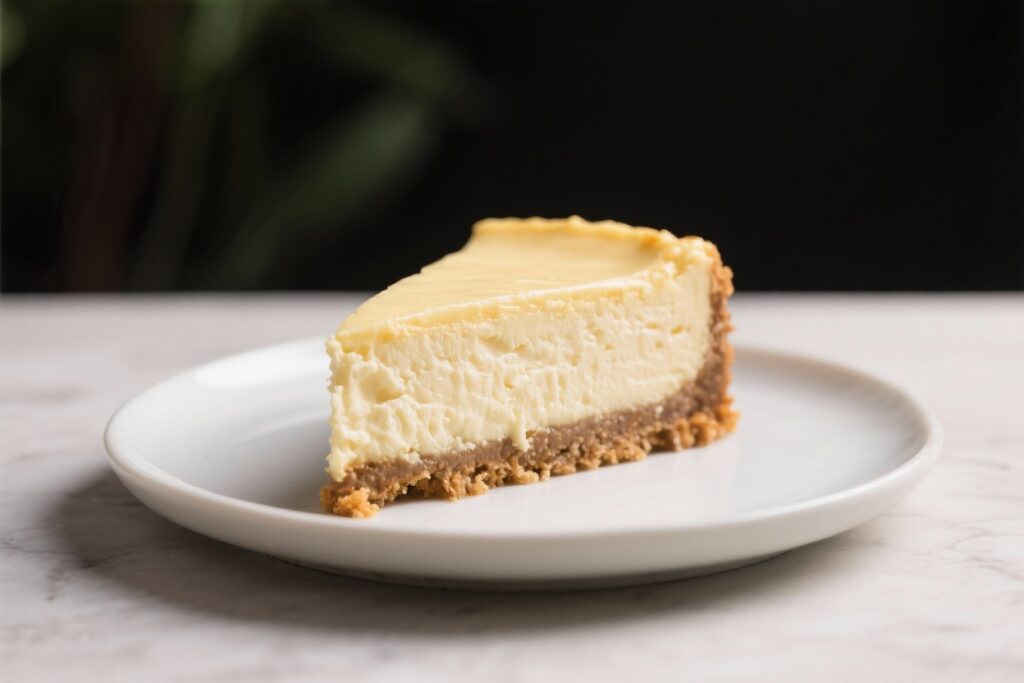
If you’ve been missing cheesecake on a low-carb lifestyle, this keto version brings back all the creamy, velvety goodness without the sugar crash. It’s rich, smooth, and tastes just like traditional cheesecake. The crust is buttery and lightly sweet, and the filling sets beautifully with a gentle tang from cream cheese and lemon.
Whether you’re new to keto or a dessert lover looking for a smarter treat, this recipe delivers big flavor with fewer carbs.

Ingredients
Method
- Prep the pan and oven. Preheat your oven to 325°F (163°C). Line the bottom of a 9-inch springform pan with parchment and lightly grease the sides. Wrap the exterior of the pan with a layer of heavy-duty foil if you plan to use a water bath.
- Make the crust. In a bowl, mix almond flour, erythritol, salt, melted butter, and vanilla until the texture resembles damp sand. Press firmly into the bottom of the pan in an even layer. Use the bottom of a glass to compact it well.
- Par-bake the crust. Bake for 10–12 minutes until lightly golden and fragrant. Remove and let it cool while you prepare the filling. Reduce oven temperature to 300°F (150°C) for a gentler bake.
- Beat the cream cheese. In a large bowl, beat softened cream cheese with a handheld mixer on medium speed until smooth and lump-free, about 1–2 minutes. Do not overbeat.
- Add sweetener and flavorings. Beat in powdered sweetener, vanilla, lemon juice, zest, and a pinch of salt. Mix just until combined and silky.
- Incorporate sour cream. Add sour cream and mix on low speed until fully blended. Scrape the bowl and paddle to catch any streaks.
- Add the eggs. Add eggs one at a time on low speed, mixing just until incorporated after each addition. Avoid whipping air into the batter to prevent cracks.
- Pour and smooth. Pour the filling over the cooled crust. Tap the pan on the counter a few times to release air bubbles. For a water bath, place the springform inside a larger pan and pour hot water around it to reach halfway up the sides.
- Bake low and slow. Bake at 300°F (150°C) for 55–70 minutes. The edges should be set, and the center should jiggle slightly like gelatin. Do not overbake.
- Cool gradually. Turn off the oven, crack the door, and let the cheesecake rest for 1 hour. This gentle cooling reduces cracking.
- Chill fully. Remove the pan, run a thin knife around the edge, and cool at room temperature another 30 minutes. Then cover and refrigerate for at least 6 hours, preferably overnight.
- Slice and serve. Release the springform, slice with a hot, clean knife, and serve plain or with berries, chocolate shavings, or a dollop of whipped cream.
What Makes This Special

This cheesecake uses almond flour for the crust and a zero-calorie sweetener in the filling, keeping carbs low without sacrificing texture. It’s baked gently to avoid cracks and finished with a cooling period that ensures a silky, custard-like bite. The recipe is versatile—you can top it with berries, swirl in chocolate, or make it crustless.
Most importantly, it tastes like the real thing, not a compromise.
Ingredients
- For the crust:
- 1 1/2 cups almond flour
- 1/4 cup granulated erythritol or allulose (or your preferred keto sweetener)
- 1/4 teaspoon fine sea salt
- 5 tablespoons unsalted butter, melted
- 1/2 teaspoon vanilla extract
- For the filling:
- 24 ounces (3 blocks) full-fat cream cheese, softened to room temperature
- 2/3–3/4 cup powdered erythritol or allulose
- 3 large eggs, at room temperature
- 1/2 cup sour cream, at room temperature
- 2 teaspoons vanilla extract
- 1 tablespoon lemon juice (fresh) and 1/2 teaspoon lemon zest
- Pinch of salt
- Optional toppings:
- Fresh berries (raspberries, strawberries, blueberries)
- Shaved dark chocolate (90% cacao or sugar-free)
- Whipped cream (unsweetened or lightly sweetened with keto sweetener)
Step-by-Step Instructions

- Prep the pan and oven. Preheat your oven to 325°F (163°C). Line the bottom of a 9-inch springform pan with parchment and lightly grease the sides. Wrap the exterior of the pan with a layer of heavy-duty foil if you plan to use a water bath.
- Make the crust. In a bowl, mix almond flour, erythritol, salt, melted butter, and vanilla until the texture resembles damp sand.
Press firmly into the bottom of the pan in an even layer. Use the bottom of a glass to compact it well.
- Par-bake the crust. Bake for 10–12 minutes until lightly golden and fragrant. Remove and let it cool while you prepare the filling.
Reduce oven temperature to 300°F (150°C) for a gentler bake.
- Beat the cream cheese. In a large bowl, beat softened cream cheese with a handheld mixer on medium speed until smooth and lump-free, about 1–2 minutes. Do not overbeat.
- Add sweetener and flavorings. Beat in powdered sweetener, vanilla, lemon juice, zest, and a pinch of salt. Mix just until combined and silky.
- Incorporate sour cream. Add sour cream and mix on low speed until fully blended.
Scrape the bowl and paddle to catch any streaks.
- Add the eggs. Add eggs one at a time on low speed, mixing just until incorporated after each addition. Avoid whipping air into the batter to prevent cracks.
- Pour and smooth. Pour the filling over the cooled crust. Tap the pan on the counter a few times to release air bubbles. For a water bath, place the springform inside a larger pan and pour hot water around it to reach halfway up the sides.
- Bake low and slow. Bake at 300°F (150°C) for 55–70 minutes.
The edges should be set, and the center should jiggle slightly like gelatin. Do not overbake.
- Cool gradually. Turn off the oven, crack the door, and let the cheesecake rest for 1 hour. This gentle cooling reduces cracking.
- Chill fully. Remove the pan, run a thin knife around the edge, and cool at room temperature another 30 minutes. Then cover and refrigerate for at least 6 hours, preferably overnight.
- Slice and serve. Release the springform, slice with a hot, clean knife, and serve plain or with berries, chocolate shavings, or a dollop of whipped cream.
Storage Instructions
- Refrigerator: Store covered in the fridge for 4–5 days.
Keep slices in an airtight container to prevent drying and absorbing odors.
- Freezer: Freeze whole or in slices for up to 2 months. Wrap tightly in plastic and foil, or use freezer-safe containers. Thaw overnight in the fridge for best texture.
- Make-ahead: This cheesecake tastes even better the next day, so it’s perfect for prepping ahead for holidays and gatherings.

Health Benefits
This dessert is low in net carbs thanks to almond flour and keto-friendly sweeteners, making it easier to fit into a ketogenic or low-carb diet.
The filling provides healthy fats and protein from cream cheese and eggs, which help keep you full and satisfied. Almond flour adds vitamin E, magnesium, and fiber compared to traditional wheat crusts. While it’s still a treat, it’s a smarter option for those managing blood sugar or aiming to reduce refined carbs.
Pitfalls to Watch Out For
- Overmixing the batter: Too much air leads to cracks and a spongy texture.
Keep the mixer on low.
- Cold ingredients: Cold cream cheese can leave lumps. Let everything come to room temperature before you start.
- Overbaking: If the center is fully set, it’s overdone. Look for a slight jiggle.
- Skipping the cool-down: Abrupt temperature changes cause cracks.
Follow the slow-cooling steps.
- Too much sweetener: Some keto sweeteners can taste cooling or bitter in high amounts. Taste the batter and adjust gently.
Recipe Variations
- Chocolate Swirl: Melt 2 ounces of sugar-free dark chocolate with 1 tablespoon butter. Swirl into the filling before baking.
- Lemon Cheesecake: Add an extra tablespoon of lemon juice and more zest.
Top with a few raspberries.
- Crustless: Skip the crust and bake directly in a greased springform. Reduce baking time slightly and watch for the same jiggle.
- Pecan Crust: Swap half the almond flour for finely ground pecans for a nutty twist.
- Pumpkin Spice: Blend in 1/2 cup pumpkin puree and 1 teaspoon pumpkin pie spice. Slightly increase bake time.
- No-Bake Option: Use the same crust, but chill it.
Beat the filling with 1 teaspoon gelatin (bloomed and dissolved) and chill 6–8 hours.
FAQ
What is the best sweetener for keto cheesecake?
Powdered erythritol or allulose works well because they dissolve smoothly. Allulose tends to give a softer texture and less cooling aftertaste. You can also use a blend like erythritol with stevia or monk fruit.
Do I have to use a water bath?
No, but it helps.
A water bath bakes the cheesecake gently, reducing cracks and keeping the texture extra creamy. If you skip it, bake at the lower temperature, avoid overbaking, and cool the cake slowly.
How do I prevent cracks on top?
Use room-temperature ingredients, mix on low speed, bake until just jiggly, and cool gradually in the oven with the door cracked. Running a thin knife around the edge right after baking also helps prevent splitting.
Can I make this dairy-free?
It’s possible, but the texture changes.
Use a dairy-free cream cheese alternative and full-fat coconut cream, and choose a compatible sweetener. Expect a slightly different flavor and structure.
How many carbs per slice?
It varies by sweetener and toppings, but a standard 9-inch cheesecake cut into 12 slices typically lands around 4–6g net carbs per slice without toppings. Check your specific ingredient labels to be sure.
Why is my cheesecake grainy?
Graininess often comes from undissolved sweetener or cold cream cheese.
Use powdered sweetener and room-temperature ingredients, and beat just until smooth.
Can I use coconut flour instead of almond flour?
Not as a 1:1 swap. Coconut flour is very absorbent and will make the crust dry. If you must, use a tested coconut flour crust recipe with more fat and possibly an egg to bind.
How long should I chill it?
At least 6 hours, but overnight is best.
Chilling firms the filling and deepens the flavor, giving you clean, neat slices.
In Conclusion
This keto cheesecake delivers everything you want from a classic dessert—silky texture, rich flavor, and a crisp, buttery crust—without the sugar overload. With a few smart swaps and careful baking, you’ll get a show-stopping cake that fits your goals. Keep the tips handy, choose the variation you love, and let the fridge do the final magic. It’s a dessert you’ll be proud to serve, keto or not.

Printable Recipe Card
Want just the essential recipe details without scrolling through the article? Get our printable recipe card with just the ingredients and instructions.