
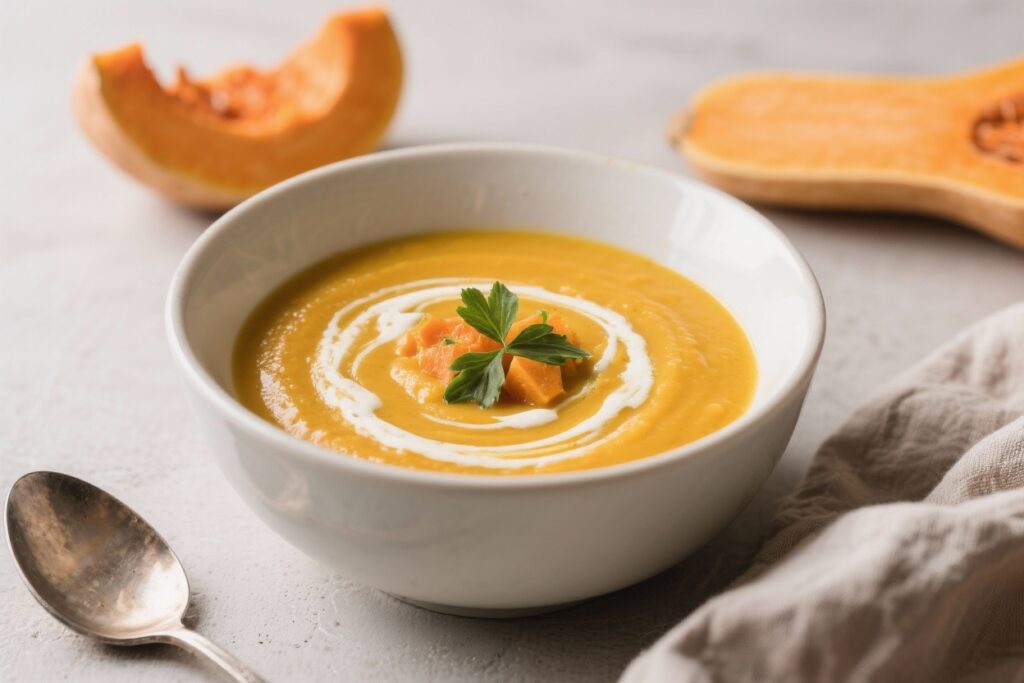
Butternut squash soup usually means sweet, starchy, and carb-heavy. This version keeps the comfort while trimming the carbs, thanks to smart swaps and a savory flavor base. You still get that silky texture and a hint of natural sweetness, but with better balance.
It’s perfect for cool evenings, meal prep, and anyone craving something warm without the sugar crash. Make a batch once, and you’ll want it on repeat all season.
Ingredients
Method
- Prep the squash: Peel, seed, and cube the butternut squash into 1-inch pieces. If you want to save time, use pre-cut squash.
- Roast for deeper flavor (recommended): Toss squash with 1 tablespoon olive oil, a pinch of salt and pepper. Roast at 425°F (220°C) for 20–25 minutes until tender and lightly caramelized. This step adds incredible flavor, but you can skip it and simmer instead.
- Sauté the aromatics: In a large pot, heat remaining olive oil and butter over medium heat. Add onion and a pinch of salt. Cook 6–8 minutes, stirring, until translucent and lightly golden. Add garlic and cook 30 seconds until fragrant.
- Add veggies and spices: Stir in cauliflower, thyme, pepper, and ginger. If you didn’t roast the squash, add raw squash now. Cook 2–3 minutes to bloom the spices.
- Simmer: Pour in 3 cups of broth. If using roasted squash, add it now. Bring to a gentle boil, then reduce to a simmer. Cook 12–15 minutes, until everything is tender.
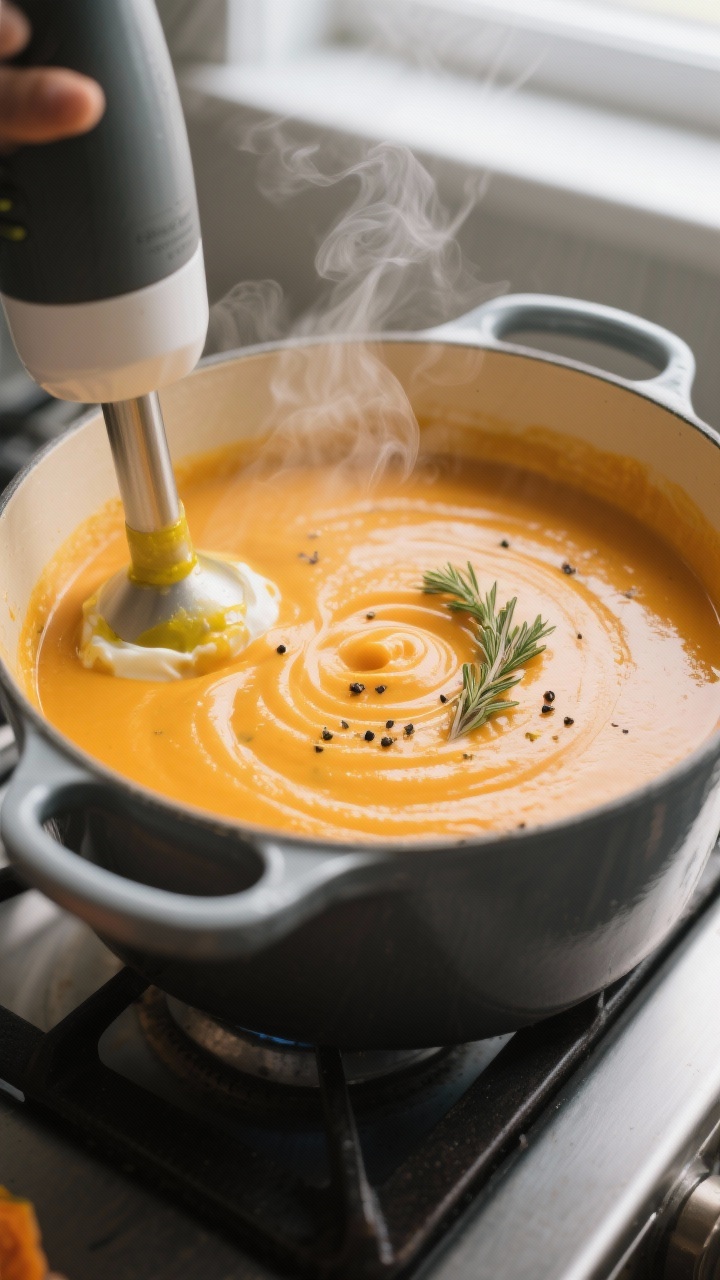
- Blend until silky: Use an immersion blender to puree right in the pot until smooth. For a super-silky finish, transfer to a blender in batches. Add more broth as needed to reach your ideal thickness.
- Finish with cream: Return soup to low heat, stir in heavy cream (or coconut milk). Warm gently. Do not boil after adding dairy.
- Brighten and balance: Stir in a small squeeze of lemon juice or a splash of apple cider vinegar. Taste and adjust salt and pepper. If you like a hint of warmth, finish with a pinch of nutmeg or cinnamon.
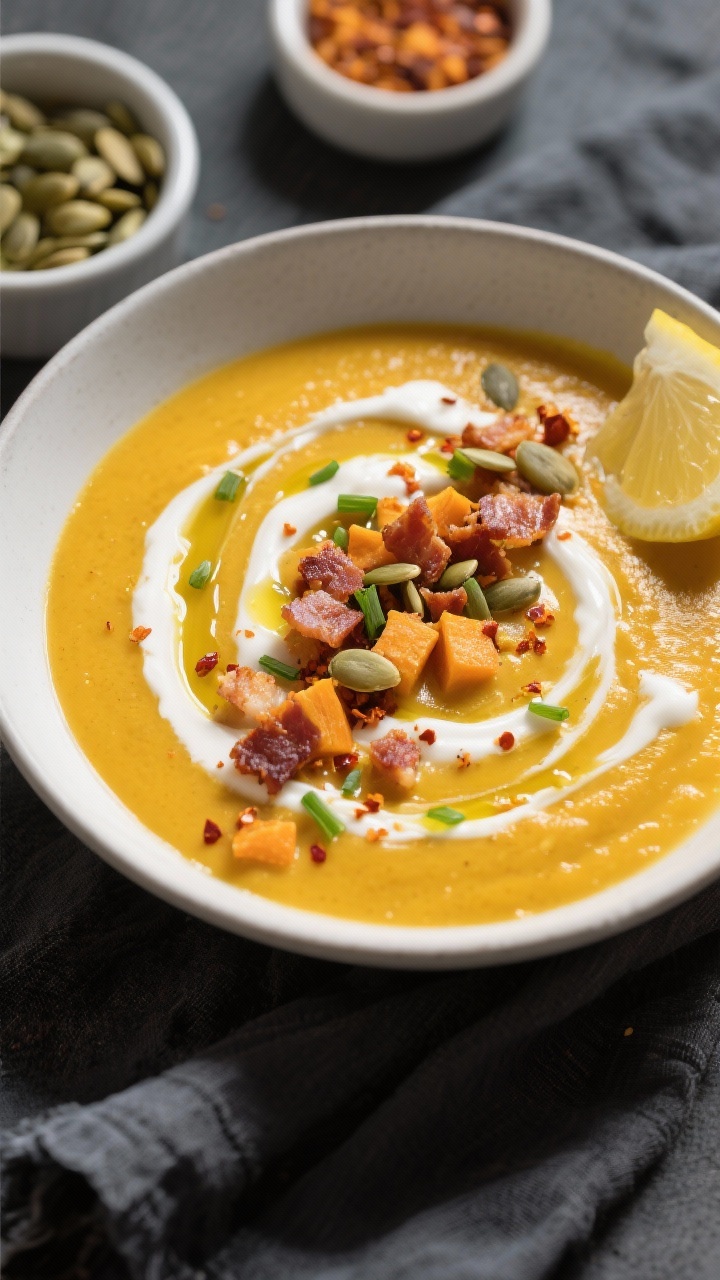
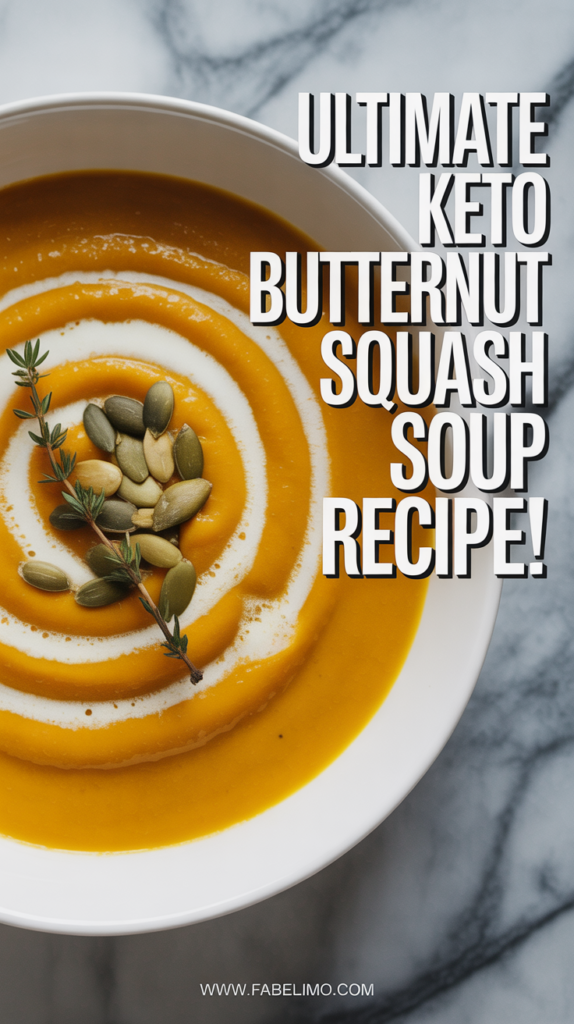
- Serve and top: Ladle into bowls and finish with your favorite keto-friendly toppings—crispy bacon, pumpkin seeds, chives, a drizzle of olive oil, or a dollop of sour cream.
What Makes This Recipe So Good
- Low-carb friendly: Butternut squash has some natural carbs, but this recipe keeps portions smart and adds low-carb veggies and fats to steady blood sugar.
- Luxuriously creamy without flour: The velvety texture comes from simmered squash, cauliflower, and cream—not thickeners.
- Deep savory flavor: Roasted squash, caramelized onion, garlic, and thyme bring rich, layered taste.
- Flexible and forgiving: Swap broth, adjust spices, choose your topping—crisp bacon, pumpkin seeds, or a swirl of sour cream.
- Meal-prep gold: Keeps well for days and freezes beautifully, so you can reheat a bowl whenever you need something cozy.
Shopping List
- 1 medium butternut squash (about 2.5–3 pounds), peeled, seeded, cubed
- 2 cups cauliflower florets (fresh or frozen)
- 1 medium yellow onion, chopped
- 3 cloves garlic, minced
- 3–4 cups chicken or vegetable broth (low-sodium)
- 1/2 cup heavy cream (or full-fat coconut milk)
- 2 tablespoons olive oil or ghee
- 1 tablespoon butter (optional, for extra richness)
- 1 teaspoon sea salt, plus more to taste
- 1/2 teaspoon black pepper
- 1 teaspoon dried thyme or 2 teaspoons fresh thyme leaves
- 1/2 teaspoon ground ginger or 1 teaspoon fresh grated ginger (optional but great)
- Pinch of ground nutmeg or cinnamon (optional)
- Fresh lemon juice or apple cider vinegar, to finish (about 1–2 teaspoons)
- Optional toppings: crispy bacon, toasted pumpkin seeds, chopped chives, chili flakes, sour cream
How to Make It
- Prep the squash: Peel, seed, and cube the butternut squash into 1-inch pieces. If you want to save time, use pre-cut squash.
- Roast for deeper flavor (recommended): Toss squash with 1 tablespoon olive oil, a pinch of salt and pepper.
Roast at 425°F (220°C) for 20–25 minutes until tender and lightly caramelized. This step adds incredible flavor, but you can skip it and simmer instead.
- Sauté the aromatics: In a large pot, heat remaining olive oil and butter over medium heat. Add onion and a pinch of salt.
Cook 6–8 minutes, stirring, until translucent and lightly golden. Add garlic and cook 30 seconds until fragrant.
- Add veggies and spices: Stir in cauliflower, thyme, pepper, and ginger. If you didn’t roast the squash, add raw squash now.
Cook 2–3 minutes to bloom the spices.
- Simmer: Pour in 3 cups of broth. If using roasted squash, add it now. Bring to a gentle boil, then reduce to a simmer.
Cook 12–15 minutes, until everything is tender.
- Blend until silky: Use an immersion blender to puree right in the pot until smooth. For a super-silky finish, transfer to a blender in batches. Add more broth as needed to reach your ideal thickness.
- Finish with cream: Return soup to low heat, stir in heavy cream (or coconut milk).
Warm gently. Do not boil after adding dairy.
- Brighten and balance: Stir in a small squeeze of lemon juice or a splash of apple cider vinegar. Taste and adjust salt and pepper.
If you like a hint of warmth, finish with a pinch of nutmeg or cinnamon.
- Serve and top: Ladle into bowls and finish with your favorite keto-friendly toppings—crispy bacon, pumpkin seeds, chives, a drizzle of olive oil, or a dollop of sour cream.
Keeping It Fresh
- Fridge: Store in airtight containers for 4–5 days. The flavors deepen by day two.
- Freezer: Freeze in portions for up to 3 months. Leave a little headspace for expansion.
Thaw overnight in the fridge.
- Reheating: Warm gently on the stovetop over low heat, adding a splash of broth or water if it thickens. Avoid boiling after adding cream.
- Make-ahead tip: Cook and blend the base without cream, cool, and store. Add cream when reheating for the best texture.
Why This is Good for You
- Balanced keto bowl: Butternut squash has more carbs than leafy greens, but this recipe uses smaller portions and adds low-carb cauliflower and healthy fats to keep carbs in check.
- Fiber and micronutrients: Squash brings vitamin A, potassium, and fiber.
Cauliflower adds vitamin C and extra bulk without extra carbs.
- Satiety from fat: Olive oil, butter, and cream help you feel full and satisfied, which supports steady energy on a low-carb diet.
- Gentle on digestion: Blended soups can be easier to digest, especially when you’re easing into lower-carb eating.
What Not to Do
- Don’t skip seasoning: Taste at the end. A pinch more salt or a splash of acid can transform the soup.
- Don’t overdo the squash: If you’re strict keto, keep portions reasonable and balance with cauliflower to manage carbs.
- Don’t boil after adding cream: High heat can cause dairy to split. Keep it gentle.
- Don’t rely on sugar: You don’t need it.
Caramelized onion, roasted squash, and spices add natural sweetness and depth.
- Don’t skip fat: A drizzle of olive oil or a dollop of sour cream helps with mouthfeel and satiety.
Alternatives
- Dairy-free: Use full-fat coconut milk instead of cream and ghee/olive oil instead of butter. The coconut flavor is subtle and cozy.
- Extra protein: Stir in shredded rotisserie chicken or top with crumbled bacon. You can also add unflavored collagen peptides after blending.
- Spice route: Try curry powder and a little turmeric for a golden, fragrant bowl.
Garnish with coconut cream and cilantro.
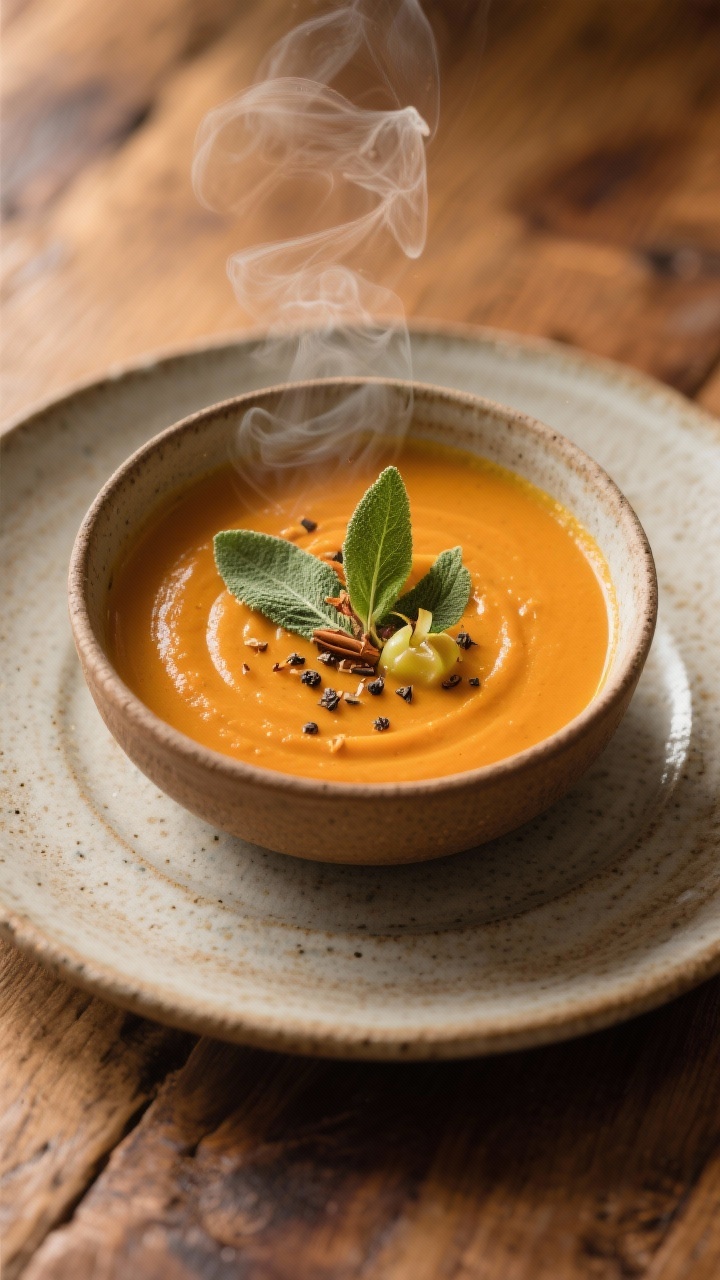
- Herb-forward: Swap thyme for sage and rosemary for a classic fall profile. Crisped sage leaves on top are fantastic.
- Ultra-low-carb: Use less squash and more cauliflower. The texture stays creamy, and you still get that squash flavor.
- No-roast shortcut: Simmer everything in the pot.
Add a small knob of butter and a pinch of smoked paprika to mimic roasted depth.
FAQ
Is butternut squash actually keto?
Butternut squash is higher in carbs than most keto vegetables, but you can still enjoy it in moderate portions. This soup balances it with cauliflower and fats, so a serving fits within many low-carb plans.
How many carbs are in a serving?
It varies based on brands and portions, but a typical serving of this recipe lands around 10–14g net carbs. If you need fewer, reduce the squash slightly and bump up the cauliflower and broth.
Can I make it without a blender?
Yes.
Simmer longer and mash with a potato masher for a rustic texture. It won’t be as silky, but it’ll still taste great.
What can I use instead of heavy cream?
Full-fat coconut milk or coconut cream works well. For a lighter option, use a splash of unsweetened almond milk and an extra tablespoon of olive oil for body.
Can I use frozen squash?
Absolutely.
Roast from frozen until tender, or add straight to the pot and simmer. It may release more liquid, so adjust broth as needed.
How do I make it spicier?
Add a pinch of cayenne, chili flakes, or a little chipotle powder. A drizzle of chili oil on top is also delicious.
What should I serve with it?
Keep it simple: a green salad with olive oil and lemon, roasted Brussels sprouts, or grilled sausage.
For crunch, add toasted pumpkin seeds on top.
Can I cook this in a slow cooker?
Yes. Add all ingredients except cream to the slow cooker and cook on low for 6–7 hours or high for 3–4. Blend, then stir in cream and season to taste.
Final Thoughts
Keto Butternut Squash Soup proves you don’t have to give up cozy comfort to stay low-carb.
With the right balance of squash, cauliflower, and healthy fats, you get a silky, satisfying bowl that works for weeknights and meal prep. Keep the toppings fun, tweak the spices, and make it your own. It’s an easy, flexible recipe you’ll come back to every time the weather cools—or whenever you want something warm and nourishing without the carb overload.
Printable Recipe Card
Want just the essential recipe details without scrolling through the article? Get our printable recipe card with just the ingredients and instructions.