
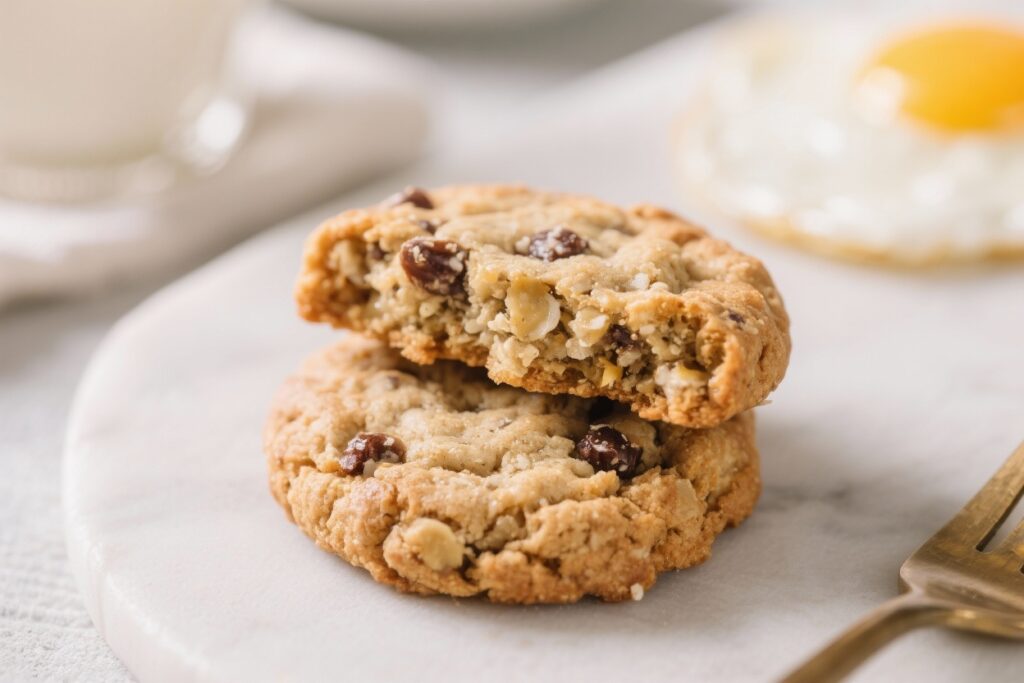
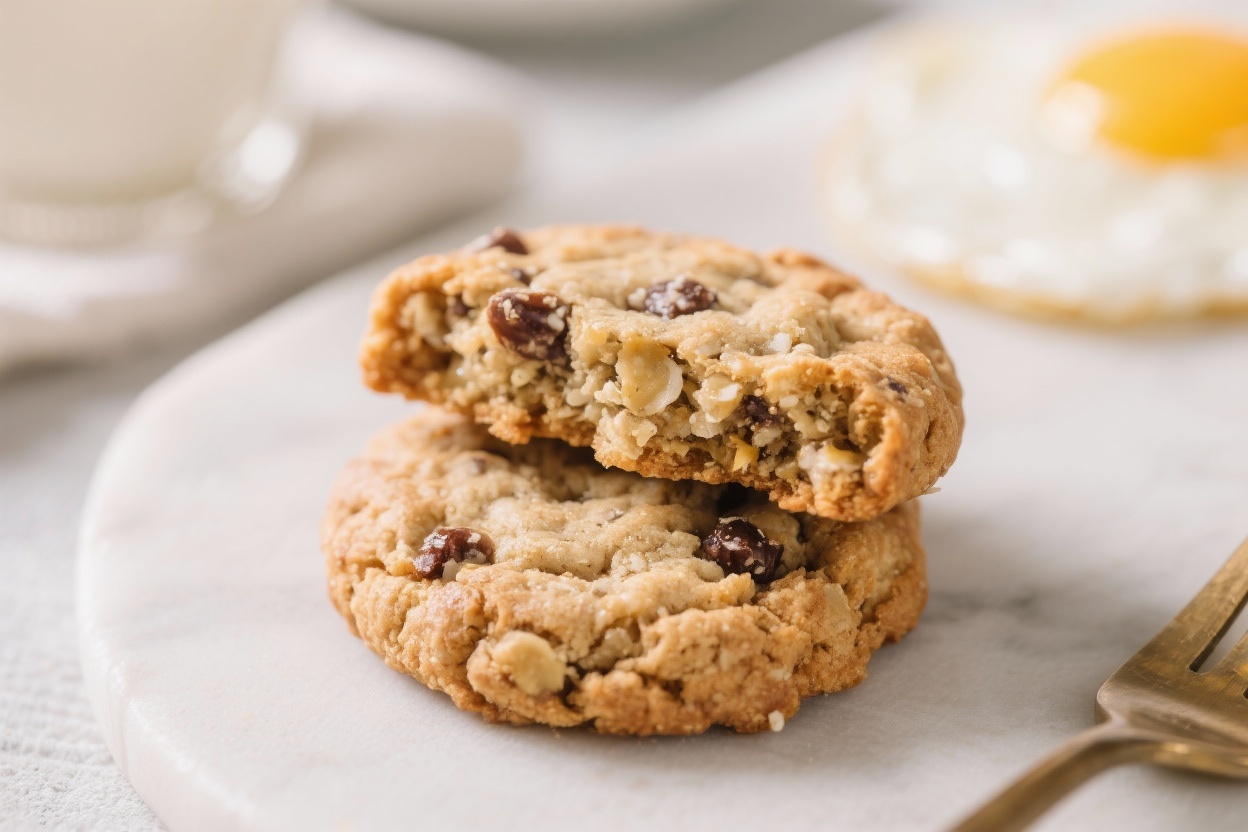
If you’ve ever wanted a breakfast that feels like a treat but still fits your low-carb goals, this keto breakfast cookie is your answer. It’s chewy, lightly sweet, and packed with good fats and fiber to keep you satisfied for hours. You can make a batch in under 30 minutes and keep them on hand for busy mornings.
They’re also easy to customize with nuts, seeds, and sugar-free chocolate chips. Best of all, they taste like a cookie but behave like a balanced breakfast.
Ingredients
Method
- Preheat your oven to 350°F (175°C). Line a baking sheet with parchment paper to prevent sticking.
- In a large bowl, whisk together the almond flour, ground flaxseed, baking powder, salt, and sweetener until evenly combined.
- In a separate bowl, beat the egg. Stir in the almond butter, melted coconut oil, and vanilla until smooth.
- Pour the wet mixture into the dry ingredients. Stir with a spatula until a thick dough forms. If the dough looks crumbly, add almond milk 1 tablespoon at a time until it holds together and feels like soft cookie dough.
- Fold in the sugar-free chocolate chips, nuts, coconut, and seeds, if using. Mix just until distributed.
- Scoop the dough into 8–10 portions (about 2 tablespoons each). Roll lightly and flatten to about 1/2 inch thick on the baking sheet. These cookies don’t spread much, so shape them how you want them to look.
- Bake for 10–13 minutes, until the edges are set and lightly golden. The centers should still be slightly soft.
- Cool on the baking sheet for 10 minutes, then transfer to a rack. They firm up as they cool, so resist moving them too early.
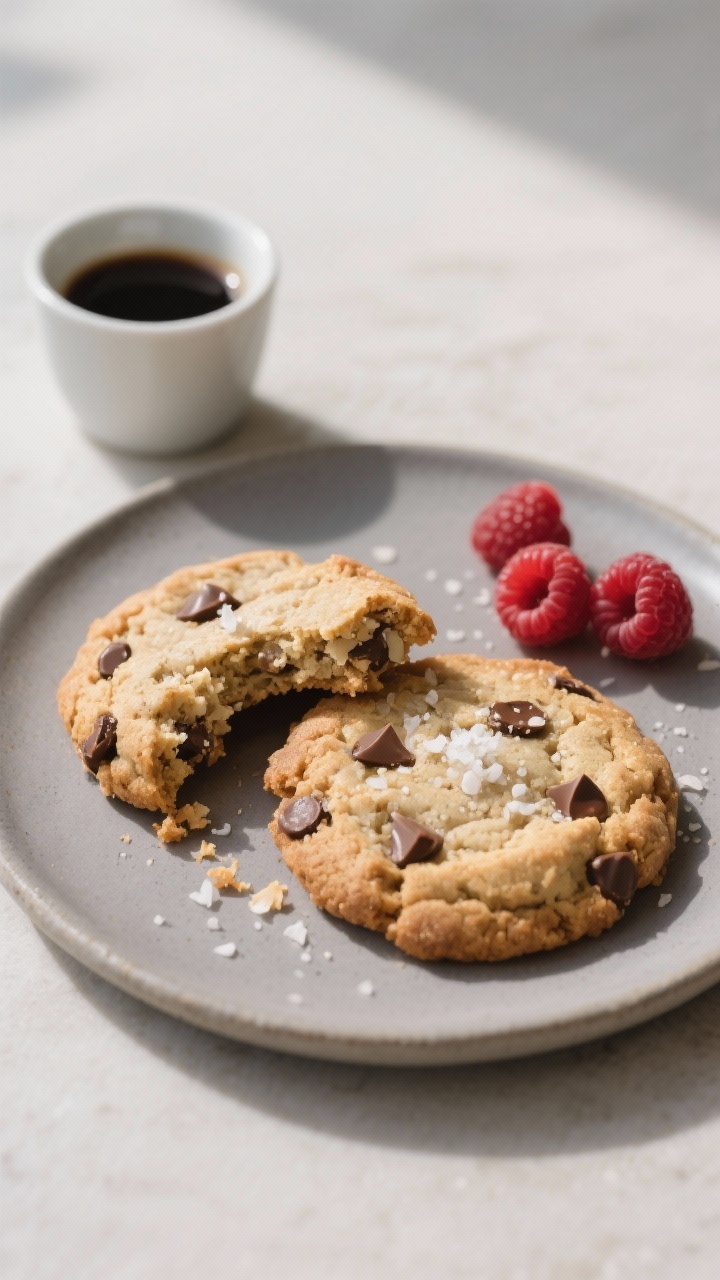
- Enjoy warm or at room temperature. For a breakfast boost, pair with coffee or tea and a few berries.
Why This Recipe Works
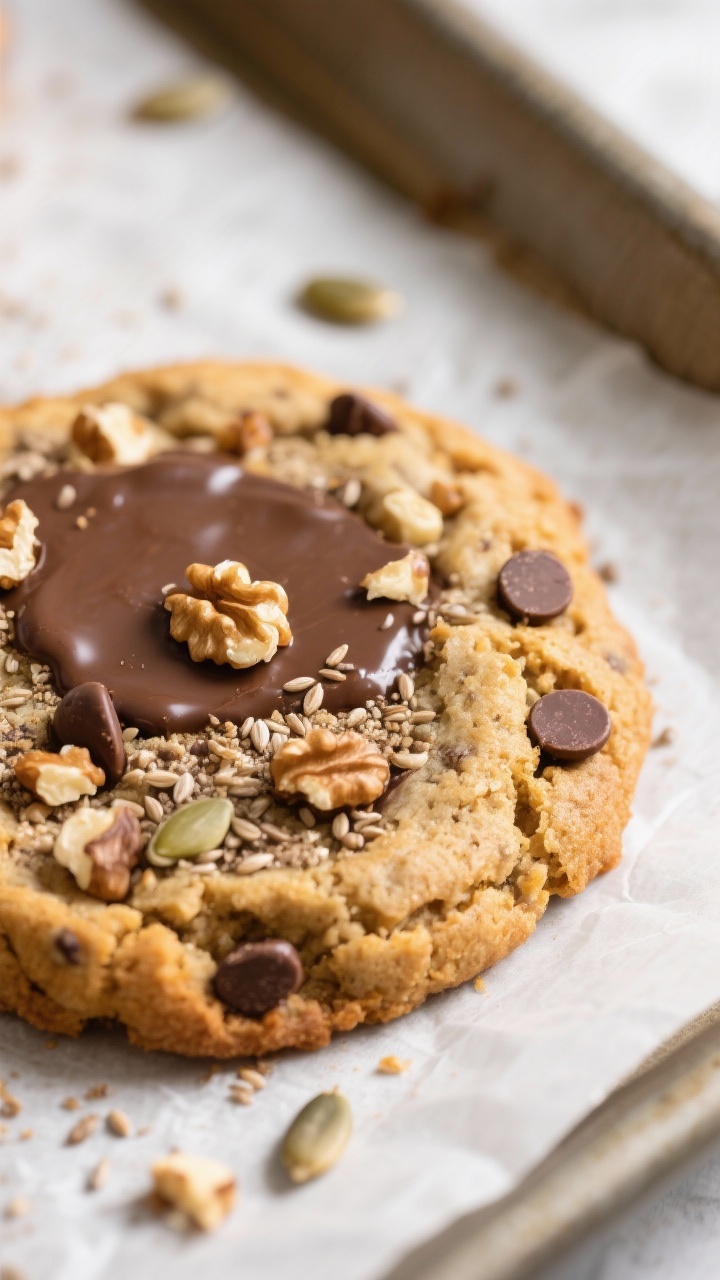
This recipe swaps high-carb flour and sugar for low-carb staples that still deliver great texture and flavor. Almond flour gives structure and a gentle nuttiness, while flaxseed or chia adds fiber and helps bind the cookie without grains. Egg and nut butter provide protein and healthy fats that support steady energy. A touch of granulated erythritol or allulose brings sweetness without spiking carbs.
The result is a soft, satisfying cookie that’s easy to meal prep and portable enough for a grab-and-go breakfast.
What You’ll Need
- 1 1/2 cups almond flour (finely blanched for best texture)
- 2 tablespoons ground flaxseed or chia seeds
- 1/2 teaspoon baking powder
- 1/4 teaspoon fine sea salt
- 1/3 cup granulated erythritol or allulose (adjust to taste)
- 1 large egg
- 1/4 cup unsweetened almond butter or peanut butter (no added sugar)
- 3 tablespoons melted coconut oil or unsalted butter
- 1 teaspoon vanilla extract
- 2–3 tablespoons unsweetened almond milk (as needed for consistency)
- 1/4 cup sugar-free chocolate chips (optional)
- 2 tablespoons chopped nuts (walnuts, pecans, or almonds)
- 2 tablespoons unsweetened shredded coconut (optional)
- 1–2 tablespoons seeds (pumpkin, hemp, or sunflower, optional)
Instructions
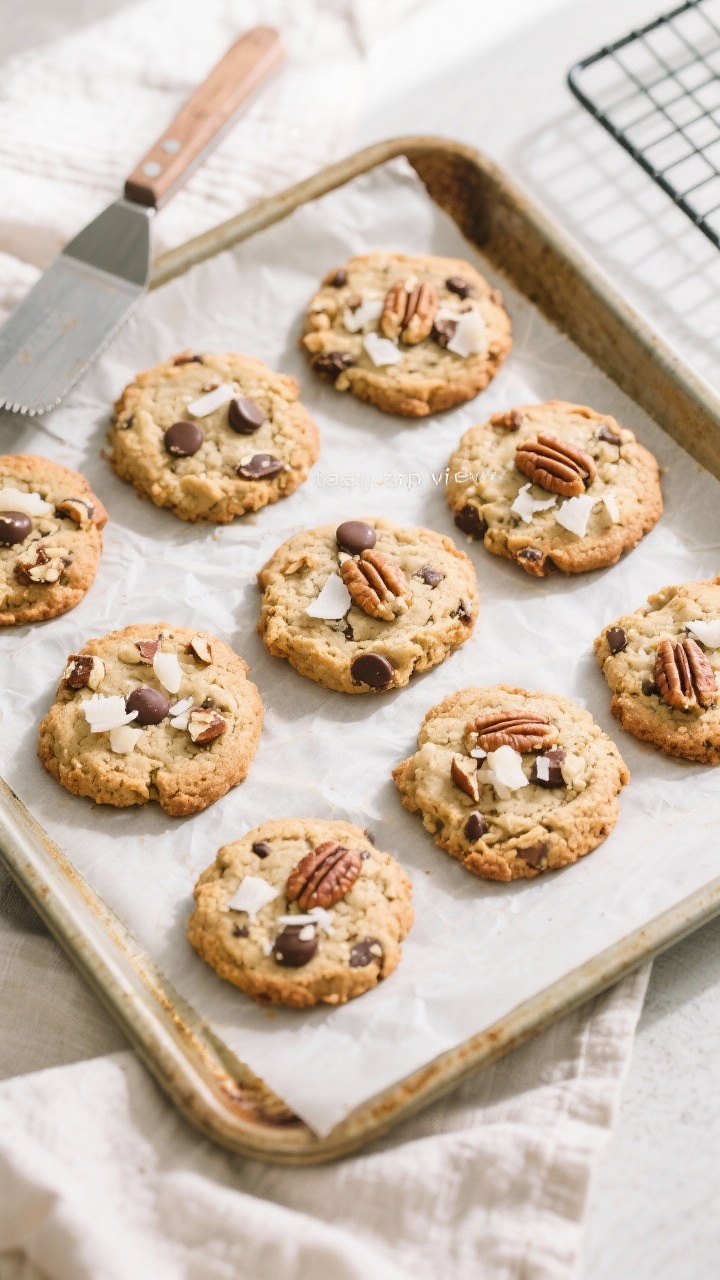
- Preheat your oven to 350°F (175°C). Line a baking sheet with parchment paper to prevent sticking.
- In a large bowl, whisk together the almond flour, ground flaxseed, baking powder, salt, and sweetener until evenly combined.
- In a separate bowl, beat the egg. Stir in the almond butter, melted coconut oil, and vanilla until smooth.
- Pour the wet mixture into the dry ingredients.
Stir with a spatula until a thick dough forms. If the dough looks crumbly, add almond milk 1 tablespoon at a time until it holds together and feels like soft cookie dough.
- Fold in the sugar-free chocolate chips, nuts, coconut, and seeds, if using. Mix just until distributed.
- Scoop the dough into 8–10 portions (about 2 tablespoons each).
Roll lightly and flatten to about 1/2 inch thick on the baking sheet. These cookies don’t spread much, so shape them how you want them to look.
- Bake for 10–13 minutes, until the edges are set and lightly golden. The centers should still be slightly soft.
- Cool on the baking sheet for 10 minutes, then transfer to a rack.
They firm up as they cool, so resist moving them too early.
- Enjoy warm or at room temperature. For a breakfast boost, pair with coffee or tea and a few berries.
How to Store
- Room temperature: Keep in an airtight container for up to 3 days.
- Refrigerator: Store for 1 week to maintain freshness and texture.
- Freezer: Freeze in a sealed bag or container for up to 2 months. Thaw overnight in the fridge or warm in a low oven for 5–7 minutes.
- Meal prep tip: Make a double batch and freeze half.
They’re perfect for busy mornings.
Health Benefits
- Low in net carbs: Almond flour and low-carb sweeteners keep carbs in check, supporting ketosis.
- High in healthy fats: Coconut oil, nut butter, and nuts deliver satiating fats that help curb mid-morning hunger.
- Fiber-rich: Flaxseed or chia supports digestion and helps balance energy release.
- Protein support: The egg, nuts, and seeds add a modest protein bump for a more complete breakfast.
- No refined sugar: Using erythritol or allulose reduces blood sugar impact compared to traditional cookies.
Pitfalls to Watch Out For
- Overbaking: These cookies can dry out quickly. Pull them when edges are just set; they’ll firm as they cool.
- Wrong sweetener swap: Liquid sweeteners or pure stevia can change texture and sweetness. Stick to a granulated keto-friendly sweetener.
- Runny dough: If you add too much almond milk, the cookies won’t hold shape.
Add only enough to bring the dough together.
- Nut butter with added sugar: Read labels. Hidden sugars can raise carbs and kick you out of ketosis.
- Portion creep: Even keto cookies have calories. Keep portions consistent if you’re tracking macros.
Alternatives
- Dairy-free: Use coconut oil instead of butter and choose dairy-free chocolate chips.
- Egg-free: Replace the egg with a flax egg (1 tablespoon ground flax + 3 tablespoons water, rest 5 minutes).
Cookies will be a bit softer.
- Nut-free: Use sunflower seed butter and swap almond flour for a fine sunflower seed flour. Expect a slightly different flavor and a greenish tint from chlorophyll reacting with baking powder—it’s harmless.
- Flavor twists: Add 1/2 teaspoon cinnamon, a pinch of nutmeg, or 1 teaspoon espresso powder. A dash of orange zest pairs well with dark chocolate chips.
- Protein boost: Stir in 1–2 tablespoons unflavored or vanilla whey or collagen.
If the dough dries out, add a splash more almond milk.
FAQ
How many net carbs are in each cookie?
It varies with size and mix-ins, but a standard cookie made as written typically lands around 3–4 net carbs. Use a nutrition calculator and your exact brands for precise numbers.
Can I use coconut flour instead of almond flour?
Coconut flour isn’t a 1:1 swap. It absorbs much more liquid and would make the cookies dry.
If you must use it, you’ll need far less (about 1/4–1/3 the amount) and extra liquid, but the texture will change.
What sweetener works best?
Granulated erythritol or a blend with stevia works well. Allulose gives a softer, chewier texture and browns more. Adjust to taste and note that allulose is slightly less sweet than sugar.
Do I have to use flax or chia?
No, but they help bind and add fiber.
If you skip them, the cookies may be more delicate. You can add 1–2 tablespoons of unsweetened shredded coconut to help with structure.
Can I make the dough ahead of time?
Yes. Chill covered dough for up to 24 hours.
If it firms up too much, let it sit at room temp for 10–15 minutes before scooping and baking.
How do I make them crispier?
Flatten the cookies a bit thinner and bake an extra 1–2 minutes. Let them cool completely on a rack. Erythritol tends to yield a crisper finish than allulose.
Are these cookies freezer-friendly?
Absolutely.
Freeze baked cookies in a single layer, then transfer to a bag. Reheat in a low oven or toaster oven for best texture.
Final Thoughts
A keto breakfast cookie should feel like an upgrade, not a compromise. This version checks all the boxes: easy to make, filling, and flexible enough to match your favorite flavors. Keep a batch on hand, and you’ll always have a low-carb breakfast ready when mornings get hectic. Simple ingredients, dependable texture, and a little sweetness—exactly what a weekday needs.
Printable Recipe Card
Want just the essential recipe details without scrolling through the article? Get our printable recipe card with just the ingredients and instructions.