
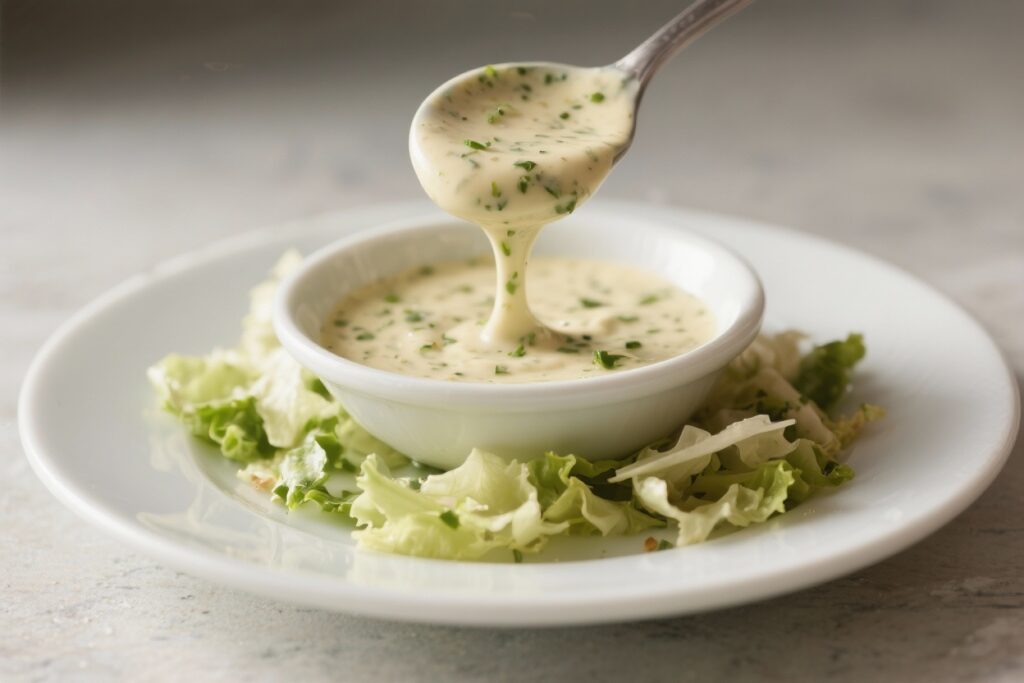
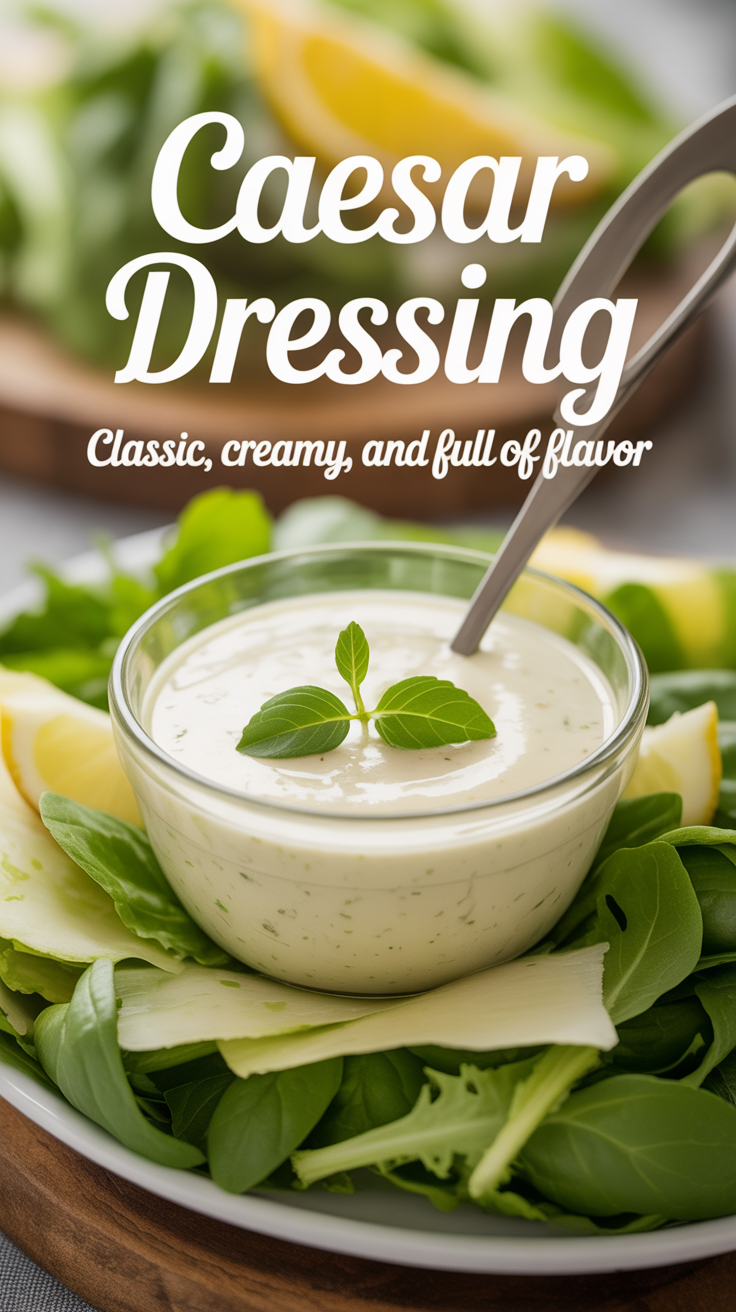
Caesar dressing is one of those sauces that makes simple greens taste like a restaurant dish. It’s rich, tangy, garlicky, and surprisingly easy to make at home. Once you try it fresh, the bottled version won’t compare.
You can whisk it in minutes, adjust the flavor to your liking, and use it far beyond salad. Think sandwiches, dips, and drizzles over grilled vegetables.
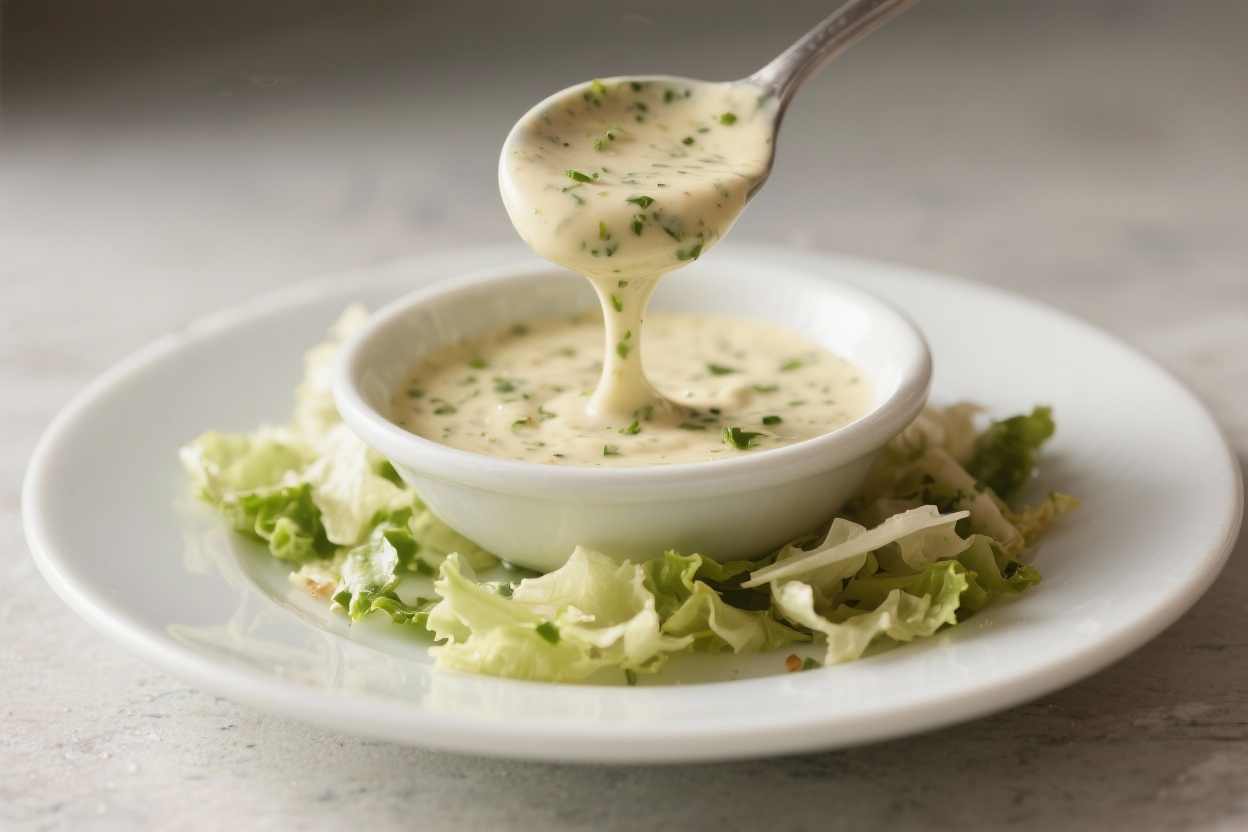
Method
-
Prepare the base. In a medium bowl, whisk the egg yolk, Dijon mustard, lemon juice, and Worcestershire until smooth.
If using mayonnaise instead of egg yolk, whisk it in now with the lemon and Dijon.
-
Mash the anchovies. On a cutting board, sprinkle a pinch of salt over the anchovies and minced garlic. Use the side of your knife to mash into a paste. Add this paste to the bowl and whisk to combine.
-
Start the emulsion. While whisking constantly, slowly drizzle in the neutral oil first.
Begin with a few drops at a time. Once it thickens slightly, you can add a thin, steady stream. Keep whisking until glossy and creamy.
-
Add olive oil for flavor. Drizzle in the extra-virgin olive oil, whisking until the dressing is thick and cohesive.
If it looks too thick, whisk in a teaspoon of water or lemon juice to loosen.
-
Finish with Parmesan. Whisk in the grated Parmesan. Taste and adjust with more lemon for brightness, black pepper for bite, and salt only if needed.
-
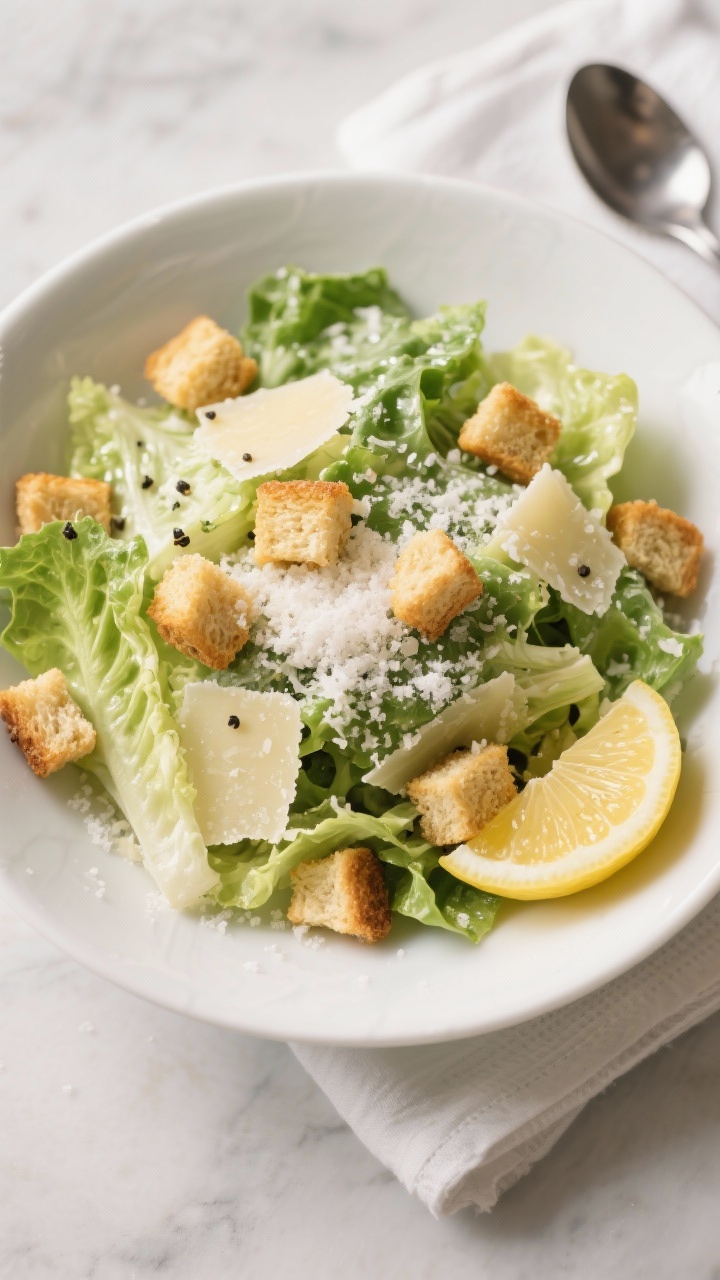
Rest and serve. Let the dressing sit 5–10 minutes to marry the flavors. Toss with crisp romaine and croutons, or use as a spread or dip.
What Makes This Special
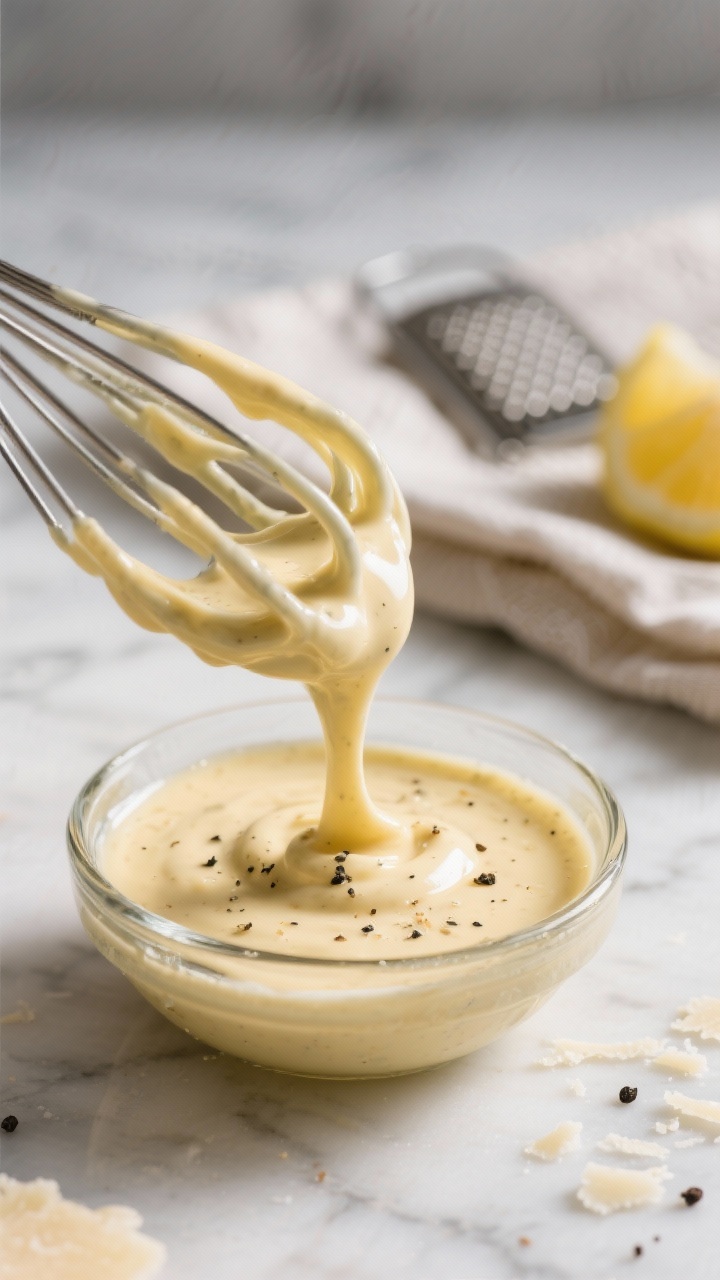
This Caesar dressing keeps the classic profile: anchovy, garlic, lemon, Dijon, and a touch of Parmesan. It’s balanced—savory, bright, and creamy without feeling heavy.
The texture clings to leaves just right, thanks to a simple emulsion of egg yolk and oil.
It’s also flexible. You can make it with whole anchovies or paste, adjust the lemon to taste, and swap in mayonnaise if you prefer a shortcut. The result is a dressing that tastes fresh, clean, and full of character.
Shopping List
- 1 large egg yolk (room temperature) or 2 tablespoons mayonnaise if avoiding raw egg
- 4–6 anchovy fillets in oil (or 2 teaspoons anchovy paste)
- 2 small garlic cloves, finely grated or minced
- 2 teaspoons Dijon mustard
- 2 tablespoons freshly squeezed lemon juice (plus more to taste)
- 1 teaspoon Worcestershire sauce
- 1/3 cup extra-virgin olive oil (for flavor)
- 1/3 cup neutral oil (like avocado, grapeseed, or canola)
- 1/4 cup finely grated Parmesan cheese (Parmigiano-Reggiano preferred)
- Freshly ground black pepper, to taste
- Pinch of kosher salt (adjust carefully; anchovies and Parmesan are salty)
- Optional: 1 teaspoon red wine vinegar for extra tang
Instructions

- Prepare the base. In a medium bowl, whisk the egg yolk, Dijon mustard, lemon juice, and Worcestershire until smooth.
If using mayonnaise instead of egg yolk, whisk it in now with the lemon and Dijon.
- Mash the anchovies. On a cutting board, sprinkle a pinch of salt over the anchovies and minced garlic. Use the side of your knife to mash into a paste. Add this paste to the bowl and whisk to combine.
- Start the emulsion. While whisking constantly, slowly drizzle in the neutral oil first.
Begin with a few drops at a time. Once it thickens slightly, you can add a thin, steady stream. Keep whisking until glossy and creamy.
- Add olive oil for flavor. Drizzle in the extra-virgin olive oil, whisking until the dressing is thick and cohesive.
If it looks too thick, whisk in a teaspoon of water or lemon juice to loosen.
- Finish with Parmesan. Whisk in the grated Parmesan. Taste and adjust with more lemon for brightness, black pepper for bite, and salt only if needed.
- Rest and serve. Let the dressing sit 5–10 minutes to marry the flavors. Toss with crisp romaine and croutons, or use as a spread or dip.
Keeping It Fresh
Store the dressing in a clean, airtight jar in the refrigerator.
It will keep for 3–4 days if made with egg, or up to 1 week if made with mayonnaise. The flavors may intensify as it rests.
If it thickens in the fridge, whisk in a splash of cold water or lemon juice to loosen. Always taste before serving and adjust the acidity and seasoning after chilling.
Why This is Good for You
- Healthy fats: Olive oil provides monounsaturated fats, which support heart health when used in place of saturated fats.
- Protein and minerals: Anchovies bring protein, calcium, and omega-3s.
Parmesan adds calcium and umami without adding much volume.
- Portion control: A flavorful dressing encourages you to enjoy more greens, even in small amounts. A little goes a long way.
- No additives: Making it at home means fewer stabilizers and preservatives than most bottled versions.
Common Mistakes to Avoid
- Pouring oil too fast: Add oil slowly at first. Rushing can break the emulsion and result in a thin, separated dressing.
- Using only extra-virgin olive oil: It can taste bitter if used as the sole oil.
Split it with a neutral oil for balance and a silky feel.
- Under-seasoning: Taste after adding Parmesan and anchovy. Then adjust. Salt lightly; often, you won’t need much.
- Skipping the anchovy: It doesn’t make the dressing fishy—it adds depth.
If you’re hesitant, start with less and build up.
- Using bottled lemon juice: Fresh lemon juice makes a cleaner, brighter dressing.
- Cold ingredients: Room-temperature egg and oils emulsify better than ice-cold ones.
Recipe Variations
- Quick Mayo Caesar: Replace the egg yolk and some oil with 1/3–1/2 cup good mayonnaise. Thin with lemon juice and a splash of water as needed.
- Greek Yogurt Caesar: Swap half the oil with 1/3 cup plain Greek yogurt for a lighter, tangier dressing. You may need extra lemon to keep it bright.
- Roasted Garlic Caesar: Use 2–3 cloves of roasted garlic instead of raw for a sweeter, mellow flavor.
- No-Anchovy (Umami Boost): Use 1–2 teaspoons white miso plus a few dashes of soy sauce to mimic anchovy depth.
Different, but delicious.
- Extra-Briny: Add 1 teaspoon capers, minced, for a pop of tang and texture.
- Spicy Caesar: Whisk in 1/4–1/2 teaspoon crushed red pepper or a few dashes of hot sauce.
- Dairy-Free: Skip Parmesan and add 1 teaspoon nutritional yeast and a touch more anchovy and lemon for umami and brightness.
FAQ
Can I make Caesar dressing without raw egg?
Yes. Use mayonnaise in place of the egg yolk, or use pasteurized eggs. Mayonnaise gives a stable, creamy base with less risk and keeps a bit longer.
Do I need anchovies?
They’re traditional and key to the signature flavor, but you can substitute anchovy paste for convenience.
If you truly don’t want fish, try white miso with a splash of soy sauce for umami.
Why did my dressing separate?
Usually the oil was added too quickly or the ingredients were too cold. Start with a slow drizzle, whisk constantly, and use room-temperature ingredients. You can often fix a broken dressing by whisking a teaspoon of water or lemon juice into a fresh bowl, then slowly whisking in the broken mixture.
What kind of oil works best?
A 50/50 blend of neutral oil and extra-virgin olive oil gives body without bitterness.
Using all extra-virgin can taste harsh; using all neutral can taste flat.
How much dressing should I use for a salad?
For a large head of romaine (or two hearts), start with 1/3 to 1/2 cup dressing. Toss well to coat every leaf lightly, then add more if needed. It should glisten, not pool.
Can I use pre-grated Parmesan?
Freshly grated Parmesan melts into the dressing better and tastes cleaner.
Pre-grated can be powdery or too salty. If that’s what you have, use a bit less and whisk thoroughly.
Is Caesar dressing gluten-free?
The dressing itself typically is, but check labels on Worcestershire sauce and mustard to be sure. Croutons, of course, are not gluten-free—use GF croutons if needed.
How can I make it extra creamy?
Whisk in an extra teaspoon of Dijon, add a spoonful of mayonnaise, or increase the Parmesan slightly.
A tiny splash of cold water can also help the emulsion look silkier.
What else can I use it on besides salad?
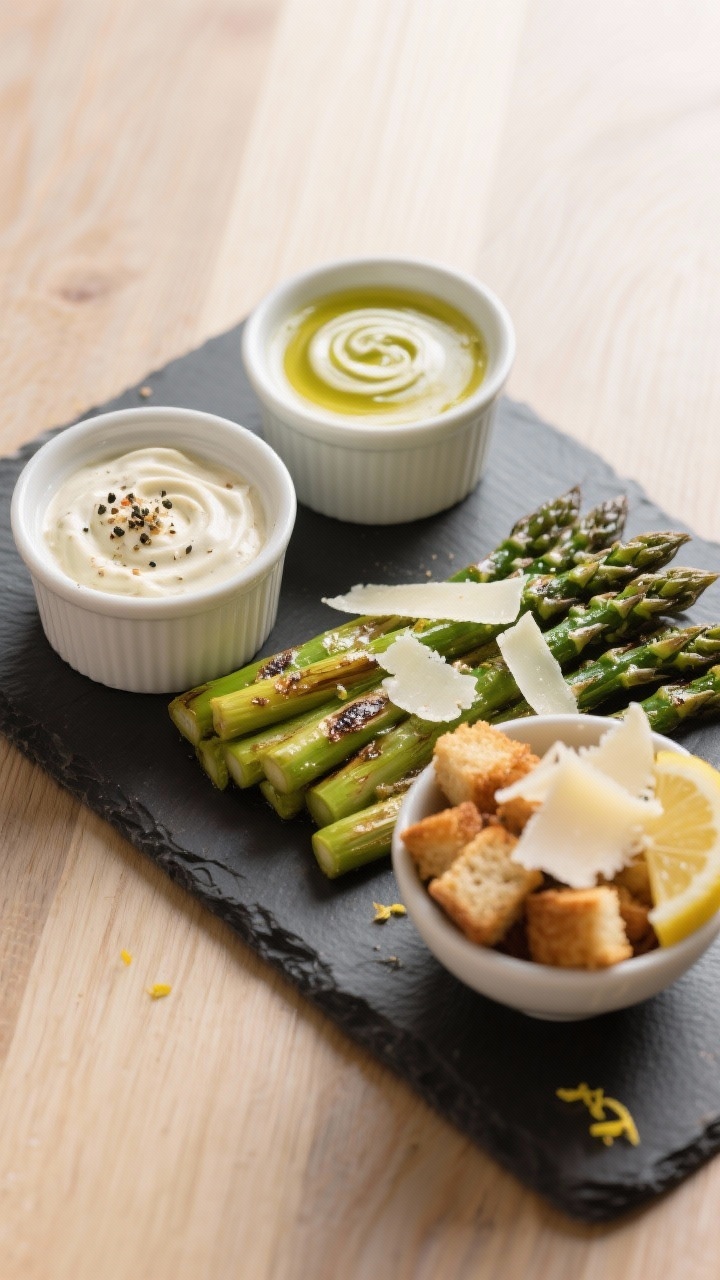
Try it as a spread for chicken sandwiches, a dip for raw vegetables, a drizzle over grilled asparagus or salmon, or a toss for roasted potatoes. It adds instant savory depth.
In Conclusion
Homemade Caesar dressing is simple, reliable, and far more flavorful than store-bought. With a few pantry staples and a steady whisk, you get a creamy, tangy dressing that upgrades almost anything it touches.
Keep the base classic, then tweak it to your taste. Once you make it your way, you’ll want a jar in the fridge at all times.
Printable Recipe Card
Want just the essential recipe details without scrolling through the article? Get our printable recipe card with just the ingredients and instructions.