
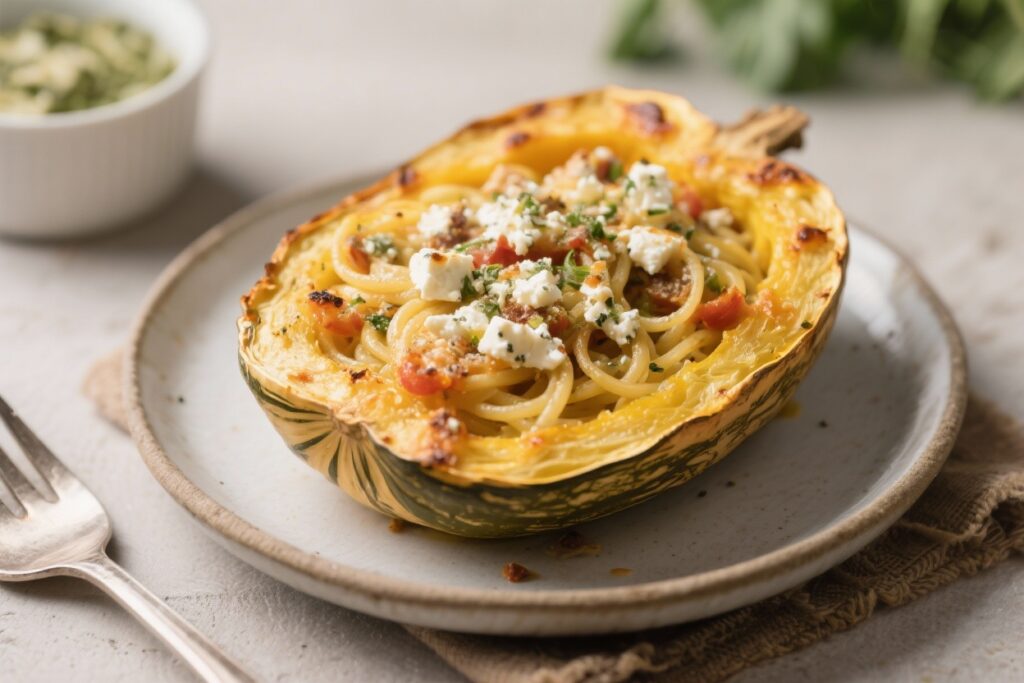
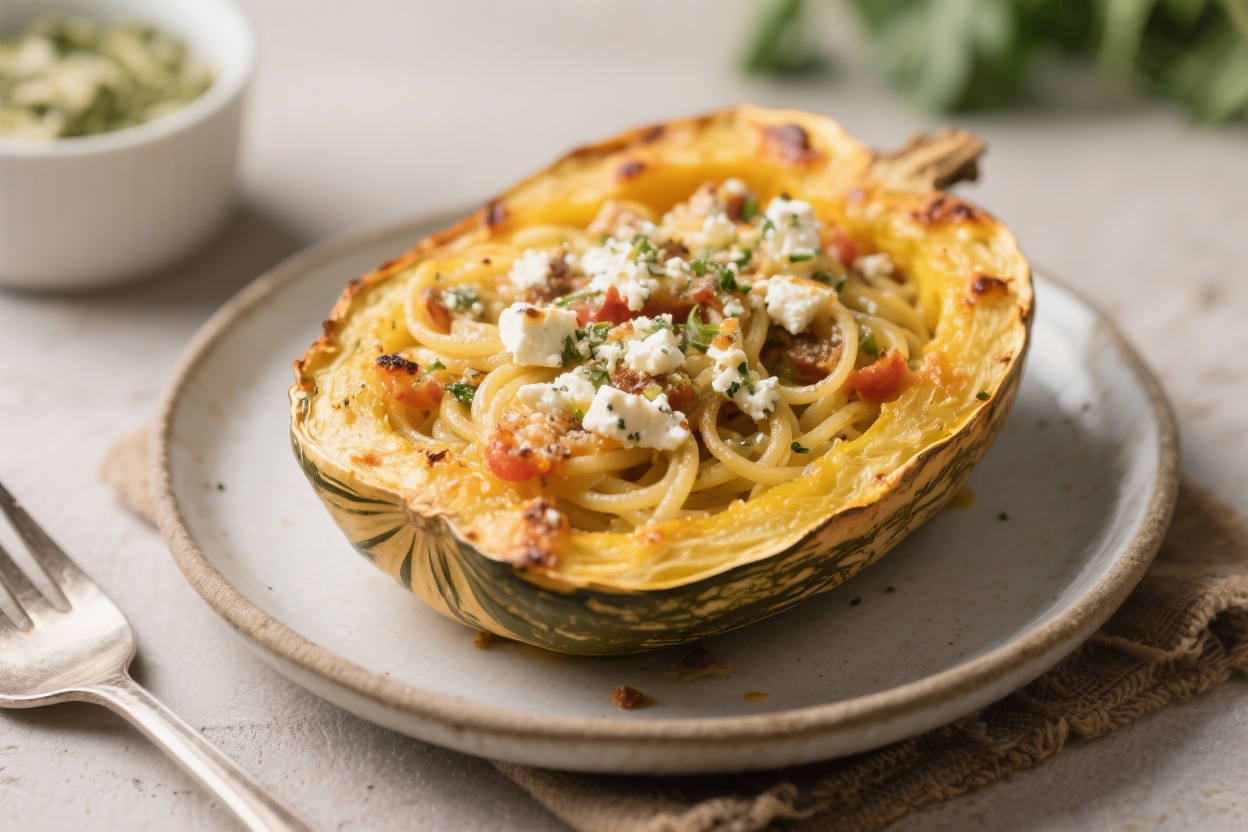
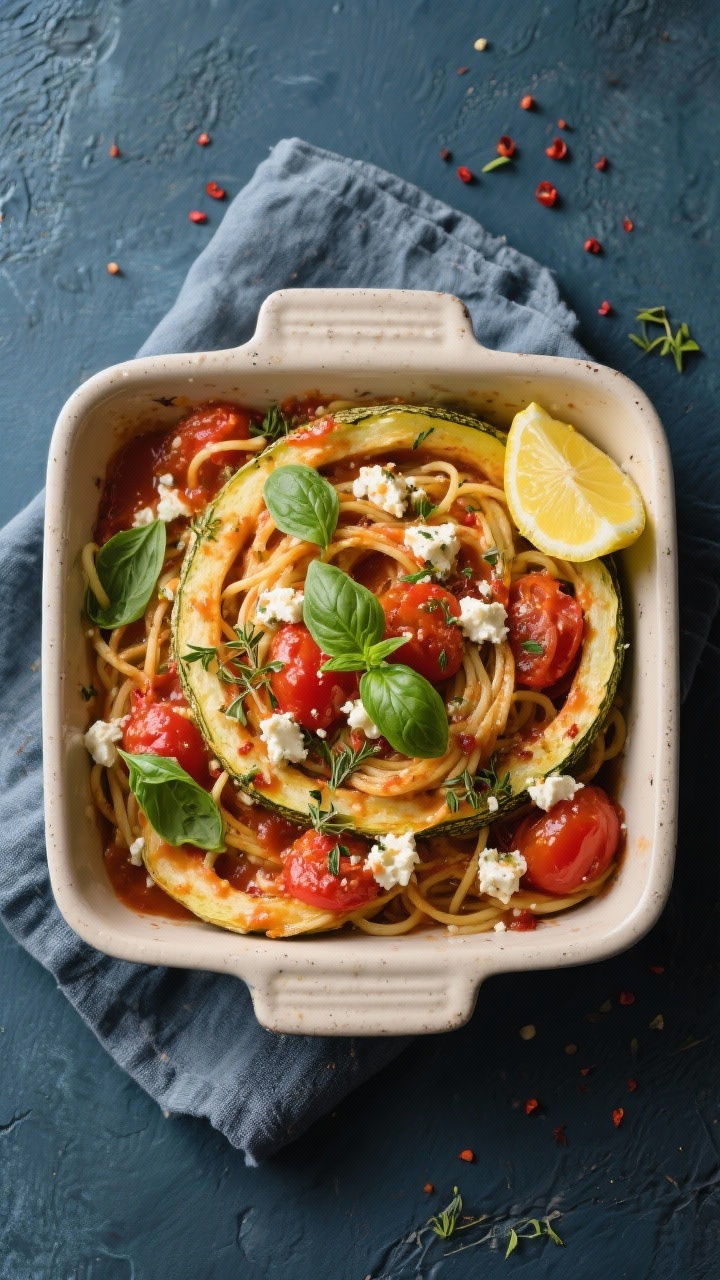
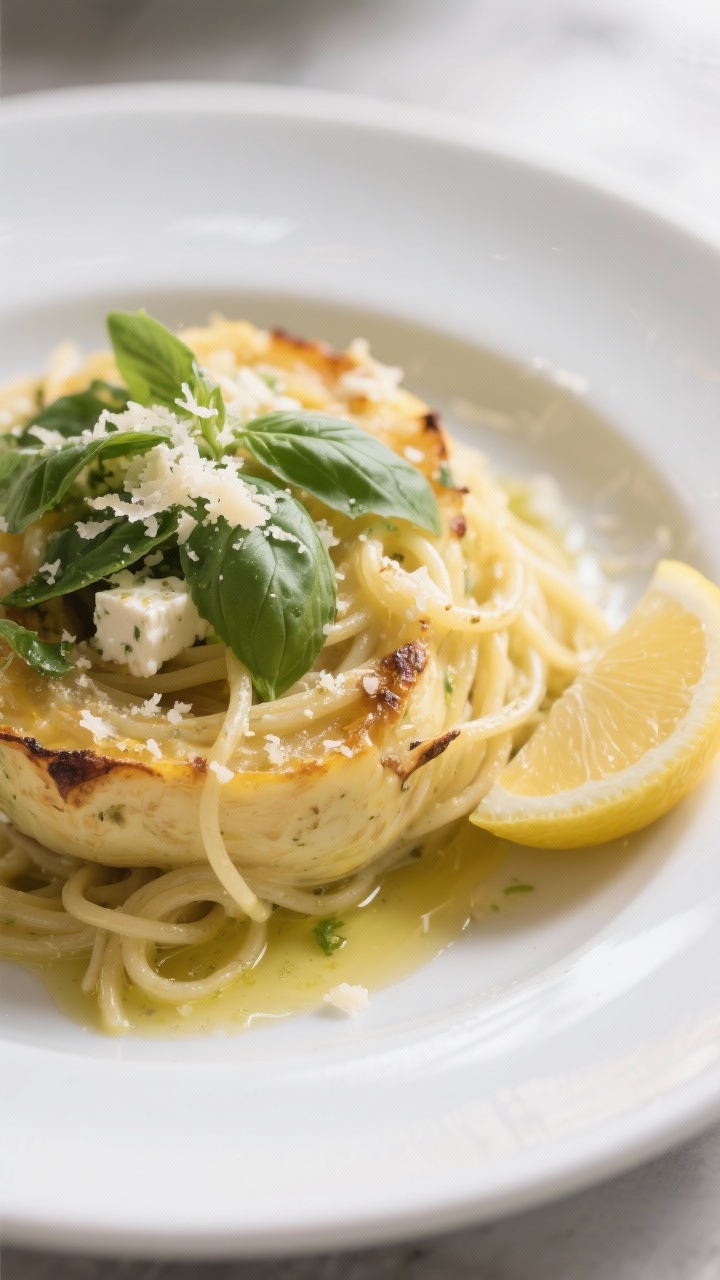
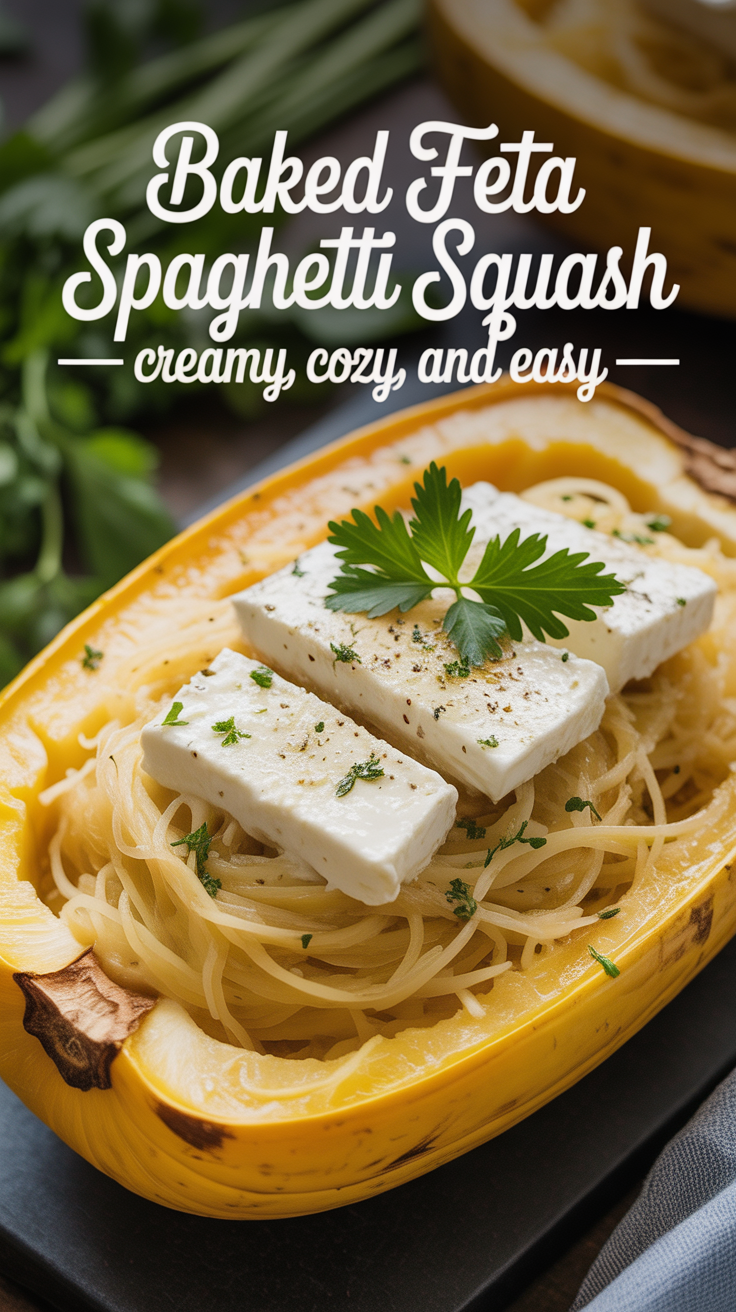
Baked feta spaghetti squash is the kind of weeknight dinner that feels special without much effort. It’s creamy, savory, and a little tangy, with a roasted sweetness from the squash that keeps every bite satisfying. If you love the viral baked feta pasta, this is a lighter, vegetable-forward twist that still hits all the right notes.
The oven does most of the work, and the result is a bubbly, golden pan you’ll want to dig into right away. It also reheats beautifully, making it great for meal prep or leftovers.
Ingredients
Method
-
Preheat the oven: Set your oven to 400°F (200°C). Line a large baking sheet and an 8×8 or 9×9 baking dish with parchment for easier cleanup.
-
Prep the squash: Carefully slice the spaghetti squash in half lengthwise.
Scoop out the seeds and stringy pulp. Rub the cut sides with 1 tablespoon olive oil and season with 1/2 teaspoon salt and a few grinds of black pepper.
-
Roast the squash: Place the squash halves cut side down on the baking sheet. Roast for 35–45 minutes, until the skin gives when pressed and the strands pull away easily with a fork.
Thicker squash may need a few extra minutes.
-
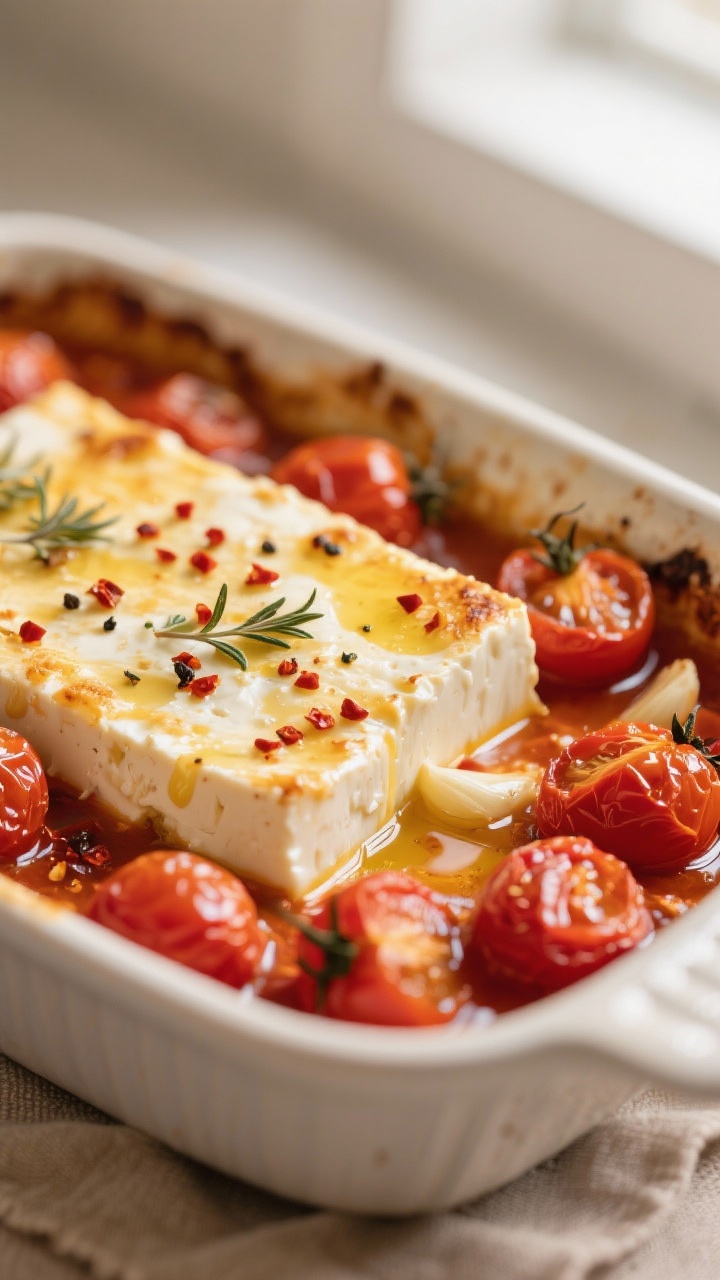
Build the feta pan: While the squash roasts, add the tomatoes, smashed garlic, and feta block to the baking dish. Drizzle with the remaining 2 tablespoons olive oil. Sprinkle with the remaining 1/2 teaspoon salt, remaining pepper, red pepper flakes, and oregano.
-
Roast the feta and tomatoes: Place the dish in the oven during the last 20–25 minutes of the squash cook time.
Roast until the feta is soft and lightly golden and the tomatoes have burst and released their juices.
-
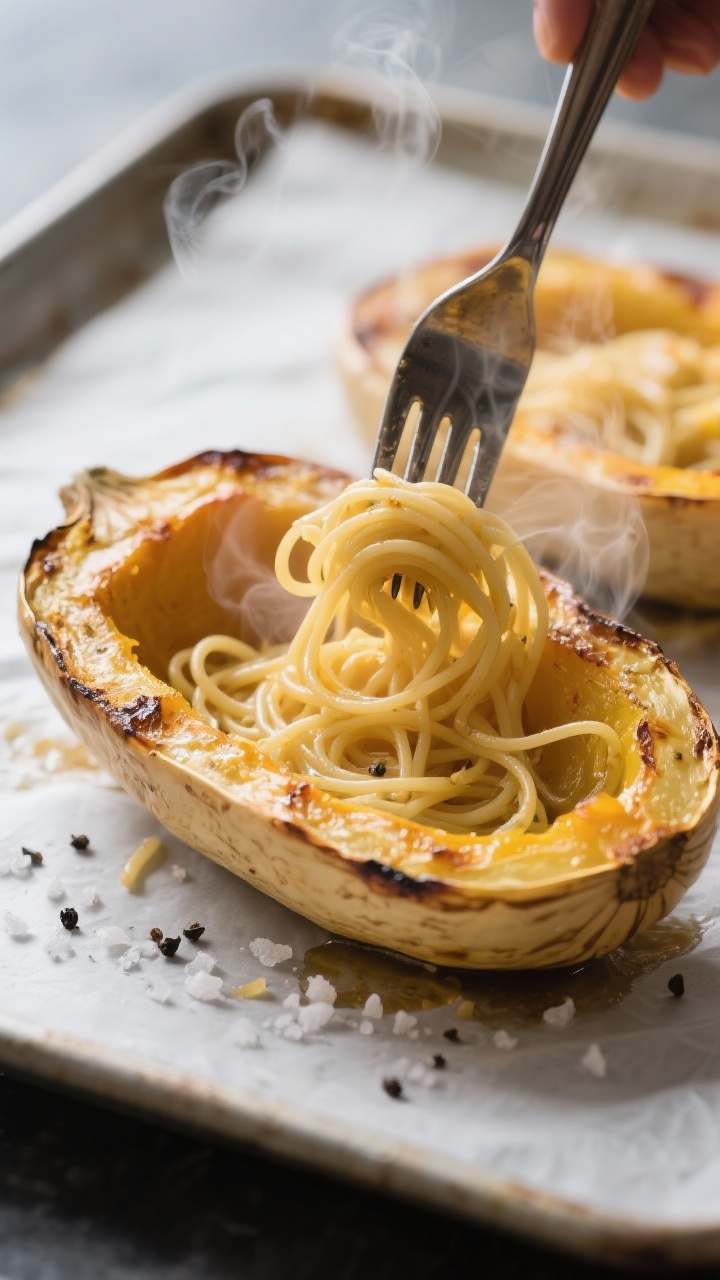
Shred the squash: When the squash is done, flip the halves over and let cool for a few minutes. Use a fork to pull long, spaghetti-like strands into the shell. Transfer the strands to the feta-tomato dish, or keep them in the squash boats for serving.
-
Combine and finish: Mash the feta and tomatoes with a spoon to create a creamy sauce.
Toss with the squash strands until well coated. Stir in the basil and lemon juice. Taste and adjust seasoning with more salt, pepper, or red pepper flakes.
-
Serve: Plate the squash mixture or serve straight from the squash boats.
Top with more basil and a sprinkle of Parmesan if you like.
What Makes This Recipe So Good
- Low-carb comfort food: You get the richness and creaminess of a pasta dish with fewer carbs and more fiber.
- Hands-off cooking: The squash and feta roast together, so prep is minimal and cleanup is simple.
- Big flavor: Roasted tomatoes, garlic, and feta melt into a sauce that tastes like it simmered for hours.
- Flexible and forgiving: You can add protein, swap herbs, or use different cheeses without losing the magic.
- Meal-prep friendly: The components hold up well for a few days, and the flavor actually improves as it sits.
Ingredients
- 1 medium spaghetti squash (about 2.5 to 3 pounds)
- 8 ounces feta cheese, in block form
- 2 cups cherry or grape tomatoes
- 4 cloves garlic, peeled and smashed
- 3 tablespoons extra-virgin olive oil, divided
- 1 teaspoon kosher salt, divided (adjust to taste)
- 1/2 teaspoon freshly ground black pepper, divided
- 1/2 teaspoon red pepper flakes (optional, for heat)
- 1 teaspoon dried oregano or Italian seasoning
- 1/4 cup fresh basil, chopped (plus more for garnish)
- 1 tablespoon lemon juice (optional, for brightness)
- Grated Parmesan, for serving (optional)
Instructions
- Preheat the oven: Set your oven to 400°F (200°C). Line a large baking sheet and an 8×8 or 9×9 baking dish with parchment for easier cleanup.
- Prep the squash: Carefully slice the spaghetti squash in half lengthwise.
Scoop out the seeds and stringy pulp. Rub the cut sides with 1 tablespoon olive oil and season with 1/2 teaspoon salt and a few grinds of black pepper.
- Roast the squash: Place the squash halves cut side down on the baking sheet. Roast for 35–45 minutes, until the skin gives when pressed and the strands pull away easily with a fork.
Thicker squash may need a few extra minutes.
- Build the feta pan: While the squash roasts, add the tomatoes, smashed garlic, and feta block to the baking dish. Drizzle with the remaining 2 tablespoons olive oil. Sprinkle with the remaining 1/2 teaspoon salt, remaining pepper, red pepper flakes, and oregano.
- Roast the feta and tomatoes: Place the dish in the oven during the last 20–25 minutes of the squash cook time.
Roast until the feta is soft and lightly golden and the tomatoes have burst and released their juices.
- Shred the squash: When the squash is done, flip the halves over and let cool for a few minutes. Use a fork to pull long, spaghetti-like strands into the shell. Transfer the strands to the feta-tomato dish, or keep them in the squash boats for serving.
- Combine and finish: Mash the feta and tomatoes with a spoon to create a creamy sauce.
Toss with the squash strands until well coated. Stir in the basil and lemon juice. Taste and adjust seasoning with more salt, pepper, or red pepper flakes.
- Serve: Plate the squash mixture or serve straight from the squash boats.
Top with more basil and a sprinkle of Parmesan if you like.
How to Store
- Refrigerate: Store leftovers in an airtight container for up to 4 days. The flavors deepen as it sits.
- Reheat: Warm gently on the stovetop over medium-low heat or in the microwave in 45-second bursts, stirring between each to keep it creamy.
- Freeze: Not ideal. Spaghetti squash can turn watery after freezing.
If you must, freeze in a flat, airtight bag for up to 1 month and reheat covered in a skillet to evaporate excess moisture.
Health Benefits
- High in fiber: Spaghetti squash brings satisfying volume with fewer calories, helping with fullness and digestion.
- Good source of vitamins: It’s rich in vitamin C and B vitamins, while tomatoes add lycopene, an antioxidant linked to heart health.
- Protein and calcium: Feta contributes protein and calcium, supporting muscle function and bone health.
- Healthy fats: Extra-virgin olive oil provides monounsaturated fats that support heart health and help absorb fat-soluble vitamins.
- Lower-carb alternative: Compared to traditional pasta, this dish is lighter on carbohydrates and can fit into low-carb or gluten-free lifestyles.
What Not to Do
- Don’t skip salting the squash: A little salt builds flavor and balances the sweetness of the roasted strands.
- Don’t use crumbled feta: The block melts creamier and browns better. Pre-crumbled feta contains anti-caking agents that affect texture.
- Don’t overcrowd the dish: If your baking dish is too small, the tomatoes will steam, not roast. Use a larger dish or split between two.
- Don’t under-roast: The feta should be soft and lightly golden, and the tomatoes should be burst and saucy.
That’s where the flavor happens.
- Don’t skip the fresh element: Fresh basil and a squeeze of lemon brighten the dish and keep it from tasting heavy.
Recipe Variations
- Spinach and olive: Fold in a few handfuls of baby spinach and a handful of sliced Kalamata olives for a Mediterranean twist.
- Herb swap: Use fresh thyme or rosemary instead of oregano. Add a spoonful of pesto for a garlicky, herby punch.
- Creamier sauce: Stir in a splash of heavy cream or a dollop of Greek yogurt after roasting for extra richness.
- Extra protein: Add roasted chicken, seared shrimp, or chickpeas. Toss them in with the feta and tomatoes for the last 10 minutes of roasting.
- Spicy version: Increase red pepper flakes, add a pinch of smoked paprika, or drizzle with chili crisp before serving.
- Dairy tweak: Try a mix of feta and ricotta or goat cheese.
Goat cheese will make the sauce tangier and silkier.
- Garlic lovers: Roast a whole head of garlic alongside the dish, then squeeze the cloves into the sauce.
FAQ
Can I cook the spaghetti squash in the microwave?
Yes. Pierce the squash several times with a knife, microwave for 4–5 minutes to soften, then halve, seed, and microwave cut side up for 10–12 more minutes until tender. It won’t get the same roasted flavor, but it’s fast.
Is there a substitute for feta?
You can use goat cheese, ricotta, or even Boursin for a creamy texture.
If you prefer a milder taste, try part-skim ricotta and finish with Parmesan for a salty edge.
Can I make this dish vegan?
Yes. Replace feta with a plant-based feta or a cashew-based cheese. Make sure to use olive oil and skip Parmesan or use a vegan alternative.
How do I know when the squash is done?
The skin should yield to pressure, and a fork should easily pull long strands from the flesh.
If it feels watery or mushy, it’s overcooked; if it’s hard to shred, it needs more time.
What can I serve with it?
A simple green salad, roasted broccoli, or garlic-roasted shrimp pairs well. Warm crusty bread is great for scooping up the sauce if you’re not keeping it low-carb.
Can I use canned tomatoes?
Whole cherry or grape tomatoes are best for texture, but you can use well-drained canned diced tomatoes in a pinch. Roast them longer to cook off extra liquid.
How do I avoid watery squash?
Roast cut side down to let moisture escape, and don’t cover during roasting.
If the strands seem wet, toss them in a dry skillet for a minute to steam off excess water before mixing with the feta.
Wrapping Up
Baked feta spaghetti squash checks all the boxes: easy, cozy, flavorful, and flexible. It’s a weeknight keeper that’s fancy enough for company but simple enough to throw together after work. With a few pantry staples and a squash, you’ll have a creamy, satisfying meal that feels both wholesome and indulgent.
Save this one for your regular rotation—you’ll make it again and again.
Printable Recipe Card
Want just the essential recipe details without scrolling through the article? Get our printable recipe card with just the ingredients and instructions.