
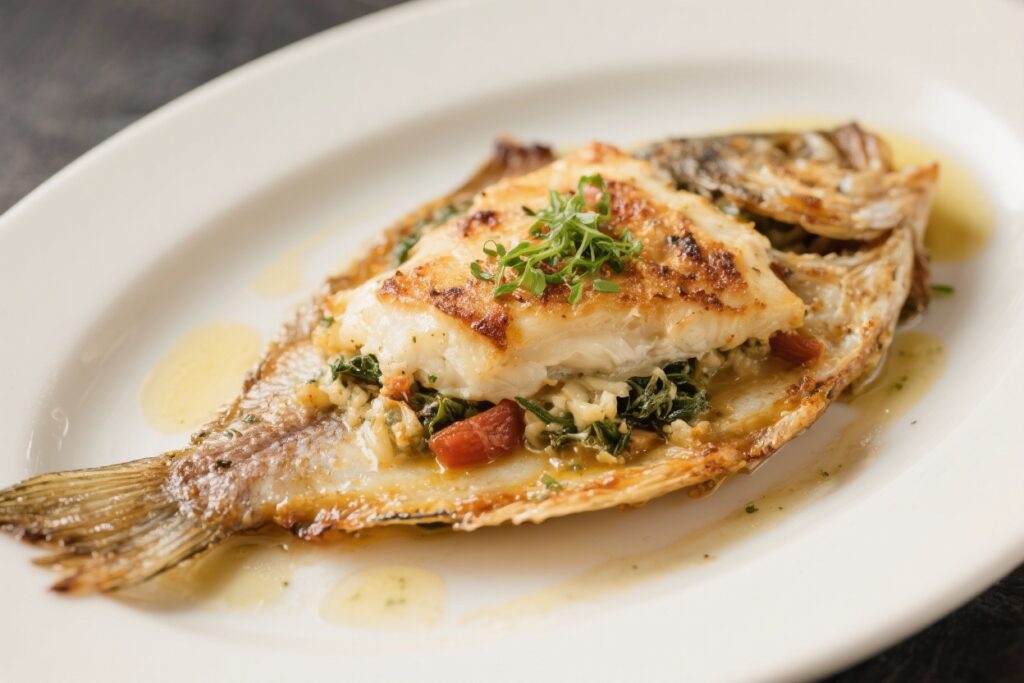
Flounder is mild, tender, and perfect for stuffing with a rich, savory filling. This recipe keeps things simple while delivering that restaurant-style finish you crave at home. The buttery breadcrumbs, fresh herbs, and a touch of lemon make the fish shine without overpowering it.
You’ll get crisp edges, juicy fish, and a golden top that feels special but doesn’t require fuss. Whether it’s a weeknight dinner or a relaxed dinner party, this dish lands every time.
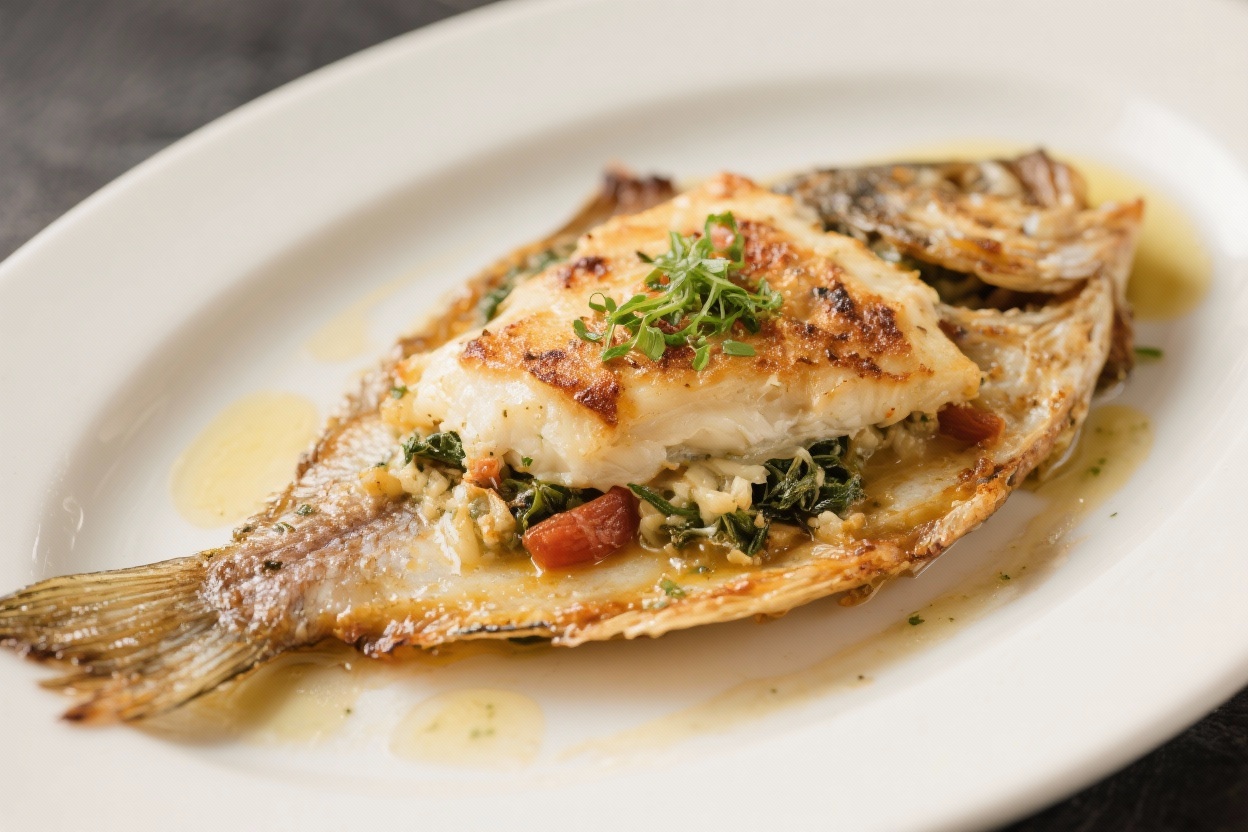
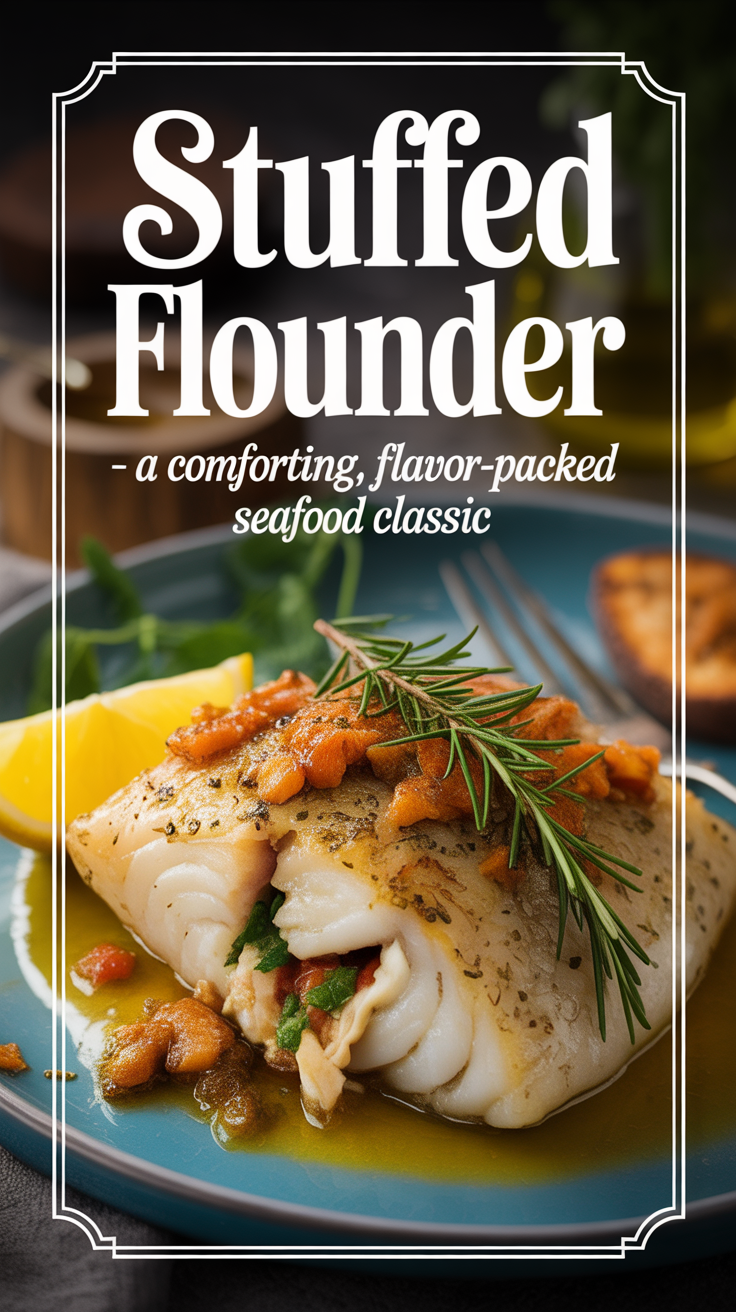
Stuffed Flounder – A Comforting, Flavor-Packed Seafood Classic
Ingredients
Method
-
Prep the oven and pan. Heat the oven to 375°F (190°C).
Lightly grease a baking dish with olive oil or butter. Choose a dish that holds the fillets snugly so they don’t unroll.
-
Sauté the aromatics. Melt 1 tablespoon butter with 1 tablespoon olive oil in a skillet over medium heat. Add the shallot, celery, and a pinch of salt.
Cook 3–4 minutes until softened. Stir in garlic for 30 seconds, then remove from heat.
-
Make the stuffing. In a bowl, combine breadcrumbs, sautéed aromatics, parsley, dill, lemon zest, Dijon, mayonnaise, egg, and Old Bay. Gently fold in the crabmeat (or shrimp) so it stays chunky.
Season with salt and pepper. The mixture should be moist and hold together—add a splash of lemon juice or a touch more mayo if needed.
-
Season the fish. Pat flounder fillets dry. Sprinkle both sides with salt, pepper, and a light dusting of Old Bay.
This seasons the fish and helps the surface sear and brown.
-
Fill and roll. Place a fillet on a board, narrow end toward you. Spoon a mound of stuffing near the narrow end. Roll it up toward the wider end, tucking as you go.
Set seam-side down in the baking dish. Repeat with remaining fillets and stuffing. If the fillets are very thin, you can fold them over the filling like a book instead of rolling.
-
Add moisture to the pan. Pour the white wine (or stock) around the fish, not over it.
This steams the fillets gently and keeps them juicy.
-
Top and bake. Melt the remaining butter and drizzle over the rolled fillets. Sprinkle a pinch of paprika for color. Bake 16–22 minutes, depending on thickness, until the fish flakes easily and the internal temperature reaches 145°F (63°C).
-
Finish with lemon. Let the fish rest 3 minutes.
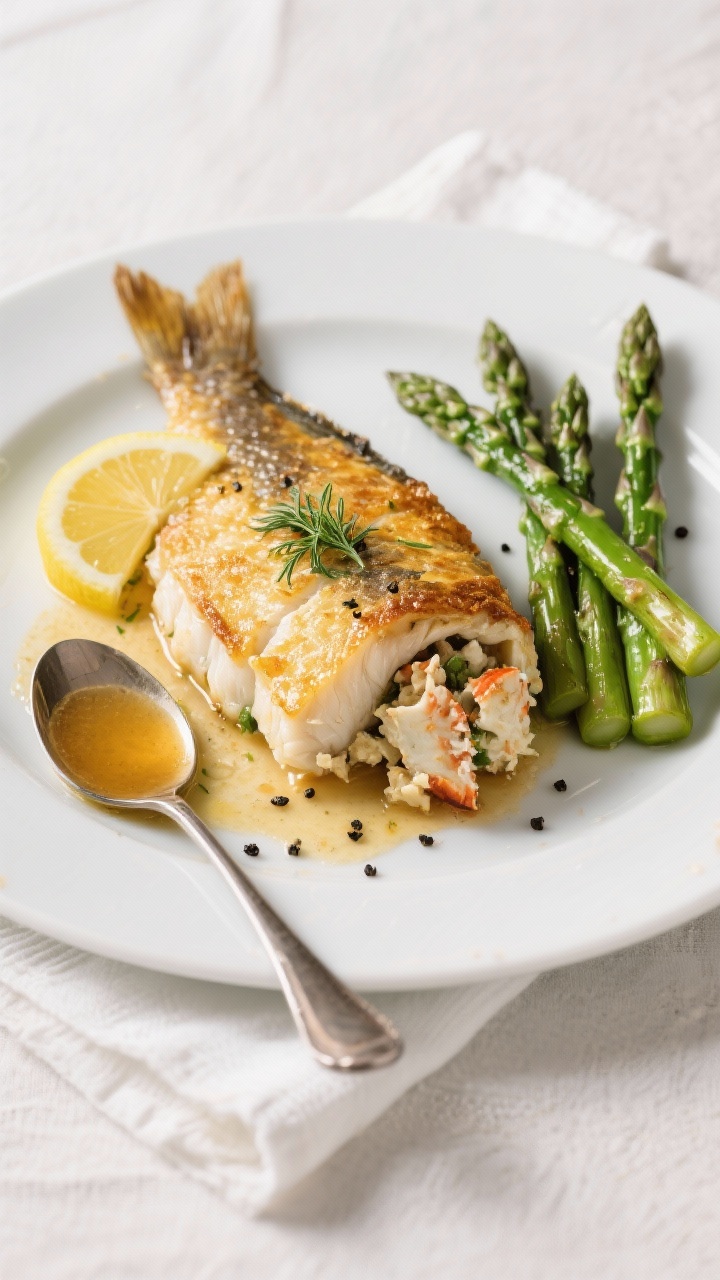
Squeeze fresh lemon juice over the top. Spoon a little pan sauce around each fillet for extra flavor.
-
Serve. Plate with lemon wedges and a light side like steamed asparagus, green beans, or a simple salad. Garlic mashed potatoes or rice pilaf also pair beautifully with the buttery sauce.
Why This Recipe Works
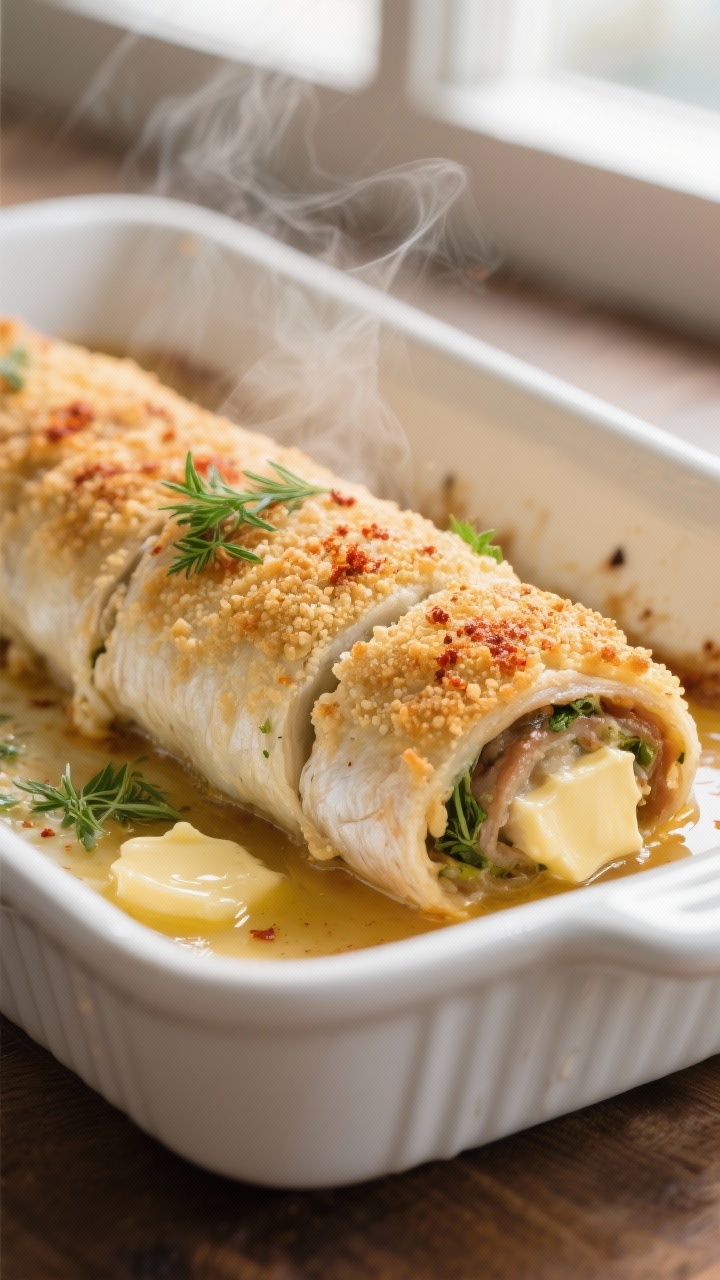
Flounder is a thin, delicate fish, which makes it ideal for rolling or folding around a flavorful stuffing. The filling adds moisture and richness, keeping the fish tender while it bakes.
A squeeze of lemon and a quick butter drizzle help the top brown and add brightness to every bite. The ingredients are easy to find, the steps are straightforward, and the results feel impressive with minimal effort. It’s a great gateway recipe if you’re new to cooking seafood.
Shopping List
- Flounder fillets (4 fillets, about 6 ounces each, skinless)
- Lump crabmeat (optional but classic, 6–8 ounces), or chopped cooked shrimp
- Breadcrumbs (3/4 cup; panko or plain)
- Butter (4 tablespoons), plus more for drizzling
- Olive oil (1–2 tablespoons)
- Shallot (1 small, finely minced) or 1/4 cup minced onion
- Garlic (2 cloves, minced)
- Celery (1 rib, finely diced)
- Fresh parsley (2–3 tablespoons, chopped)
- Fresh dill (1 tablespoon, chopped) or tarragon
- Lemon (1–2, for zest and juice)
- Dijon mustard (1 teaspoon)
- Mayonnaise (2 tablespoons) or Greek yogurt
- Egg (1, lightly beaten)
- Old Bay or seafood seasoning (1 teaspoon), to taste
- Salt and black pepper
- White wine (1/4 cup) or seafood stock (optional, for the pan)
- Paprika (a pinch, for color)
- Lemon wedges (for serving)
How to Make It
- Prep the oven and pan. Heat the oven to 375°F (190°C).
Lightly grease a baking dish with olive oil or butter. Choose a dish that holds the fillets snugly so they don’t unroll.
- Sauté the aromatics. Melt 1 tablespoon butter with 1 tablespoon olive oil in a skillet over medium heat. Add the shallot, celery, and a pinch of salt.
Cook 3–4 minutes until softened. Stir in garlic for 30 seconds, then remove from heat.
- Make the stuffing. In a bowl, combine breadcrumbs, sautéed aromatics, parsley, dill, lemon zest, Dijon, mayonnaise, egg, and Old Bay. Gently fold in the crabmeat (or shrimp) so it stays chunky.
Season with salt and pepper. The mixture should be moist and hold together—add a splash of lemon juice or a touch more mayo if needed.
- Season the fish. Pat flounder fillets dry. Sprinkle both sides with salt, pepper, and a light dusting of Old Bay.
This seasons the fish and helps the surface sear and brown.
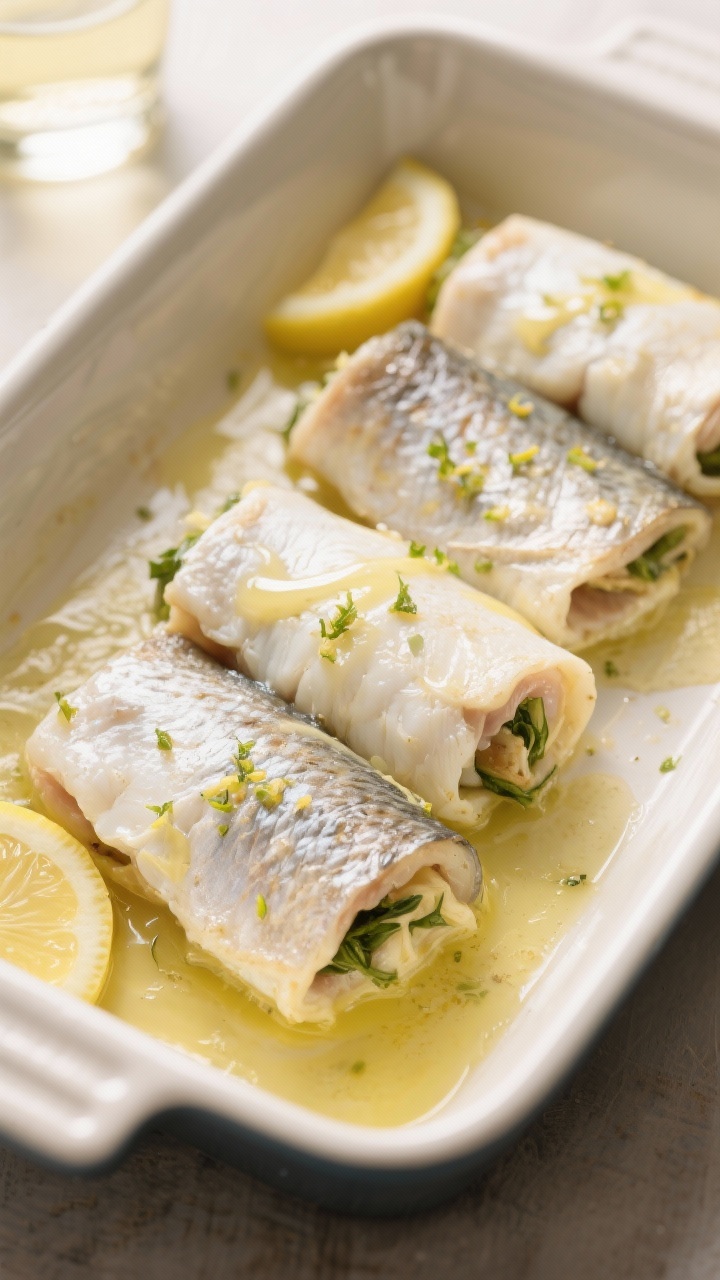
- Fill and roll. Place a fillet on a board, narrow end toward you. Spoon a mound of stuffing near the narrow end. Roll it up toward the wider end, tucking as you go.
Set seam-side down in the baking dish. Repeat with remaining fillets and stuffing. If the fillets are very thin, you can fold them over the filling like a book instead of rolling.
- Add moisture to the pan. Pour the white wine (or stock) around the fish, not over it.
This steams the fillets gently and keeps them juicy.
- Top and bake. Melt the remaining butter and drizzle over the rolled fillets. Sprinkle a pinch of paprika for color. Bake 16–22 minutes, depending on thickness, until the fish flakes easily and the internal temperature reaches 145°F (63°C).
- Finish with lemon. Let the fish rest 3 minutes.
Squeeze fresh lemon juice over the top. Spoon a little pan sauce around each fillet for extra flavor.
- Serve. Plate with lemon wedges and a light side like steamed asparagus, green beans, or a simple salad. Garlic mashed potatoes or rice pilaf also pair beautifully with the buttery sauce.
How to Store
Let leftovers cool slightly, then transfer to an airtight container.
Refrigerate for up to 2 days. Reheat gently in a 300°F (150°C) oven, covered, for 10–12 minutes until warmed through. Avoid microwaving on high; it can make the fish rubbery.
If freezing, wrap tightly and freeze up to 1 month, but note the texture of the fish and stuffing is best when fresh.
Health Benefits
- Lean protein: Flounder is low in fat yet satisfying, helping support muscle and satiety.
- Heart-friendly: Seafood provides helpful omega-3s; even mild white fish contributes to overall heart health when part of a balanced diet.
- Nutrient-dense add-ins: Herbs and lemon add antioxidants and brightness without extra calories.
- Smart fats: Using a measured amount of butter and olive oil adds flavor while keeping portions moderate.
What Not to Do
- Don’t overstuff. Too much filling can cause tearing or uneven cooking.
- Don’t skip drying the fish. Moisture on the surface can prevent browning and dilute flavors.
- Don’t overbake. Flounder cooks fast. Start checking at 15 minutes to avoid dryness.
- Don’t drown it in liquid. A small amount of wine or stock is perfect; too much can make the stuffing soggy.
- Don’t overseason the filling. The fish is delicate, so keep the balance—lemon, herbs, and a hint of spice are enough.
Variations You Can Try
- Spinach and Feta: Skip the crab, add sautéed spinach, crumbled feta, and a pinch of nutmeg.
- Mushroom and Herb: Brown chopped mushrooms with shallots until dry, then fold into the breadcrumb mix with thyme.
- Shrimp and Corn: Stir in chopped cooked shrimp and a handful of sweet corn kernels for texture.
- Cajun Style: Use Cajun seasoning, add green onion, and finish with a squeeze of charred lemon.
- Gluten-Free: Use almond flour or gluten-free breadcrumbs. Ensure your mustard and seasonings are GF-certified.
- Lighter Option: Swap mayo for Greek yogurt and reduce butter; add extra lemon zest for punch.
FAQ
Can I use a different fish if I can’t find flounder?
Yes.
Sole, tilapia, or thin fillets of haddock or cod work well. Choose a mild, thin fish that can roll or fold easily.
Do I have to use crab in the stuffing?
No. The crab adds sweetness and richness, but you can use chopped cooked shrimp, a mushroom mix, or keep it vegetarian with herbs and breadcrumbs.
How do I know when the fish is done?
The fillets should flake easily with a fork, look opaque, and reach 145°F (63°C) at the center.
If the stuffing is hot and the fish no longer looks translucent, it’s ready.
Can I make it ahead?
You can assemble the stuffed fillets up to 6 hours in advance. Cover and refrigerate. Add the wine and butter just before baking, and add 2–3 extra minutes to the cook time.
What sauce pairs well with stuffed flounder?
A simple pan sauce is perfect: whisk a teaspoon of Dijon and a squeeze of lemon into the baking juices, then finish with a pat of butter.
A light lemon-butter sauce or a drizzle of herbed olive oil also works.
How can I keep the rolls from falling apart?
Don’t overfill, and place the seam side down in the baking dish. If needed, secure with a toothpick and remove it before serving.
My stuffing feels dry. What should I do?
Add a touch more mayonnaise or a splash of lemon juice to loosen it.
You want it moist enough to clump when pressed but not wet.
In Conclusion
Stuffed flounder is a simple, satisfying way to elevate a mild white fish. With a few pantry staples, fresh herbs, and a bright finish of lemon, you’ll get a dish that’s elegant without being fussy. Keep an eye on the cook time, season with a light hand, and let the fish speak for itself.
Serve it with crisp vegetables and your favorite starch, and you’ve got a balanced, impressive meal any night of the week.

Printable Recipe Card
Want just the essential recipe details without scrolling through the article? Get our printable recipe card with just the ingredients and instructions.