
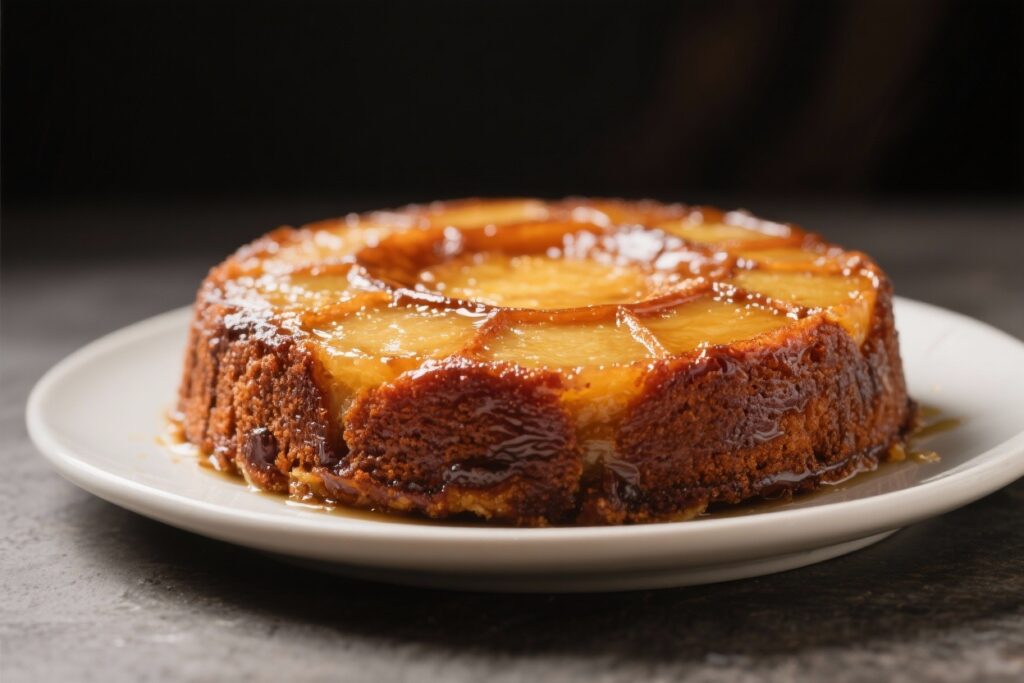
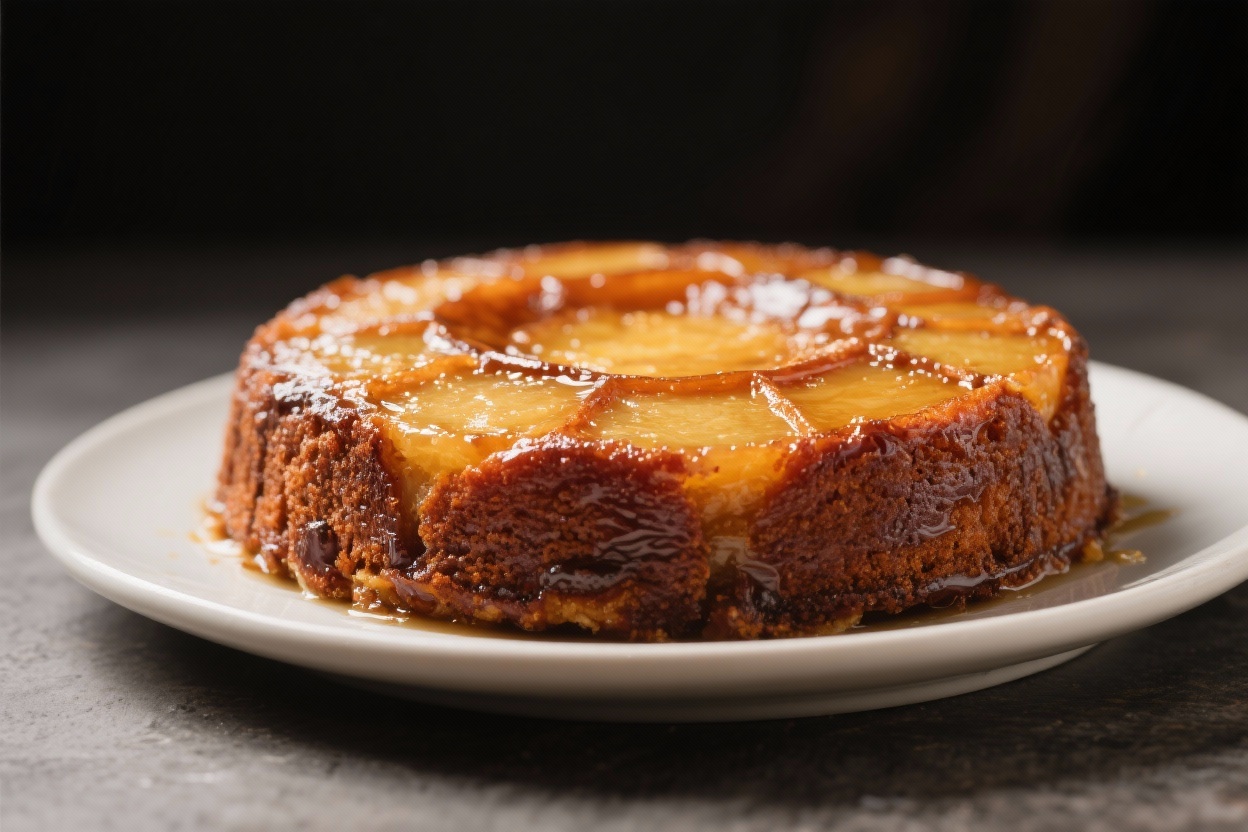
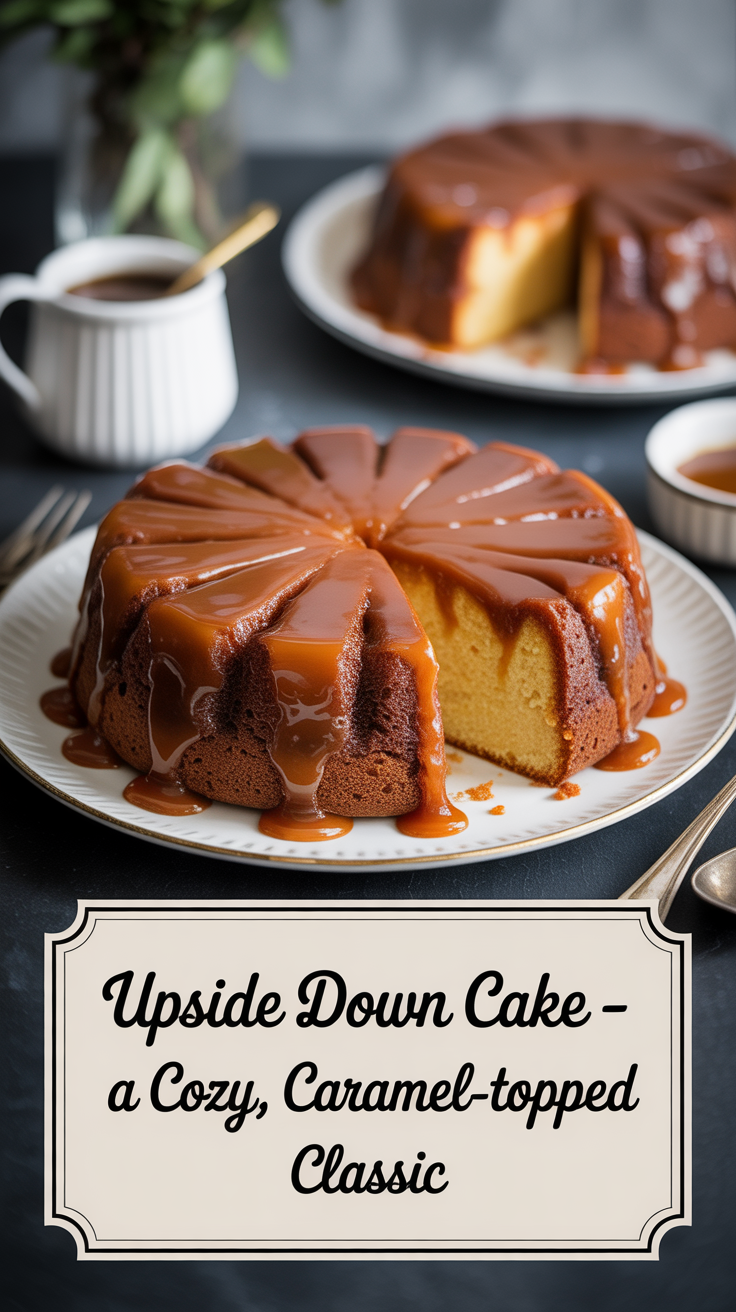
Upside Down Cake has a way of feeling both nostalgic and fresh. The glossy fruit, the buttery caramel, and the soft, fluffy crumb make it a crowd-pleaser every time. It’s simple enough for a weeknight bake but special enough for a celebration.
Best of all, you don’t need fancy tools or rare ingredients—just a good pan and a little patience. If you’ve never flipped a cake before, don’t worry. This one is forgiving, fun, and delivers great results.
Ingredients
Method
-
Prep the pan and oven. Heat the oven to 350°F (175°C). Grease a 9-inch round cake pan (2 inches deep) or a 9-inch cast-iron skillet. Line the bottom with parchment for easy release.
-
Make the caramel base. In the prepared pan or skillet, melt 4 tablespoons butter over low heat.
Sprinkle in the brown sugar and stir until it becomes a smooth, bubbling mixture. Remove from heat. Spread it evenly across the bottom.
-
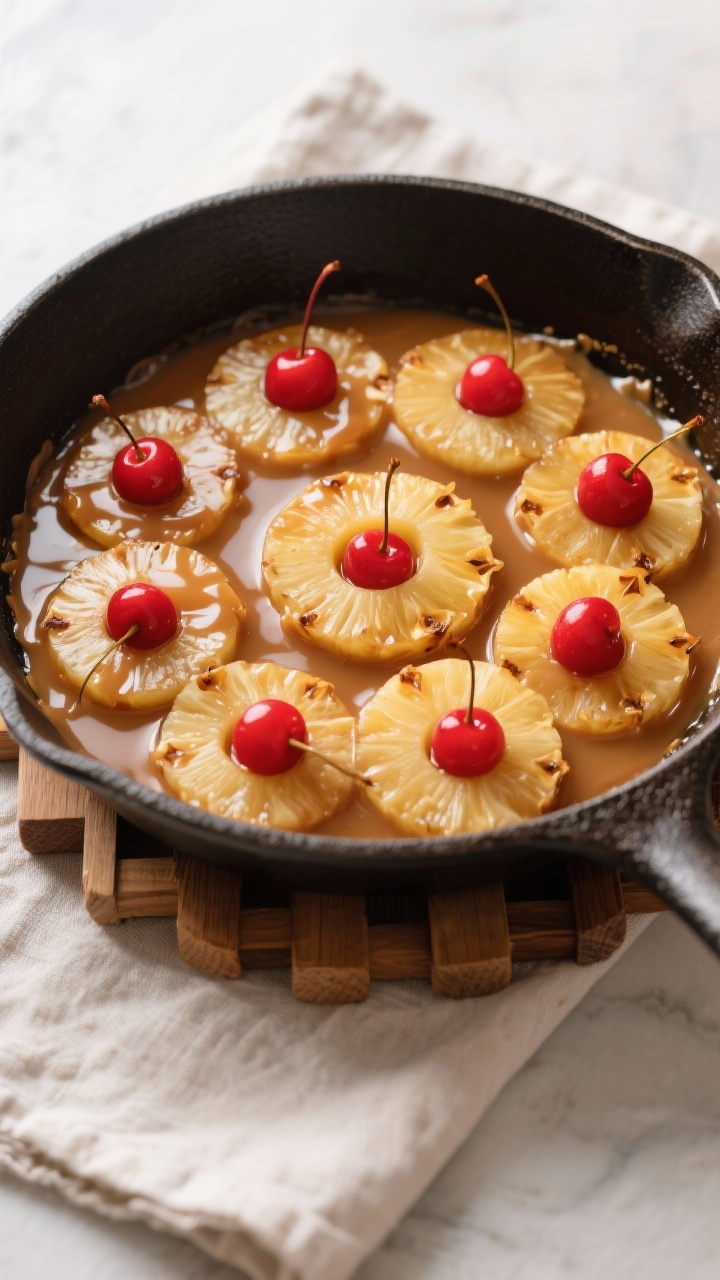
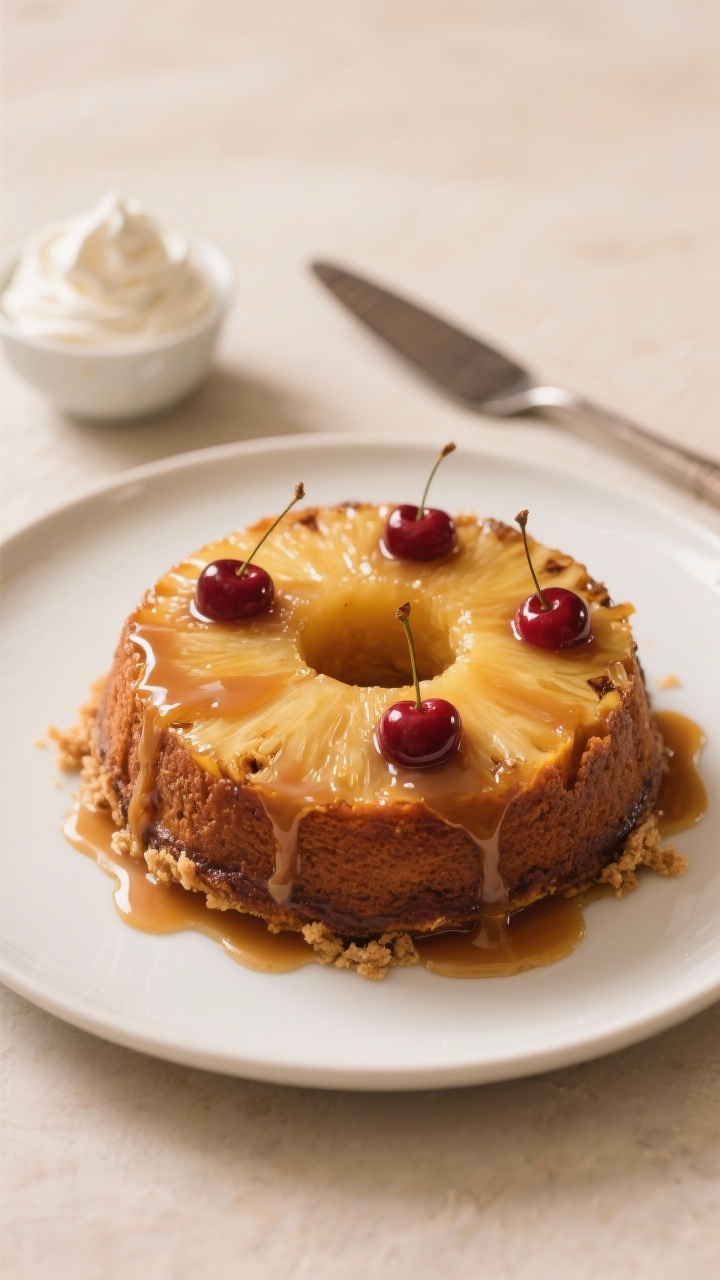
Arrange the fruit. Lay pineapple rings over the caramel.
Tuck cherries into the centers if using. If using other fruit, fan thin slices in a single layer. Keep it snug without stacking too thick.
-
Combine dry ingredients. In a bowl, whisk the flour, baking powder, baking soda, and salt.
Set aside.
-
Cream butter and sugar. In a separate large bowl, beat the softened butter and granulated sugar until light and fluffy, about 2–3 minutes. This helps the cake rise and stay tender.
-
Add eggs and vanilla. Beat in the eggs one at a time, scraping the bowl. Mix in the vanilla and citrus zest if using.
-
Mix wet ingredients. Stir together the milk and sour cream in a small bowl.
-
Combine the batter. Add the dry ingredients to the butter mixture in two additions, alternating with the milk mixture.
Start and end with dry. Mix just until smooth. Do not overmix.
-
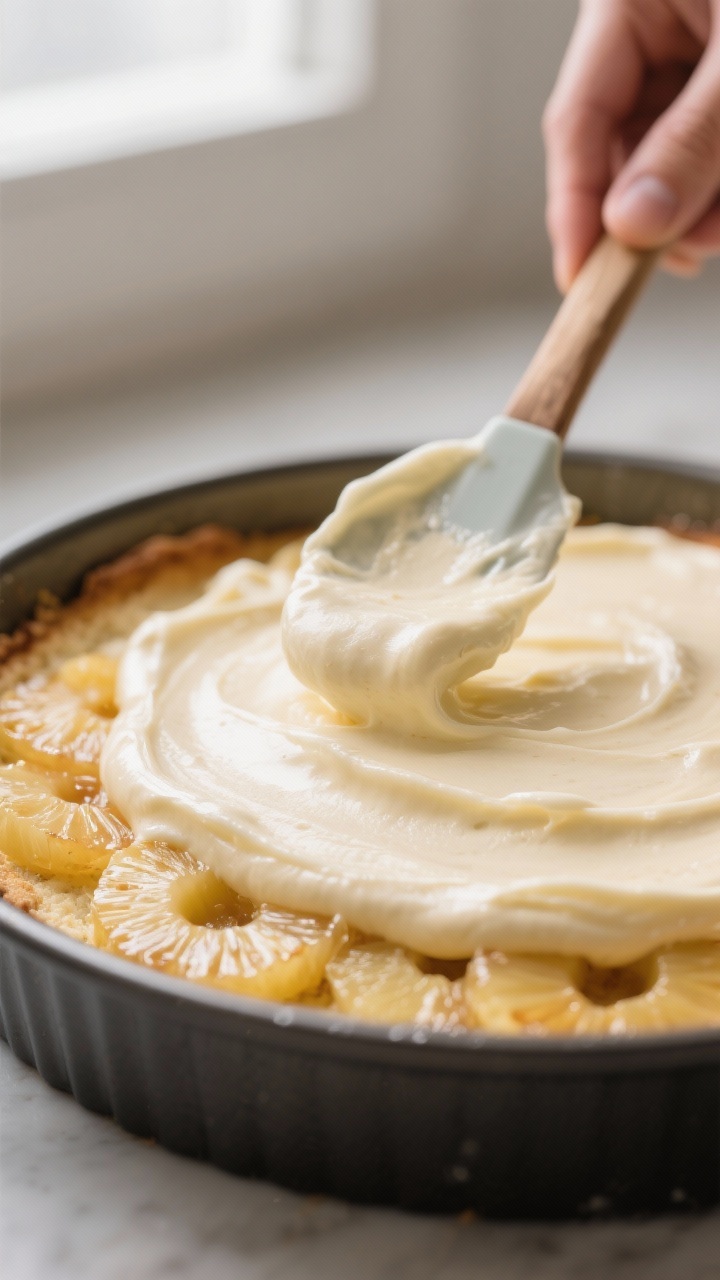
Spread over the fruit. Spoon the batter over the fruit in dollops, then gently spread to the edges.
Try not to disturb the fruit arrangement.
-
Bake. Bake for 35–45 minutes, until the top is golden and a toothpick inserted into the center of the cake (not the fruit) comes out clean. The edges should be slightly pulling away from the pan.
-
Rest and flip. Let the cake rest for 10–15 minutes. Run a knife around the edges.
Place a serving plate over the pan, then invert in one confident motion. Lift the pan carefully. If any fruit sticks, just nudge it back into place.
-
Cool and serve. Let cool for at least 20 minutes before slicing.
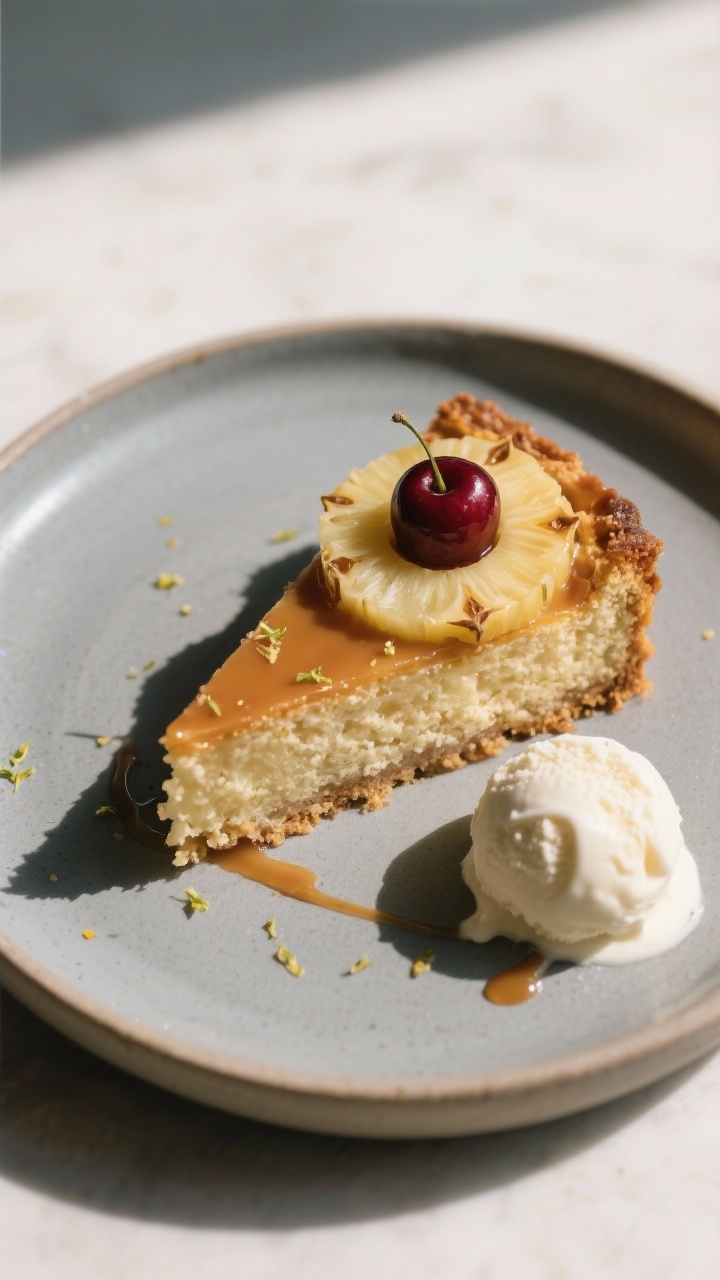
Serve warm or at room temperature. A dollop of whipped cream or a scoop of vanilla ice cream is a nice touch.
What Makes This Special
This cake is a perfect balance of texture and flavor: soft cake on the bottom and tender caramelized fruit on top.
The flip is the big moment, turning what looks simple in the pan into a stunning dessert. You can use pineapple for a classic look, or swap in peaches, apples, or even berries. The batter is a straightforward, buttery vanilla base that never overwhelms the fruit.
It’s the kind of recipe that invites you to relax and enjoy the process.
Ingredients
- For the fruit topping:
- 4 tablespoons unsalted butter
- 1/2 cup packed light brown sugar
- 1 can (14–20 oz) pineapple rings, well-drained (or 3 cups sliced fresh fruit like peaches, apples, or pears)
- Maraschino cherries (optional, for a classic pineapple version)
- For the cake batter:
- 1 1/2 cups all-purpose flour
- 1 1/2 teaspoons baking powder
- 1/2 teaspoon baking soda
- 1/2 teaspoon fine salt
- 1/2 cup unsalted butter, softened
- 3/4 cup granulated sugar
- 2 large eggs, at room temperature
- 1 teaspoon vanilla extract
- 1/2 cup whole milk, at room temperature
- 1/2 cup sour cream or plain yogurt, at room temperature
- Zest of 1 lemon or orange (optional, for brightness)
Step-by-Step Instructions
- Prep the pan and oven. Heat the oven to 350°F (175°C). Grease a 9-inch round cake pan (2 inches deep) or a 9-inch cast-iron skillet. Line the bottom with parchment for easy release.
- Make the caramel base. In the prepared pan or skillet, melt 4 tablespoons butter over low heat.
Sprinkle in the brown sugar and stir until it becomes a smooth, bubbling mixture. Remove from heat. Spread it evenly across the bottom.
- Arrange the fruit. Lay pineapple rings over the caramel.
Tuck cherries into the centers if using. If using other fruit, fan thin slices in a single layer. Keep it snug without stacking too thick.
- Combine dry ingredients. In a bowl, whisk the flour, baking powder, baking soda, and salt.
Set aside.
- Cream butter and sugar. In a separate large bowl, beat the softened butter and granulated sugar until light and fluffy, about 2–3 minutes. This helps the cake rise and stay tender.
- Add eggs and vanilla. Beat in the eggs one at a time, scraping the bowl. Mix in the vanilla and citrus zest if using.
- Mix wet ingredients. Stir together the milk and sour cream in a small bowl.
- Combine the batter. Add the dry ingredients to the butter mixture in two additions, alternating with the milk mixture.
Start and end with dry. Mix just until smooth. Do not overmix.
- Spread over the fruit. Spoon the batter over the fruit in dollops, then gently spread to the edges.
Try not to disturb the fruit arrangement.
- Bake. Bake for 35–45 minutes, until the top is golden and a toothpick inserted into the center of the cake (not the fruit) comes out clean. The edges should be slightly pulling away from the pan.
- Rest and flip. Let the cake rest for 10–15 minutes. Run a knife around the edges.
Place a serving plate over the pan, then invert in one confident motion. Lift the pan carefully. If any fruit sticks, just nudge it back into place.
- Cool and serve. Let cool for at least 20 minutes before slicing.
Serve warm or at room temperature. A dollop of whipped cream or a scoop of vanilla ice cream is a nice touch.
How to Store
- Room temperature: Keep covered for up to 1 day. The caramel stays glossy and the cake remains soft.
- Refrigerator: Store in an airtight container for 3–4 days.
Warm slices in the microwave for 10–15 seconds to soften the caramel.
- Freezer: Wrap individual slices tightly in plastic, then foil. Freeze for up to 2 months. Thaw in the fridge and warm before serving.
Why This is Good for You
It’s dessert, but it’s not empty.
You get natural sweetness and fiber from the fruit, and the portion size is easy to manage because the cake is rich and satisfying. Making it at home also means fewer additives and a shorter ingredient list. You can adjust sugar to taste or swap in fruit with more natural tartness.
That balance keeps it from feeling overly heavy.
Common Mistakes to Avoid
- Using too much fruit. A thick layer can make the top soggy and the cake heavy. Keep it to a single, even layer.
- Skipping the parchment. It helps prevent sticking and makes the flip less stressful.
- Overmixing the batter. This can make the cake tough. Mix just until smooth.
- Flipping too soon or too late. Flip after a short rest—10 to 15 minutes.
Too hot and it may break; too cool and it may stick.
- Not draining canned fruit. Excess liquid can water down the caramel. Pat fruit dry for best texture.
Alternatives
- Fruit swaps: Try peaches, apples, pears, mango, or a mix of berries. For apples or pears, slice thin so they cook through.
- Flavor twists: Add 1/2 teaspoon ground cinnamon to the caramel for apple or pear, or a splash of rum to the batter for pineapple.
Citrus zest brightens all versions.
- Flour options: Replace 1/2 cup of the all-purpose flour with almond flour for a slightly denser, nutty crumb.
- Dairy-free: Use plant butter and a neutral plant milk. Coconut milk pairs well with pineapple.
- Gluten-free: Use a 1:1 gluten-free baking blend with xanthan gum. Check doneness, as bake time may vary slightly.
- Mini versions: Use a muffin tin with a teaspoon of caramel and a small fruit slice in each cup.
Bake 16–20 minutes.
FAQ
Can I make this ahead?
Yes. Bake the cake, let it cool, and store it covered at room temperature for a day or refrigerate for up to 3 days. Warm lightly before serving to refresh the caramel and crumb.
Do I need a cast-iron skillet?
No.
A 9-inch round cake pan works well. Just melt the butter and sugar on the stovetop and pour it into the lined pan before arranging the fruit.
Why did my cake stick?
It usually happens if the caramel cooled too much or the pan wasn’t lined. Next time, line the bottom with parchment and flip while the cake is still warm, about 10–15 minutes after baking.
Can I reduce the sugar?
Yes.
Reduce the brown sugar in the topping to 1/3 cup and the granulated sugar in the batter to 2/3 cup. Expect a slightly less glossy top but still a delicious cake.
How do I know it’s done?
The top will be golden, the edges will pull slightly from the pan, and a toothpick inserted into the cake portion comes out clean. If the center looks wet, give it 3–5 more minutes.
What if my fruit releases a lot of juice?
Drain well and pat dry.
If you still end up with extra syrup after baking, let the cake rest longer before flipping, and absorb any excess with a paper towel after unmolding.
Can I use frozen fruit?
You can, but thaw and drain it thoroughly first. Frozen fruit can water down the caramel if used straight from the freezer.
What’s the best way to slice it?
Use a sharp, thin knife and wipe between slices. Press down gently to avoid dragging the fruit topping.
In Conclusion
Upside Down Cake is warm, pretty, and wonderfully simple.
With a buttery crumb and glossy fruit top, it delivers comfort with every slice. Keep the fruit layer light, don’t rush the flip, and trust the basics. Once you master the method, you can swap in any fruit you like and make it your own.
It’s the kind of dessert that turns an ordinary day into something a little special.
Printable Recipe Card
Want just the essential recipe details without scrolling through the article? Get our printable recipe card with just the ingredients and instructions.