

Thumbprint cookies are the kind of treat that feels homemade even when you’re making them for the first time. They’re soft, buttery, and just the right amount of sweet, with a bright pop of jam in the center. The dough is easy to work with and forgiving, which makes these great for kids or beginner bakers.
You can use any jam you like, so every batch can be a little different. Bake them for holidays, bake sales, or just because you want something simple and cozy with your coffee.
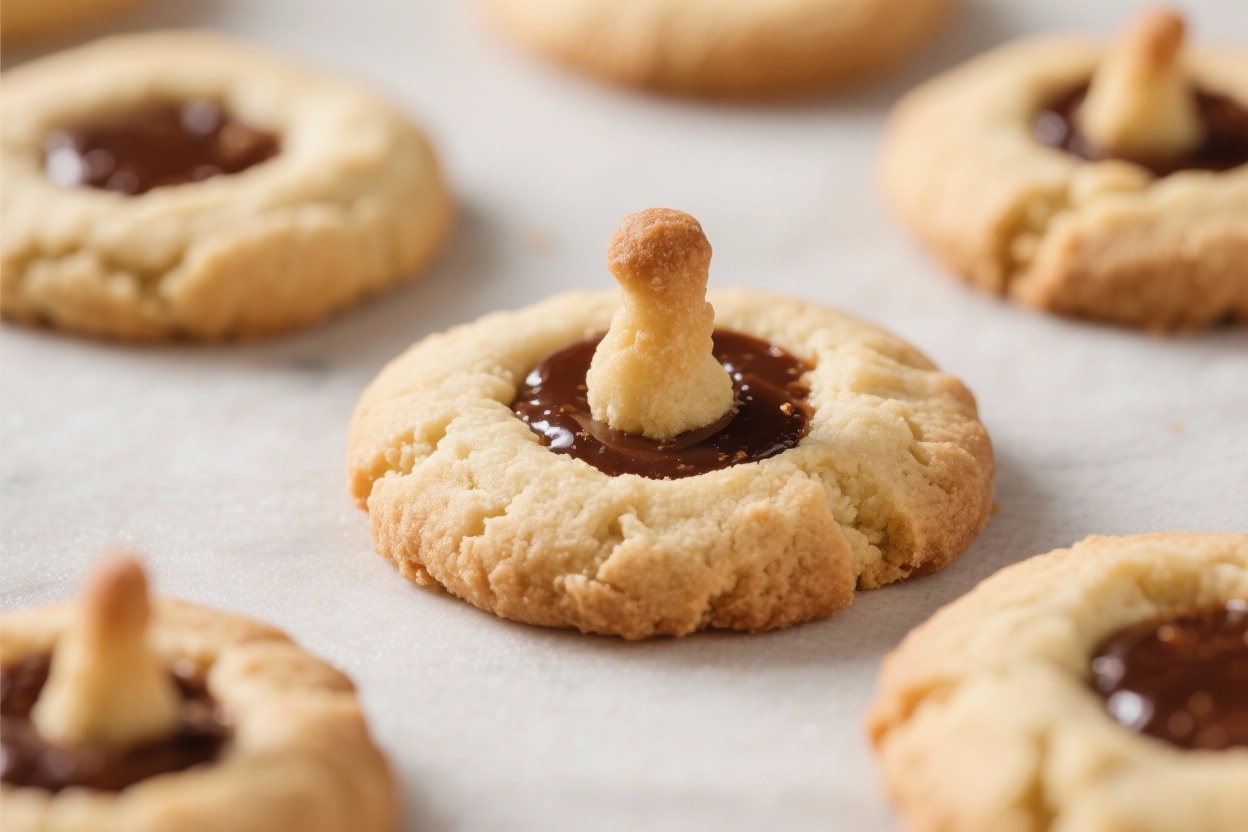
Thumbprint Cookies – Soft, Buttery Cookies With Jam Centers
Ingredients
Method
-
Preheat and prep: Heat your oven to 350°F (175°C).
Line two baking sheets with parchment paper or silicone mats so the cookies don’t stick and brown evenly.
-
Cream the butter and sugars: In a large bowl, beat softened butter, granulated sugar, and brown sugar until light and fluffy, about 2–3 minutes. This step traps air and helps the cookies stay tender.
-
Add egg yolk and flavorings: Mix in the egg yolk, vanilla, and almond extract if using. Beat until smooth.
The yolk adds richness and helps the dough hold its shape.
-
Mix in the dry ingredients: Add flour and salt. Stir on low just until the flour disappears. Do not overmix or the cookies will turn tough.
-
Chill briefly (optional but helpful): If the dough feels soft or sticky, chill it for 15–20 minutes. Slightly firm dough is easier to roll and helps prevent spreading.
-
Shape the cookies: Scoop tablespoon-sized portions and roll into balls.
If using nuts, roll each ball in the chopped nuts to coat the outside lightly.
-
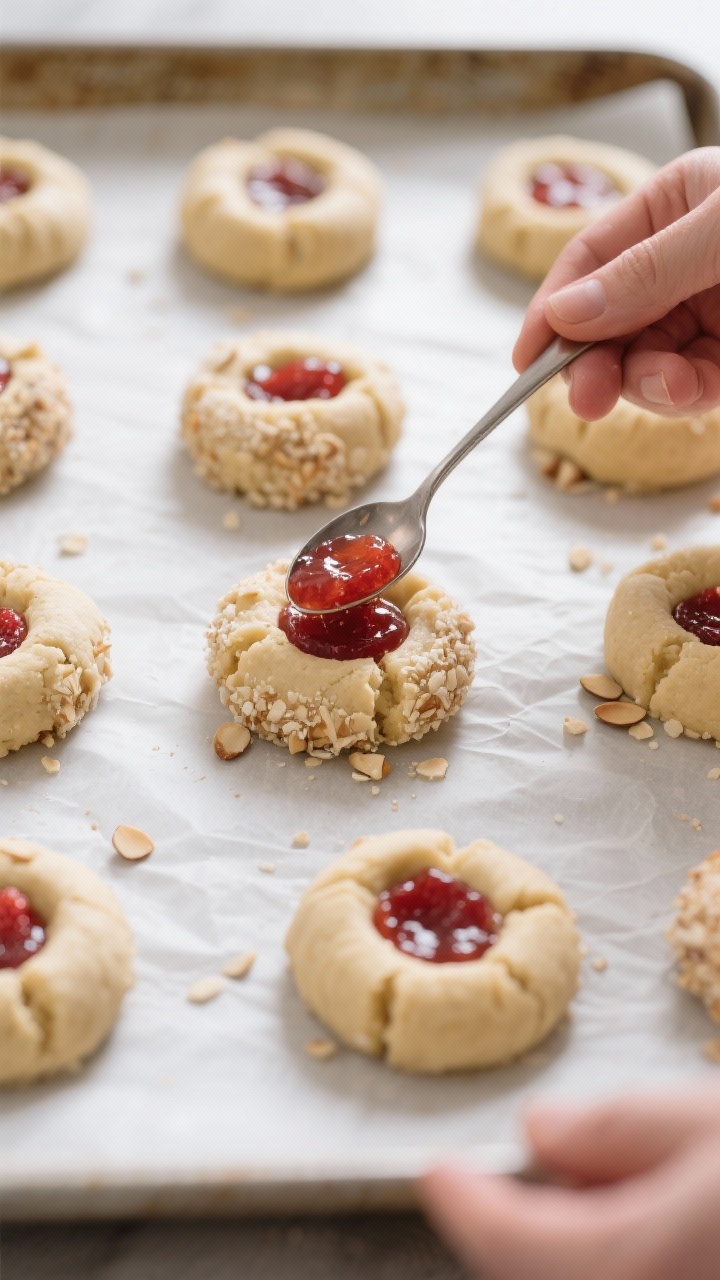
Make the “thumbprint”: Use your thumb or the back of a measuring teaspoon to press a small well in the center of each dough ball. If cracks form around the edges, gently pinch them back together so the jam doesn’t leak.
-
Fill with jam: Stir the jam to loosen it slightly. Spoon about 1/2 teaspoon into each well. Don’t overfill; the jam bubbles as it bakes.
-
Bake: Bake for 11–13 minutes, until the edges are just set and the bottoms are pale golden.
The cookies should not brown deeply.
-
Cool: Let the cookies rest on the sheet for 5 minutes, then transfer to a rack. They’ll firm up as they cool. Dust with powdered sugar once fully cooled if you like.
What Makes This Special
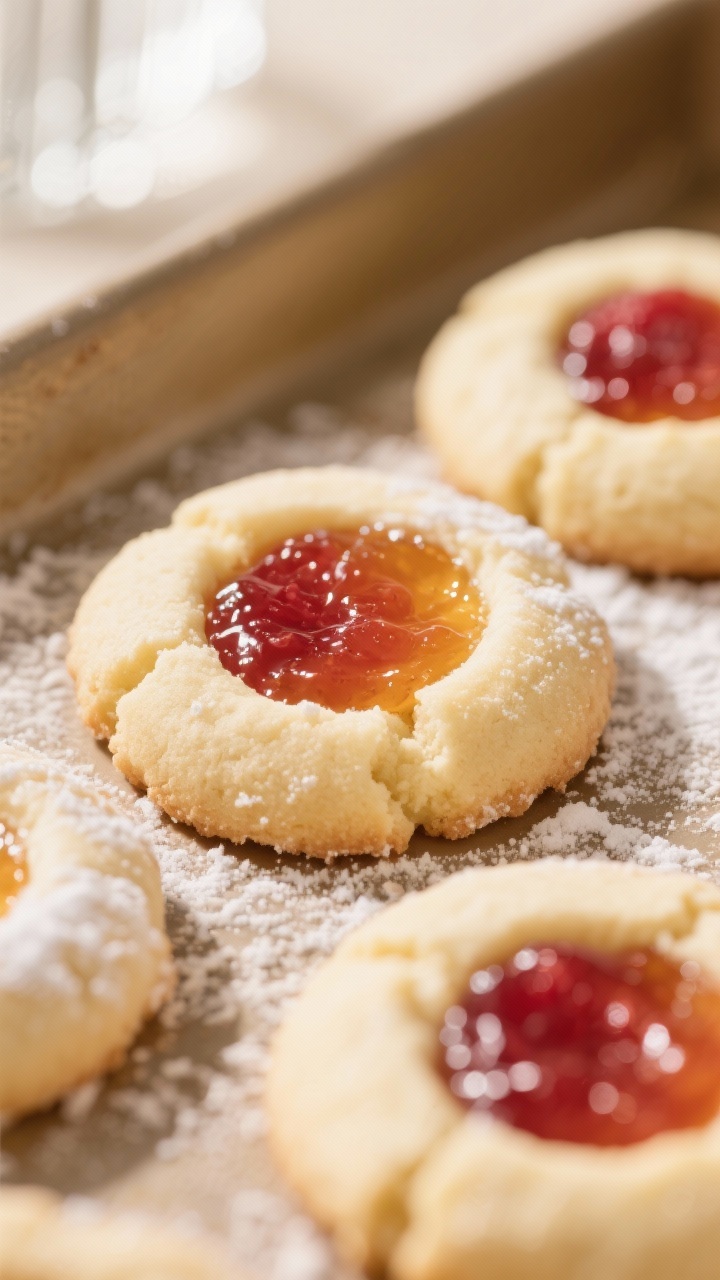
These cookies are simple, but they deliver on texture and flavor. The edges are slightly crisp, while the centers stay tender.
The fruity jam adds a tangy contrast to the buttery base. You can customize the filling with jam, lemon curd, or chocolate for a cookie that feels new every time. Best of all, the dough mixes up in one bowl with pantry ingredients.
Shopping List
- Unsalted butter (1 cup, softened)
- Granulated sugar (1/2 cup)
- Brown sugar (2 tablespoons, optional for deeper flavor)
- Egg yolk (1 large)
- Vanilla extract (1 1/2 teaspoons)
- All-purpose flour (2 cups)
- Salt (1/4 teaspoon; use 1/2 teaspoon if butter is unsalted and you like a slightly saltier cookie)
- Jam or preserves (about 1/2 cup total; raspberry, strawberry, apricot, or mixed berry work well)
- Optional: Finely chopped nuts (1/2 cup; almonds, pecans, or walnuts) for rolling
- Optional: Powdered sugar for dusting
- Optional: Almond extract (1/4 teaspoon) for a bakery-style flavor
Step-by-Step Instructions
- Preheat and prep: Heat your oven to 350°F (175°C).
Line two baking sheets with parchment paper or silicone mats so the cookies don’t stick and brown evenly.
- Cream the butter and sugars: In a large bowl, beat softened butter, granulated sugar, and brown sugar until light and fluffy, about 2–3 minutes. This step traps air and helps the cookies stay tender.
- Add egg yolk and flavorings: Mix in the egg yolk, vanilla, and almond extract if using. Beat until smooth.
The yolk adds richness and helps the dough hold its shape.
- Mix in the dry ingredients: Add flour and salt. Stir on low just until the flour disappears. Do not overmix or the cookies will turn tough.
- Chill briefly (optional but helpful): If the dough feels soft or sticky, chill it for 15–20 minutes. Slightly firm dough is easier to roll and helps prevent spreading.
- Shape the cookies: Scoop tablespoon-sized portions and roll into balls.
If using nuts, roll each ball in the chopped nuts to coat the outside lightly.
- Make the “thumbprint”: Use your thumb or the back of a measuring teaspoon to press a small well in the center of each dough ball. If cracks form around the edges, gently pinch them back together so the jam doesn’t leak.
- Fill with jam: Stir the jam to loosen it slightly. Spoon about 1/2 teaspoon into each well. Don’t overfill; the jam bubbles as it bakes.
- Bake: Bake for 11–13 minutes, until the edges are just set and the bottoms are pale golden.
The cookies should not brown deeply.
- Cool: Let the cookies rest on the sheet for 5 minutes, then transfer to a rack. They’ll firm up as they cool. Dust with powdered sugar once fully cooled if you like.
Keeping It Fresh
Store thumbprint cookies in an airtight container at room temperature for up to 4 days.
Place parchment between layers to protect the jam centers. For longer storage, freeze in a single layer until solid, then transfer to a freezer bag. They keep well for up to 2 months.
Thaw at room temperature; no reheating required.

Health Benefits
- Portion control built in: These are small cookies, so it’s easier to enjoy a treat without overdoing it.
- Fruit content from jam: Jam adds a little fruit flavor and some antioxidants, especially if you choose varieties with higher fruit content and less added sugar.
- Customizable ingredients: You can swap in whole-wheat pastry flour for up to one-third of the flour to add fiber without losing tenderness.
- Nut option: Rolling in finely chopped nuts adds healthy fats and a satisfying crunch.
While thumbprint cookies are definitely a treat, small tweaks—like using reduced-sugar jam or adding nuts—can make them a bit more balanced.
What Not to Do
- Don’t skip softening the butter: Cold butter won’t cream properly, and melted butter can cause the cookies to spread.
- Don’t overmix after adding flour: Overmixing develops gluten, which makes the cookies tough.
- Don’t overfill the centers: Excess jam will spill over and burn on the baking sheet.
- Don’t bake until dark brown: These should stay pale with light golden bottoms. Overbaking dries them out.
- Don’t make the wells too deep: A shallow, even indent holds jam better and prevents cracking.
Variations You Can Try
- Chocolate ganache: Fill the wells after baking with a mix of warm cream and chocolate (let it set before storing).
- Lemon curd: Swap jam for lemon curd for a tart, sunny finish. Spoon into baked cookies so it stays glossy.
- Spiced dough: Add 1/2 teaspoon cinnamon or cardamom to the flour for a cozy flavor.
- Coconut coating: Roll dough balls in finely shredded coconut for a tropical twist and extra texture.
- Almond lovers: Use almond extract in the dough and fill with cherry jam for a bake-shop vibe.
- Gluten-free: Use a 1:1 gluten-free baking flour and chill the dough slightly longer to help it hold shape.
- Nut butter base: Replace 1/4 cup of butter with almond or peanut butter for a subtle nutty flavor and chewier texture.
FAQ
Why did my thumbprint cookies crack?
Cracking often happens if the dough is too cold or the indent is pressed too quickly.
Let the dough warm slightly if it’s been chilled, and press the well gently in a slow, circular motion. You can also smooth any small cracks with your fingers before baking.
How do I keep the jam from leaking?
Make a shallow, even well and avoid overfilling. Use thicker jam or stir in a pinch of cornstarch if your jam is very runny.
Pinching any cracks closed before baking also helps.
Can I make the dough ahead of time?
Yes. Wrap the dough tightly and refrigerate for up to 48 hours, or freeze for up to 2 months. Let it soften slightly before shaping so it doesn’t crack when you make the wells.
What’s the best jam to use?
Choose a jam with a higher fruit content for better flavor and less spreading.
Raspberry, strawberry, and apricot are classics. Seedless varieties give a smoother look, but use what you enjoy.
Can I make them without eggs?
Yes. Replace the egg yolk with 1 tablespoon milk or cream, or use 1 tablespoon applesauce for a slightly softer cookie.
The texture will be a touch different, but still delicious.
How do I know when they’re done?
The edges should look set and the bottoms lightly golden, usually at 11–13 minutes. If the jam is bubbling and the cookies still look pale on top, that’s fine. They’ll finish setting as they cool.
Why did my cookies spread too much?
Warm dough and over-creamed butter can cause spreading.
Chill the dough briefly, and make sure your butter is softened, not melted. Using parchment and a cool baking sheet also helps.
Can I double the recipe?
Absolutely. Double all ingredients and bake in batches.
Keep the dough you’re not using in the fridge so it stays firm while the first tray bakes.
In Conclusion
Thumbprint cookies are simple to make, reliably tasty, and endlessly adaptable. With a buttery base and a bright, jammy center, they bring a bit of joy to any cookie plate. Keep the dough tender, don’t overfill the wells, and try a few variations to find your favorite.
Whether it’s a holiday tradition or a weekday treat, this is a recipe you’ll come back to again and again.
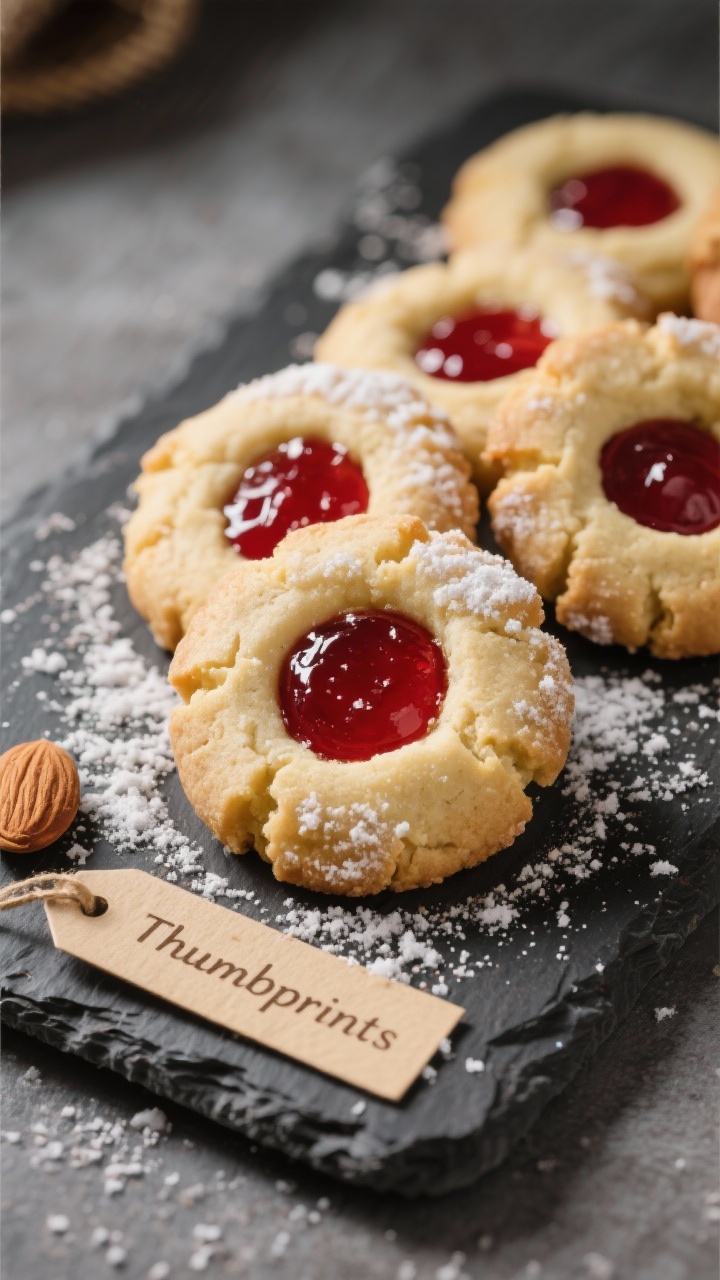

Printable Recipe Card
Want just the essential recipe details without scrolling through the article? Get our printable recipe card with just the ingredients and instructions.