
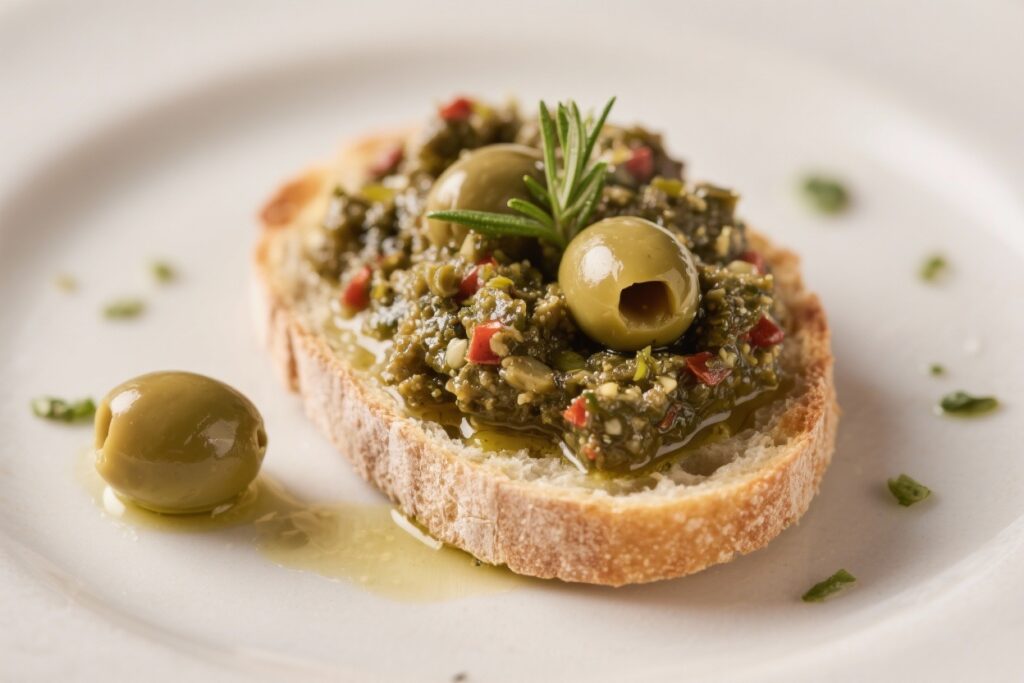
Briny, garlicky, and deeply savory, olive tapenade is the kind of spread that makes any snack feel a little more special. It comes together fast, needs no cooking, and turns a simple baguette into something you can happily serve to guests. If you love big flavors—think olives, capers, and lemon—you’ll love this.
Make it chunky or smooth, keep it classic or add your own twist. Once you try it, you’ll find plenty of excuses to spoon it onto just about everything.
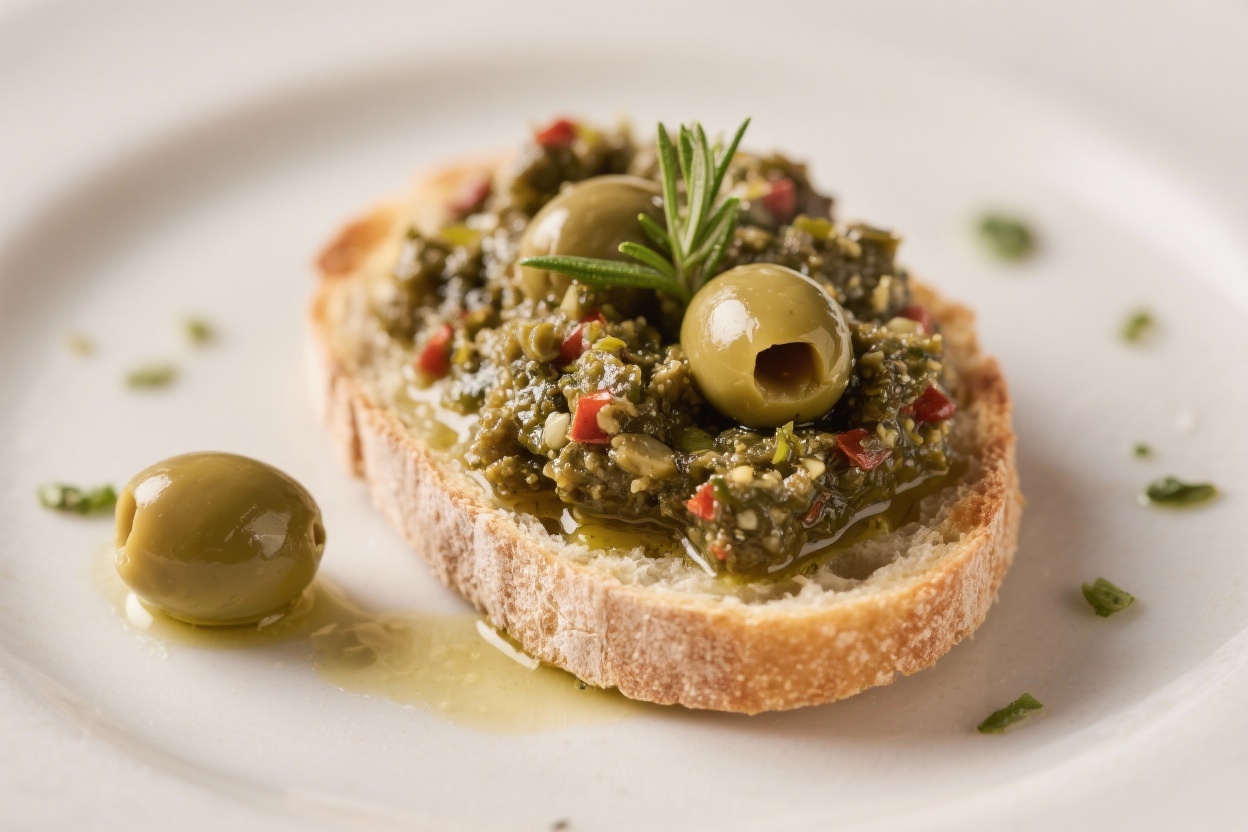
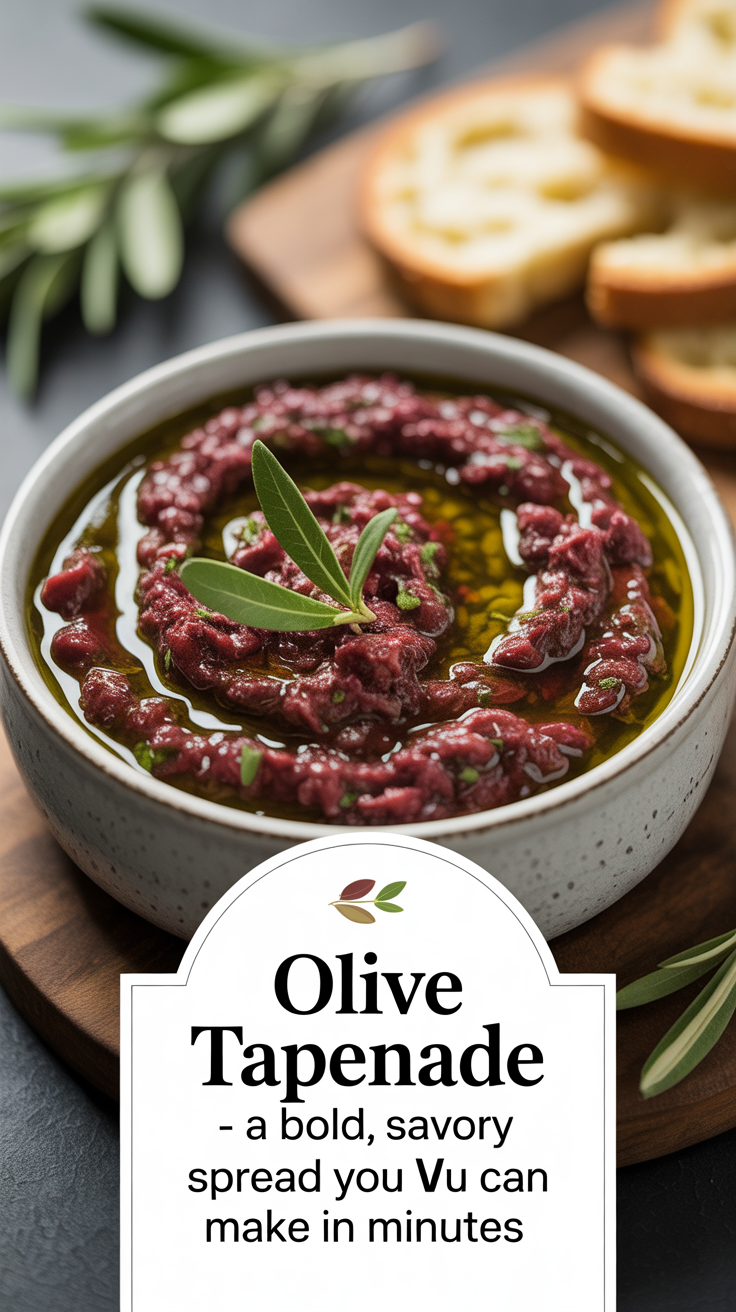
Olive Tapenade – A Bold, Savory Spread You Can Make in Minutes
Ingredients
Method
-
Prep the olives. Rinse and drain your olives and capers to remove excess brine.
Pat them dry with a paper towel so the tapenade isn’t watery.
-
Load the processor. Add olives, capers, garlic, and anchovies (if using) to a food processor. If you don’t have one, a sharp knife and patience work fine—just chop everything very finely.
-
Pulse, don’t purée. Pulse 4–6 times to start breaking things down. You want a coarse mixture before you add liquids, so you control the final texture.
-
Add brightness and richness. Add lemon juice, lemon zest, and black pepper.
With the processor running briefly, drizzle in olive oil until the tapenade holds together but isn’t greasy. Start with 2 tablespoons and add more as needed.
-
Taste and adjust. Tapenade varies a lot depending on your olives. Adjust with more lemon juice for acidity, a pinch of red pepper flakes for heat, or a splash of vinegar if it tastes flat.
-
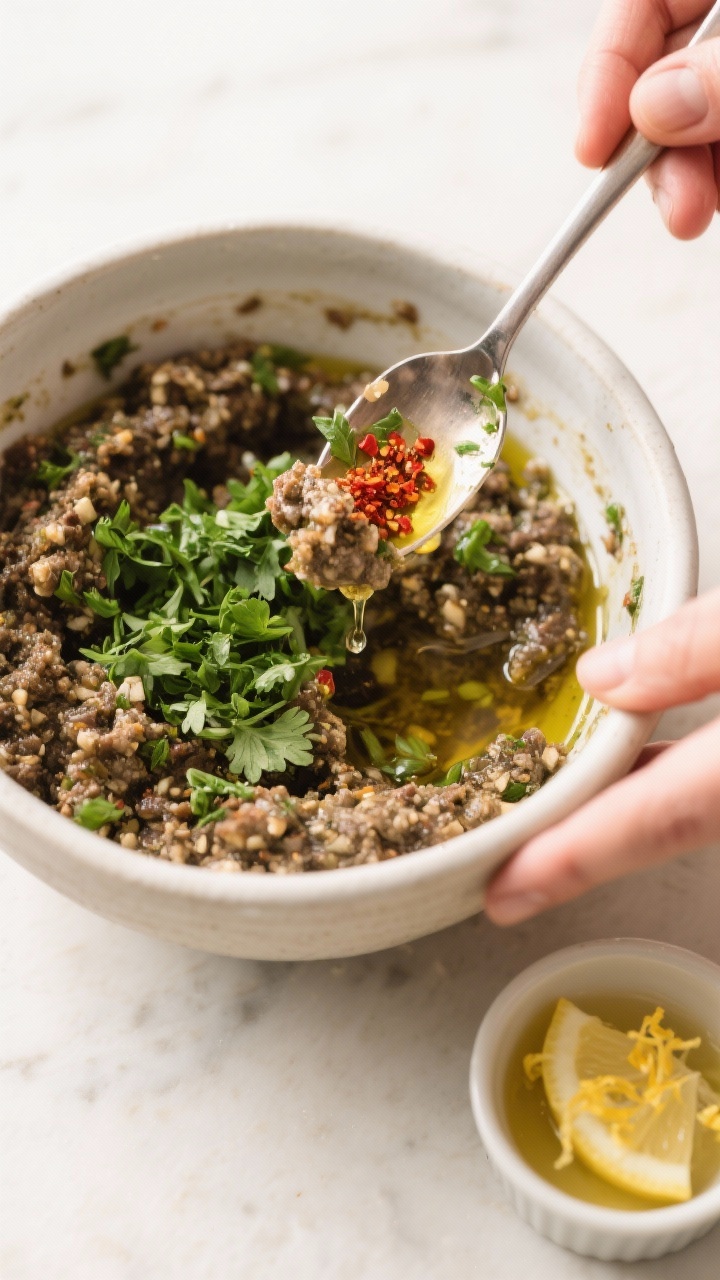
Fold in herbs. Stir in chopped parsley by hand for a fresh finish.
If you’re adding sun-dried tomatoes or walnuts, fold them in now for texture.
-
Rest and serve. Let it sit for at least 20 minutes, or cover and chill for a few hours. The flavors meld and round out as it rests.
What Makes This Special
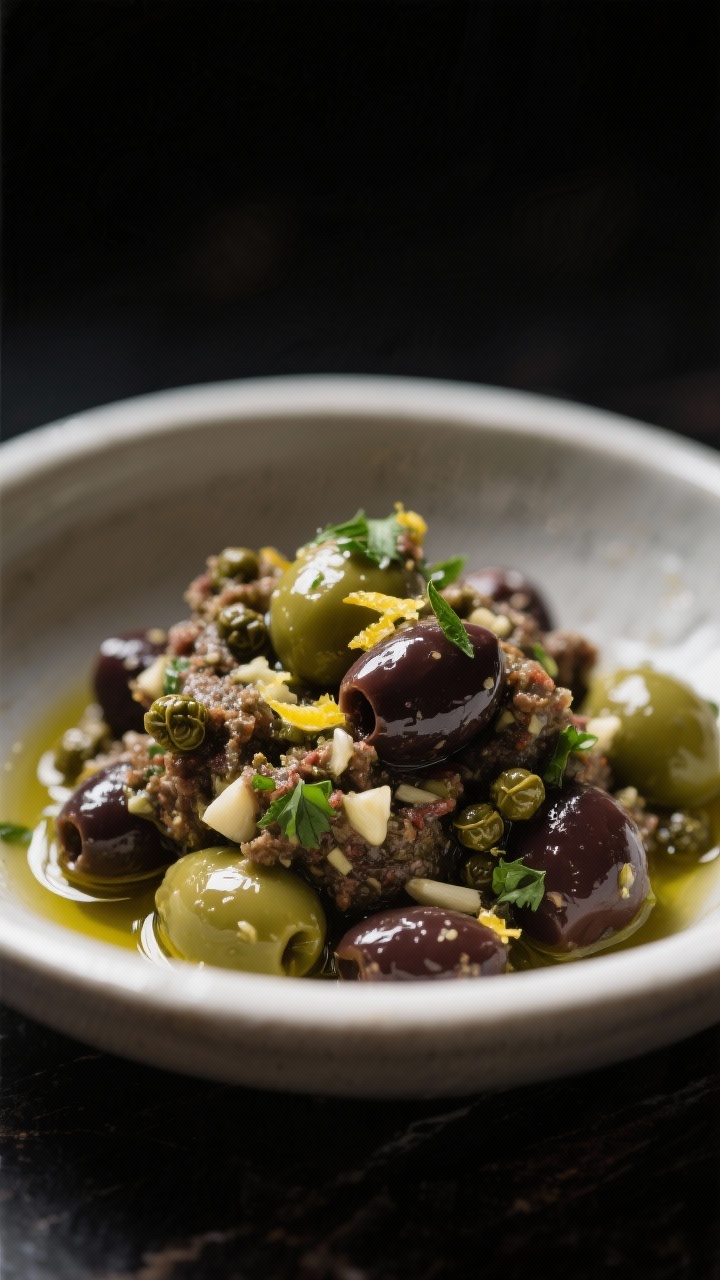
Olive tapenade is a Provençal staple with a short ingredient list and big payoff. It’s naturally dairy-free, vegetarian, and easy to scale up for a crowd.
The texture is flexible, too: you can keep it rustic and chunky or blitz it until it’s silky. Best of all, it tastes even better after a few hours in the fridge, so it’s ideal for make-ahead entertaining. Serve it with toast, toss it with pasta, or spread it under roasted vegetables—the versatility is part of the fun.
What You’ll Need
- 2 cups pitted olives (a mix of Kalamata and green olives is ideal)
- 2 tablespoons capers, drained
- 2–3 cloves garlic, roughly chopped
- 2–3 anchovy fillets (optional but traditional)
- 1–2 tablespoons fresh lemon juice
- 1 teaspoon lemon zest (optional, for brightness)
- 2–4 tablespoons extra-virgin olive oil
- 1 tablespoon fresh parsley, chopped (or basil for a twist)
- 1/4 teaspoon black pepper
- Red pepper flakes (optional, a pinch for heat)
- Optional add-ins: a few sun-dried tomatoes, a splash of red wine vinegar, or a small handful of toasted walnuts
Instructions
- Prep the olives. Rinse and drain your olives and capers to remove excess brine.
Pat them dry with a paper towel so the tapenade isn’t watery.
- Load the processor. Add olives, capers, garlic, and anchovies (if using) to a food processor. If you don’t have one, a sharp knife and patience work fine—just chop everything very finely.
- Pulse, don’t purée. Pulse 4–6 times to start breaking things down. You want a coarse mixture before you add liquids, so you control the final texture.
- Add brightness and richness. Add lemon juice, lemon zest, and black pepper.
With the processor running briefly, drizzle in olive oil until the tapenade holds together but isn’t greasy. Start with 2 tablespoons and add more as needed.
- Taste and adjust. Tapenade varies a lot depending on your olives. Adjust with more lemon juice for acidity, a pinch of red pepper flakes for heat, or a splash of vinegar if it tastes flat.
- Fold in herbs. Stir in chopped parsley by hand for a fresh finish.
If you’re adding sun-dried tomatoes or walnuts, fold them in now for texture.
- Rest and serve. Let it sit for at least 20 minutes, or cover and chill for a few hours. The flavors meld and round out as it rests.
Keeping It Fresh
Tapenade keeps well, which makes it handy for quick snacks and last-minute guests. Transfer it to an airtight container and press a thin layer of olive oil over the top to minimize air contact.
Store in the refrigerator for up to 1 week. For longer storage, freeze in small portions and thaw in the fridge; the texture stays surprisingly good.
Why This is Good for You
Olive tapenade packs flavor without heavy ingredients. Olives and extra-virgin olive oil provide heart-friendly monounsaturated fats and antioxidants. Garlic and lemon add bright flavor and small boosts of vitamins and phytonutrients. It’s naturally low in carbs and can fit into Mediterranean-style eating.
Keep an eye on sodium, though—olives and capers are salty, so you probably won’t need to add extra salt.
Pitfalls to Watch Out For
- Over-salting. With salty olives, capers, and anchovies, it’s easy to go too far. Taste first, season last.
- Over-processing. A quick pulse gives you texture. If it turns pasty, add a spoonful of chopped olives to bring some bite back.
- Watery tapenade. Failing to drain and pat olives dry can water things down.
Drying helps concentrate flavor.
- Bland flavor. If it tastes flat, add acid. Lemon juice or a splash of red wine vinegar usually wakes it right up.
- Too oily. Add olive oil slowly. You want it to bind, not swim.
Alternatives
- No anchovies. Skip them and add an extra teaspoon of capers or a dash of soy sauce for savory depth.
- Green-only tapenade. Use Castelvetrano or Manzanilla olives for a milder, buttery flavor and a bright green color.
- Herb-forward version. Blend in basil, thyme, or mint for a fresh twist.
Add herbs at the end to keep them vibrant.
- Nutty tapenade. Toasted walnuts or almonds add body and a subtle crunch. Start with 2 tablespoons and adjust to taste.
- Citrus swap. Try orange zest instead of lemon for a softer, aromatic brightness.
- Spicy kick. Add Calabrian chili paste or a pinch of Aleppo pepper for gentle heat and color.
FAQ
Can I make olive tapenade without a food processor?
Yes. Use a large, sharp knife and chop everything very finely.
Start with the garlic and anchovies, then the olives and capers, and mix with lemon juice and olive oil until it holds together.
What kind of olives are best?
A mix gives great balance. Kalamata brings deep, winey flavor, while green olives add brightness. Avoid canned black olives labeled “ripe”—they’re mild and can taste flat here.
Do I have to use anchovies?
No, but they add a classic savory note without making it “fishy.” If you skip them, add extra capers or a small splash of soy sauce or Worcestershire for umami.
How do I serve tapenade?
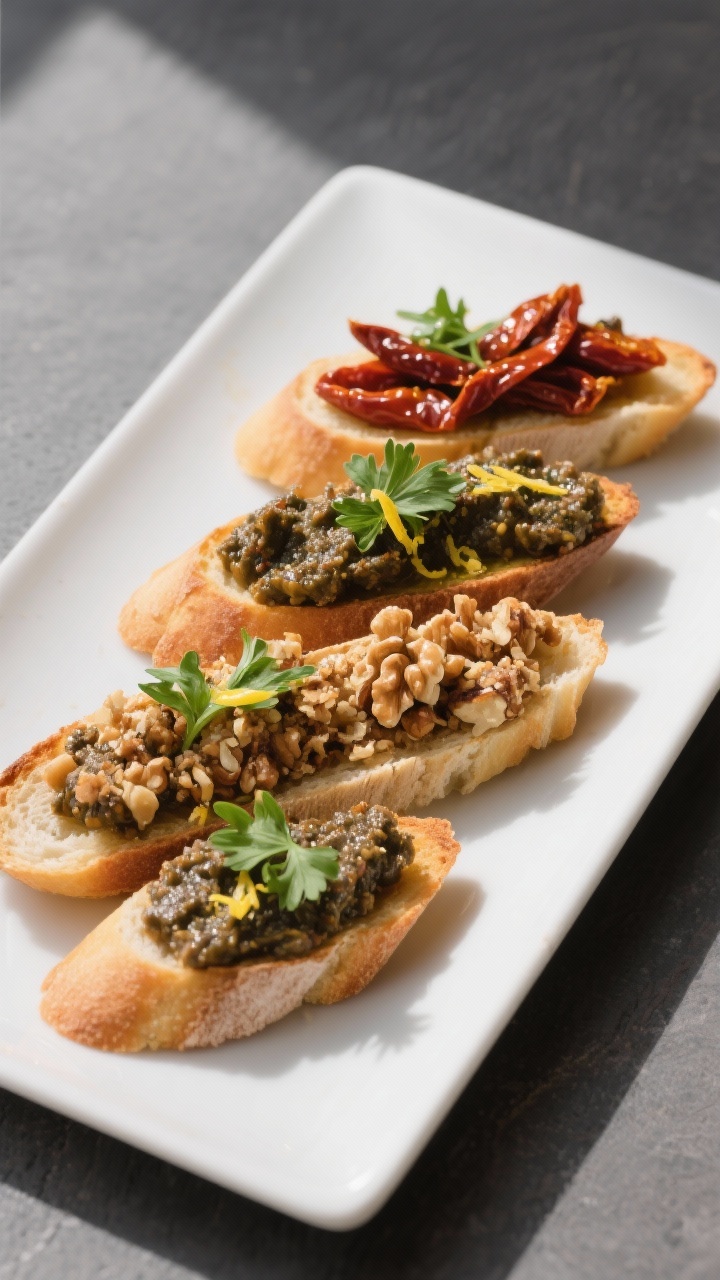
Spread it on toasted baguette, crostini, or crackers.
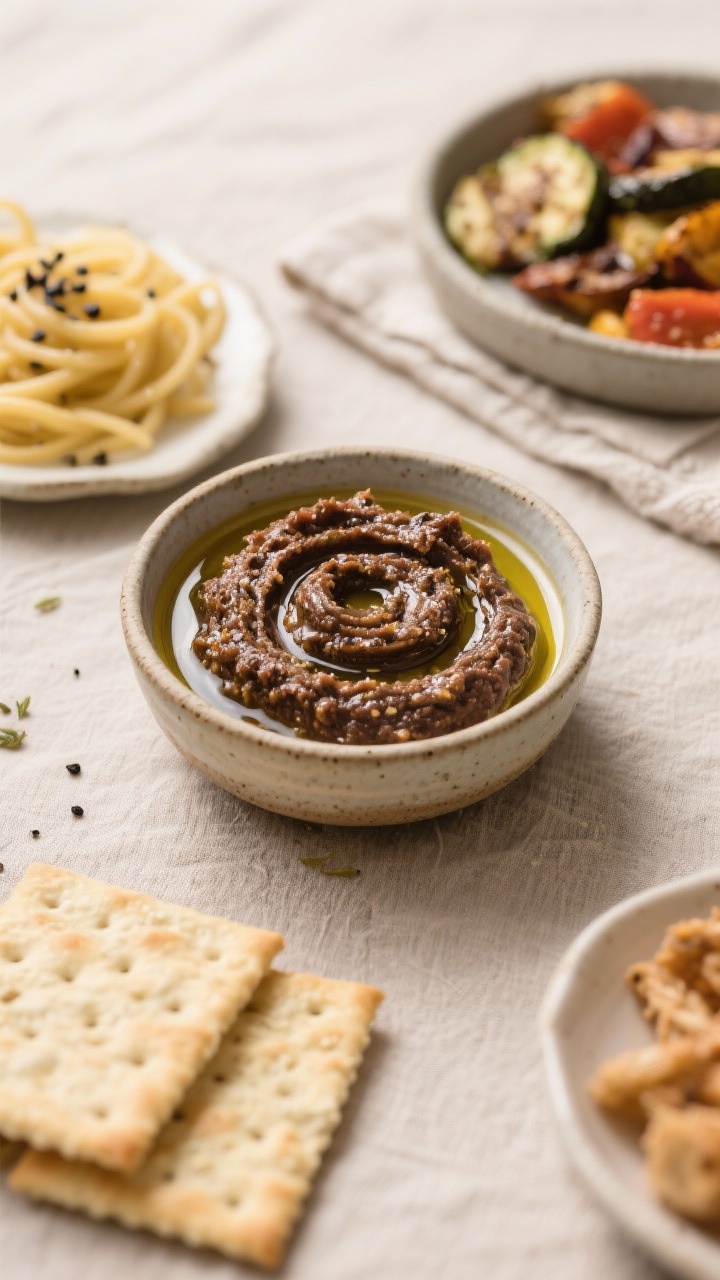
It’s also great on sandwiches, with grilled chicken or fish, tossed with warm pasta, or spooned over roasted vegetables and eggs.
Can I make it ahead?
Absolutely. Tapenade improves after a few hours. Make it up to 3 days ahead and refresh with a squeeze of lemon or a drizzle of olive oil before serving.
How do I fix an overly salty tapenade?
Add more chopped unsalted olives, a squeeze of lemon, or a pinch of sugar to balance.
Serving with unsalted items—like plain ricotta or no-salt crackers—also helps.
Is it vegan?
It can be. Use the anchovy-free option and avoid Worcestershire sauce unless it’s a vegan version. Everything else is plant-based.
Can I use jarred minced garlic?
Fresh garlic tastes brighter and cleaner, but jarred will work in a pinch.
Start with less, since jarred garlic can be sharper or slightly bitter.
What wine pairs well with olive tapenade?
Dry rosé, crisp whites like Sauvignon Blanc, or light reds such as Pinot Noir work well. The goal is freshness to balance the salt and richness.
How much tapenade do I need for a party?
Plan on about 2–3 tablespoons per person if you’re serving other snacks. For 8 people, 1 1/2 to 2 cups is usually plenty.
Wrapping Up
Olive tapenade is proof that a few strong ingredients can make something unforgettable.
It’s quick, flexible, and endlessly useful—from last-minute appetizers to easy weeknight upgrades. Keep a batch in your fridge and you’ll always have a way to add bold, bright flavor to whatever you’re cooking. Once you find your favorite mix of olives and add-ins, it’ll become a staple you reach for again and again.
Printable Recipe Card
Want just the essential recipe details without scrolling through the article? Get our printable recipe card with just the ingredients and instructions.