
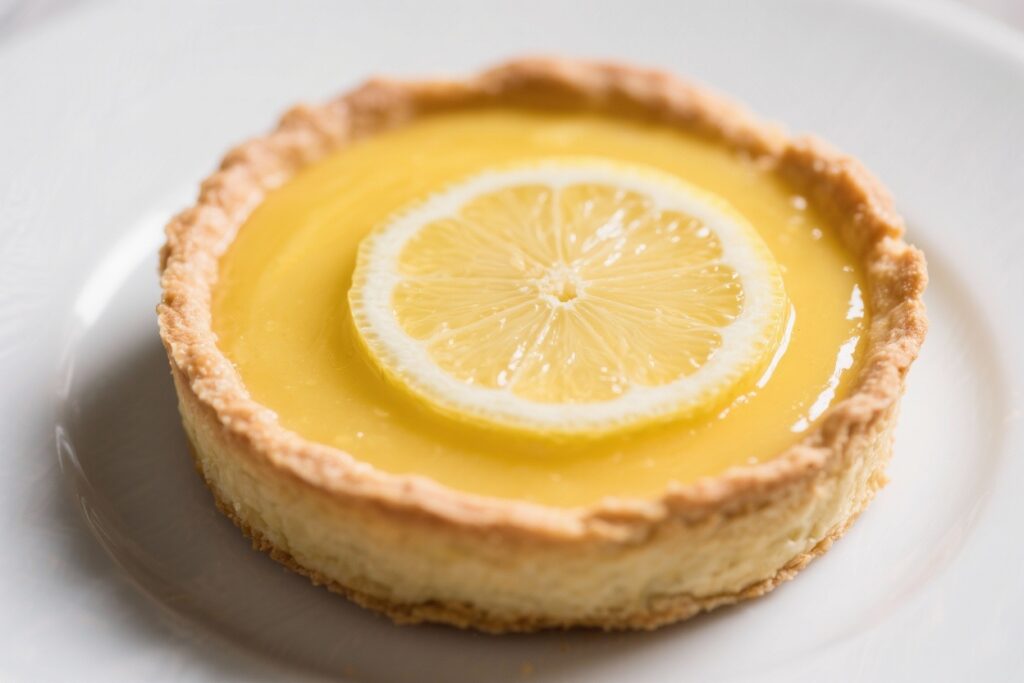
A lemon curd tart feels like sunshine on a plate. It’s bright, silky, and just the right balance of sweet and tangy. Whether you’re hosting a dinner, bringing dessert to a friend’s house, or treating yourself on a quiet afternoon, this tart delivers.
It looks elegant, but it’s actually approachable and straightforward to make. You can prep parts ahead of time, and the results are consistently impressive.
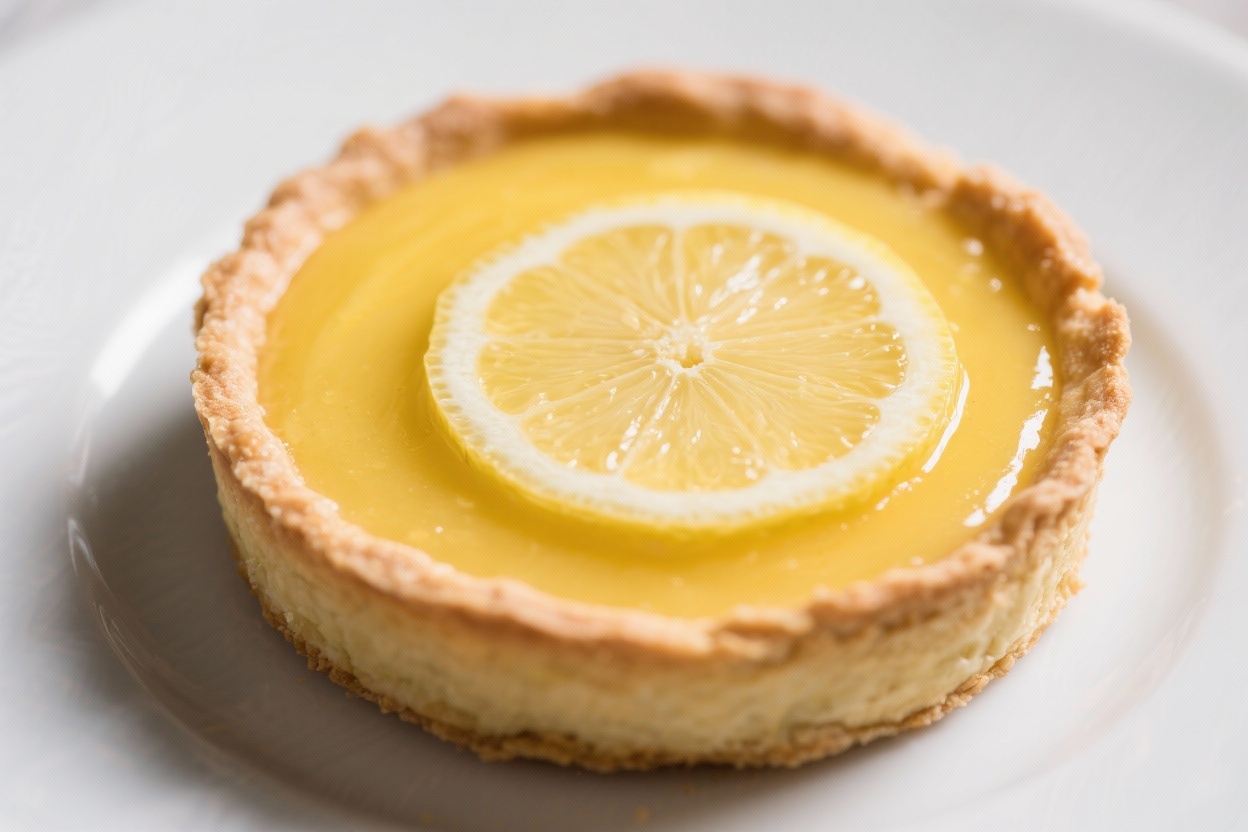
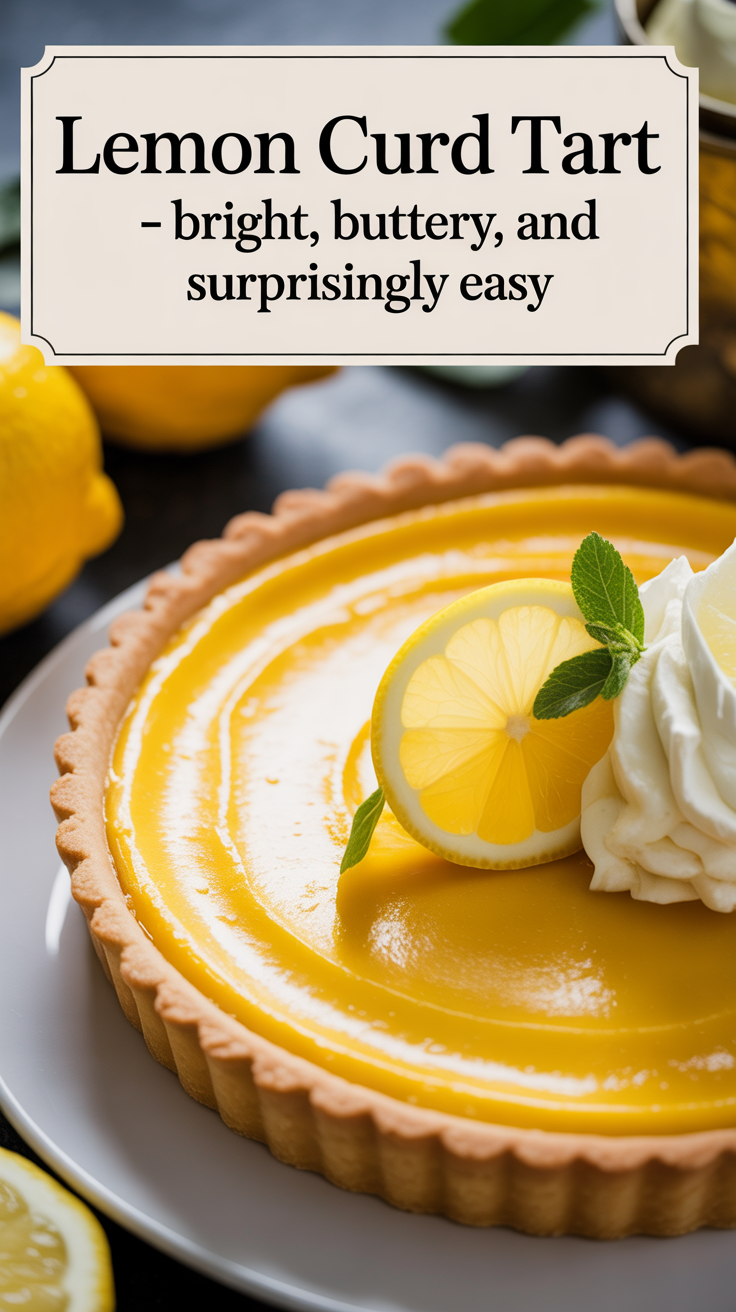
Lemon Curd Tart – Bright, Buttery, and Surprisingly Easy
Ingredients
Method
-
Make the crust dough: In a bowl, whisk flour, powdered sugar, and salt.
Cut in the cold butter with a pastry cutter or your fingertips until the mixture looks like coarse crumbs. Add the egg yolk and 1 tablespoon ice water. Mix just until it comes together.
If it’s too dry, add another teaspoon or two of water.
-
Chill the dough: Press the dough into a flat disk, wrap, and refrigerate for 30 minutes. Chilling helps the crust stay tender and prevents shrinking.
-
Prepare the tart shell: Lightly flour your surface and roll the dough into a circle about 11–12 inches wide. Fit it into a 9-inch tart pan with a removable bottom.
Press gently into the corners and trim the edges. Prick the base with a fork and chill again for 15 minutes.
-
Blind bake: Heat the oven to 375°F (190°C). Line the shell with parchment and fill with pie weights or dry beans.
Bake for 15 minutes. Remove the weights and parchment, then bake another 8–10 minutes until the crust is lightly golden. Let it cool while you make the filling.
-
Make the lemon curd: In a medium saucepan, whisk together eggs, egg yolks, sugar, lemon juice, lemon zest, and a pinch of salt.
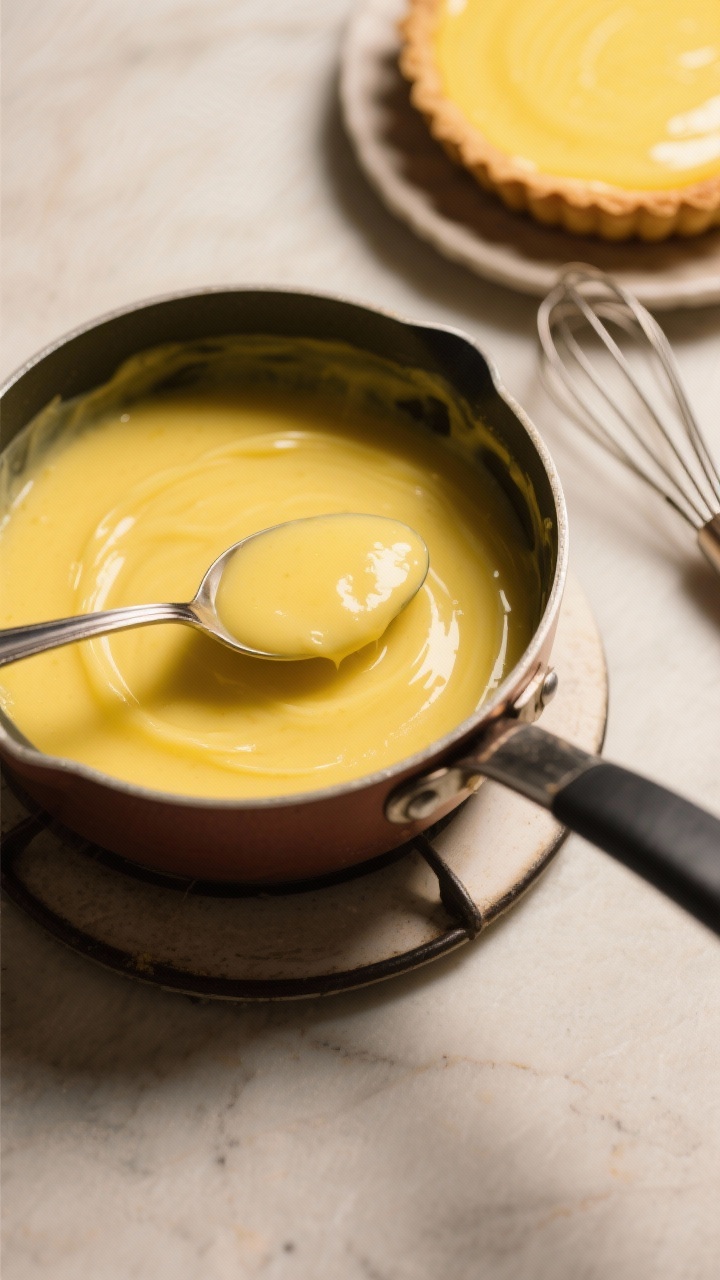
Cook over medium-low heat, whisking constantly, until the mixture thickens and coats the back of a spoon, about 6–8 minutes. Do not let it simmer vigorously.
-
Add the butter: Remove from heat. Whisk in butter pieces until fully melted and smooth.
For extra-smooth curd, strain through a fine mesh sieve into a bowl to remove zest and any cooked egg bits.
-
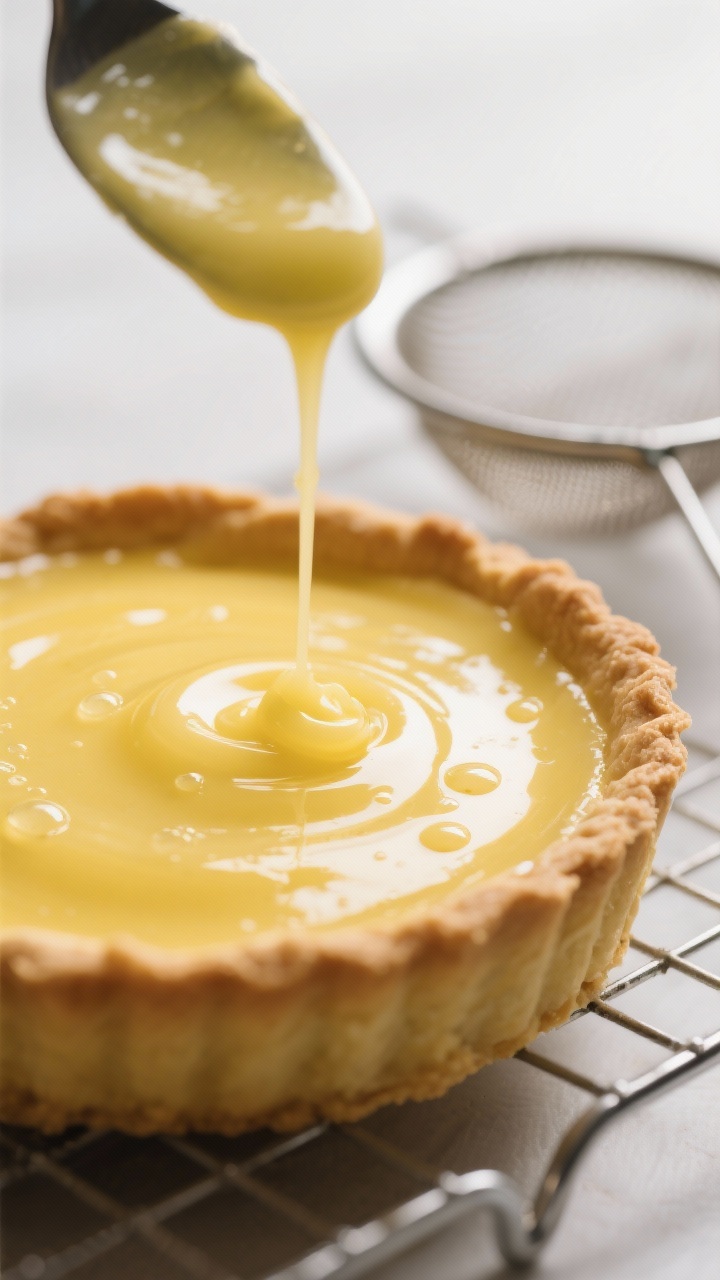
Fill the crust: Pour the warm curd into the cooled tart shell. Smooth the top with a spatula. The curd will continue to set as it cools.
-
Chill to set: Refrigerate the tart for at least 2–3 hours, or until fully set and sliceable.
The surface should be glossy and slightly jiggly but not liquid.
-
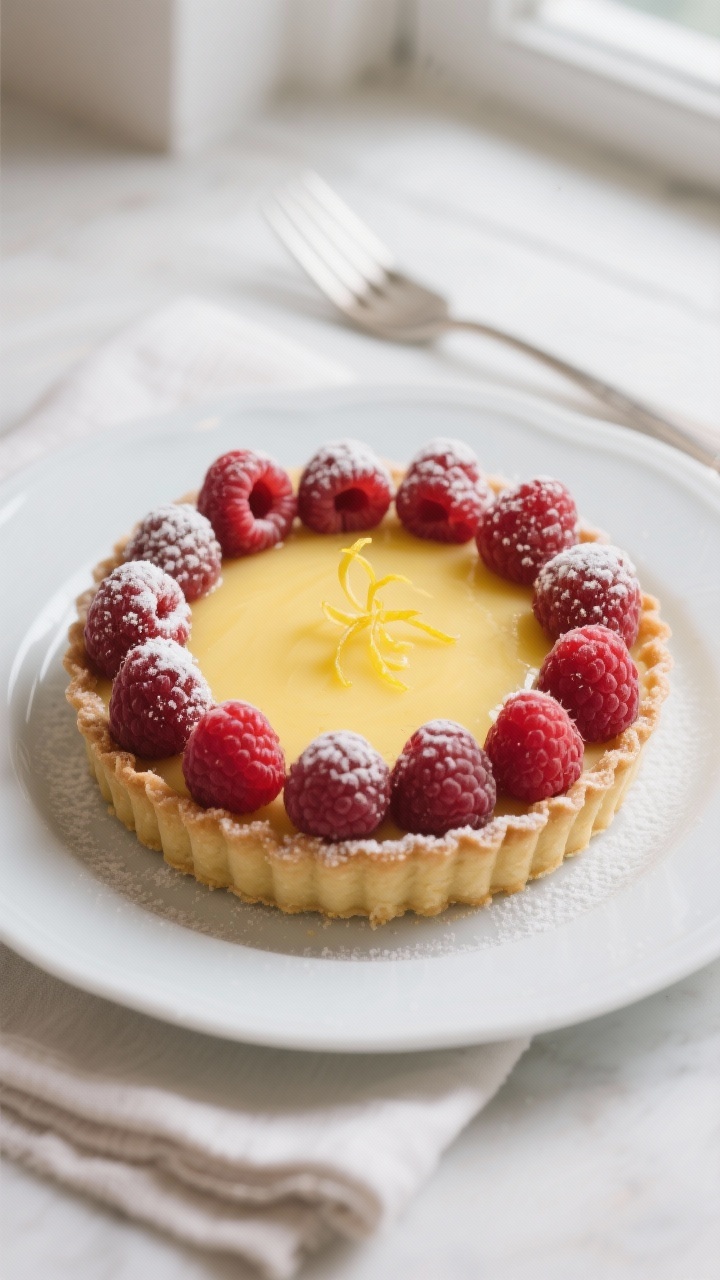
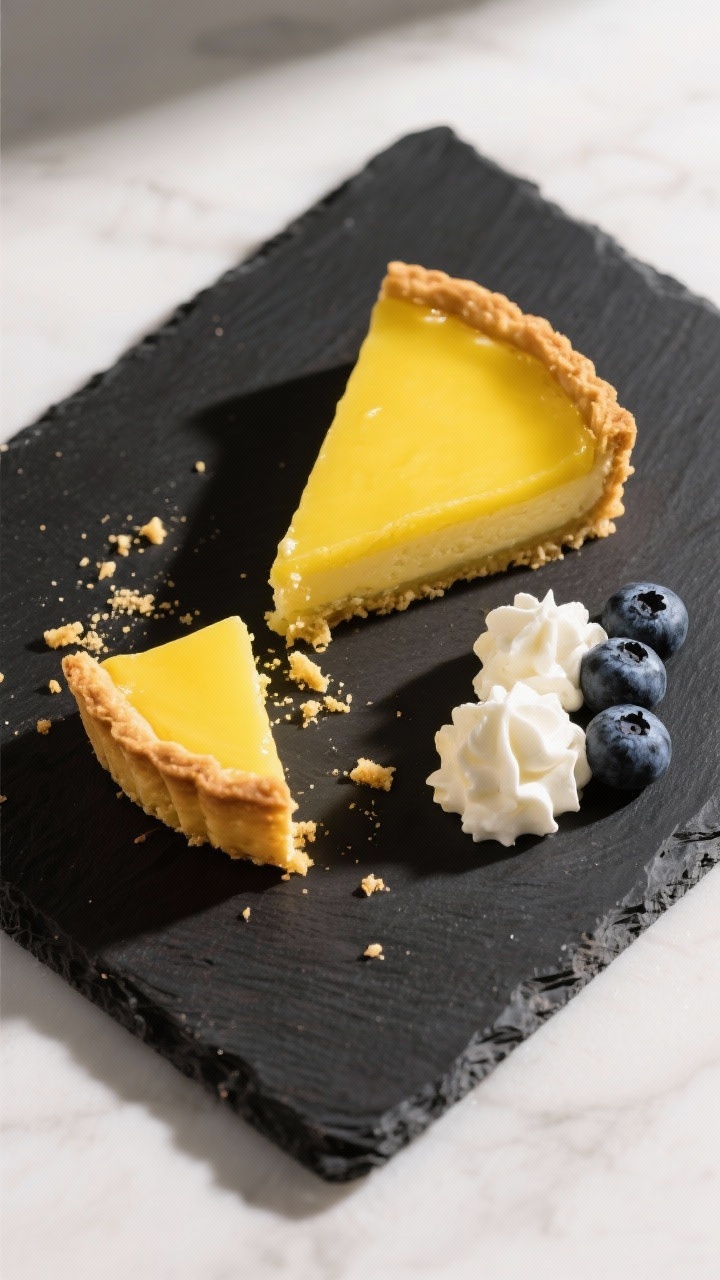
Garnish and serve: Add berries, a dusting of powdered sugar, or dollops of lightly sweetened whipped cream. Slice with a clean, sharp knife, wiping between cuts for neat edges.
What Makes This Recipe So Good
- Balanced flavor: The tart lemon curd sits perfectly against a buttery crust. It’s zesty without being harsh, sweet without being cloying.
- Silky texture: The curd sets beautifully—no rubbery feel, no graininess—just smooth, sliceable custard.
- Make-ahead friendly: The crust can be baked in advance, and the entire tart keeps well in the fridge.
- No special equipment required: A whisk, a saucepan, and a tart pan are all you really need.
- Elegant presentation: A glossy lemon filling in a golden crust looks like it came from a bakery, especially with a dusting of powdered sugar or a few fresh berries.
What You’ll Need
- For the crust:
- 1 1/4 cups (160 g) all-purpose flour
- 1/2 cup (115 g) unsalted butter, cold and cubed
- 1/4 cup (30 g) powdered sugar
- 1/4 teaspoon fine salt
- 1 large egg yolk
- 1–2 tablespoons ice water (as needed)
- For the lemon curd filling:
- 3 large eggs
- 2 large egg yolks
- 3/4 cup (150 g) granulated sugar
- 2/3 cup (160 ml) fresh lemon juice (about 4–5 lemons)
- 2 teaspoons finely grated lemon zest
- 6 tablespoons (85 g) unsalted butter, cut into small pieces
- Pinch of salt
- Optional garnish: Fresh berries, whipped cream, or powdered sugar
Instructions
- Make the crust dough: In a bowl, whisk flour, powdered sugar, and salt.
Cut in the cold butter with a pastry cutter or your fingertips until the mixture looks like coarse crumbs. Add the egg yolk and 1 tablespoon ice water. Mix just until it comes together.
If it’s too dry, add another teaspoon or two of water.
- Chill the dough: Press the dough into a flat disk, wrap, and refrigerate for 30 minutes. Chilling helps the crust stay tender and prevents shrinking.
- Prepare the tart shell: Lightly flour your surface and roll the dough into a circle about 11–12 inches wide. Fit it into a 9-inch tart pan with a removable bottom.
Press gently into the corners and trim the edges. Prick the base with a fork and chill again for 15 minutes.
- Blind bake: Heat the oven to 375°F (190°C). Line the shell with parchment and fill with pie weights or dry beans.
Bake for 15 minutes. Remove the weights and parchment, then bake another 8–10 minutes until the crust is lightly golden. Let it cool while you make the filling.
- Make the lemon curd: In a medium saucepan, whisk together eggs, egg yolks, sugar, lemon juice, lemon zest, and a pinch of salt.
Cook over medium-low heat, whisking constantly, until the mixture thickens and coats the back of a spoon, about 6–8 minutes. Do not let it simmer vigorously.
- Add the butter: Remove from heat. Whisk in butter pieces until fully melted and smooth.
For extra-smooth curd, strain through a fine mesh sieve into a bowl to remove zest and any cooked egg bits.
- Fill the crust: Pour the warm curd into the cooled tart shell. Smooth the top with a spatula. The curd will continue to set as it cools.
- Chill to set: Refrigerate the tart for at least 2–3 hours, or until fully set and sliceable.
The surface should be glossy and slightly jiggly but not liquid.
- Garnish and serve: Add berries, a dusting of powdered sugar, or dollops of lightly sweetened whipped cream. Slice with a clean, sharp knife, wiping between cuts for neat edges.
Storage Instructions
- Refrigerate: Cover the tart and store in the fridge for up to 3 days. The crust stays crisp if the shell was well-baked.
- Freeze: You can freeze the fully assembled tart for up to 1 month.
Wrap tightly. Thaw in the fridge overnight, then refresh with a new dusting of powdered sugar.
- Make-ahead tips: Bake the crust a day ahead and keep it at room temperature, wrapped. Make the curd up to 3 days in advance and store it in the fridge; rewarm gently before filling the shell.
Why This is Good for You
- Lemons bring vitamin C: You get a boost of antioxidants and a bright, fresh flavor that wakes up your palate.
- Reasonable portion, big satisfaction: A small slice delivers intense flavor, which makes mindful eating easier.
- Homemade control: You can adjust sugar levels, choose quality butter, and skip additives found in store-bought desserts.
Pitfalls to Watch Out For
- Scrambled eggs in the curd: If the heat is too high or you stop whisking, the eggs can curdle.
Keep the heat moderate and whisk constantly. Straining helps if it happens.
- Soggy crust: Underbaking the shell leads to a soft base. Blind bake until lightly golden and cool before adding the curd.
- Runny filling: If the curd isn’t cooked long enough, it won’t set.
Cook until thick enough to coat the back of a spoon and leave a clear trail when you run a finger through it.
- Tough pastry: Overworking the dough can make it hard. Mix just until it comes together and chill before rolling.
- Too tart or too sweet: Lemons vary. Taste the curd before adding butter; adjust sugar or lemon juice slightly to balance.
Variations You Can Try
- Meyer lemon tart: Swap regular lemons for Meyer lemons for a sweeter, floral flavor.
- Almond crust: Replace 1/3 cup of the flour with finely ground almonds for a nutty twist.
- Ginger kick: Add 1–2 teaspoons of grated fresh ginger to the curd while cooking for warmth and spice.
- Berry swirl: Spoon a few dollops of thick raspberry jam onto the curd after pouring it into the crust.
Swirl gently with a skewer.
- Toasted meringue topping: Add a layer of Swiss meringue and torch the top for a lemon meringue tart vibe.
- Gluten-free option: Use a gluten-free all-purpose blend for the crust and add an extra tablespoon of water if needed.
FAQ
Can I use bottled lemon juice?
Fresh lemon juice is best. Bottled juice can taste flat or slightly bitter. For the brightest flavor, squeeze your own and include the zest.
Do I need a tart pan with a removable bottom?
It helps a lot for clean edges and easy removal, but you can use a pie dish if that’s what you have.
Just serve slices directly from the dish.
How do I know when the curd is thick enough?
It should coat the back of a spoon. When you run a finger through it, the track should stay clean. If you have a thermometer, aim for about 170–175°F (77–80°C).
Can I make the crust in a food processor?
Yes.
Pulse the dry ingredients, add butter, and pulse until sandy. Add the yolk and water, pulsing just until it clumps. Don’t overprocess.
What if my curd tastes too sharp?
Whisk in an extra tablespoon or two of sugar while the curd is still warm.
A pinch more butter can also soften the edges of the acidity.
How can I prevent the tart from cracking?
Cracks usually come from overcooking or rapid temperature changes. Cook the curd gently, and let the tart cool at room temperature before chilling.
Is there a dairy-free option?
Use a dairy-free butter alternative for both crust and curd. Choose one with a neutral flavor for the best result.
Final Thoughts
A lemon curd tart is one of those desserts that feels special without demanding much fuss.
With a crisp, buttery shell and a smooth, tangy filling, it’s hard to beat. Follow the steps, keep the heat gentle, and don’t skip the chill time. Add a handful of berries or a swirl of whipped cream, and you’ve got a dessert that brightens any table.
It’s simple, fresh, and always a crowd-pleaser.
Printable Recipe Card
Want just the essential recipe details without scrolling through the article? Get our printable recipe card with just the ingredients and instructions.