
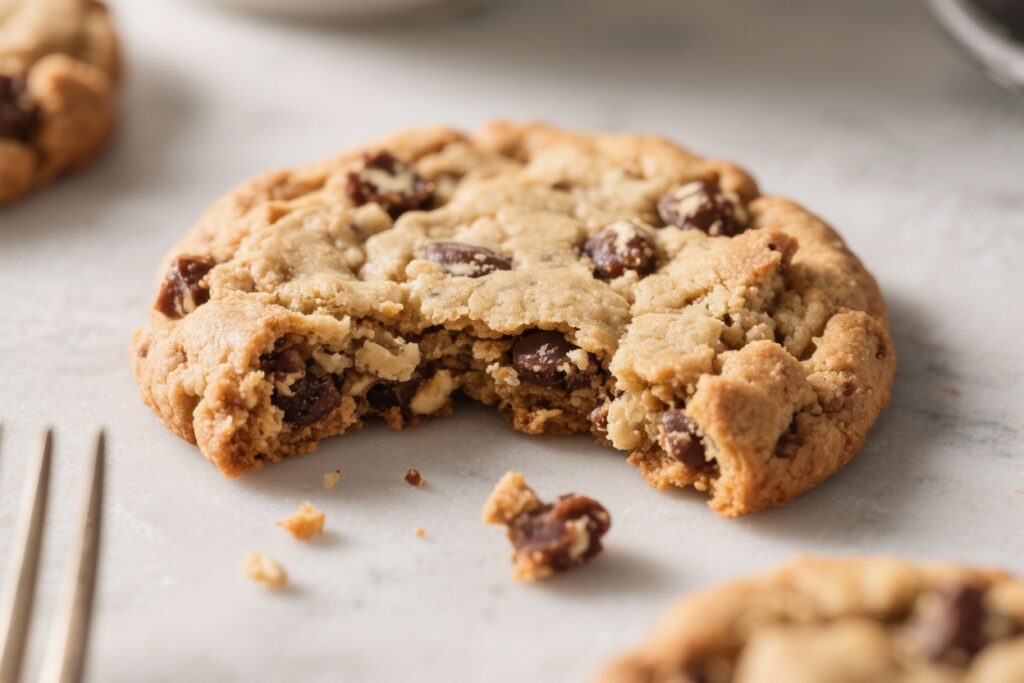
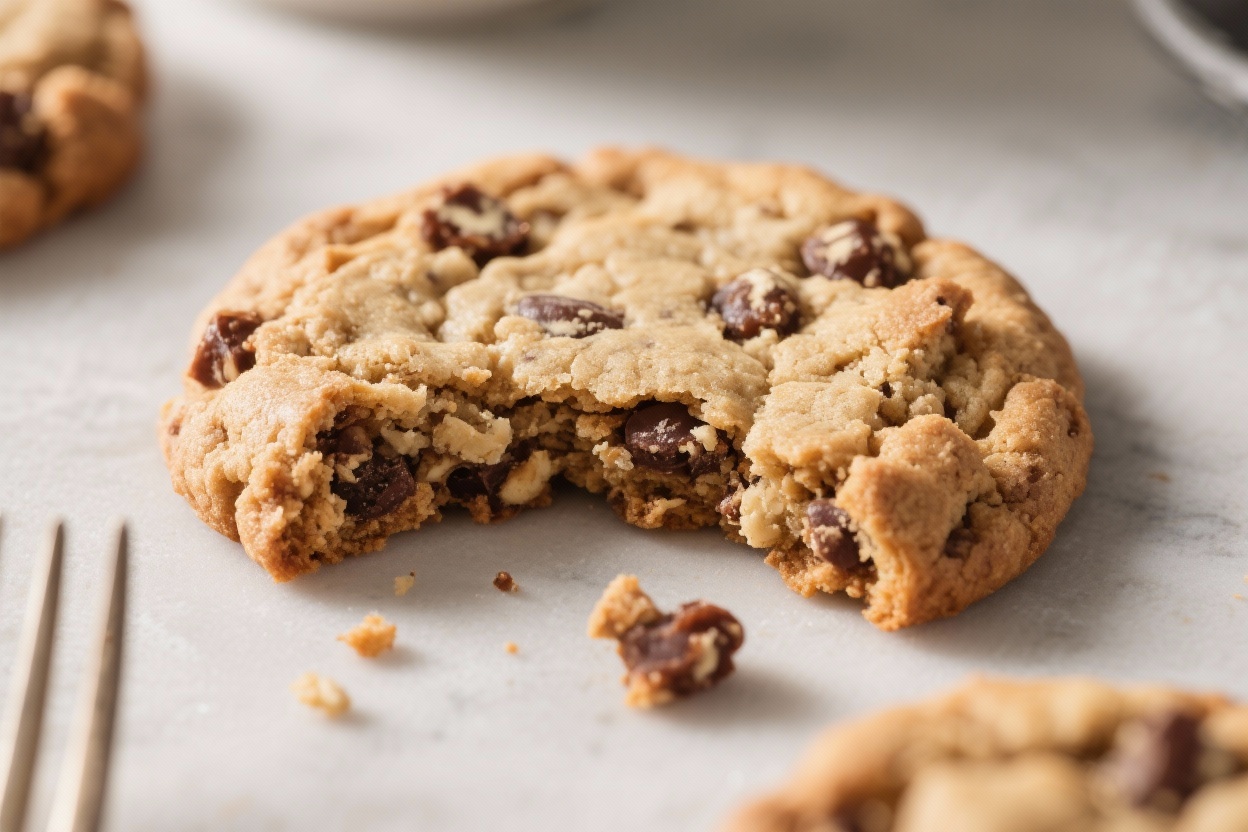
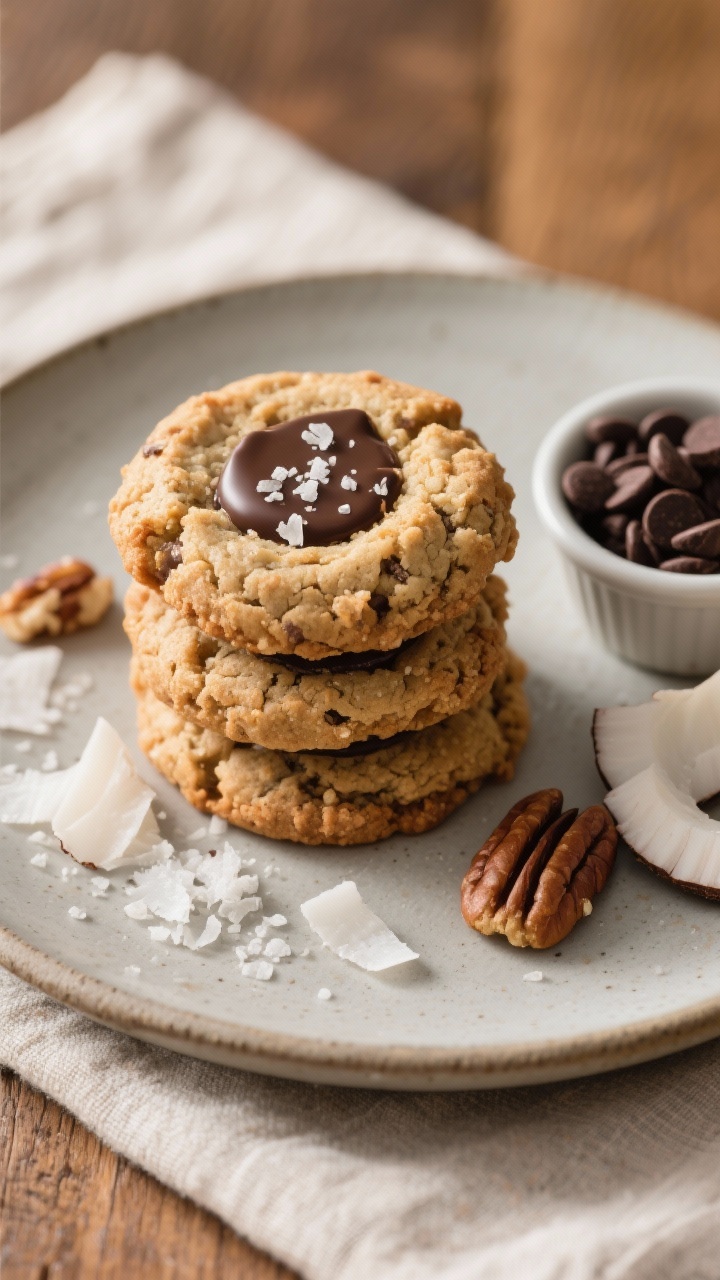
If you love a hearty cookie packed with texture but want to keep things low-carb, this Keto Cowboy Cookie is for you. It’s inspired by the classic cowboy cookie—loaded with chocolate, nuts, and coconut—reworked to fit a ketogenic lifestyle. The result is a chewy, satisfying cookie with crispy edges and a rich, toasty flavor.
No strange ingredients, no complicated steps—just a simple, reliable bake you’ll want to make again and again.
Ingredients
Method
- Preheat and prep: Heat your oven to 350°F (175°C). Line two baking sheets with parchment paper to prevent sticking and spreading.
- Mix dry ingredients: In a large bowl, whisk almond flour, shredded coconut, baking powder, sea salt, and cinnamon until evenly combined.
- Cream the fats and sweetener: In another bowl, beat the softened butter with the granulated sweetener and the brown-style sweetener until light and slightly fluffy, about 2–3 minutes.
- Add eggs and vanilla: Beat in the eggs one at a time, then mix in the vanilla extract. The mixture should look smooth and cohesive.
- Combine wet and dry: Add the dry mixture to the wet mixture and stir until a thick dough forms. It will be slightly sticky but should hold together well.
- Fold in the mix-ins: Stir in the chopped nuts, sugar-free chocolate chips, and any optional coconut flakes. Distribute them evenly throughout the dough.
- Chill briefly: Place the bowl in the fridge for 15–20 minutes. This helps control spread and concentrates flavors.
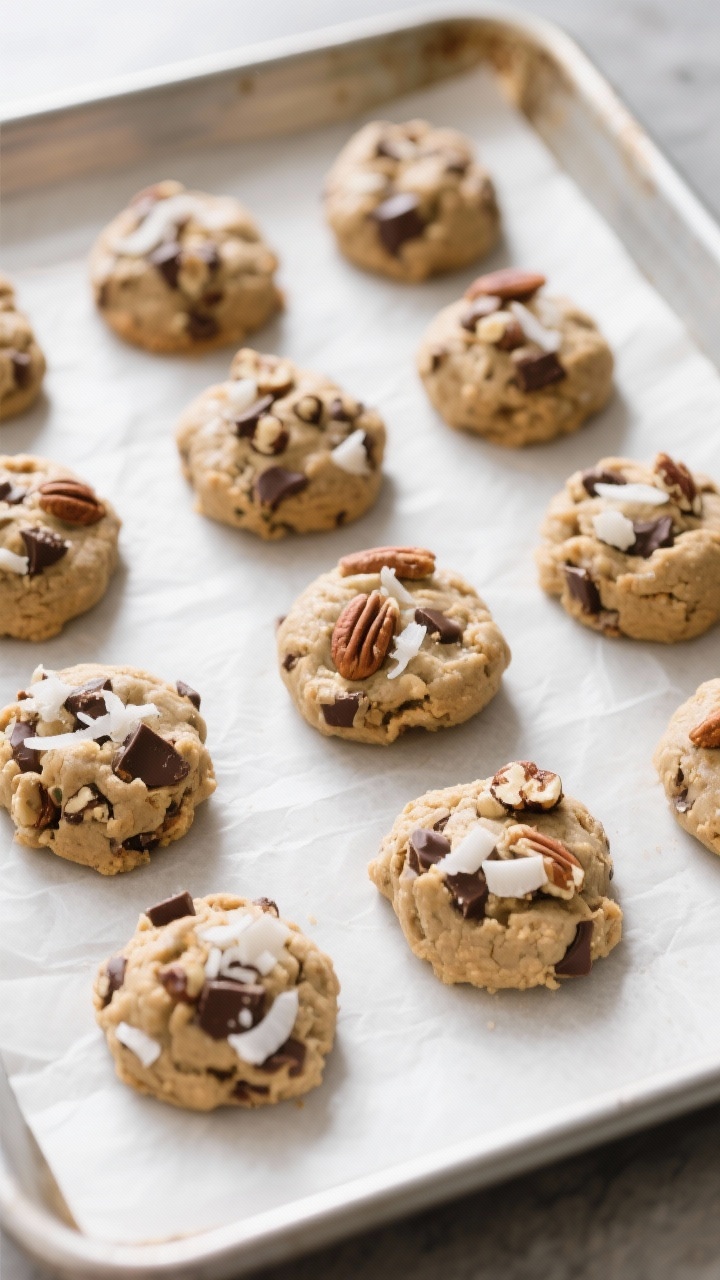
- Portion the dough: Scoop 2-tablespoon mounds onto the prepared sheets, spacing about 2 inches apart. Gently press each mound to about 1/2-inch thick; almond flour cookies don’t spread as much on their own.
- Bake: Bake for 10–13 minutes, rotating the pans halfway through. Look for golden edges and set centers. They will firm up as they cool.
- Cool: Let cookies cool on the sheet for 10 minutes, then move to a rack. This step prevents crumbling and helps them develop that chewy center.
What Makes This Special
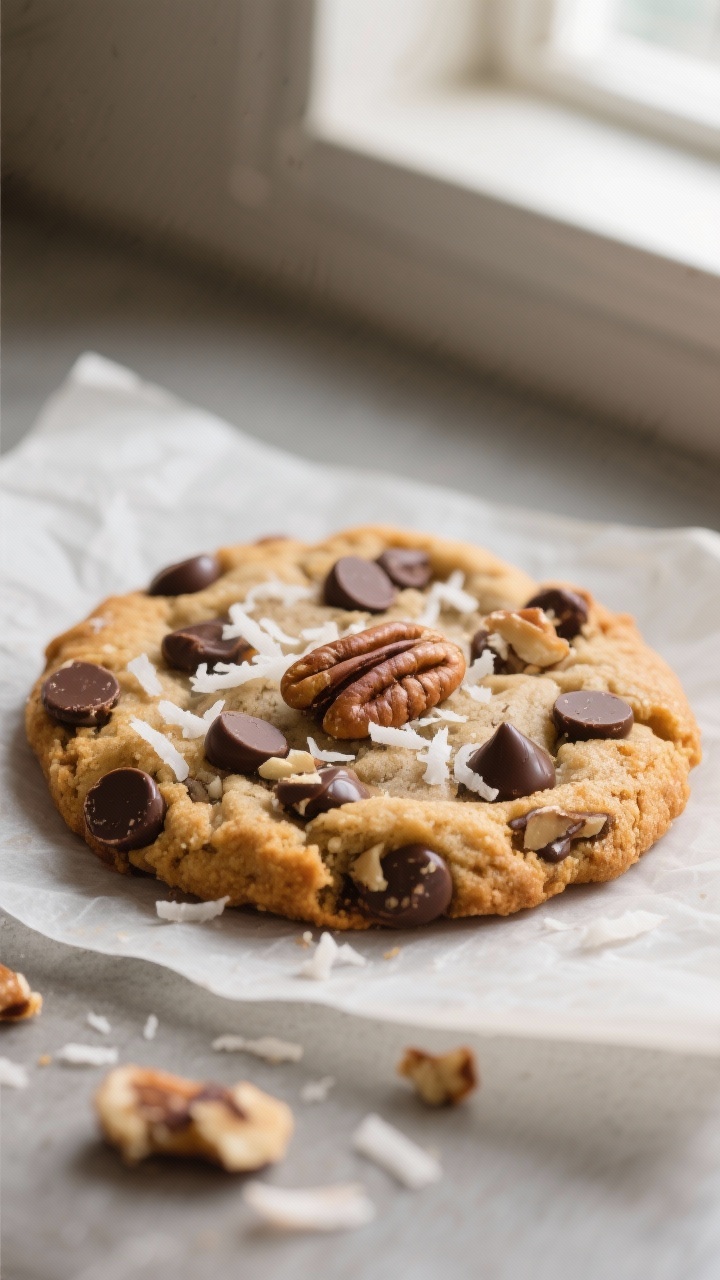
This keto version keeps the rugged spirit of a cowboy cookie while staying friendly to your macros. Instead of oats and sugar, it leans on almond flour, unsweetened coconut, and a clean low-carb sweetener. You still get layers of texture—chewy coconut, crunchy nuts, and melty chocolate—without the carb overload.
It’s a cookie you can feel good about, whether you’re following keto or just cutting back on sugar.
Even better, the dough is easy to work with, and it freezes well. Bake a batch on a Sunday, keep some in the freezer, and you’ll have a ready-to-go treat whenever the craving hits.
What You’ll Need
- Almond flour (fine blanched) – 2 cups; gives structure and a tender crumb.
- Unsweetened shredded coconut – 1 cup; adds chew and classic cowboy cookie texture.
- Pecans or walnuts, chopped – 3/4 cup; for crunch and toasty flavor.
- Unsalted butter, softened – 1/2 cup (1 stick); provides richness. Use coconut oil for dairy-free.
- Granulated erythritol or allulose blend – 3/4 cup; choose your preferred low-carb sweetener.
- Brown-style keto sweetener – 1/4 cup; adds caramel notes.
Optional but recommended.
- Eggs – 2 large; for binding.
- Vanilla extract – 2 teaspoons; warm, round flavor.
- Baking powder – 1 teaspoon; helps lift.
- Sea salt – 1/2 teaspoon; balances sweetness.
- Ground cinnamon – 1/2 teaspoon; subtle warmth that complements chocolate and nuts.
- Sugar-free dark chocolate chips or chopped bar – 3/4 cup; look for 0–1g net carbs per serving.
- Unsweetened coconut flakes (large) – 1/2 cup; optional extra for more bite.
Step-by-Step Instructions
- Preheat and prep: Heat your oven to 350°F (175°C). Line two baking sheets with parchment paper to prevent sticking and spreading.
- Mix dry ingredients: In a large bowl, whisk almond flour, shredded coconut, baking powder, sea salt, and cinnamon until evenly combined.
- Cream the fats and sweetener: In another bowl, beat the softened butter with the granulated sweetener and the brown-style sweetener until light and slightly fluffy, about 2–3 minutes.
- Add eggs and vanilla: Beat in the eggs one at a time, then mix in the vanilla extract. The mixture should look smooth and cohesive.
- Combine wet and dry: Add the dry mixture to the wet mixture and stir until a thick dough forms.
It will be slightly sticky but should hold together well.
- Fold in the mix-ins: Stir in the chopped nuts, sugar-free chocolate chips, and any optional coconut flakes. Distribute them evenly throughout the dough.
- Chill briefly: Place the bowl in the fridge for 15–20 minutes. This helps control spread and concentrates flavors.
- Portion the dough: Scoop 2-tablespoon mounds onto the prepared sheets, spacing about 2 inches apart.
Gently press each mound to about 1/2-inch thick; almond flour cookies don’t spread as much on their own.
- Bake: Bake for 10–13 minutes, rotating the pans halfway through. Look for golden edges and set centers. They will firm up as they cool.
- Cool: Let cookies cool on the sheet for 10 minutes, then move to a rack.
This step prevents crumbling and helps them develop that chewy center.
Storage Instructions
- Room temperature: Store in an airtight container for up to 4 days. Add a small piece of parchment between layers to prevent sticking.
- Refrigerator: Keeps well for 1 week. Chilling enhances chewiness and flavor.
- Freezer (baked): Freeze in a single layer, then transfer to a bag for up to 2 months.
Thaw at room temp or warm briefly in a low oven.
- Freezer (unbaked dough): Scoop and flatten dough, freeze on a sheet, then store. Bake from frozen at 350°F, adding 2–3 minutes.
Benefits of This Recipe
- Low in net carbs: Almond flour and keto sweeteners keep the carb count in check while still delivering a classic cookie experience.
- High in healthy fats: Nuts and coconut support satiety and make the cookie more filling.
- No refined sugar: Uses keto-friendly sweeteners for a treat that won’t spike blood sugar as much as traditional cookies.
- Customizable: Swap nuts, add seeds, or adjust spices without losing structure.
- Great texture: Chewy, crunchy, and melty all in one bite—what cowboy cookies are known for.
Pitfalls to Watch Out For
- Overbaking: These cookies go from perfect to dry quickly. Pull them when edges are golden; centers will set as they cool.
- Skipping the chill: Warm dough spreads more and can bake unevenly.
A short chill keeps the cookies thick and chewy.
- Using coarse almond meal: You need fine blanched almond flour. Coarse meal can make cookies gritty and crumbly.
- Too much sweetener: Overdoing erythritol can cause cooling aftertaste or crystallization. Stick to the amounts or use an allulose blend for softer texture.
- Wrong chocolate: Some “sugar-free” chips use maltitol, which can impact blood sugar and cause GI discomfort.
Choose chips sweetened with stevia, monk fruit, or allulose.
Variations You Can Try
- Trail mix twist: Add pumpkin seeds, sunflower seeds, and a few sugar-free dried cranberries (sparingly) for a more rustic mix.
- Peanut butter cowboy: Replace 2 tablespoons of butter with natural peanut butter and use chopped peanuts.
- Mocha chip: Add 1 teaspoon instant espresso powder and use dark chocolate for a bolder flavor.
- Spice it up: Swap cinnamon for 1/2 teaspoon chai spice or add a pinch of nutmeg and cardamom.
- Dairy-free: Use refined coconut oil instead of butter and check that your chocolate chips are dairy-free.
- Extra chewy: Fold in 1 tablespoon psyllium husk for a chewier texture and slightly thicker cookie.
FAQ
How many net carbs are in each cookie?
It varies based on your chocolate chips and sweetener. As a ballpark, a 2-tablespoon cookie made with almond flour, unsweetened coconut, and sugar-free chips typically lands around 2–3g net carbs. Always calculate based on your exact ingredients and servings.
Can I use coconut flour instead of almond flour?
Not as a direct swap.
Coconut flour is much more absorbent and would make the cookies dry and crumbly. If you must use coconut flour, start with 1/2 cup and add an extra egg, but expect a different texture.
What sweetener is best for texture and flavor?
Allulose or an allulose/monk fruit blend gives a softer, chewier cookie with no cooling effect. Erythritol works but can be slightly crisper and may set firmer as it cools.
A brown-style keto sweetener adds depth and a hint of caramel flavor.
Do I have to use both shredded coconut and coconut flakes?
No. The shredded coconut is the main source of chew. The larger flakes are optional for extra texture.
If you skip the flakes, consider adding 2–3 tablespoons more shredded coconut or a few seeds for texture.
Why did my cookies fall apart?
They likely needed more time to cool or had too little binding. Let them rest on the baking sheet for at least 10 minutes before moving. If the dough seemed too dry, add 1–2 teaspoons of water or a tablespoon of softened butter next time.
Can I make them smaller or larger?
Yes.
For smaller cookies, use a 1-tablespoon scoop and bake 8–10 minutes. For larger cookies, use 3 tablespoons and bake 12–15 minutes, watching for golden edges. Adjust cooling time accordingly.
How do I get thicker cookies?
Chill the dough longer—up to 45 minutes—and press the scoops only slightly before baking.
You can also add 1 tablespoon of coconut flour to the dough to reduce spread, but don’t add more than that.
In Conclusion
This Keto Cowboy Cookie brings the bold, chunky charm of the original cookie to a low-carb kitchen with zero fuss. It’s simple to make, endlessly adaptable, and consistently satisfying—perfect for meal prep, lunchbox treats, or a quick sweet after dinner. Keep a batch on hand, and you’ll have a go-to cookie that fits your goals without sacrificing flavor or texture.
Printable Recipe Card
Want just the essential recipe details without scrolling through the article? Get our printable recipe card with just the ingredients and instructions.