
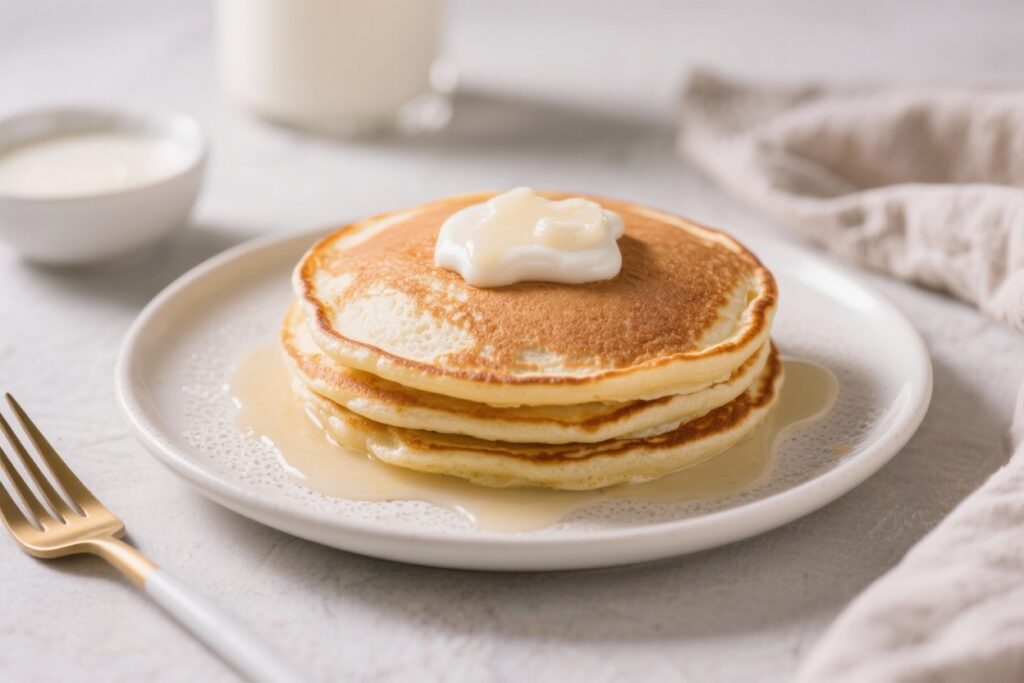
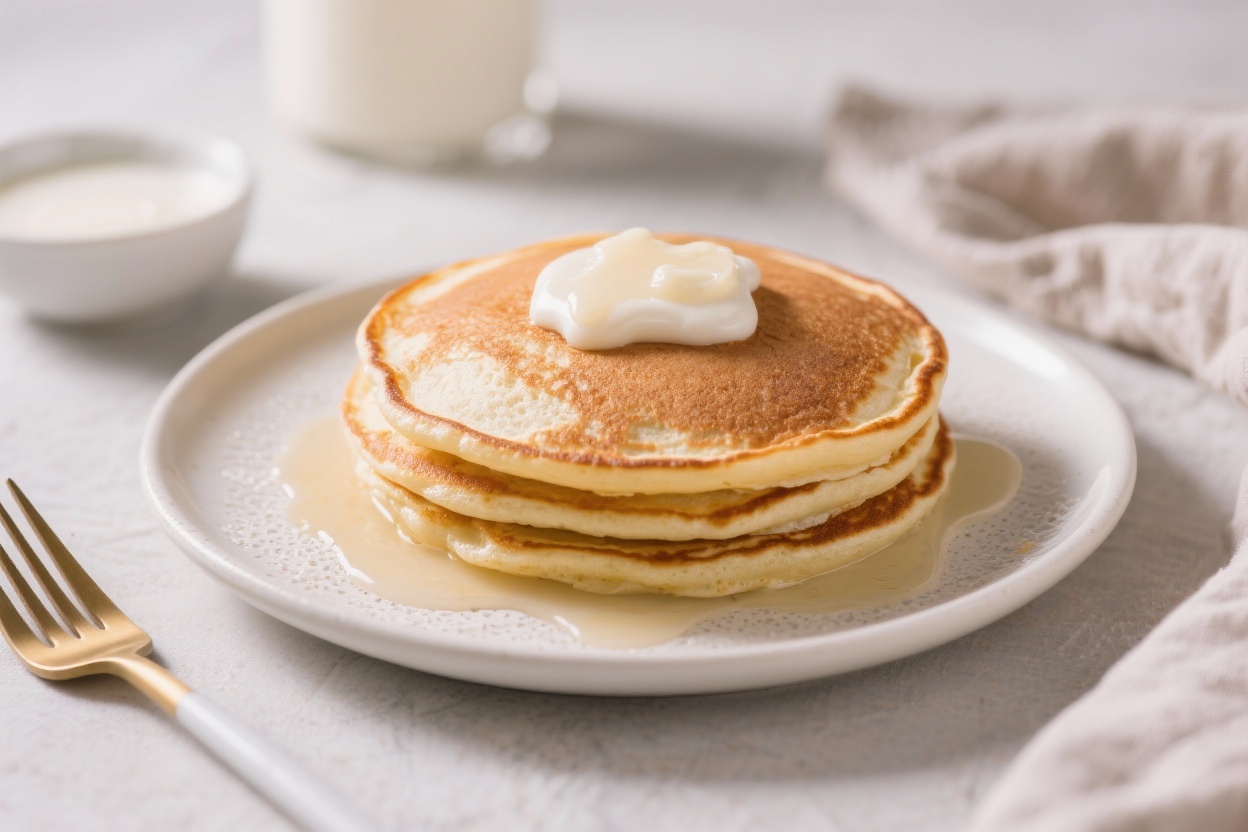
If you’ve been missing pancakes on a low-carb diet, this keto buttermilk pancake will change your mornings. It’s soft, fluffy, and has that classic buttermilk tang without the sugar spike. The batter comes together fast, and the ingredients are easy to find.
You’ll get the comfort of a weekend stack with net carbs that fit your goals. Top it simply with butter or dress it up with berries and sugar-free syrup—either way, it’s satisfying and keeps you full.
Ingredients
Method
- Mix the dry ingredients: In a bowl, whisk 1 1/2 cups almond flour, 2 tablespoons coconut flour, 2 teaspoons baking powder, 1/4 teaspoon baking soda, 1/4 teaspoon salt, and 1–2 tablespoons keto sweetener.
- Whisk the wet ingredients: In a separate bowl, whisk 3 large eggs, 1/2 cup buttermilk (or the keto substitute), 1/4 cup heavy cream, and 1 teaspoon vanilla.
- Combine gently: Stir the wet ingredients into the dry until just combined. The batter should be thick but scoopable. If it’s too thick, add 1–2 tablespoons almond milk. If too thin, rest for 3 minutes to allow coconut flour to hydrate.
- Heat the pan: Warm a nonstick skillet or griddle over medium-low heat. Lightly grease with butter or avocado oil.
- Portion the batter: Scoop 3–4 tablespoons per pancake (about 3 inches wide). Smaller pancakes are easier to flip and cook evenly.
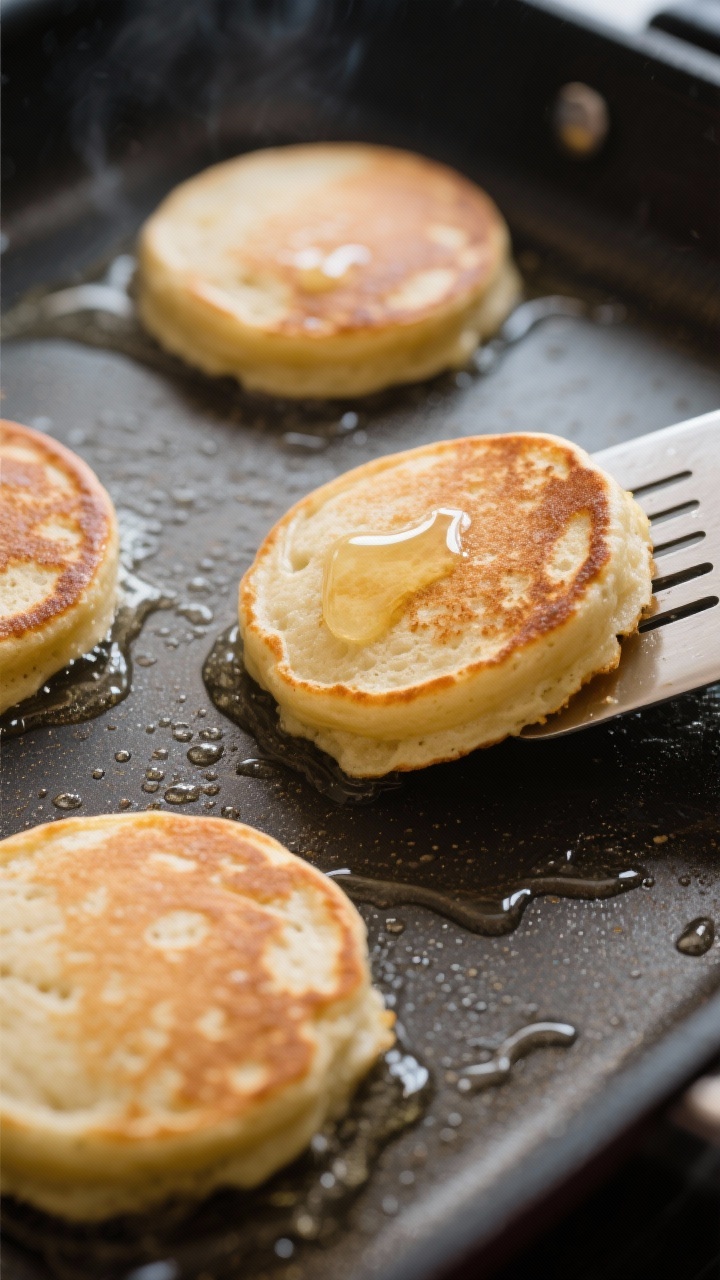
- Cook slowly: Cook for 2–3 minutes, until bubbles form at the edges and the bottom is golden. Flip carefully and cook 1–2 minutes more. Adjust heat as needed to avoid burning.
- Keep warm: Move cooked pancakes to a low oven (200°F/95°C) while you finish the batch.
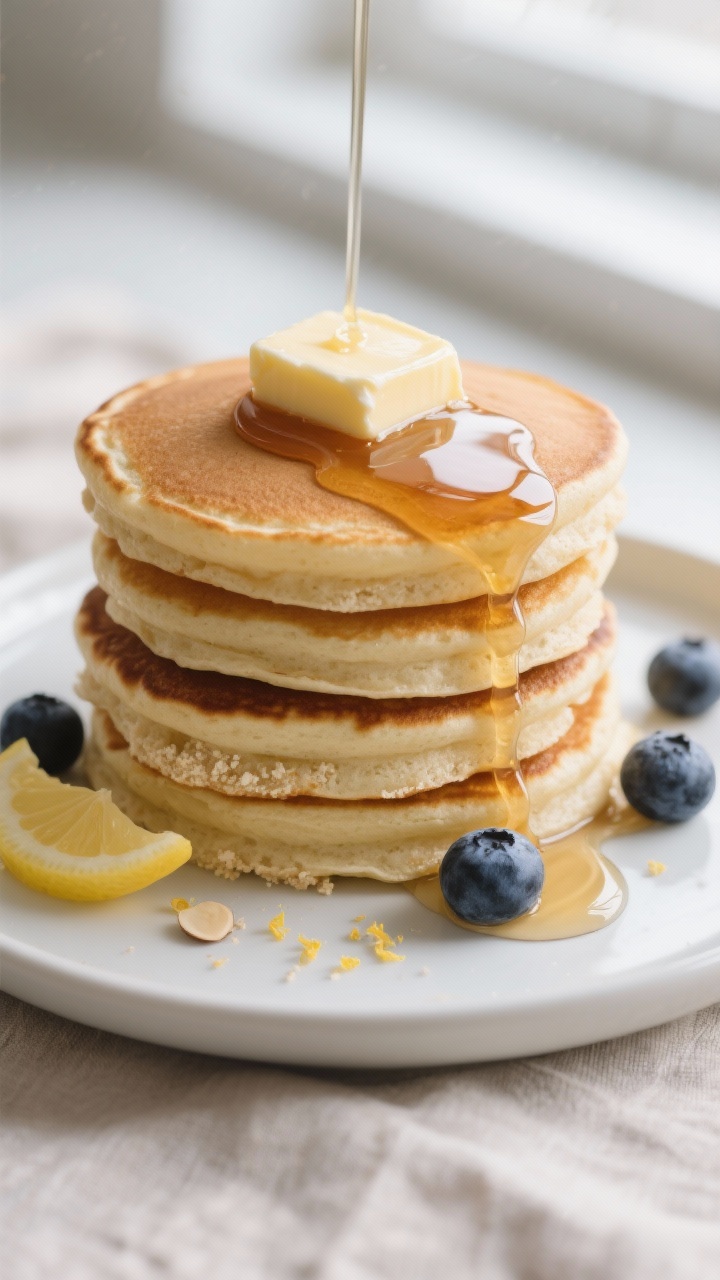
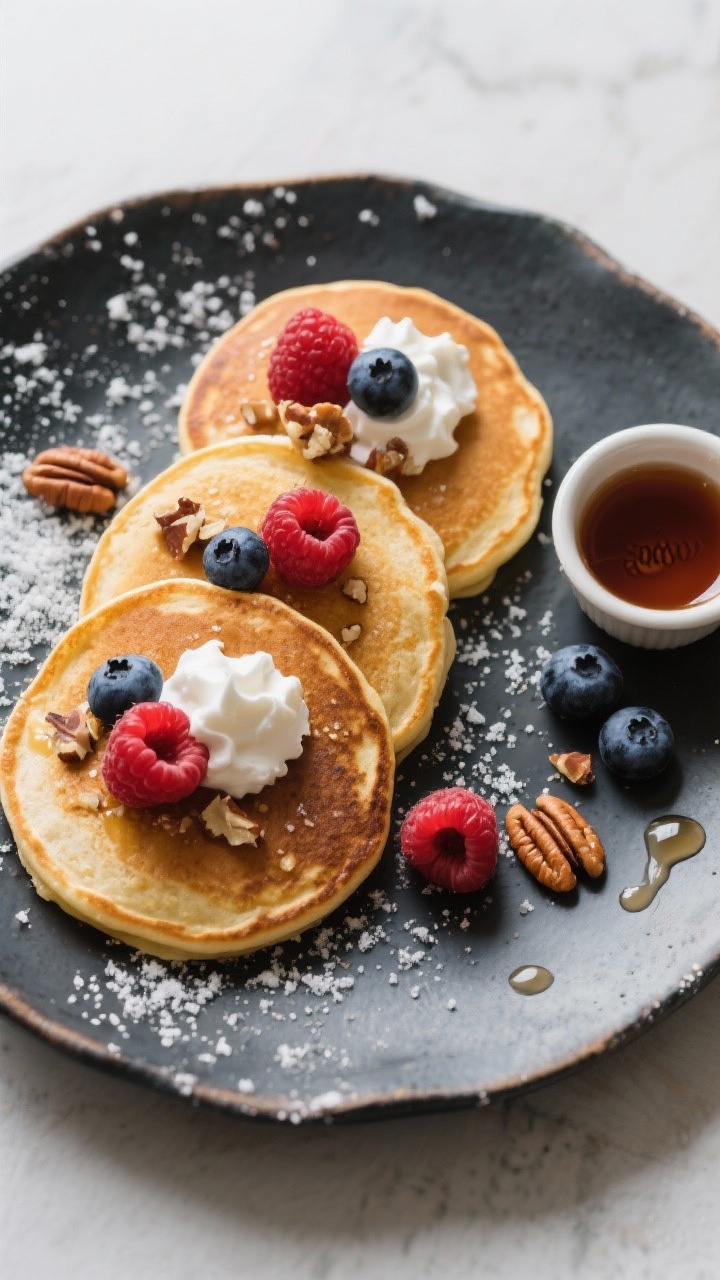
- Serve: Top with butter and a drizzle of sugar-free syrup, or keep it simple with a dollop of whipped cream and a few berries.
What Makes This Special
This recipe keeps the classic pancake flavor but swaps the flour and sugar for keto-friendly staples. Almond flour and a touch of coconut flour mimic the tenderness of traditional pancakes.
A splash of buttermilk (or a smart low-carb substitute) adds that familiar tang and softness. Best of all, the texture is fluffy, not eggy, and the batter behaves like the real thing. It’s quick to make, easy to flip, and won’t leave you with a heavy, dense stack.
What You’ll Need
- Almond flour: Fine blanched almond flour works best for a soft crumb.
- Coconut flour: A small amount helps with structure and absorbs moisture.
- Baking powder: Gives lift.
Use aluminum-free for a cleaner taste.
- Baking soda: Reacts with acid to boost fluffiness.
- Salt: A pinch balances sweetness and enhances flavor.
- Granulated erythritol or monk fruit blend: Optional, for a lightly sweet batter.
- Eggs: Provide structure and richness.
- Buttermilk or keto buttermilk substitute: 1/2 cup. For a lower-carb option, use 1/2 cup unsweetened almond milk plus 2 teaspoons apple cider vinegar or lemon juice; let it sit 5 minutes to curdle.
- Heavy cream: Adds body and tenderness.
- Vanilla extract: For aroma and classic pancake flavor.
- Butter or avocado oil: For greasing the pan and adding flavor.
- Optional add-ins: Sugar-free chocolate chips, cinnamon, lemon zest, or blueberries (fresh or frozen, used sparingly).
- Optional toppings: Butter, sugar-free maple syrup, berries, whipped cream, or crushed nuts.
How to Make It
- Mix the dry ingredients: In a bowl, whisk 1 1/2 cups almond flour, 2 tablespoons coconut flour, 2 teaspoons baking powder, 1/4 teaspoon baking soda, 1/4 teaspoon salt, and 1–2 tablespoons keto sweetener.
- Whisk the wet ingredients: In a separate bowl, whisk 3 large eggs, 1/2 cup buttermilk (or the keto substitute), 1/4 cup heavy cream, and 1 teaspoon vanilla.
- Combine gently: Stir the wet ingredients into the dry until just combined. The batter should be thick but scoopable.
If it’s too thick, add 1–2 tablespoons almond milk. If too thin, rest for 3 minutes to allow coconut flour to hydrate.
- Heat the pan: Warm a nonstick skillet or griddle over medium-low heat. Lightly grease with butter or avocado oil.
- Portion the batter: Scoop 3–4 tablespoons per pancake (about 3 inches wide).
Smaller pancakes are easier to flip and cook evenly.
- Cook slowly: Cook for 2–3 minutes, until bubbles form at the edges and the bottom is golden. Flip carefully and cook 1–2 minutes more. Adjust heat as needed to avoid burning.
- Keep warm: Move cooked pancakes to a low oven (200°F/95°C) while you finish the batch.
- Serve: Top with butter and a drizzle of sugar-free syrup, or keep it simple with a dollop of whipped cream and a few berries.
How to Store
- Refrigerate: Store leftovers in an airtight container for up to 4 days.
Layer parchment between pancakes to prevent sticking.
- Freeze: Freeze in a single layer, then transfer to a freezer bag. Keeps well for up to 2 months.
- Reheat: Toast on low, warm in a skillet with a little butter, or microwave for 20–30 seconds. For crisp edges, the skillet or toaster oven is best.
Health Benefits
- Low in net carbs: Almond and coconut flours keep carbs in check, making these pancakes keto-friendly.
- Higher in healthy fats: Satisfying fats from almond flour, eggs, and cream support satiety and steady energy.
- Gluten-free: Naturally free of wheat, suitable for gluten-sensitive eaters.
- Protein-rich: Eggs provide complete protein to help keep you full.
- Blood sugar friendly: Using erythritol or monk fruit avoids sugar spikes common with traditional pancakes.
Common Mistakes to Avoid
- Overheating the pan: High heat burns the outside while the center stays undercooked.
Use medium-low and be patient.
- Overmixing the batter: Stir just until combined. Overmixing can make pancakes dense.
- Making them too big: Large pancakes are hard to flip and cook through. Keep them small and uniform.
- Skipping the acid: The buttermilk (or vinegar/lemon + milk) activates baking soda and boosts fluffiness.
Don’t omit it.
- Using coarse almond meal: It leads to a gritty texture. Choose fine blanched almond flour.
- Adding berries to the batter too early: They can bleed and burn. Sprinkle onto the batter right after it hits the pan.
Variations You Can Try
- Blueberry Lemon: Add lemon zest to the batter and a few blueberries per pancake once poured onto the griddle.
- Cinnamon Roll: Mix 1 teaspoon cinnamon into the dry ingredients.
Finish with a drizzle of cream cheese glaze sweetened with erythritol.
- Chocolate Chip: Fold in 2 tablespoons sugar-free chocolate chips for a dessert-style treat.
- Protein Boost: Add 1 scoop unflavored or vanilla whey isolate. Increase liquid by 1–2 tablespoons if needed.
- Nutty Crunch: Top with chopped pecans or walnuts for texture and flavor.
- Savory Swap: Omit sweetener and vanilla, add a pinch of garlic powder and chives, and serve with bacon and eggs.
FAQ
Can I make these dairy-free?
Yes. Use the almond milk + lemon juice substitute for buttermilk, replace heavy cream with full-fat coconut milk, and cook with avocado oil.
Flavor stays great, with a slightly different richness.
What’s the net carb count per pancake?
It varies by brand and size, but for 10 small pancakes using almond flour, coconut flour, and keto sweetener, you’re looking at roughly 2–3g net carbs each. Check your specific ingredients to be sure.
Can I use only almond flour?
You can, but a small amount of coconut flour improves structure and reduces greasiness. If using only almond flour, expect a softer pancake; you may need to reduce the liquid slightly.
Why are my pancakes falling apart?
They might be too big or the batter too thin.
Make smaller pancakes, let the batter rest to thicken, and avoid flipping too early. A well-greased nonstick pan also helps.
Can I make the batter ahead?
It’s best cooked fresh. If needed, mix the dry and wet ingredients separately and combine right before cooking.
If the batter sits, it can thicken—just loosen with a splash of almond milk.
What’s the best pan to use?
A heavy nonstick skillet or well-seasoned griddle works best. They hold even heat and make flipping simple. Avoid thin pans that scorch easily.
Do I have to use sweetener?
No.
You can skip it if you prefer a less sweet base and rely on toppings like berries or sugar-free syrup for sweetness.
Final Thoughts
These keto buttermilk pancakes give you the classic breakfast experience without the sugar and flour. The texture is tender, the flavor is spot on, and the method is straightforward enough for busy mornings. Keep the batter small and the heat moderate, and you’ll get consistent, golden results.
Top them your way and enjoy a stack that feels indulgent while staying firmly within your low-carb goals.
Printable Recipe Card
Want just the essential recipe details without scrolling through the article? Get our printable recipe card with just the ingredients and instructions.